The icon indicates free access to the linked research on JSTOR.
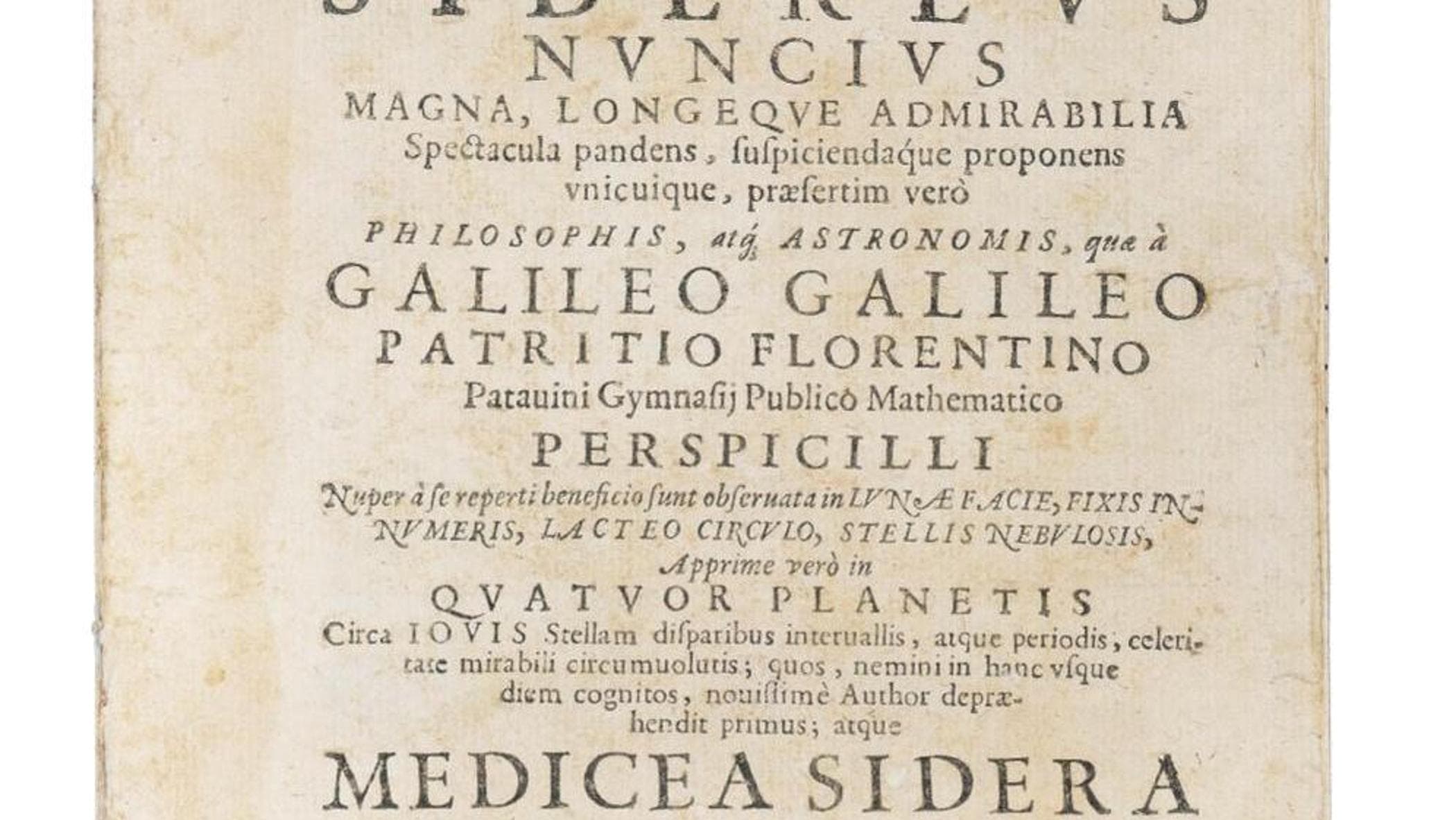
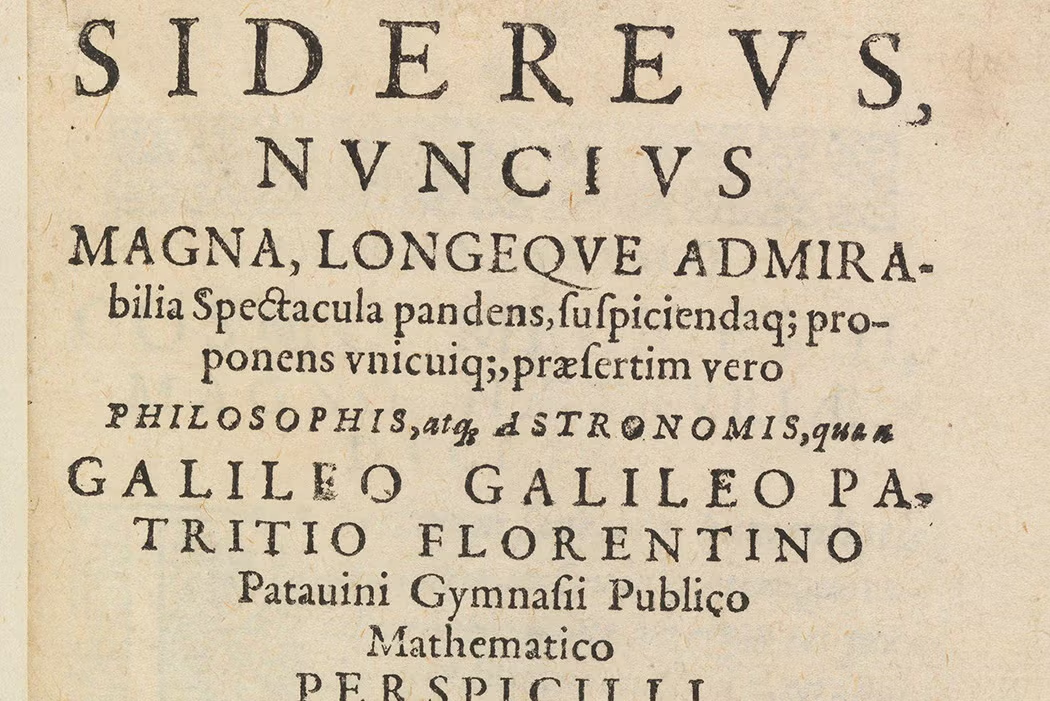
When a rare copy of Galileo Galilei’s Sidereus Nuncius came on the market in 2005, there was talk it could reach a sales price of $10 million. It was, after all, supposed to be a unique version of one of the most famous documents in the history of science—one that would be authenticated by experts as being signed and illustrated by Galileo himself.
Tech billionaires have made the history of science a very hot market, one which tends to suck volumes into private collections and away from both the purview of scholars and the eyes of the public and law enforcement. Considering the associated thefts from libraries in this story, provenance—the history of the ownership of the item in question—may also get swallowed by all the hot money.
Sidereus Nuncius is usually translated as Sidereal Messenger or Starry Messenger. It’s Galileo’s 1610 report of his examination of the night sky through a newfangled device, the telescope. In 60 pages, he described for the first time the rugged topography of the Moon; four moons orbiting Jupiter; and the gloriously remarkable fact that there were many more stars out than could be seen by the eye alone.