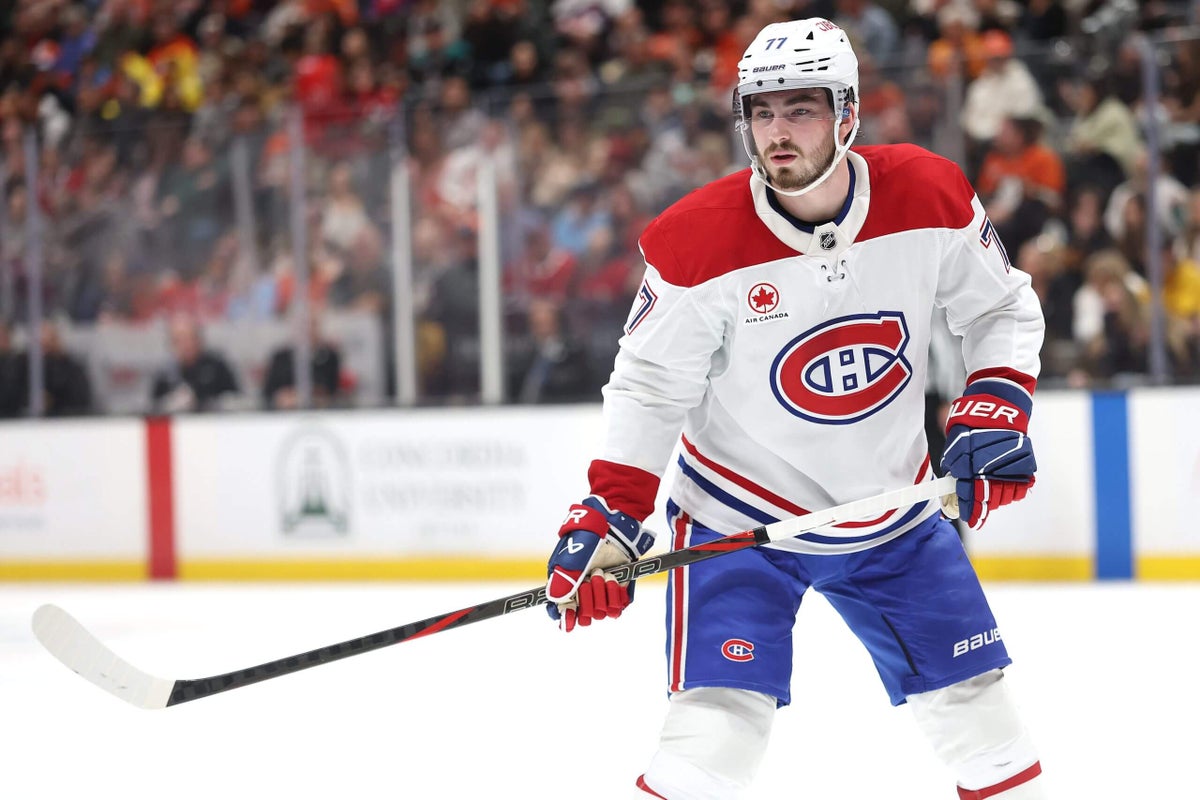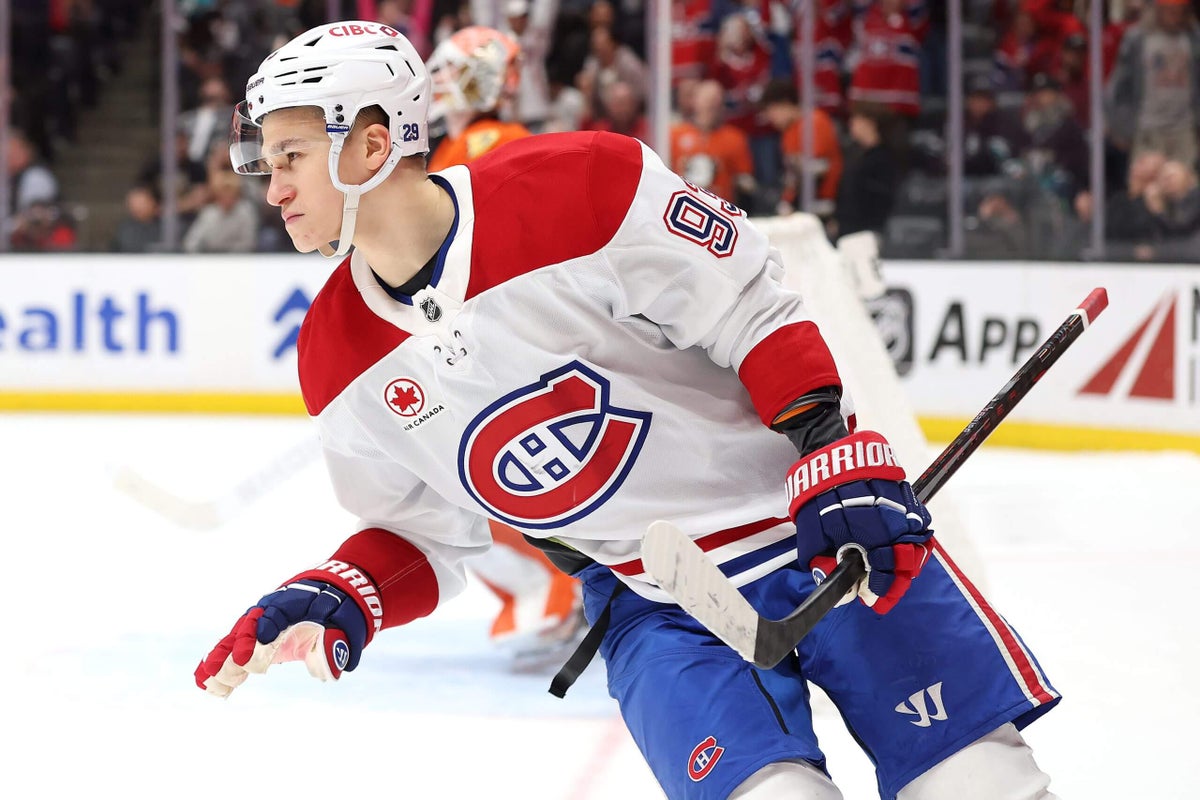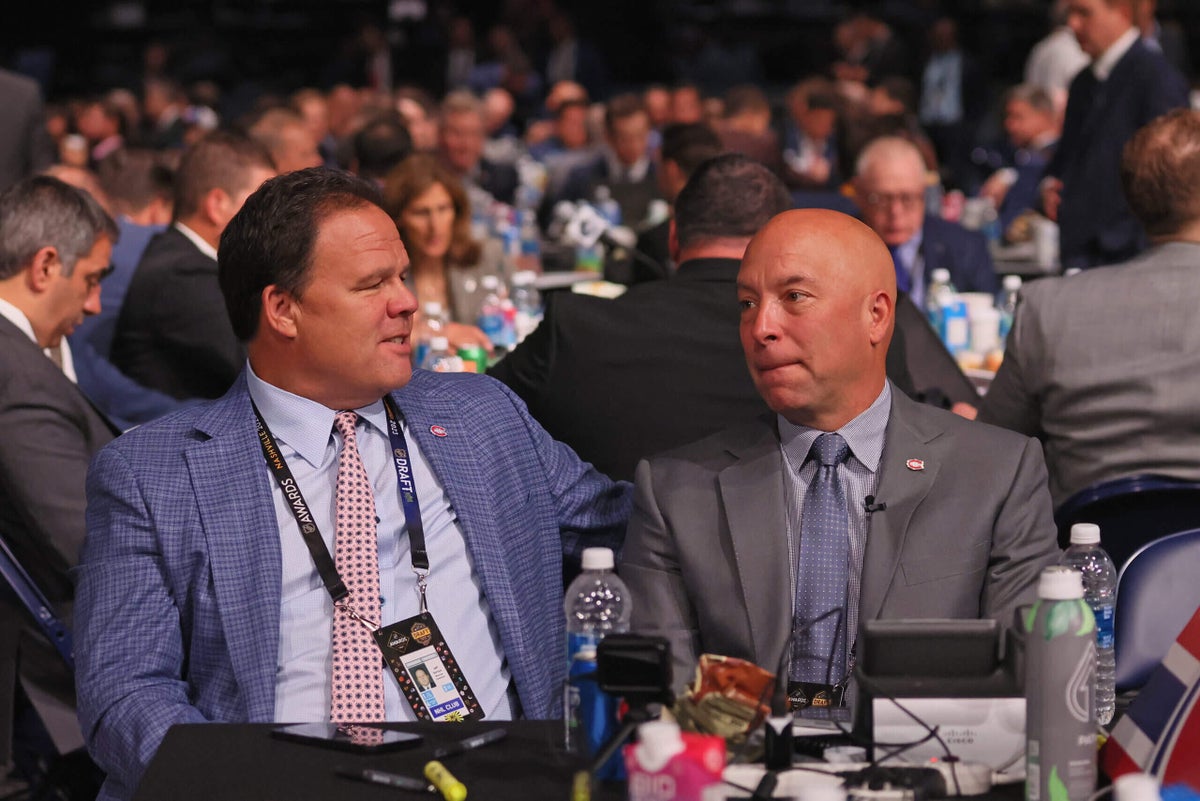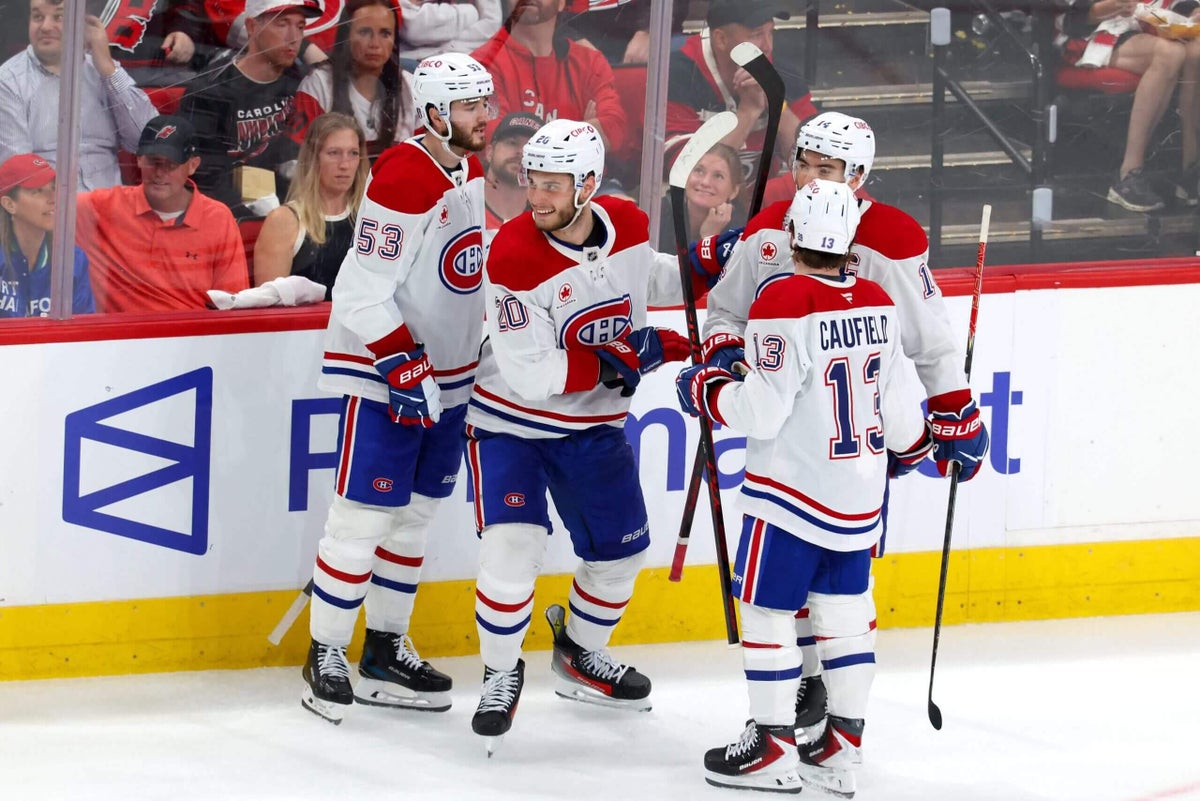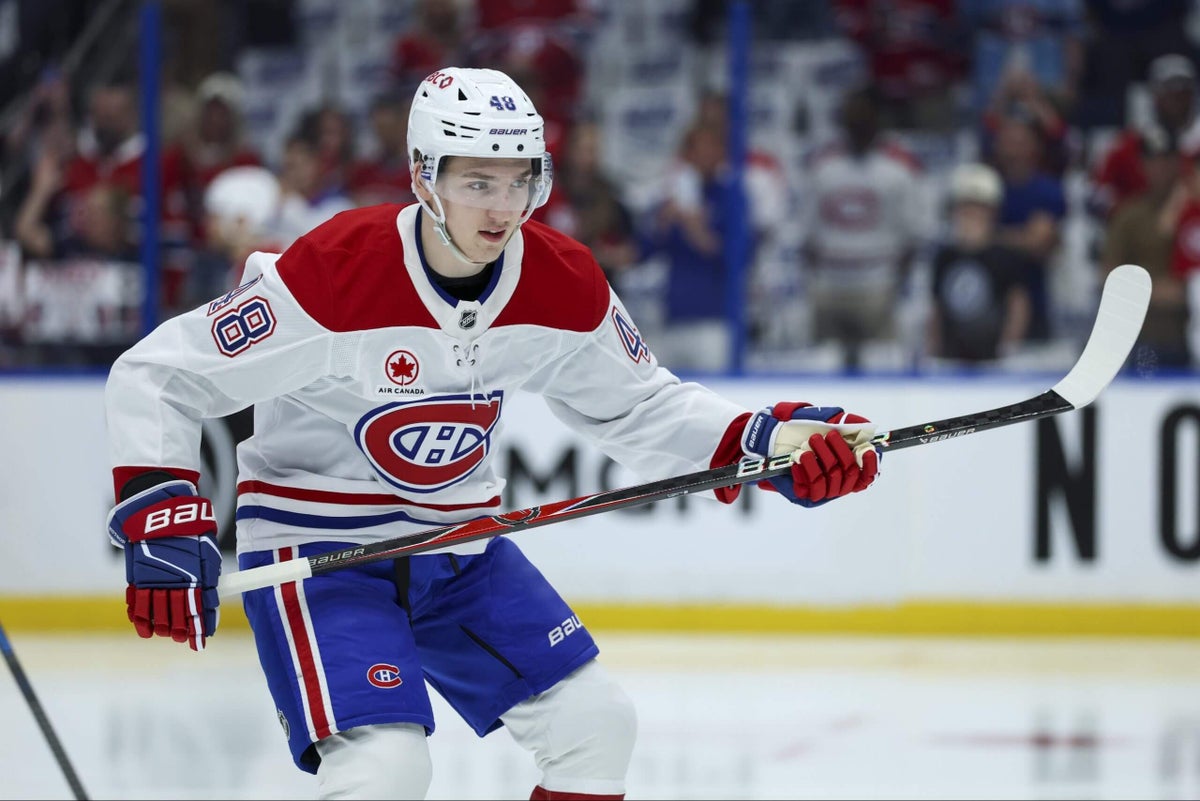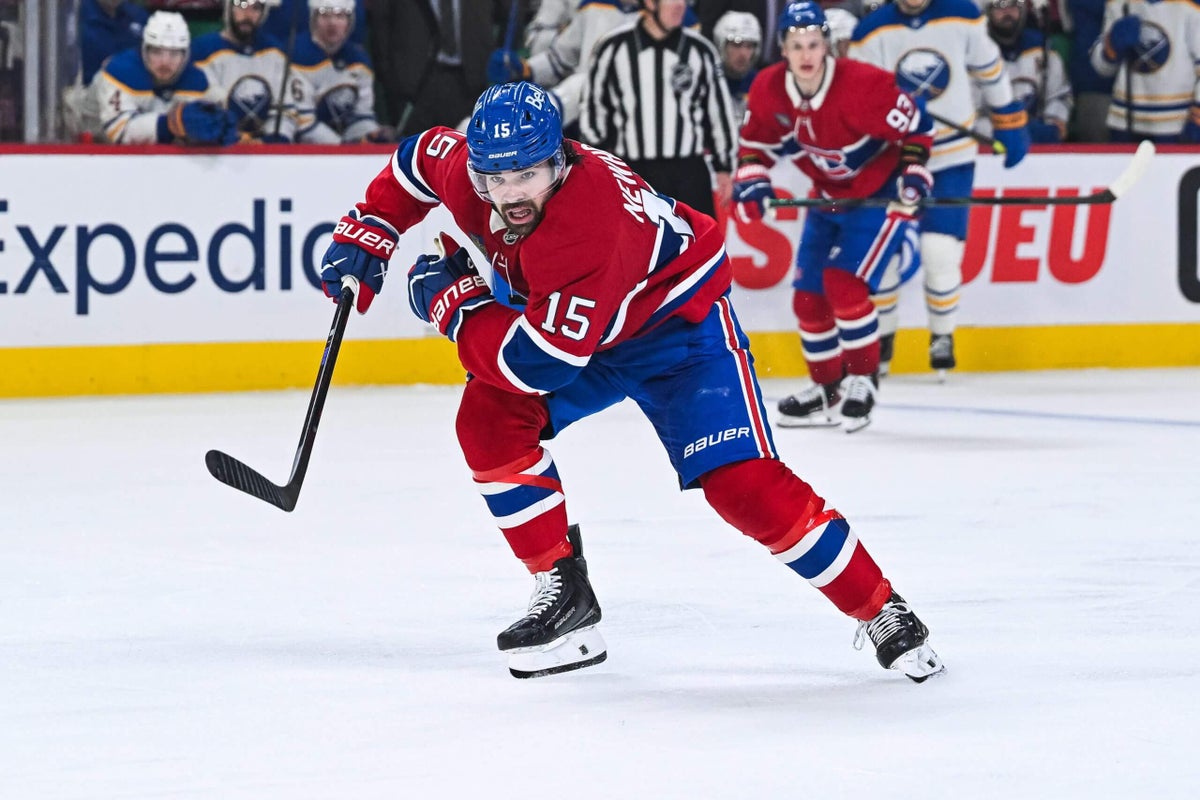
Kirby Dach and Alex Newhook have long been attached at the hip: two players who represented Montreal Canadiens management’s attempt to aggressively advance their rebuild by acquiring young players under team control with unrealized potential.The pair are extremely relevant considering the playoff run the Canadiens just had, the hole each was acquired to fill and the hole that remains the team’s No. 1 offseason priority: second-line centre.The acquisition of Dach was bold, with Jeff Gorton and Kent Hughes pulling the trigger on a deal that sent beloved defenceman Alexander Romanov and a fourth-round pick to the New York Islanders for the No. 13 pick in the 2022 draft, and then flipping that pick and an additional third-round pick to the Chicago Blackhawks for Dach.To have that trade announced at the Bell Centre, not long after Gorton and Hughes took Juraj Slafkovský with the No. 1 pick when most of the building wanted them to draft Shane Wright, only added to just how bold it was.The trade served a dual purpose. It added a young, talented forward with size who was a natural centre, taken in the same draft as Cole Caufield, who could seamlessly be added to the existing core Gorton and Hughes inherited from their predecessor Marc Bergevin.It also signalled that Gorton and Hughes would be aggressively pushing this rebuild forward.A year later, they did something similar to acquire Newhook from the Colorado Avalanche for Gianni Fairbrother and the No. 31 and No. 37 picks in the 2023 draft.Dach came with the bigger price tag and the higher potential, but four years after that big Bell Centre trade, the Canadiens have no more clarity on him than when they acquired him. He has reached a crossroads with his contract expiring and the Canadiens needing to make an objective evaluation of what he is at age 25: an injury-prone player who still has a ton of unrealized potential.Dach is due a qualifying offer worth $4 million, or the Canadiens could sign him at a lower number before that deadline, but either way they will need to fish or cut bait.When asked about Dach’s future last week, Hughes said they will need to have what amounts to a committee meeting — including head coach Martin St. Louis and assistant GM/cap manager John Sedgwick — “to discuss his case.”Dach’s own view of “his case” based on how he performed in the playoffs was generally positive.“I felt confident in my game,” Dach said. “I felt good. I felt like whatever the coaching staff asked me to do, I was willing to do it, and I was able to do it.”The reality, however, is that Dach was playing through an injury. He described his status in the playoffs as “healthy enough,” having returned from a broken foot very similar to the one that ended Shea Weber’s career. It is what makes discussing Dach’s case complicated, because yet again, he was playing while physically limited. And as the playoffs advanced, Dach’s play diminished.Just past the midpoint of the Canadiens’ playoff run, after Game 3 against the Buffalo Sabres, we wrote a piece about how the team was finally benefiting from the two defining trades of the rebuild — with Dach and Newhook being major contributors to the playoff drive.Dach scored his fourth goal in 10 playoff games that night. He would not score another. Two games later, he had seven shot attempts and four shots on goal in Game 5 against the Sabres. In the seven playoff games that followed, Dach had nine shot attempts total, only four of which hit the net, and he finished his playoff run with no shots on goal and only two attempts in his final four games.When asked if he feels like he failed to seize an opportunity to grab the second-line centre spot that will be the primary focus of a second straight Canadiens offseason, a role he was acquired to fill four years ago, Dach brushed it off.“It’s not really my job to pick the lineup and decide who plays with who,” he said.No, it’s not. And the player St. Louis picked to play consistently with prized rookie Ivan Demidov should be meaningful, especially when it comes to the debate over who could fill the role of second-line centre.That player, of course, is Newhook.He played left wing throughout the playoffs, with Oliver Kapanen at centre — as he had been all season — before eventually being replaced by Jake Evans. The chemistry Newhook has developed with Demidov is unmistakable, and while Dach faded after those first 10 playoff games, Newhook continued to drive play for the Canadiens. His speed at both ends of the ice was a plus, and his ability to battle for pucks and create possession helped Demidov play with the puck more.As Demidov develops, having a familiar linemate will be valuable. Newhook has become that familiar linemate.“He’s always a guy that’s looking for answers,” Newhook said. “He’s a driven guy who wants to have an impact on the game, every game. I think talking with him through some stuff is good. He’s a new guy to the league, not a lot of English, but when you’re talking hockey it comes across pretty easy. He wants to learn, he wants to figure out solutions for a lot of the game. It’s fun playing with guys like that, when you get back to the bench they’re always looking to see what they can do, see what they can do better. He definitely has that in him.”But Newhook’s value goes beyond that. All season, he showed value. He established career highs in five-on-five goals per 60 (1.21) and points per 60 (2.43) in the regular season, and his underlying numbers with Demidov in the first two rounds of the playoffs were very positive. Newhook’s five-on-five points per 60 number was third on the team: behind Caufield (2.71), just behind Demidov (2.45) and ahead of Nick Suzuki (2.24).“I think I’m confident in the kind of player I can be, being an effective 200-foot guy that plays in all situations,” Newhook said. “I think that hasn’t changed since I started playing in the league and thinking of what I can be. I think this year I’ve proved that at times. Just keep taking steps forward and keep getting better, and being put in those situations this year kind of let me show that I can do that and be trusted in those roles.”When Newhook broke his ankle on Nov. 13, he was on pace for a 28-goal season. When he returned from injury coming out of the Olympic break, he produced at a rate of 23 goals over 82 games. And in the playoffs, he produced at a rate of 32 goals over 82 games. If you combine it all, Newhook’s 20 goals over 61 regular season and playoff games would represent a 27-goal pace over 82 games.Essentially, his playoffs allowed him to catch up to the pace he had set at the time he got injured.“It was the best start I’ve had to a season,” Newhook said. “I think I was feeling as good as I have at that point, so the injury was kind of bad timing in that way. I was proud of the way I came back, and a lot of credit to our staff here for getting me back healthy. I felt good, came back and wanted to contribute, I didn’t want to just come back to play games.“When you can get back to producing like that in big times of the year, it reinforces the belief in what I can be.”Is Newhook an ideal second-line centre? Probably not. Is he even a centre? Maybe not. But he has definitely shown more promise as a potentially strong second-line option than Dach has, and if the Canadiens were to acquire a second-line winger to strengthen the top six, the thought of Newhook — or perhaps even Kapanen — filling that second-line centre slot becomes far more palatable.But more importantly, Newhook’s season has provided the Canadiens with concrete options, and that is something Dach simply has not done.
As Canadiens seek to solidify their top six, what can Dach and Newhook provide?
Kirby Dach's potenial to be a top-six option for the Canadiens has not matched Alex Newhook's proof he is a viable one.
1,352 words~6 min read