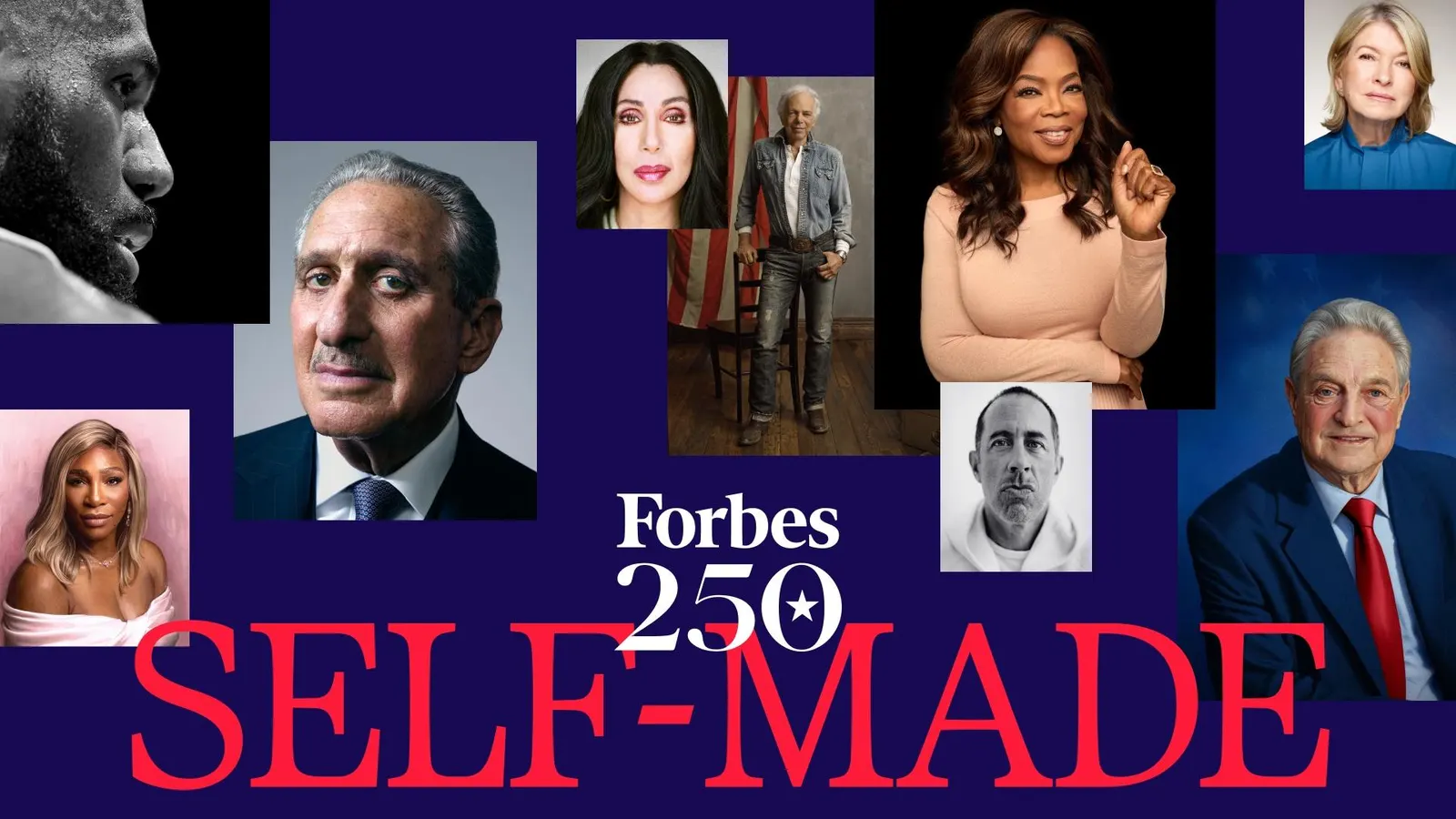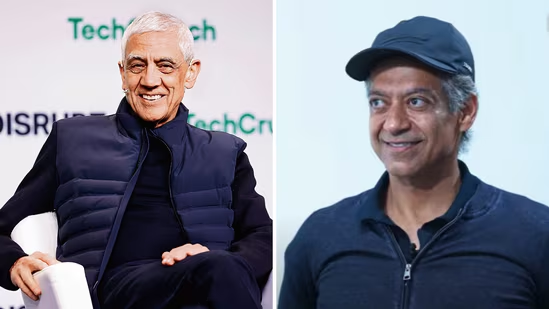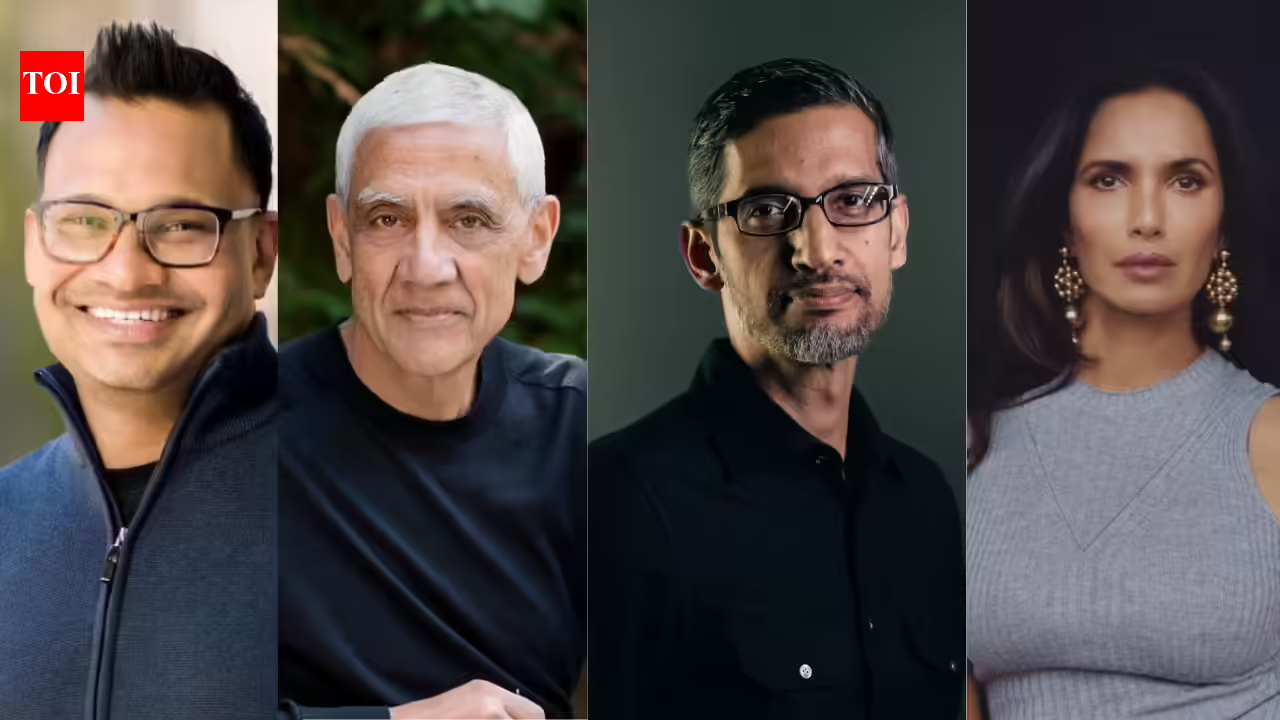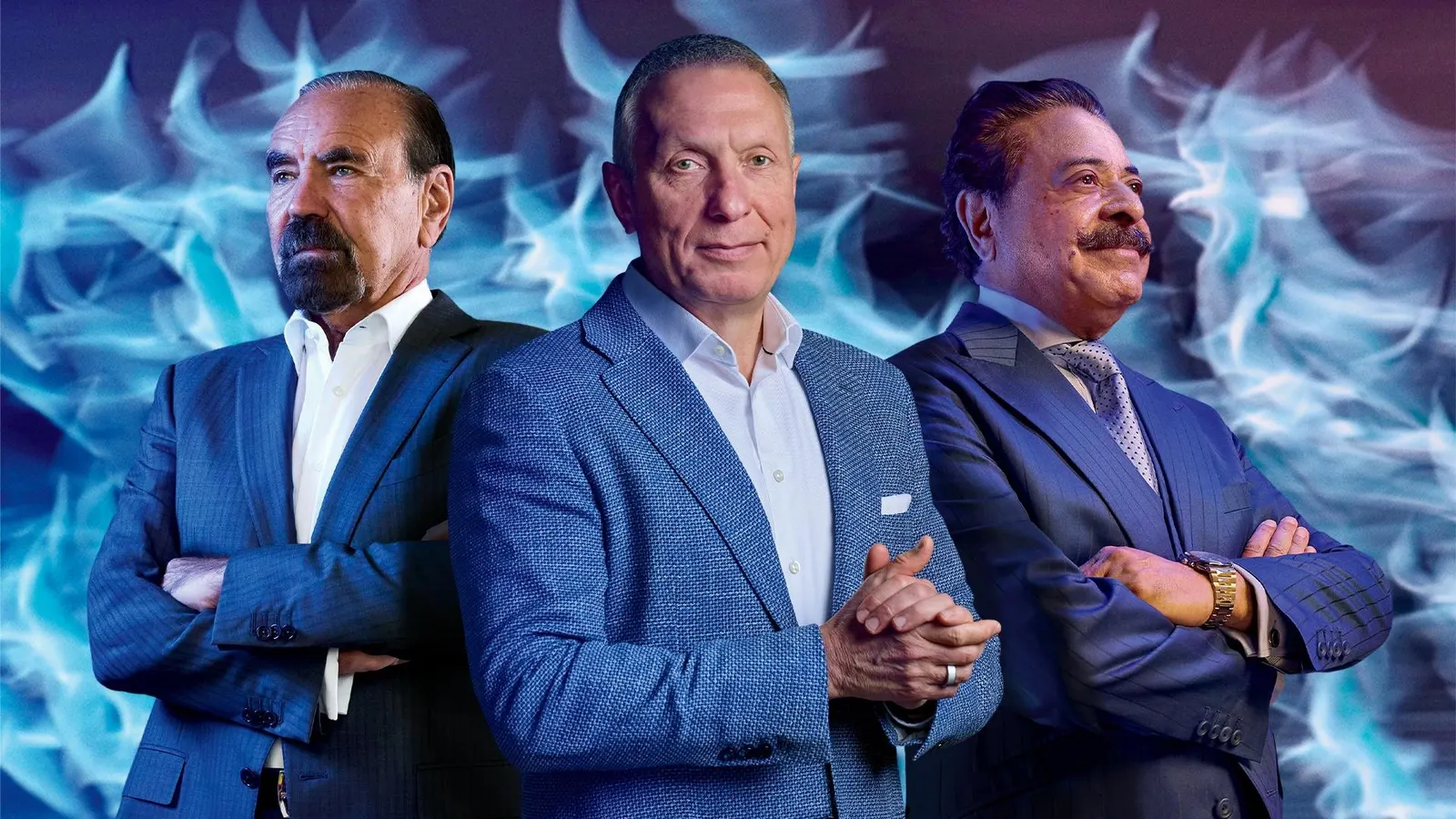
By Giacomo Tognini and Luisa Kroll, Forbes StaffWith reporting by Monica Hunter-Hart, Alex Knapp, Simone Melvin and Richard NievaOn April 24, space and energy billionaire Kam Ghaffarian rang Nasdaq’s opening bell for the public listing of X-Energy, the Amazon-backed small nuclear reactor manufacturer he founded in Maryland in 2009. It was the second time the 68-year-old Iranian-born entrepreneur had taken a company public, after the IPO of his space exploration company Intuitive Machines in 2023. It was yet another highlight from Ghaffarian’s American Dream, now spanning more than a half-century since the electrical engineer first fell in love with the United States when he was an 11-year-old in Iran huddling around his neighbor’s black-and-white TV to watch the moon landing on July 20, 1969. “It was emotional for me,” he says of his morning at the Nasdaq. “Only in the United States can you come as an immigrant, work hard and accomplish your dream.”Ghaffarian came to the U.S. on a student visa to Catholic University in Washington, D.C., in 1976 and became an American citizen in 1983, the same year he got his first gig in the space industry, working for aerospace giant Lockheed. While he didn’t become an astronaut, he went on to launch six companies that now employ some 3,500 people. He has also played his part in the American space program that inspired him when he was a kid: In 2024, Intuitive Machines helped bring America back to the moon for the first time since 1972 when it landed an unmanned spacecraft on the lunar south pole. Another of his companies, Axiom Space, is building what could become the first commercial space station. Says Ghaffarian, “I don’t think there’s any other country where you could accomplish what I’ve accomplished.”For young as well as old, the U.S. remains the world’s most attractive destination. Jordan-born AI billionaire Amjad Masad moved to the U.S. in 2012 at age 24 and founded vibe coding outfit Replit with his wife, Haya Odeh, in California four years later. In March, it was valued at $9 billion. “We wanted to create Replit in Jordan and we couldn’t,” Odeh says. Adds Masad: “I don’t think it ever crossed my mind to go to Europe or somewhere else like that. America was really the place to be, and Silicon Valley specifically.”By the numbersNumber of U.S. residents born in Mexico, by far the largest immigrant group in the United States as of 2024. India and China (including Hong Kong and Macau) were the next-largest origin countries, with 3.2 million and 2.6 million immigrants, respectively.For 250 years, immigrants like Ghaffarian, Masad and millions of others have fueled America’s economy, advanced its knowledge and enriched its culture. Currently, 50 million Americans, or 15% of the entire U.S. population, were born abroad. Since the government first started keeping track in 1820, some 90 million people have immigrated to America. From Andrew Carnegie (who arrived in 1848) to Elon Musk (1992), they’ve founded business empires and employed millions of people, spurring innovations ranging from blue jeans and hot dogs to telephones and mRNA vaccines. In recognition of their accomplishments, and in honor of America’s 250th birthday, Forbes is publishing a list of America’s 250 greatest living immigrants (plus 250 historical greats) online at forbes.com/forbes-250.“When you come into the United States, you almost have something to prove," says space billionaire Kam Ghaffarian.robert severi for forbesDespite recurring spasms of intense xenophobia—from the Chinese Exclusion Act of 1882 and the national origin quotas of the 1920s to the internment of Japanese Americans during World War II and current ICE raids—immigrants have kept coming to America for a better life.“This is the greatest country in the world. If you don’t know that, then you haven’t been traveling,” says Shahid Khan, the Pakistan-born billionaire who immigrated to the U.S. nearly 60 years ago and made his initial fortune making one-piece bumpers for cars and trucks. “I could be in a taxi anywhere, Barcelona or Paris or London, and you talk to the taxi drivers, they want their kids to come to America.”Without immigrants, the U.S. wouldn’t be nearly as prosperous as it is today. Between 1990 and 2016, a period covering both the tech boom and the Great Recession, U.S. economic growth would have been 15 percentage points lower without migration, per Citi Research. Between 1994 and 2023, immigrants in the U.S. generated a cumulative fiscal surplus of $14.5 trillion (in real 2024 dollars), meaning they’ve paid far more in taxes than they received in government benefits, according to the Cato Institute. They are also a key driver of innovation. Immigrants hold one in every four U.S. patents, per research by Deloitte Insights.By the Numbers$1.7 TrillionTotal spending power of immigrants, 2023.“Patents are the lifeblood of protecting and promoting innovation,” says billionaire biotech entrepreneur and investor Noubar Afeyan, who has been granted more than 100 patents. Born in Lebanon to Armenian parents, he fled the Lebanese civil war in 1975 for Canada before coming to the U.S. in 1983 for his Ph.D. and cofounding Covid vaccine maker Moderna in Massachusetts in 2010. “It’s one thing to say a quarter of patents are from immigrants. But how many of those patents wouldn’t exist but for the contribution of immigrants? I wouldn’t be surprised if it’s an even larger number, because this is a team sport.”“America provides a lot of opportunity. If you have any ideas that wouldn’t get funded in any other place in the world, they have a chance to get funded in the United States,” says Amjad Masad, who grew up in Jordan and founded $9 billion (valuation) vibe coding unicorn Replit in the U.S.robert severi for forbesImmigrants have founded or been vital in building many of America’s largest and most valuable companies, including Nvidia, Google, Microsoft, Broadcom and Tesla. Many of them have also amassed enormous personal fortunes. There are 189 foreign-born billionaires in the U.S., worth a collective $2.4 trillion. The companies they founded, or run, employ more than a million people. The majority of these billionaires—141 of them—are now citizens, 16 more than a year ago and 53% more than in 2022. Among them are three of the ten richest people on the planet: Tesla and SpaceX chief Elon Musk, Google cofounder Sergey Brin and Nvidia’s Jensen Huang.America hasn’t always made it easy. Zoom’s Eric Yuan was denied a U.S. visa eight times before getting approved on the ninth try. Aravind Srinivas came to UC Berkeley in 2017 to get his Ph.D. in computer science and worked as a research scientist at OpenAI, DeepMind and Google before founding Perplexity AI in 2022. Despite being worth some $2.1 billion and employing roughly 250 people, Srinivas still didn’t have a green card as of early 2025; he declined to comment on whether it has finally come through.It’s not just immigrants themselves. Their kids end up making America better, too. Over the past 130 years, second-generation immigrants have almost always matched or outearned their native-born peers, according to research from Yale economist Leah Boustan and her Stanford colleague Ran Abramitzky. Many young billionaire tech founders—from 23-year-olds Adarsh Hiremath and Surya Midha of AI data labeling outfit Mercor to Aman Sanger, 25, of popular AI code editing tool Cursor—are second-gens. So too are Robinhood cofounder Baiju Bhatt and Reddit cofounder Alexis Ohanian.“Children of immigrants are remarkably upwardly mobile, especially those from poor families,” says Abramitzky. “And this pattern holds across most sending countries—both today and 100 years ago.”★ ★ ★
189 Billionaires, 1 Million Jobs And The Truth About The American Dream
Billionaire immigrants and VCs discuss visa policies, green card backlogs and why the U.S. is still the best place: “One person will not screw up the American Dream."
3,686 words~17 min read