Maine’s 2nd Congressional District will see a competitive Democratic primary race June 9 that could help determine control of the U.S. House.Show Caption
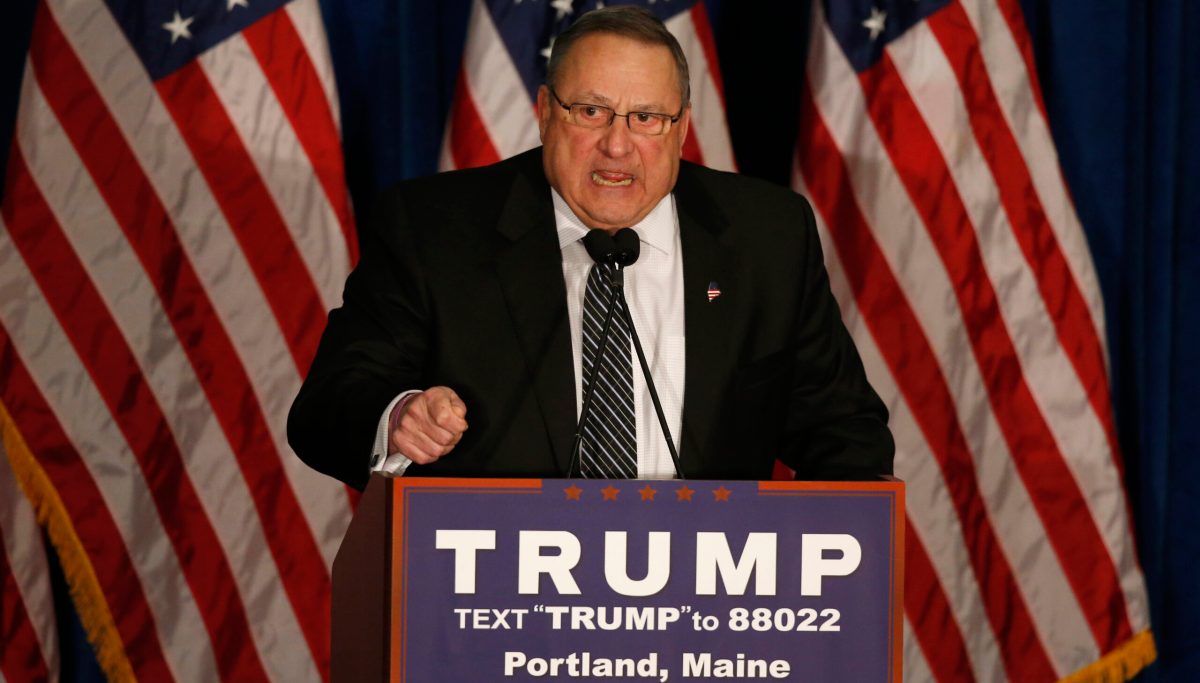
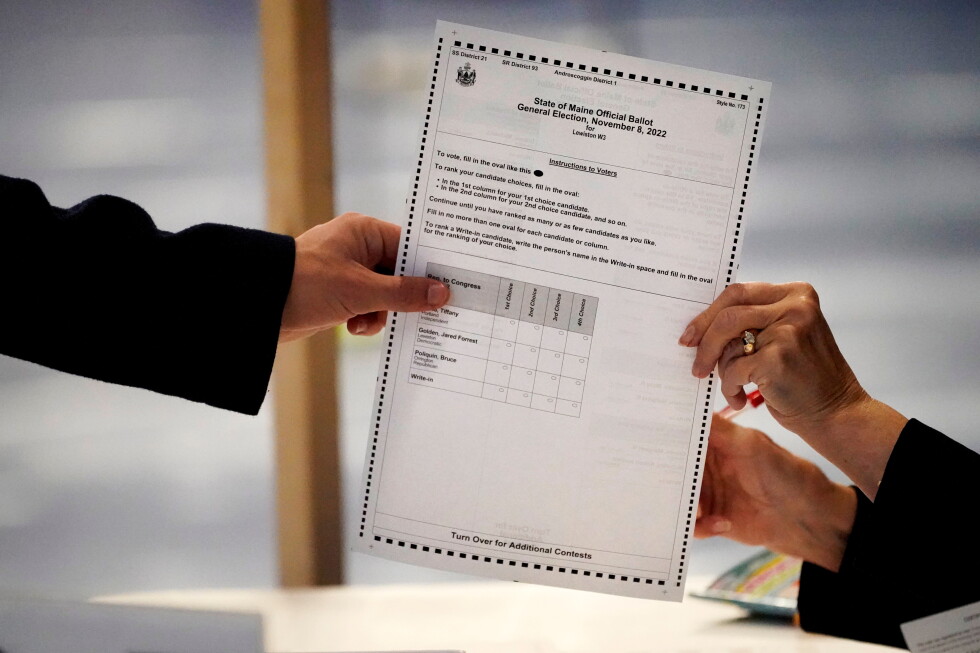
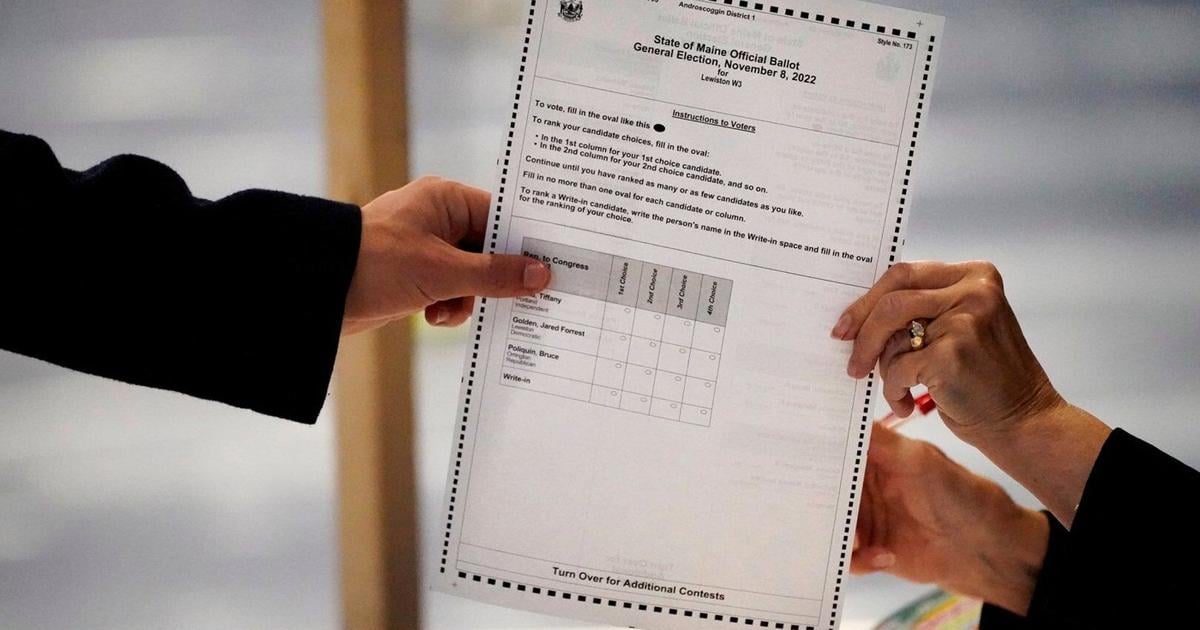
Four Democratic candidates will be running to succeed Rep. Jared Golden, D-Maine.Maine’s second district leans conservative, and Democrats who have won in the past have tended to be more moderate.But all four candidates are running to the left of Golden.Democrats have a high-stakes choice to make in a competitive primary race for Maine's 2nd Congressional District on June 9. The nominee will try to hold onto Rep. Jared Golden's seat in a district that voted for President Donald Trump three times, so the Democratic candidate's electability could prove crucial to the party's efforts to win control of the U.S. House of Representatives.Four Democratic candidates are running to succeed Golden, a moderate who repeatedly won razor-tight victories. They will be facing off against former Gov. Paul LePage, a conservative who is uncontested in the Republican primary.In the more northern, rural, and conservative-leaning of Maine's two congressional districts, gun rights and gas prices are particularly important to its residents. The Cook Political Report rates the district "Likely R."Golden has been a strong supporter of gun rights and said he would be "OK" with Trump winning reelection in 2024. In his letter announcing he would not be running for reelection, Golden said a winning candidate would need to reflect the district's independent streak and diverse views. But the four candidates — state Sen. Joe Baldacci, D-Bangor, Maine state auditor Matthew Dunlap, social worker Paige Loud, and former congressional staffer Jordan Wood — are all running to the left of Golden.Maine experts said there is a risk that Democrats could nominate someone too liberal to win that district, which would hurt the party's quest to flip the narrowly Republican-controlled U.S. House come November.Can Democrats keep this seat? Do they need to nominate a moderate? Maine's 2nd Congressional District has given Trump his only Electoral College vote in New England in the past three presidential elections, due to Maine's unusual system of apportioning Electoral College votes by district. In 2024, he won the district by nine points.“If you were to ask a generic ballot question in the second CD, it would favor Republicans,” Mark Brewer, the chair of the political science department at the University of Maine, said. "But at the same time, this isn’t Bible Belt Alabama, right? A Democrat can still win that seat; it has to be a certain type of Democrat."Brewer said that the more progressive candidates in the race are Loud, who has been especially vocal against Israel's conduct of the war in Gaza, and Wood, who was the chief of staff to former Rep. Katie Porter, D-Calif.Dunlap, who was the head of a prominent hunting organization in Maine, and Baldacci are closer to the center.In a May 27 poll from the University of New Hampshire Survey Center, Wood and Baldacci led the field with 23% and 22%, respectively, with Dunlap (17%) and Loud (14%) following. Wood, with national political experience and connections from his time on Capitol Hill, handily leads the field in fundraising, with over $5.7 million. Dunlap has the next-highest total on the Democratic side with about $930,000.If Loud or Wood are nominated, Brewer said, Democrats would be in a "little bit of a bind.""I think they would probably have better chances with Dunlap or Baldacci," Brewer said. "I think it'd be very difficult for a progressive Democrat to win in a general in the second CD."In response to a request for comment on whether the Democratic candidates are too progressive to win the second district, Wood said in a statement that the issues he's running on aren't partisan.“People don’t want to seem to give them credit for it, but Mainers know what they care about – and what they want from Washington. Medicare for all, a democracy they can believe in, and housing they can afford. It’s not that complicated," Wood said. "This is common sense, whether it’s June or November."Baldacci said he isn't focused on ideological labels, but on the needs of his district."It’s not so much an issue about right versus left, as it is an issue about being effective, one, and being independent-minded and keeping the interests of Maine people at heart," Baldacci said in a phone interview with USA TODAY.Challenges for LePage, tooLePage is popular among Republicans and has the highest name recognition in the race.He carried the second district over Mills when he lost the race for governor in 2022. But in general, voters are split by party on his favorability — according to a June 2025 poll, 43% found him favorable, and 44% found him unfavorable. And national factors could negatively impact LePage, whom Trump endorsed in December.Amy Fried, a professor emeritus of political science at the University of Maine, pointed out that this year’s election is very similar to when Golden first won his seat by defeating Republican incumbent Rep. Bruce Poliquin in 2018. It was also a midterm year under a Trump presidency, and Golden was further left than he is now.Midterm elections in general tend to go poorly for the president’s party, especially when the president is unpopular. Trump has a job approval rating of just 38%, according to an aggregate of polls by The New York Times. And oil prices are up since the start of his presidency, which hits Maine especially hard. Maine has the highest level of home heating oil usage in the country, and the rural nature of Maine’s second district means people tend to drive long distances. "I think it's going to be a competitive race, no matter who the Democrats nominate. I think some of the candidates might be stronger than others in a general election, but I think it's going to be tight," University of Maine, Farmington, political science professor Jim Melcher said. "LePage has a lot of advantages, but he's running against all the national economy evaluation of Trump."How ranked choice voting could affect the outcomeMaine’s use of ranked-choice voting helped Golden win at least two of his elections. This year, it might help a more moderate Democrat prevail in the primary.Ranked-choice voting is a system in which voters can mark candidates as their first, second, third, and subsequent choices. The votes are then tabulated in rounds, with the lowest-ranked candidate eliminated in each round and their next choice votes distributed. Maine uses this system in all state and federal primaries that have more than two candidates. While the UNH poll found Wood with a slight edge over Baldacci for the lead in first-choice votes, an analysis by Cornell University using the ranked-choice data revealed that Baldacci would receive more vote transfers than Wood. Baldacci won 67% of the paper’s simulated primaries, while Wood won 20.5%. A SurveyUSA poll found a similar result — in a ranked choice voting simulation, Baldacci led Wood 56% to 44%.Neither Dunlap, Loud, nor LePage returned a request for comment.