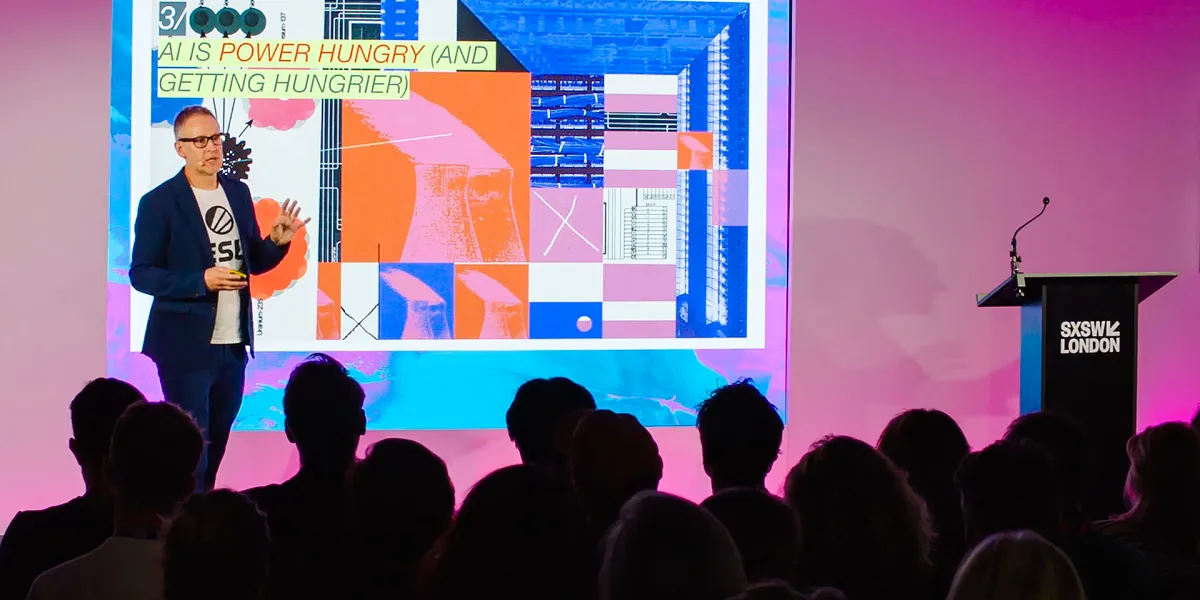
At SXSW London, our senior editor Will Douglas Heaven laid out how he’s thinking about AI in 2026.June 9, 2026Stephanie Arnett/MIT Technology Review | rawpixel At SXSW London last week I gave a talk called “Five things you need to know about AI,” in which I shared what I think are the biggest themes in AI right now. I pulled a few things from our first AI10 list, an annual guide to the most important trends in this buzzy world, but I also veered off on a number of tangents. In my half-hour slot, I tried to cover the key talking points that I think help to make sense of what’s going on in tech—and thus the economy—today. (I gave a talk with the same title at SXSW London last year with five different things you needed to know. A lot has happened since then!) So: This is how I’m thinking about AI midway through 2026. Let me know if you would pick different points!
1. Strictly speaking, I didn’t need to show up to give this talk. Tongue in cheek? Maybe. But generative AI tools have already become mundane, used by millions to automate everyday office tasks (including producing and delivering talks). It’s no surprise that one of the biggest questions out there right now is what this all means for jobs. People are confused and scared. The frustrating answer is that despite the hype coming from the top about the potential for AI to join the workforce soon—and viral social media posts yelling that something big is happening—there is almost no data to say either way what kind of effect this technology will have on employment and the economy overall. That’s not to say it won’t have an impact, even a huge one, but it’s just too soon to tell.