in History, Technology | June 9th, 2026 Leave a Comment
Though seldom heard these days, the term “desktop publishing” once opened a great many eyes to the promise of the personal computer. It meant that one could create a publication without owning a press or contracting with an outfit that did. Indeed, the whole process of writing, design, and printing could take place on one’s desk, provided one had furnished it with the right computer and accessories. From the mid-eighties through the early nineties, that meant an Apple Macintosh equipped with a LaserWriter printer and a copy of Aldus PageMaker. For the first time, ordinary computer users could create newsletters, brochures, and other documents assured that “what you see” onscreen is “what you get,” a feature abbreviated as WYSIWYG.
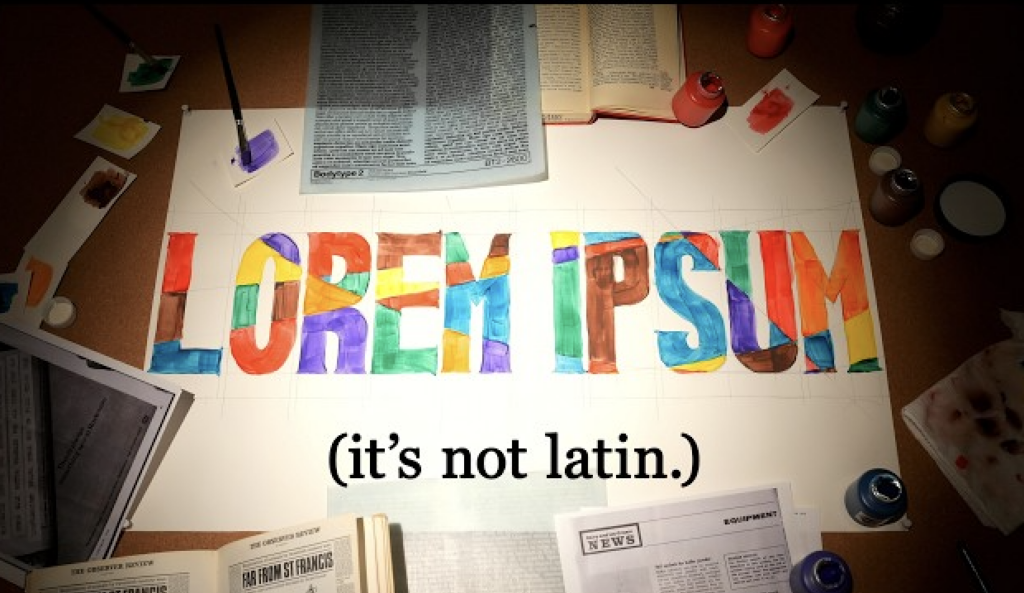
That’s not the only strange-looking piece of text encountered by early desktop publishers. Since PageMaker enabled users to create a layout before even having the words to fill it, it needed dummy text to occupy the empty spaces in order to provide a reasonable approximation of how the printed result would look. “Lorem ipsum dolor sit amet, consectetur adipiscing elit, sed do eiusmod tempor incididunt ut labore et dolore magna aliqua,” that dummy text begins, and it continues as long as its defined field allows, repeating itself as necessary. It may resemble Latin, but anyone with a decent understanding of that language won’t have to read much before noticing how oddly mangled it is. So where did this mysterious text, still familiar to all layout editors and graphic designers, actually come from?