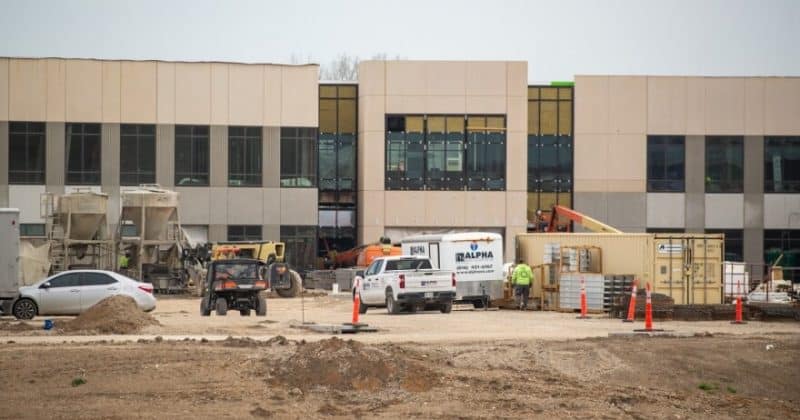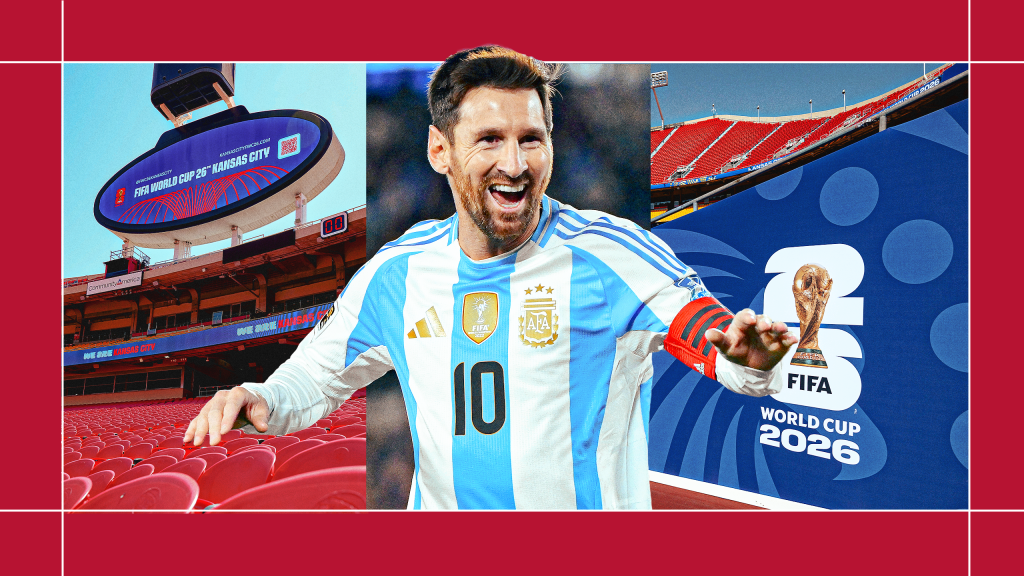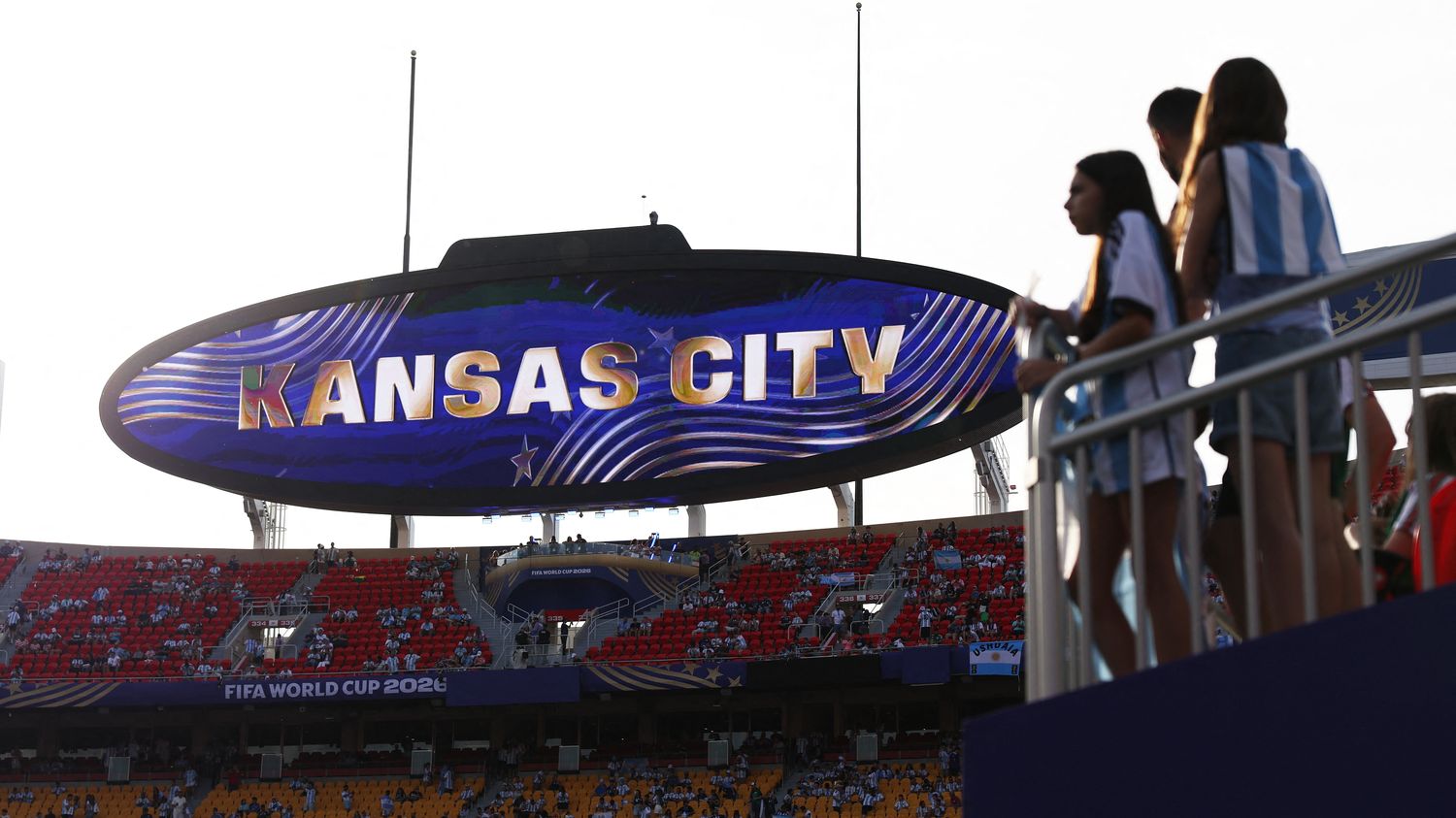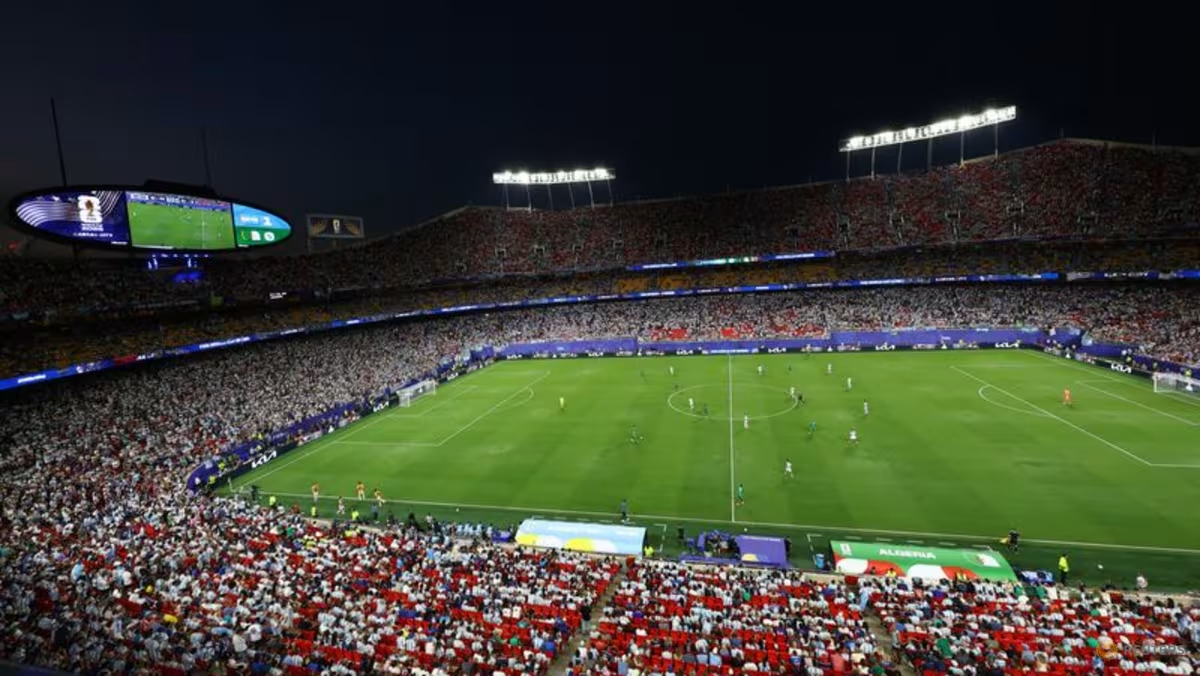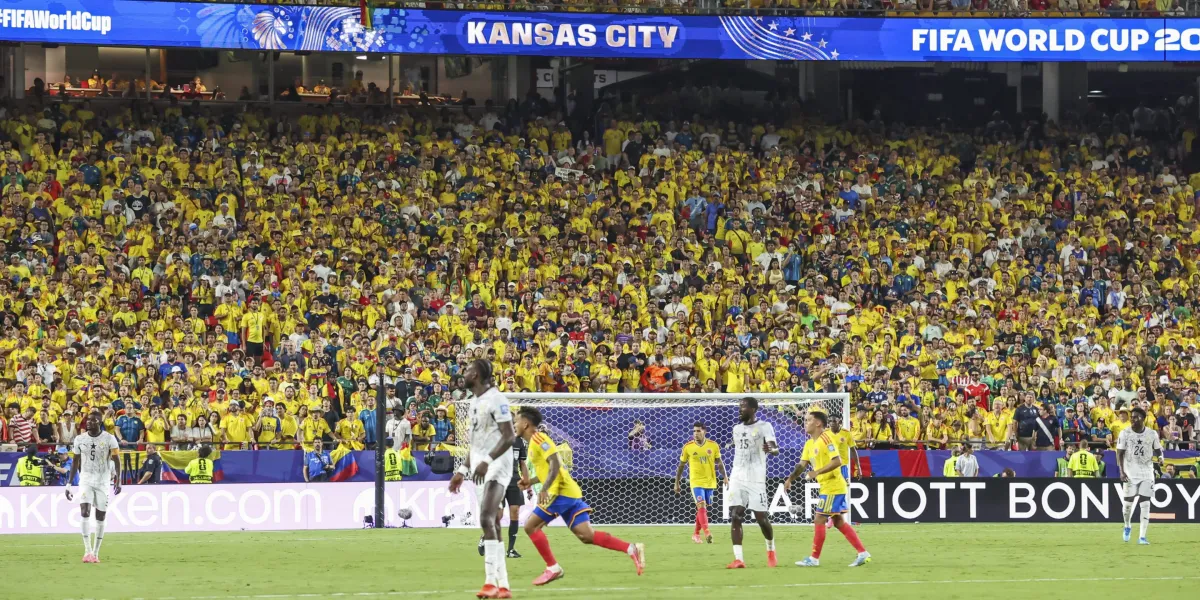
Get free access to the most comprehensive World Cup coverage in The Athletic app“It looks like an ICE detention center,” said Melissa Robinson, the third district councilwoman of Kansas City.Inside a committee room at City Hall in early March, Robinson and her colleagues had just been shown drone footage of a soon-to-be-finished modular jail. It appeared to have no windows and resembled a storage unit in its design. Her colleague, Fourth District Councilman Eric Bunch, compared it to a “warehouse.”Both council members voted in favor of the “Temporary Modular Jail Facility,” for which $22 million in taxpayer dollars was set aside, in October 2025, and the project was sponsored by Kansas City Mayor Quinton Lucas.Kansas City has not had its own municipal jail since 2009, meaning criminals who break city laws are held in police patrol stations, or ferried out to Missouri jails in Johnson County or Vernon County, both more than 50 miles away. According to the legislation, Kansas City has “outstanding detention and rehabilitation” needs.Yet there was another key factor: the FIFA World Cup. Both the original proposal and the eventual legislation stated “the expected surge of visitors for the upcoming World Cup may further strain the city’s limited rehabilitation and detention resources,” therefore intensifying the need for a temporary facility.Visit KC, the tourist region’s board, has claimed 650,000 visitors will descend on Kansas City during the World Cup, with six games to be hosted at Arrowhead Stadium. This includes Lionel Messi’s Argentina in one of four group-stage games, plus a round-of-32 game and a quarterfinal that, if results swing a certain way, could feature Messi and Portugal’s Cristiano Ronaldo facing off in a World Cup fixture for the first time.The city will also be a base camp for three top seeds throughout the tournament, while no other city will be a home base for more than one. Argentina (at Major League Soccer team Sporting KC), England (Swope Soccer Village, home of Sporting KC’s reserve team and academy) and the Netherlands (NWSL’s Kansas City Current) have all opted to train in Kansas City between fixtures.Argentina’s Thiago Almada (left) and Enzo Fernandez arrive at Kansas City International Airport on May 31. (Gustavo Pagano / Getty Images)The anticipated influx of World Cup fans was repeatedly cited by Kansas City politicians as a prime motivation for the temporary jail facility, which was originally intended to be used for up to five years until a $151 million permanent site could be constructed.Assistant city manager Jeff Martin said in October 2025 that building work needed to begin in December to meet the “desired deadline of having this facility operational by the World Cup.”Councilman Wes Rogers told a city council meeting in July 2025: “The World Cup’s coming whether we are ready for it or not, so we’ve got to get this built.”He also told Axios in July 2025 that the modular jail would “give us much-needed beds for the World Cup,” while adding it would help Kansas City get by “until the new permanent jail is built.” In May 2025, the city manager, Mario Vasquez, warned that Kansas City needs “to be prepared to handle some of the unfortunate things that may happen” during the World Cup, leading them to accelerate “a detention-type facility to address any criminal violations or misbehaviour from visitors.”This led local Kansas City media and campaigners against the plan to dub the facility as the “World Cup Jail.” The proposed 100-bed facility was supposed to open on June 1, 15 days before Argentina plays Algeria in Kansas City.But the “World Cup Jail” is not operational in time for the World Cup.If that feels like the stuff of satire, it is not for want of investment. The initial $22 million was followed by a further $3.8 million signed off in January. The funding for the entire project came from a “public safety sales tax” in Kansas City, a quarter-cent tax that brings in around $24 million per year, meaning more than an entire year’s budget has been spent on this modular jail.In a presentation to the council in March, the urgency of the timeline was underlined. City architect Rukhsana Reyes said that the council approved a waiver for the usual gold-standard environmental measures required for buildings of such size in Kansas City. A slide from her presentation said the anticipated completion date would be May 2026. This was then walked back further in April, when city spokeswoman Sherae Honeycutt said the jail would be operational by June 1, but “most likely will not be at full capacity.”A spokesperson for the city manager’s office told The Athletic in late May that detainees will not be housed at the center during the World Cup. They said the $25.8 million project has been delayed owing to the manufacturer’s delivery schedule for some components, while staffing for the center is also behind schedule. The spokesperson added that the “World Cup was referenced in the ordinance and legislative process as part of the timing and urgency around the project,” but insisted the purpose of the facility is broader than the event.For Kansas City, this World Cup has been a mammoth and expensive undertaking. At around 2.2 million residents, the Kansas City metropolitan area is the smallest of the 11 U.S. host cities.Its host committee for the World Cup told The Athletic it has received $42.5 million from the State of Missouri, $28 million from the State of Kansas, $14.8 million from Kansas City, Missouri, and a further $1.5 million from other public sources, totalling $86.8 million of public investment. Then there is $59.52 million in federal security assistance, as well as $13.3m in federal grants for transportation. There are also private donations, which the host committee, a non-profit overseeing transportation, logistics and the Fan Fest during the World Cup, would not disclose.The State of Missouri, in seeking to entice FIFA to choose Kansas City as a host venue, also opted to waive state and local sales taxes on World Cup tickets. According to an analysis by The Athletic, this means a further $15.6 million was left on the table. Our calculations do not include hospitality pricing, meaning the real figure is likely significantly higher.The $25.8m jail funding is another entirely separate pot of money but represents a World Cup-adjacent investment. As the project falls short of its timeline, there appears to be a shift in narrative, with some politicians keen to reframe the investment as not being tied to the World Cup.Councilman Rogers told The Athletic in the final week of May that it “really is maybe loosely tied to the World Cup, but this is stuff we had to do regardless.” He now describes the World Cup as a “footnote” in the broader story of Kansas City being “the biggest city in the country without a jail … and we need a jail.”He acknowledges the local jail would be used for “low-level misdemeanor and ordinance violations, whereas a prison is for somebody committing a felony,” which means it would have been “nice to have it open” for the World Cup.He continues: “If you’ve got people who are in town for five weeks for the World Cup, presumably bars will be busy and there will be more drinking than usual. You’re going to have just the general nuisance crimes that come with that. It’s probably good to have a jail available.”As for concerns about the facility’s warehouse-like appearance, and its ICE center comparisons, he is unmoved. “It’s a jail, right? Jails are jails. An ICE facility is a holding facility and a municipal jail is where someone is staying for two or three days, so it is also a holding facility. They are going to look alike.”Locally, the jail facility continues to receive pushback. In March, a coalition of campaigners who opposed the jail gathered together and held up signs linking the project to the World Cup. Posters included: “Sports Unite, Jails Separate” and “The Goal: No New Jails.”In a formal submission to the council opposing the facility, Dylan Pyles, who represents Decarcerate KC, a group campaigning for further investments in community initiatives instead of imprisonment, said: “The World Cup jail is simply a measure to clean the streets while we’re on the world’s stage.”He added: “They used the World Cup as an opportunity to get buy-in from the public. If they had to use the World Cup as an excuse to get it going, then they’re fine with that. Most of the city was sold on the idea that it was for the World Cup. So it does now feel like a little bit of a waste of everyone’s money, time and energy.”A spokesperson for the city manager’s office told The Athletic: “City leadership understands why people focus on the exterior appearance of the building. However, the appearance of the outside of the facility is not what determines whether a facility is humane or effective.“Detention facilities are designed first and foremost with safety, security, and operational functionality in mind. That includes controlled access points, supervised housing areas, and building features that help protect both staff and the individuals housed there. The priority of the design is creating a safe, secure, and humane environment inside the facility.”They added it would include “medical services, supervised housing areas, natural lighting through skylights, and access to outdoor recreation space.”“With respect to the World Cup, Kansas City is ready to welcome fans from all over the world. Our focus is ensuring residents and visitors have a safe experience, and we are confident in the partnerships and plans already in place to support that effort.”
The $25.8m Kansas City ‘World Cup jail’ that isn’t ready for the World Cup
The anticipated influx of World Cup fans was often cited as motivation for a temporary jail facility in Kansas City
1,595 words~7 min read