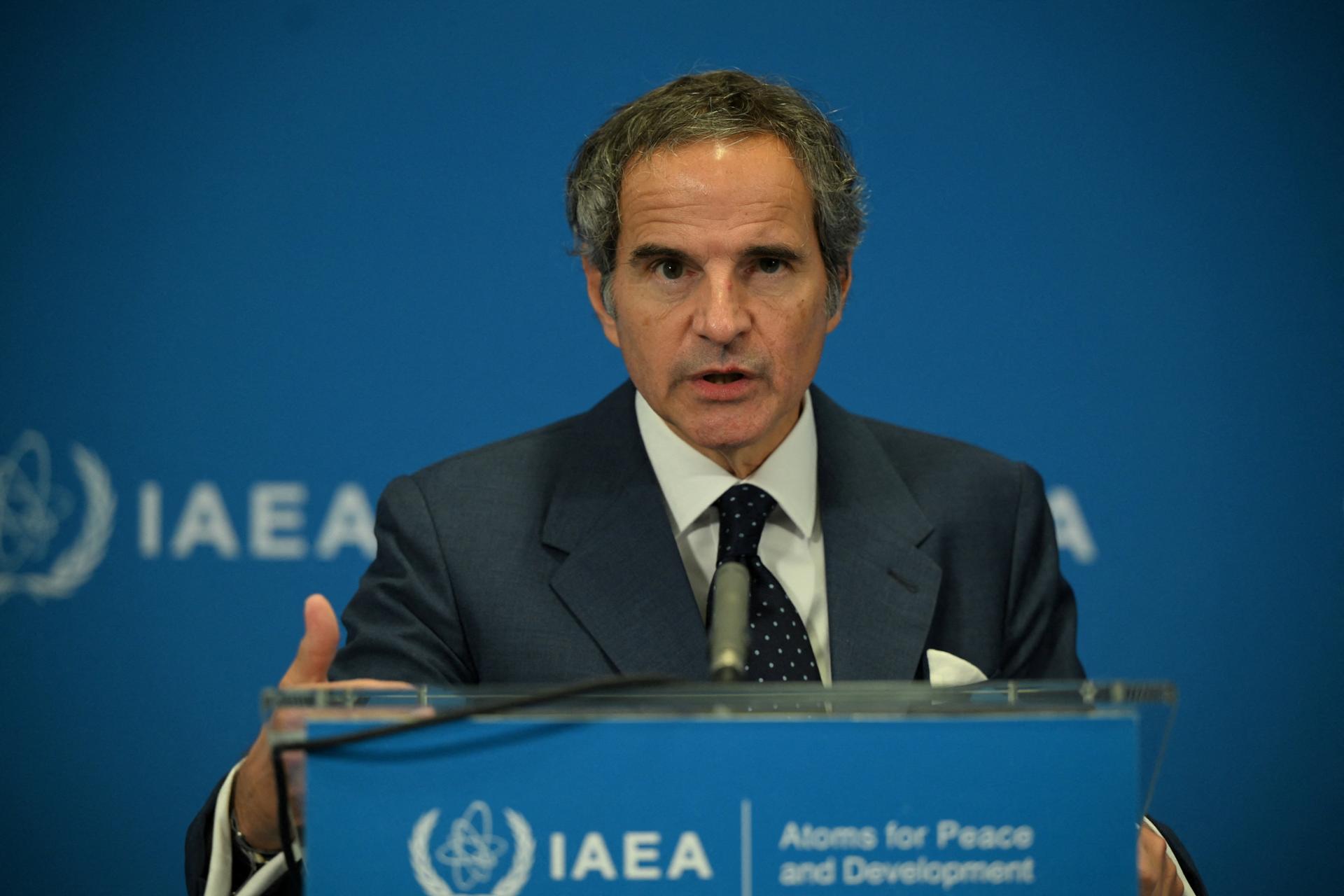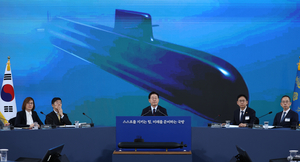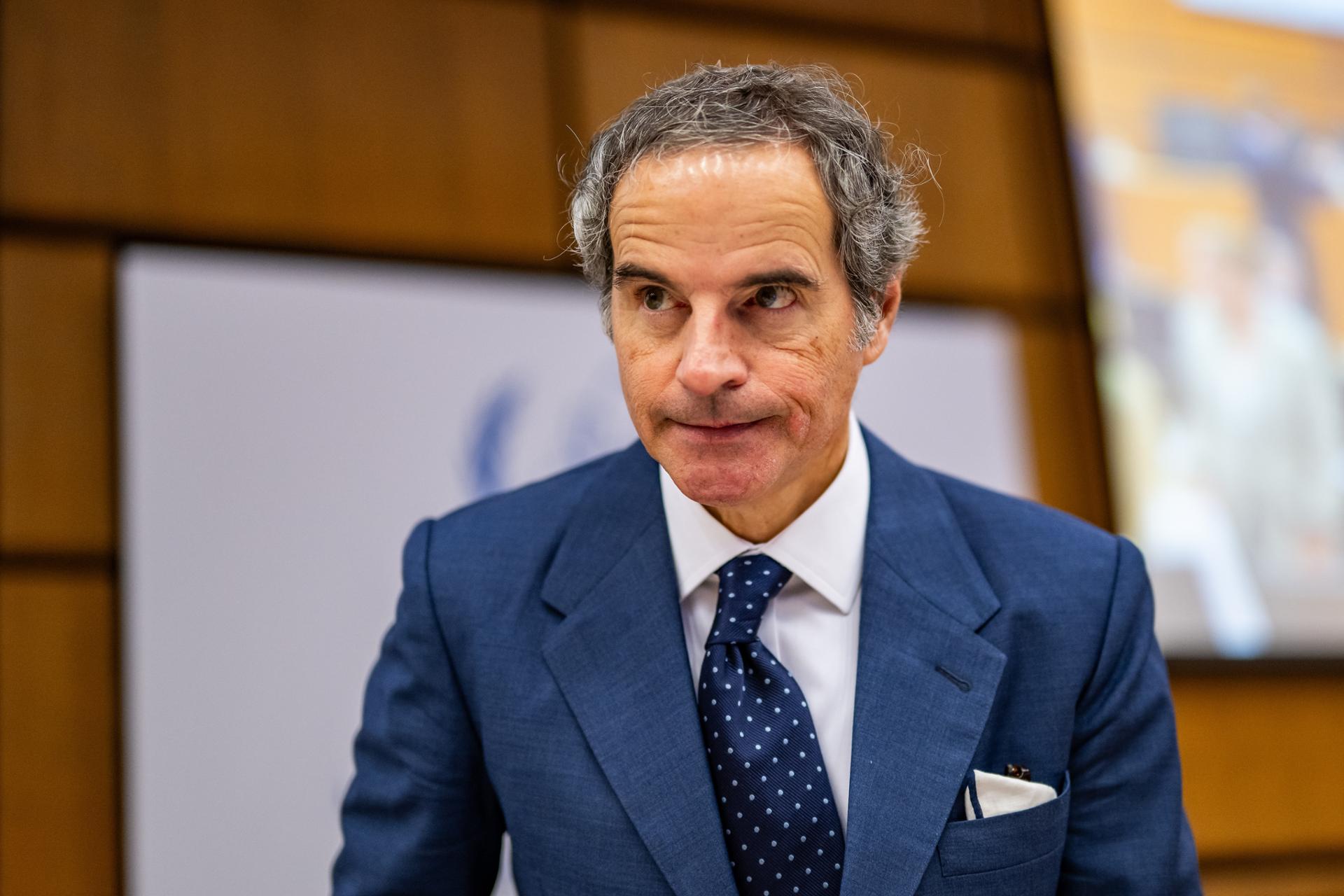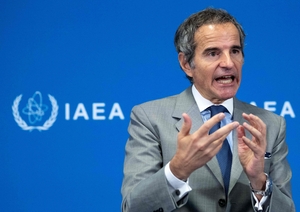
Director General of the International Atomic Energy Agency Rafael Grossi addresses a press conference in Vienna, Monday. (AFP via Yonhap) South Korea and the International Atomic Energy Agency have begun expert-level discussions on a special safeguards arrangement for Seoul’s nuclear-powered submarine project, IAEA chief Rafael Grossi said Monday.Seoul’s consultations with the agency became publicly visible in March, as South Korea moved to develop nuclear-powered submarines following last year’s summit between President Lee Jae Myung and US President Donald Trump.“We are in the kickoff phase of that process, which is a highly technical process where our safeguards experts meet with Korean experts to start looking at what will be necessary,” Grossi said, speaking at a press conference in Vienna on Monday,But he stressed that the discussions remain at a very early stage, as South Korea has yet to specify the type of technology and other details needed for the project.Grossi said countries that are party to the Nuclear Non-Proliferation Treaty and have comprehensive safeguard agreements with the IAEA must notify the agency before introducing naval nuclear propulsion.“For this to happen, there has to be a special arrangement with the IAEA,” he said.South Korea is a member of the NPT, which it joined in April 1975, and is subject to IAEA safeguards.Grossi said there should be no proliferation concern if South Korea reaches a “very solid agreement” with the agency.But he said the main challenge lies in verifying nuclear material used in submarines, which can remain outside regular inspections for long periods while on military missions.“The proliferation concern is basically that when you have a nuclear submarine with fuel that has a lot of uranium, this is out of inspections for a long time obviously, because it’s a military vessel and it goes out on missions out of sight of inspectors,” Grossi said.Yu Ji-hoon, a research fellow at the Korea Institute for Defense Analyses, said South Korea’s nuclear-powered submarine plan must be backed by a detailed system for safeguards, safety and fuel management.“South Korea’s answer to proliferation concerns must be institutional rather than rhetorical,” Yu said. “The issue is not only whether Seoul says it will comply with the nonproliferation regime, but whether it can build the legal, technical and operational system to prove it.”Yu added that “the project should not be seen simply as a plan to build a more capable submarine, but as a test of whether South Korea can operate nuclear-powered vessels responsibly.”
Seoul, IAEA begin expert talks on nuclear submarine safeguards
South Korea and the International Atomic Energy Agency have begun expert-level discussions on a special safeguards arrangement for Seoul’s nuclear-powered subma
405 words~2 min read