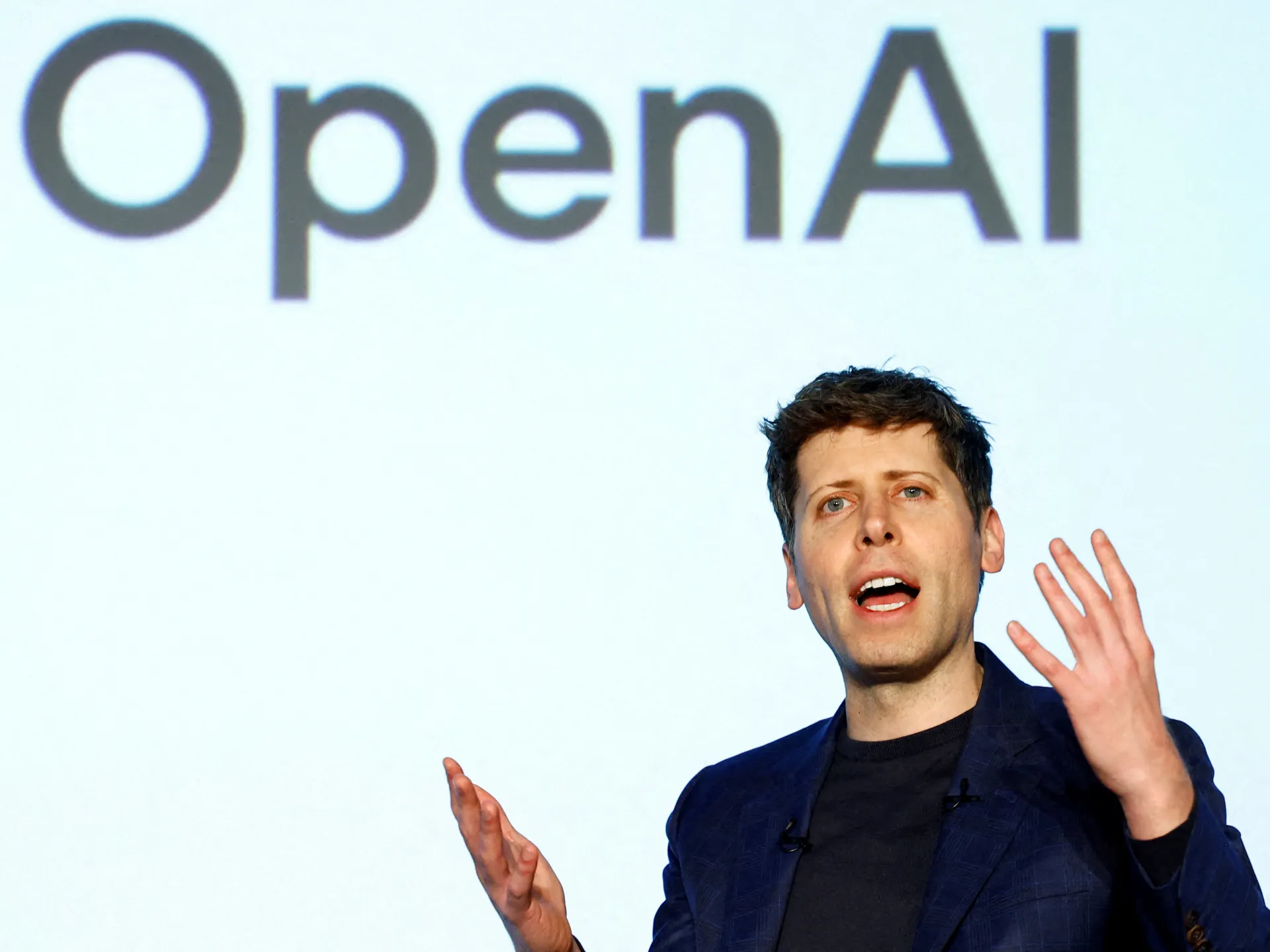
ChatGPT maker OpenAI confidentially filed for a US initial public offering recently, the company said on Monday, joining rival Anthropic in a push towards the stock market as investors seek exposure to the artificial intelligence boom.OpenAI did not disclose the size or terms of the offering and said a timeline had not yet been determined. "It may be a while because there are things we want to do that are likely easier as a private company," it said in a statement. The AI company is aiming for a valuation of up to $1 trillion in a stock market debut that could come as early as September. At that valuation, OpenAI would set the stage for a trio of trillion-dollar companies debuting in quick succession.The move is seen as the most consequential test of investor appetite for high-growth technology stocks in the last 10 years.Elon Musk's SpaceX was the first out of the blocks, filing for an IPO that, if completed, would rank as the largest in history, with the company pursuing a $75 billion offering at a $1.75 trillion valuation. Play02:22OpenAI’s Sora 2: A first look at the future of AI-generated videoAnthropic, the company behind the viral coding assistant Claude Code, said on June 1 it confidentially filed for a US IPO, weeks after raising $65 billion in a funding round that valued it at $965 billion."OpenAI is keeping options open as Anthropic edged ahead with its filing after a monster funding round," said Michael Ashley Schulman, a partner at Cerity Partners.On prediction markets, where traders wager on the outcome of future events, most expected OpenAI to file for an IPO before Anthropic. The moves by Anthropic and OpenAI would crystallise a transformative period for the technology industry and global markets, with AI rapidly emerging as the defining investment theme of the decade.OpenAI said this year that it was raising $110 billion at an $840 billion valuation from a roster of heavyweight backers including SoftBank, Amazon and Nvidia. At the time, the tech company said ChatGPT had more than 900 million weekly active users and more than 50 million consumer subscribers.The IPO filing comes after OpenAI renegotiated its partnership with Microsoft, one of its earliest investors, which allowed the AI pioneer to forge new partnerships with companies such as Amazon and Alphabet's Google.Microsoft's early investment, totalling $13 billion since 2019, powered growth at its Azure cloud-computing business and helped pave the way for OpenAI's rapid rise.In March, OpenAI said it was generating $2 billion in monthly revenue and growing about four times faster than companies that defined the internet and mobile eras, including Alphabet and Meta. That compares with about $1 billion in quarterly revenue at the end of 2024.OpenAI told investors during its most recent fundraising round that it did not expect to be profitable until 2030, a source said.Questions over sustainability Yet the industry OpenAI launched has quickly become crowded and investors are scrutinising whether the AI sector's sharp rise can be sustained.Anthropic has emerged as one of the biggest rivals, with soaring demand for its Claude AI from software developers to handle their computer programming. Some companies have used its top-shelf model Mythos to unearth vulnerabilities in their code.While the blockbuster offerings could inject renewed momentum into the US IPO market, some bankers warn they might also soak up capital that could otherwise flow to smaller deals."What OpenAI does not want is for the public market capital to exhaust itself," said Gil Luria, managing director of DA Davidson. "Not only are SpaceX and Anthropic ahead of it in line to IPO, large public competitors could also raise tens of billions of dollars each in public market secondary issuances, as Google just completed last week."SpaceX is to go public this week.OpenAI was founded in 2015 as a research-focused non-profit group, but created a for-profit arm four years later to help fund the soaring costs of developing AI systems.Its unusual structure, which gave the non-profit control over the for-profit entity, came under intense scrutiny in late 2023 when chief executive Sam Altman was ousted, before returning days later after employees revolted.In December 2024, OpenAI unveiled plans to overhaul its structure by creating a public benefit corporation, saying the move would help it raise far more capital while easing restrictions imposed by its non-profit parent.OpenAI's overhaul quickly became controversial after sharp criticism from its early backer, Mr Musk, who sued OpenAI and accused Mr Altman and other executives of turning the non-profit into a vehicle for private enrichment. A US jury in May ruled against Mr Musk in his lawsuit, finding the AI company was not liable to the world's richest person for having allegedly strayed from its original mission to benefit humanity.The unanimous verdict removed a key legal obstacle for the IPO, analysts said.
OpenAI follows Anthropic by filing for US IPO as AI companies aim to go public | The National
ChatGPT maker is reportedly targeting valuation of up to $1 trillion in stock market debut
795 words~4 min read