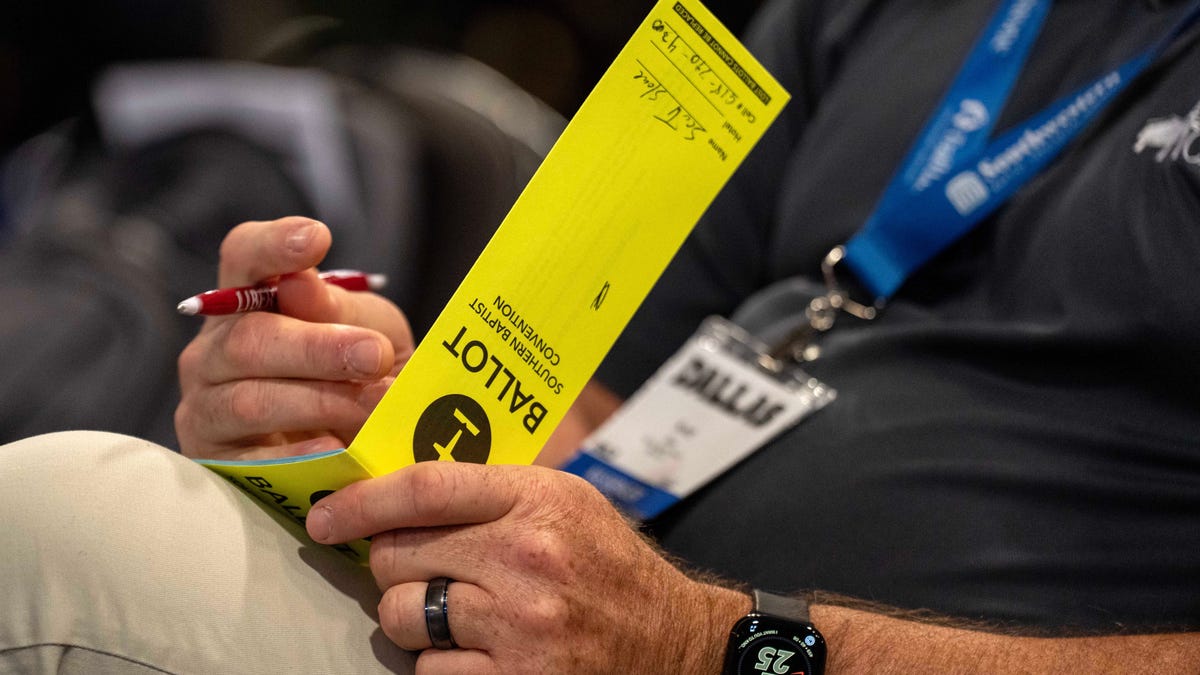
Should Southern Baptist women be allowed to preach to their congregations or teach Scripture?The issue has been a perennial thorn for the Southern Baptist Convention, whose delegates will once again confront the matter at the group's annual meeting June 9-10 in Orlando.The question won’t linger much longer if one prominent Southern Baptist theologian has his way, and his answer is a resounding "no."On May 18, Albert Mohler, the longtime president of Southern Baptist Theological Seminary in Louisville, announced online that he intended to propose a constitutional amendment at the event explicitly banning churches allowing women to serve in primary leadership roles within the nation's largest Protestant denomination.“It is for the cause of our unity in the truth that I intend to bring a motion to the Southern Baptist Convention in Orlando to amend the Constitution,” the influential evangelical wrote in a statement that has prompted a torrent of discussion online. “Let’s get this done.”Delegates – or messengers, as they are known – at the 2025 gathering in Dallas narrowly rejected a constitutional statement that would have similarly prohibited women pastors, with proponents failing to gain ground on a contentious issue rooted in differing biblical interpretations. As a result, the debate continues to challenge the Nashville-based denomination’s dedication to church self-governance.The controversy has triggered the departure of multiple congregations from the convention – one of the most influential religious groups in the United States – as some congregations espouse more egalitarian views on women in ministry rather than “complementarianism,” which assigns varied but hierarchical roles for men and women.The SBC’s faith statement, Baptist Faith & Message 2000, states “while both men and women are gifted for service in the church, the office of pastor/elder/overseer is limited to men as qualified by Scripture.”Since the 2025 meeting, the Southern Baptist Convention has severed relationships with several churches with female pastors – Fountain of Praise Church in Houston; The Crossing Church in Tampa, Florida; and Zion Temple Baptist Church in O’Fallon, Illinois. None responded to requests for comment from USA TODAY.In recent years, the SBC similarly cut ties with other notable churches including Saddleback Church, the megachurch founded by Rick and Kay Warren in Southern California; Fern Creek Baptist of Louisville, Kentucky; and First Baptist Church Alexandria in Virginia. Others have left voluntarily.The issue risks the loss of additional congregations from the denomination, which has battled declining membership. According to Lifeway Research, the SBC's research firm, total membership dropped for the 19th consecutive year, falling 3% to 12.3 million – even as attendance at worship services, Bible study sessions and Sunday school classes remained on the upswing.The faith group meets yearly to elect new leadership and discuss both business and changes that could chart the denomination's future course. About 20,000 people are expected to take part in this year's gathering.While the issue of female pastors was already among numerous nonbinding resolutions set to be discussed in Orlando, a constitutional amendment would set the denomination’s policy in stone.The 2026 resolution reaffirms that the duties of delivering sermons and teaching scripture is limited to men while thanking women for their “indispensable service, discipleship, evangelism, missions work and ministry contributions.”Other resolutions to be put forth at the meeting include statements reaffirming opposition to assisted suicide and condemning antisemitism and political violence, with the latter calling on Southern Baptists to examine their own speech and online conduct and advising they refuse “to derive primary identity from political affiliation rather than from union with Christ.”The SBC also toes a line between biblical obligation and federal deference with a resolution reaffirming “support for lawful immigration enforcement carried out justly, humanely and according to due process, including the removal of those whom the government duly prioritizes for deportation.”Citing LGBTQ issues as precedentIn announcing his “Truth and Unity Amendment,” Mohler said the need for a constitutional amendment “is abundantly clear and has been building in recent years.”He compared the moment to the faith body’s handling of LGBTQ issues in the 1990s, when the SBC made clear that “our cooperation is not extended to those who would endorse or affirm LGBTQ lifestyles and activities.”One of the greatest testimonies to that forceful language, he said, is that “LGBTQ issues are not an issue of open debate at the SBC year by year, and it hasn’t been for a generation. That’s exactly what we need on the issue of the office of pastor.”He said the question was one on which Southern Baptists stand together.“Our unity is clear,” Mohler wrote. “Our commitment to the truth is clear. Let’s make our constitution equally clear.”But with 61% of SBC delegates voting for last year’s proposed ban for a second consecutive year – short of the necessary two-thirds majority to pass – that solidarity hasn’t been so obvious.A chorus of oppositionMohler’s announcement has already drawn blowback, from those who say women shouldn't be prohibited from exercising their pastoral gifts to others who call repeated procedural battles over the issue counterproductive."At some point, revisiting this same fight year after year begins to consume energy that could be better spent on missions, evangelism, church planting, theological training, disaster relief and caring for churches and pastors," read a May 21 post on the pastor's blog at Redeemer Baptist Church at Romeo in Dunnellon, Florida.Meanwhile, the Rev. Wade Burleson, a retired Southern Baptist minister in Oklahoma City, said the amendment conflicts with church autonomy, a key principle of the denomination and its network of churches. While the convention has no direct authority over its churches, it has the ability to disassociate from those it deems "not cooperating.""I'm not a rabble-rouser, but when they push an interpretation on every church, you've got to stop," Burleson, a 64-year-old Republican candidate for Oklahoma's 3rd Congressional District, told The Oklahoman, part of the USA TODAY Network.Burleson said the SBC for years resisted calls to create a database of sexual predators within the convention, citing the denomination’s policy of allowing local congregations to remain self-governing; why, then, isn’t that autonomy in play when it comes to female pastors, he wondered?Barring SBC churches from allowing women to serve as pastors harms “female lovers of Jesus Christ who are gifted and called to serve,” he said.Opposition has also come from former SBC member Beth Moore, founder of Houston’s Living Proof Ministries and an advocate for sexual abuse victims. Moore, a popular Bible teacher who garnered backlash for criticizing President Donald Trump’s treatment of women, publicly left the SBC in 2021.“It became disturbingly clear to me that the SBC as an entity was more interested in protecting shepherds than the sheep entrusted to their care,” she wrote in a June 1 post on X. “When protecting the pulpit from women becomes a far greater priority than protecting women (& children) from an abusive pulpit, something is wrong.”Moore said she worries the movement against female pastors will provoke overreach and give male pastors more leverage to remove women they deem threatening or misplaced from other church positions.“I realize many would not use their positions to disesteem women but surely you and I both know countless others would,” she wrote.How progress spurred backlashThe movement to limit women’s roles within the SBC represents a swinging of the pendulum.In 2018, as high-profile scandals prompted reflection within the denomination over its treatment of women, SBC leaders began to signal increasing support for women in convention leadership. Some floated Beth Moore as a possible candidate for SBC president.The next year, a handful of Southern Baptist women became the first-ever to win high-level roles with the convention or its affiliated agencies, breaking a decades-long run of men holding those positions.“It was a breath of fresh air,” recalled Kathy Litton, who was narrowly elected as the convention’s registration secretary. “The whole thing was long overdue.”Their rising profile, however, stirred some discomfort. Mohler, while expressing support for women, authored a column backing traditional gender norms.The fallout and its accompanying rhetoric would ultimately prompt women like Moore to leave the denomination.A matter of efficiency?Mohler’s executive assistant said the seminary president was traveling prior to the annual meeting and not available for comment. But the theologian addressed his proposal and its timing in an interview with the Louisville-based Council on Biblical Manhood and Womanhood on its May 20 podcast.“It’s clear the convention needs to settle its mind on this issue,” Mohler said, saying the recurring debate “shows a weakness that needs to be addressed.” Amending the constitution, he said, would mean “the SBC doesn’t have to debate this further, doesn’t have to have an ongoing controversy.”He said he also planned to move that the SBC suspend a rule delaying debate on the constitutional amendment for at least a year so it can be addressed at this year's meeting. Should a two-thirds majority of SBC messengers vote to approve the amendment, denominational procedures require that it be reintroduced next year and again garner a two-thirds majority in order to be adopted.Mohler called concerns that the amendment could be broadly interpreted to include female ministry directors or other church positions a “false flag” and noted that since adoption of the denomination’s 2000 faith statement, no actions have been proposed against churches outside of those with female pastors.“I don’t think there’s any such danger,” he said.Asked why an amendment was necessary when the SBC has already shown a willingness to remove churches with female pastors, Mohler called it a matter of efficiency, considering the issue’s repeated appearance at annual meetings.“A healthy convention does not operate that way,” he said. “Do you want a parade of those, every single year? Because otherwise, that’s what’s going to happen.”Contributing: Liam Adams, USA TODAY Network-Nashville
Should Southern Baptist women be pastors? Battle reignites
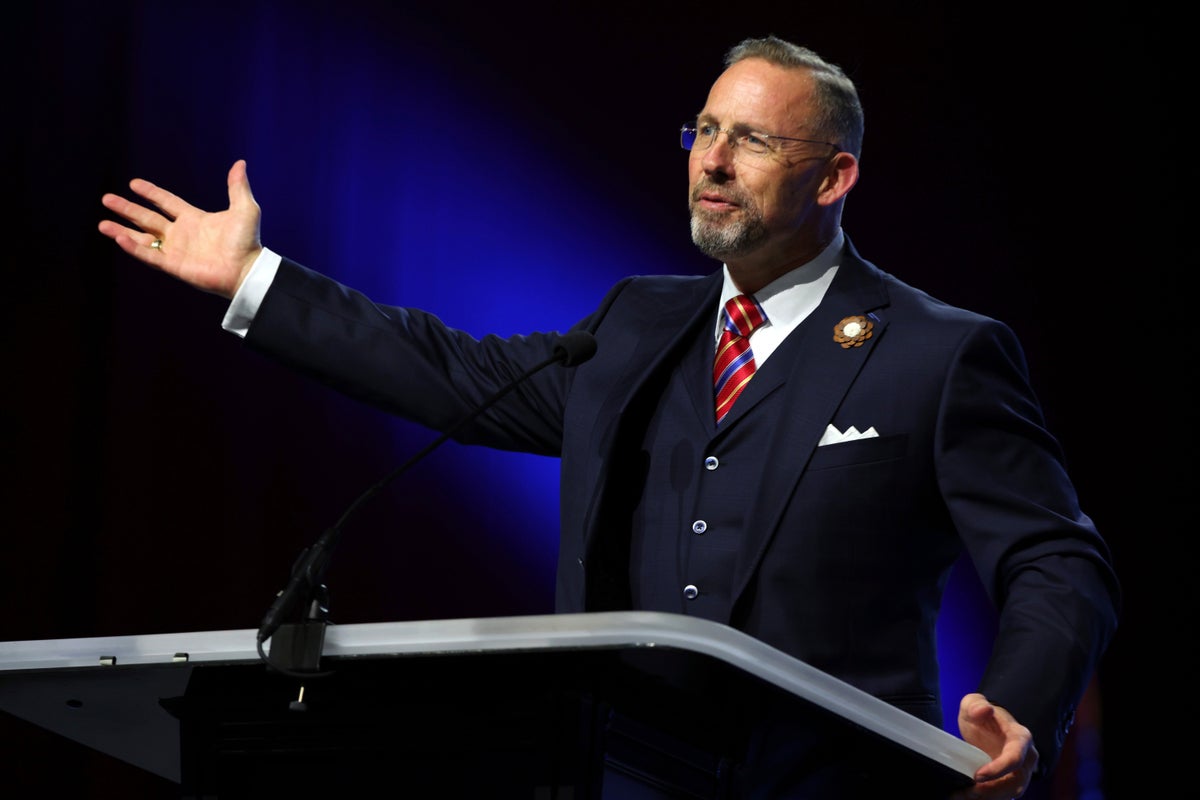
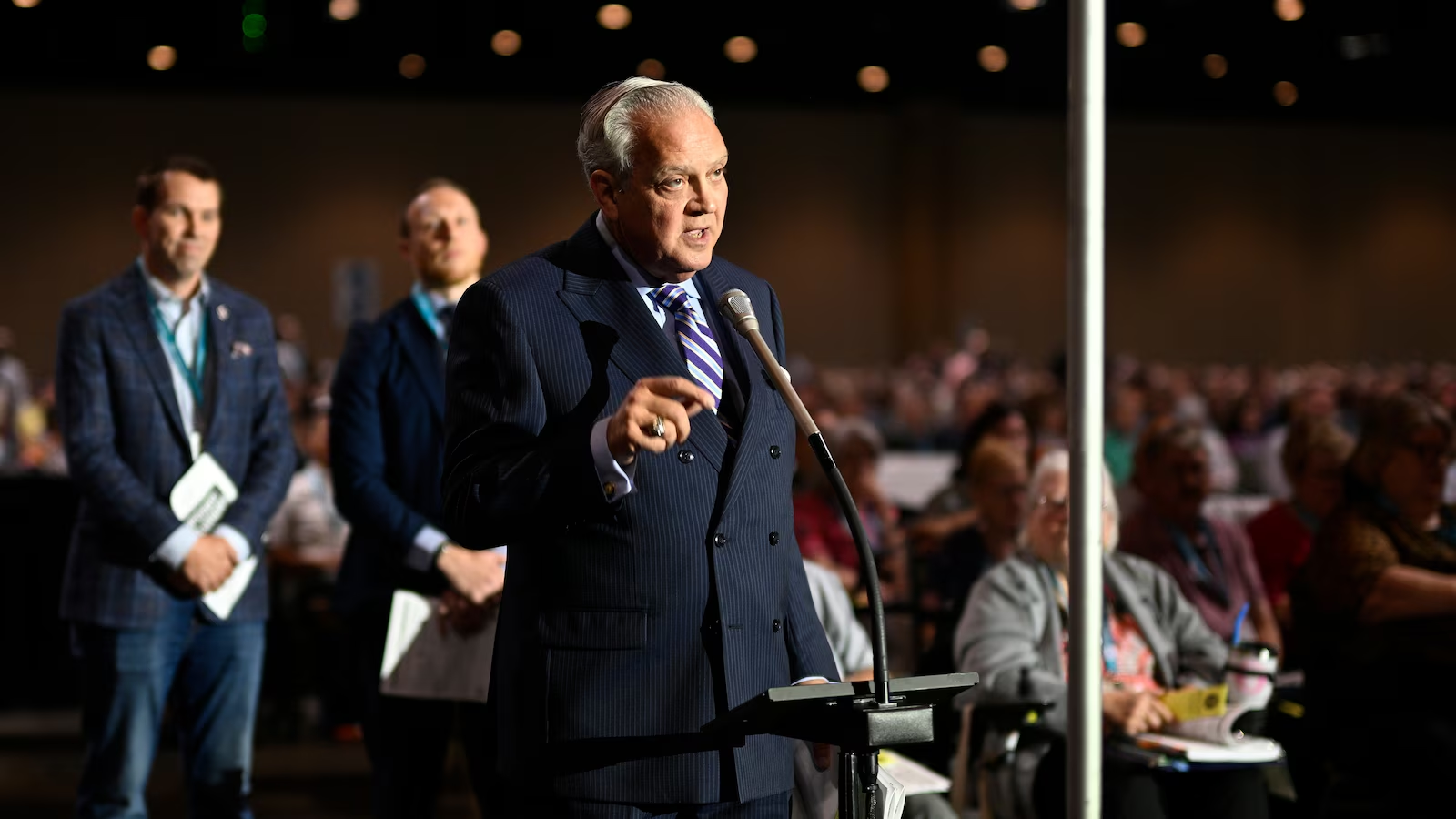
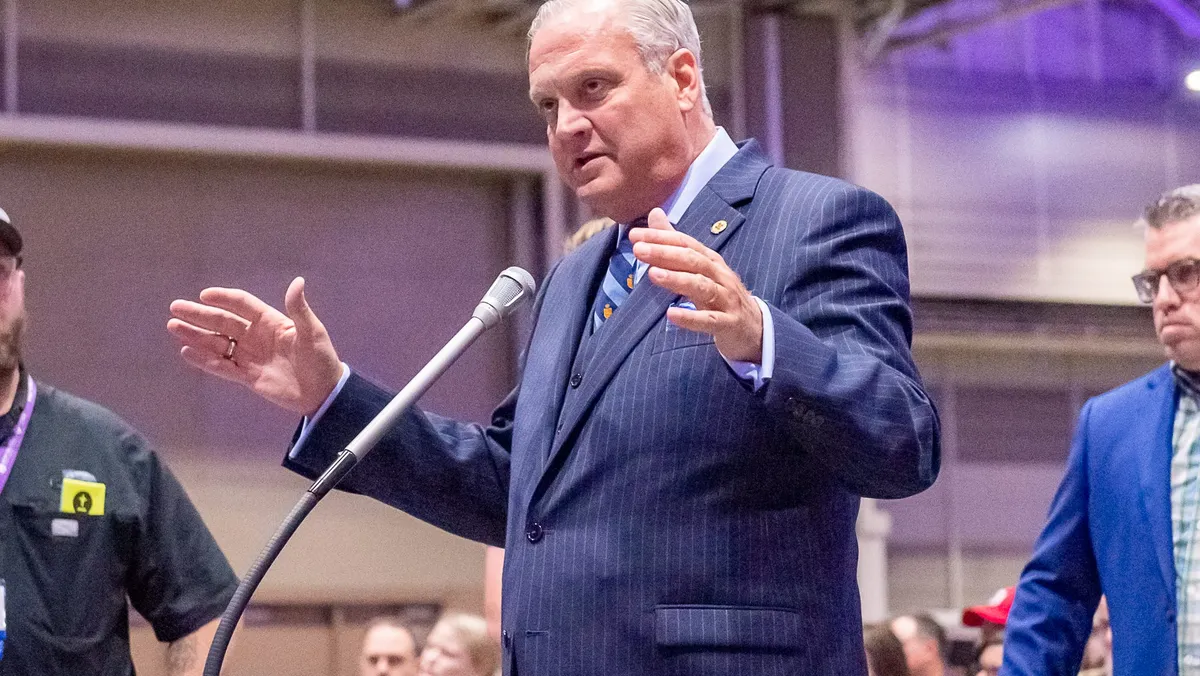
Prominent conservative theologian Albert Mohler said he would propose an amendment making the Southern Baptist Convention's position clear.
1,599 words~7 min read