Audio By Vocalize
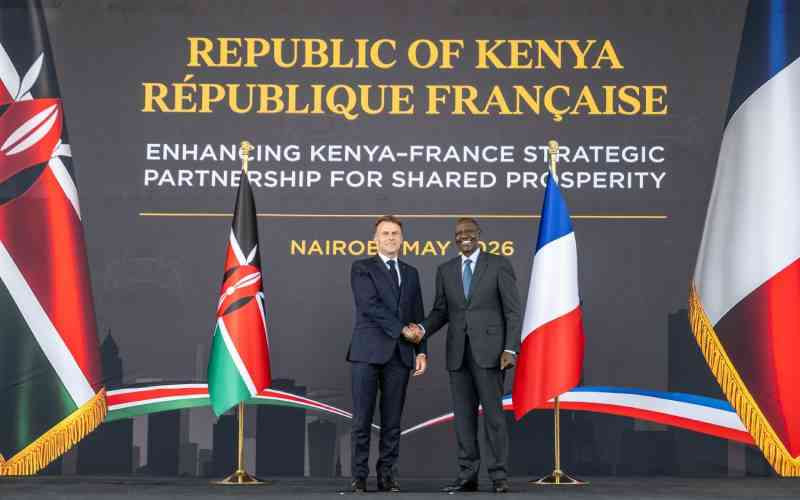
President William Ruto receives his French counterpart Emmanuel Macron at State House, Nairobi. [PCS]
For quite some time now, President William Ruto has consistently pushed one message on the international stage: Africa does not need more aid; it needs fair access to capital. It is a simple argument, but one with potentially radical implications for the continent’s economic future.
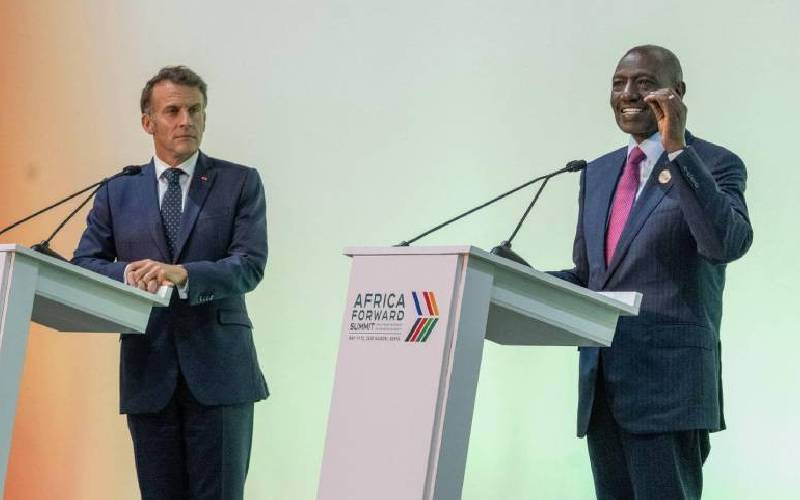
That message took centre-stage in Nairobi during high-level discussions involving African leaders and French President Emmanuel Macron ahead of the upcoming G7 Summit in Evian, France. Behind speeches and diplomatic symbolism lies a serious financial proposal that could significantly alter how African countries borrow money: the New African Financial Architecture for Development (NAFAD). Unlike traditional development institutions, NAFAD is not designed to become another African bank. It seeks to function as a coordination mechanism aimed at reducing the cost of borrowing for African nations by tackling what many economists now describe as the “Africa Premium.”
Countries like Kenya often borrow on international markets at interest rates close to 10 per cent, while developed economies access financing at rates near 3 per cent. Advocates of the new framework argue that this disparity is not entirely based on actual default risk, but on perceptions and historical biases associated with African economies.