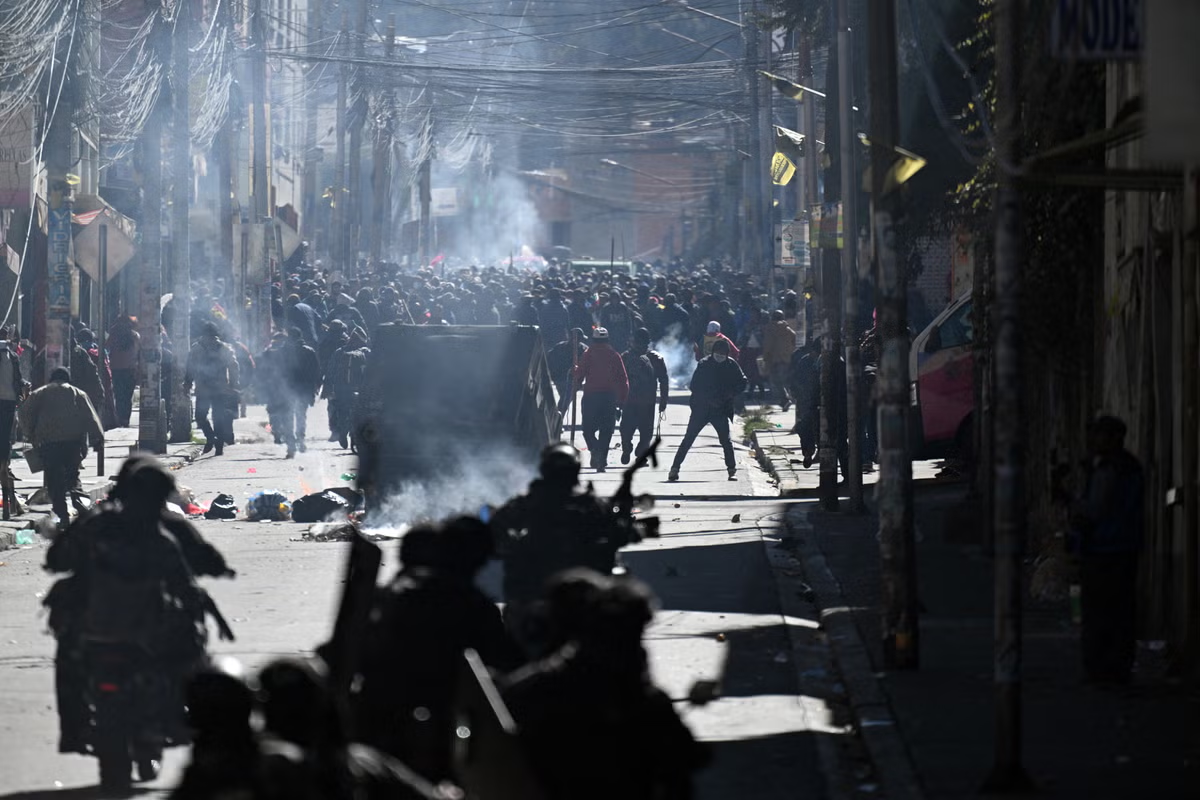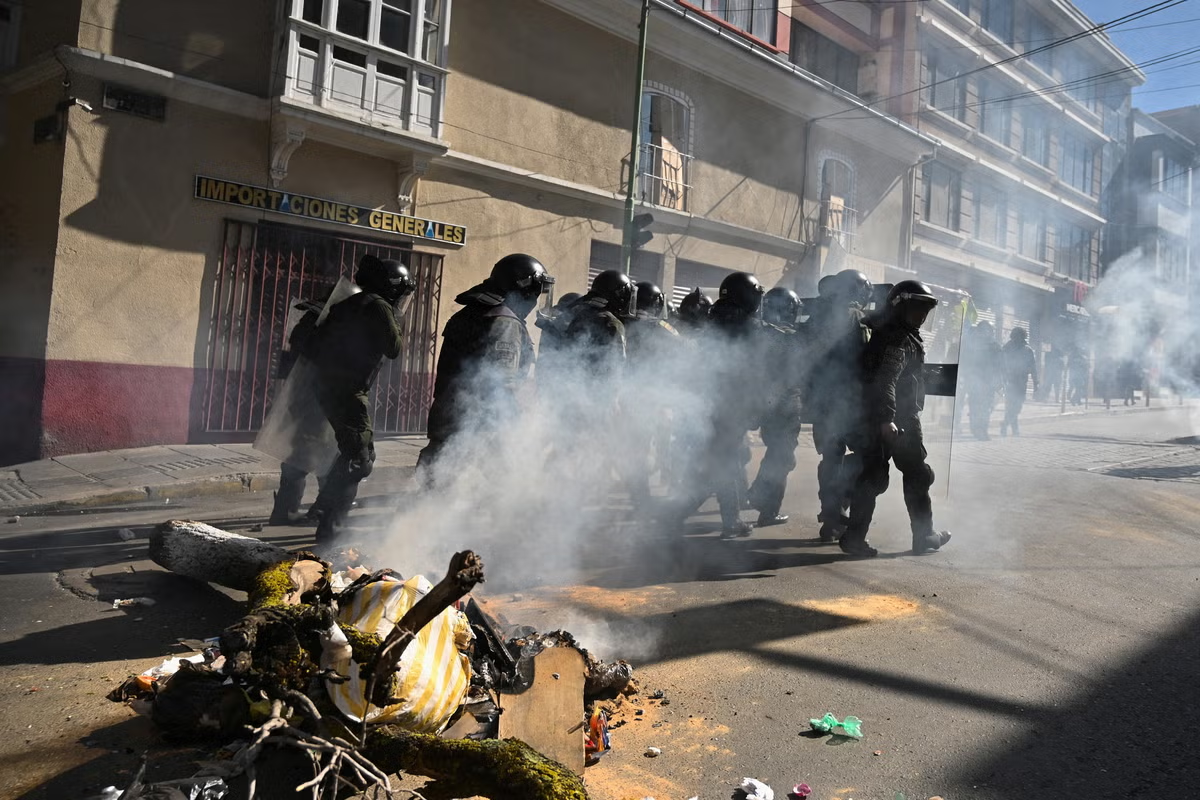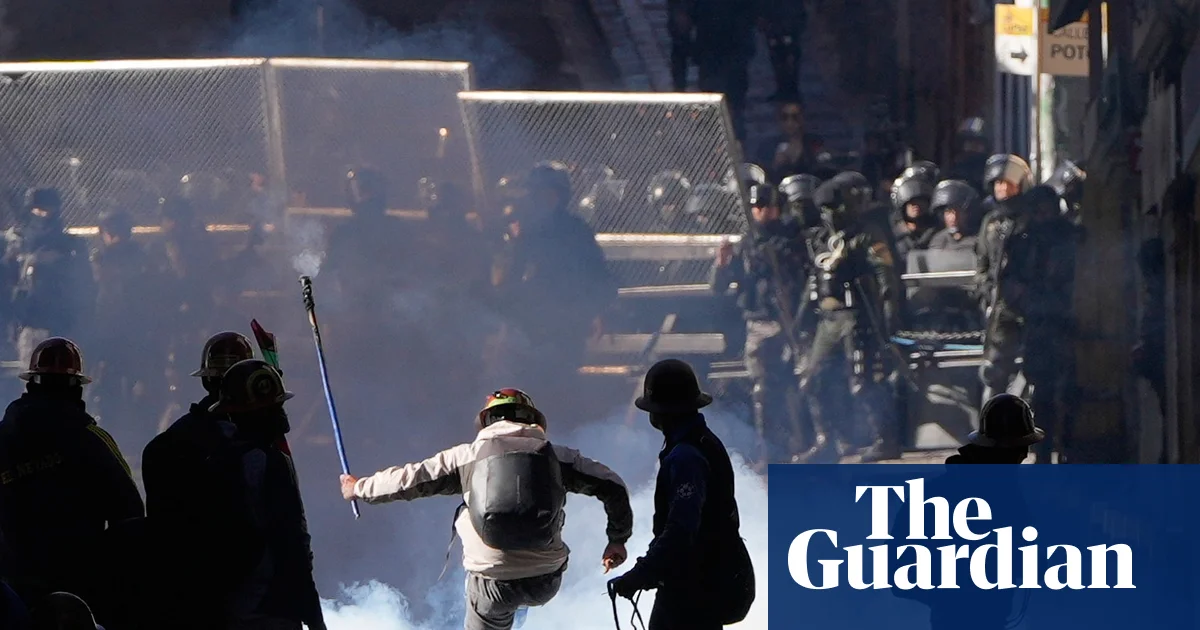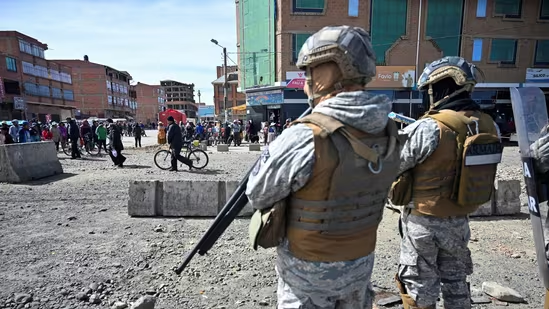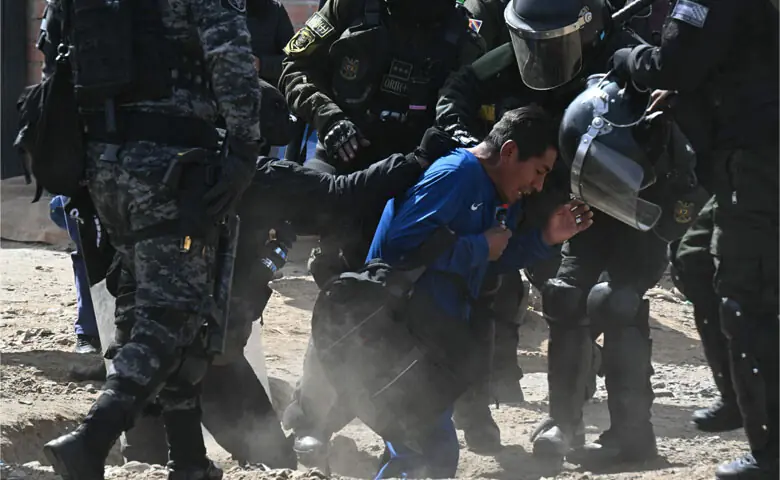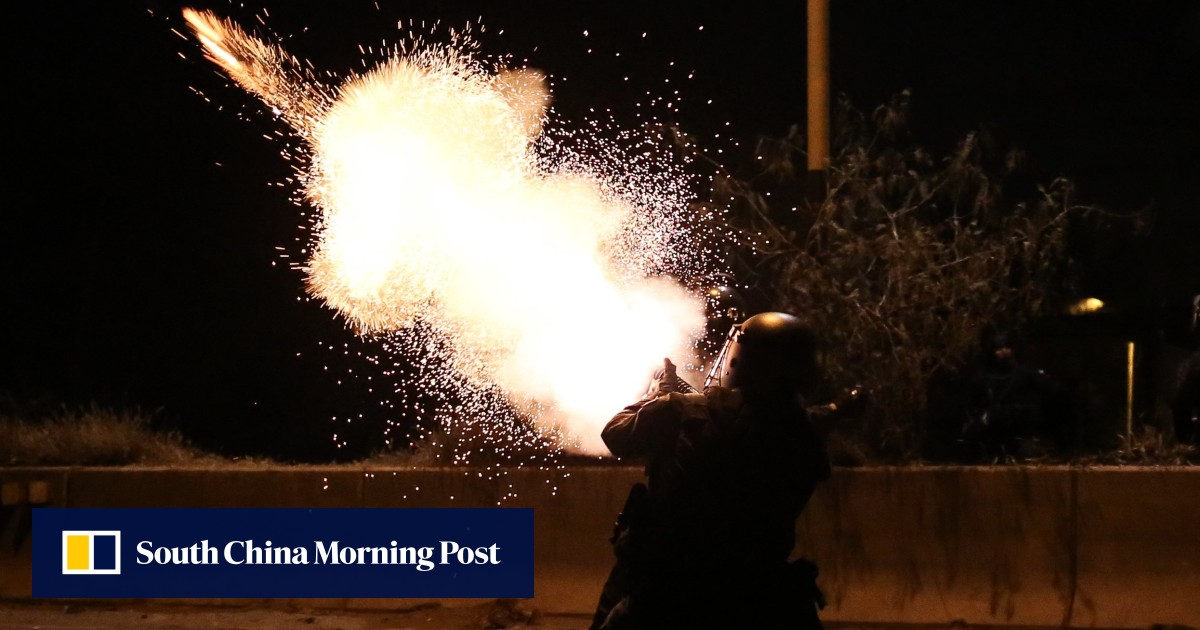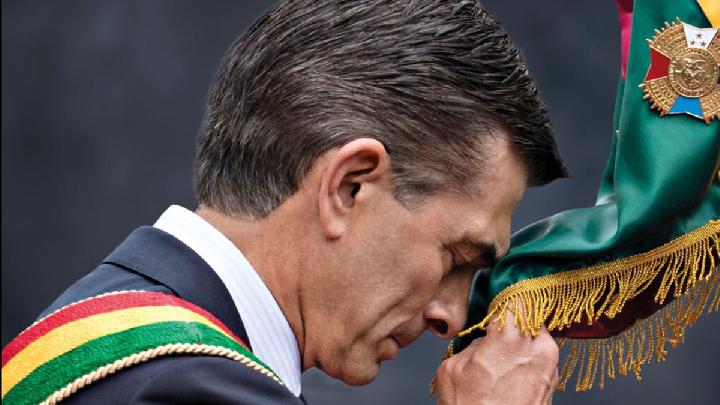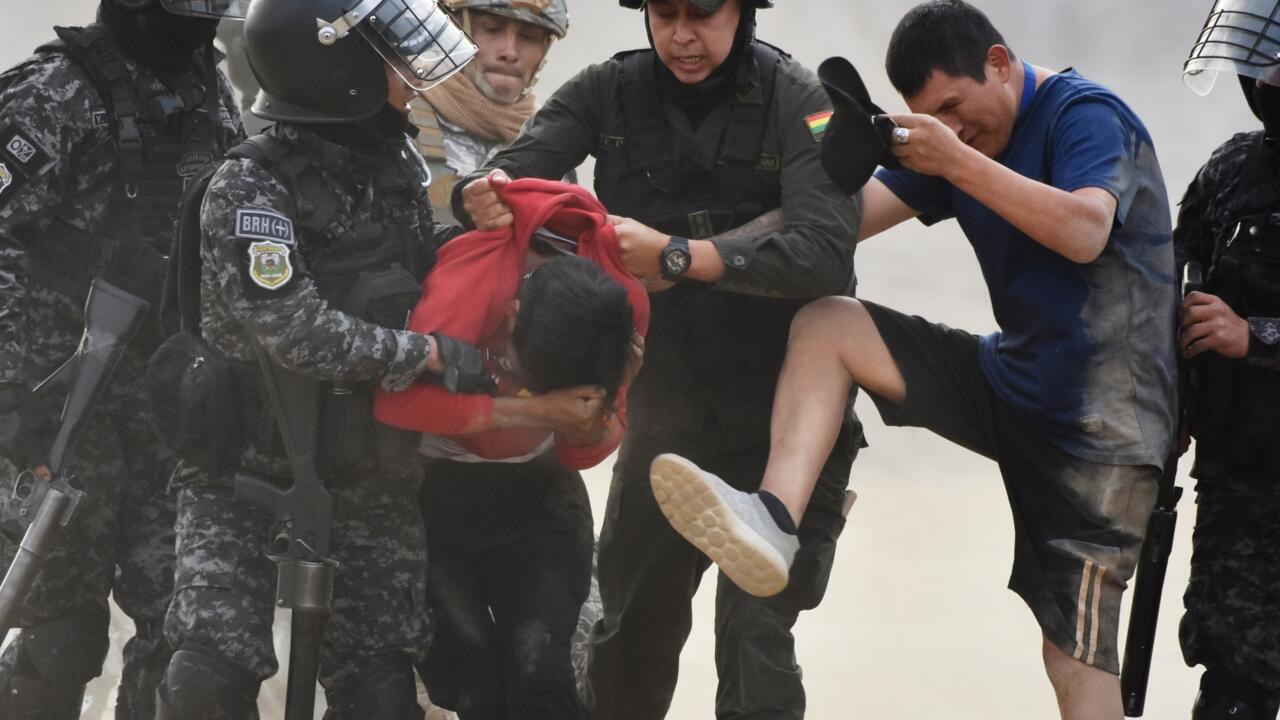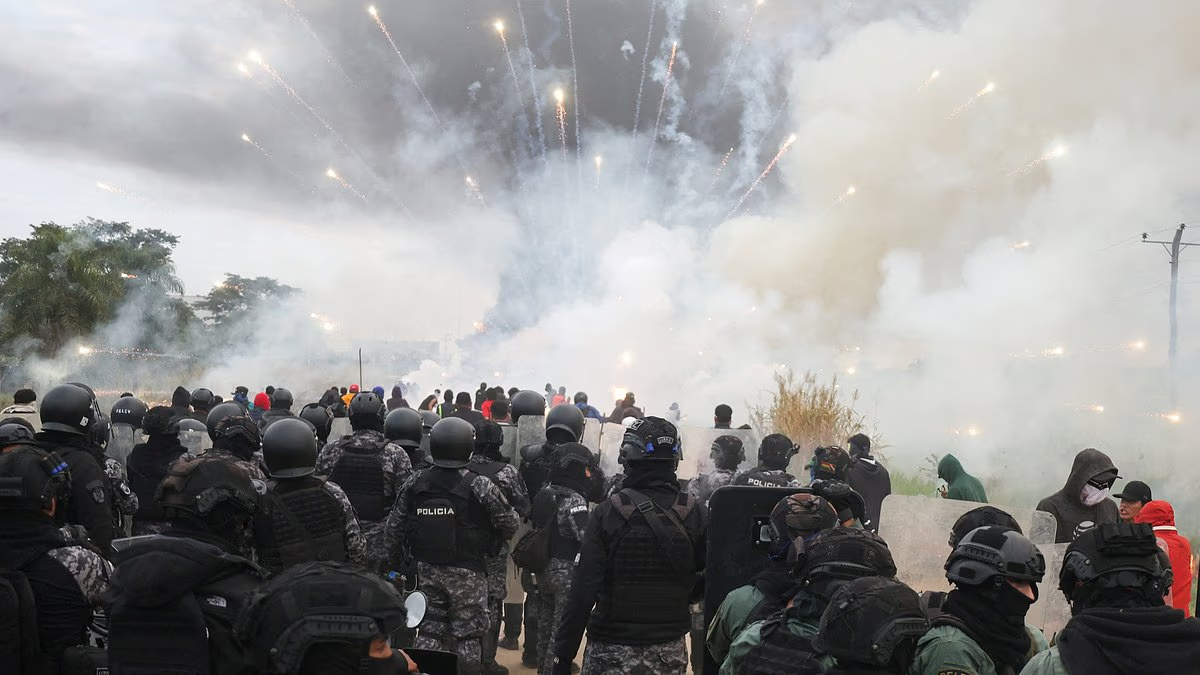
Terrified backpackers have become caught up in Bolivia's mass anti-government protests, with the country gripped by violent clashes between demonstrators and police.British holidaymakers came face-to-face with the explosive unrest - dodging dynamite and tear gas - forcing many to change their plans or become stranded in the volatile country.'My family thinks I'm in a warzone,' one backpacker told the Daily Mail.For five weeks, demonstrators have called for the US-backed, centre-right President Rodrigo Paz to step down after his unpopular economic reforms and lack of response to public demands.Violent protests have since erupted, with fireworks, burning tyres and stones hurled through furious crowds, and extensive road blockades crippling Bolivia with food and medicine shortages.The Foreign Office is now advising against all but essential travel to large swaths of the country, including the capital La Paz, and Bolivia's government has declared a 'humanitarian emergency.'While tour guides describe Bolivia as the 'Tibet of the Americas', it has historically been a hotbed of political violence and unrest, leading to the local expression: 'Every 18 months, everything blows up.'For James Brian, a civil engineer from Manchester, the local saying became reality when he was jolted awake in his hostel by the sound of explosions. Bolivia's mass anti-government protests have turned explosive, with the country gripped by violent clashes between demonstrators and police London native Emily Chen, 24, was caught up in violent protests when she visited Witches' Market (pictured) in the capital La Paz'We thought it was fireworks or maybe something else at first,' he recalled.But the 27-year-old was left terrified when locals told him the booms were protestors detonating sticks of dynamite in the streets of La Paz, just streets away from his bedroom.'When we found out it was dynamite, we were horrified,' Mr Brian said. Fearing a further escalation in violence, he and his girlfriend quickly fled to Brazil.London native Emily Chen, 24, an occupational therapist, travelled to Bolivia expecting stunning scenery and cultural curios.But her visit to La Paz's famous Witches' Market, where locals sell everything from spiritual remedies and blessed coca leaves to dried llama foetuses, turned into a nightmare.'One minute we were browsing, the next people were running up the street, and we thought, "what is this",' Ms Chen said.Just streets away, striking miners were clashing with riot police, who were firing rubber bullets and tear gas into the crowd.Ms Chen and her fellow travellers were forced to bolt uphill - no easy feat in the world's highest capital city, some 3,500 metres above sea level - to escape the chaos. Backpacker Justin, 24, said that since the protests 'all the tour companies fled the country, cancelled their tours, and we had to cancel our plans' Meanwhile, tear gas falls next to demonstrators during a protest, with the Foreign Office now advising against all but essential travel to large swaths of the country For five weeks, demonstrators have called for the US-backed, centre-right President Rodrigo Paz to step down after his unpopular economic reforms and lack of response to public demandsJoin the discussionShould the UK do more to warn or protect its citizens in countries facing violent unrest like Bolivia?What's your view?'I was so out of breath and scared. I will probably remember that forever,' she recounted.While most travellers expected some level of adventure in one of Latin America's most politically unstable countries, most quickly realized that the current crisis eclipsed the usual commotion.'We have protests in Germany, but these are too violent, this is no way to ask for change,' said Lukas Schrutt, 27, a nursing student from Berlin. 'My family thinks I am in a war zone... I am already almost out of cash.'The spiralling crisis has paralysed transport and led to the near-total collapse of the tourism industry in much of the country.Sabrina and Sebastian Schulz, two healthcare professionals, were forced to abandon their trip entirely by the unrest and opted to fly home to Germany for their own safety.'The protests are really scary. Dynamite, rocks, tear gas, slingshots, guns, rubber bullets, riot shields. It's all very scary, and not exactly the environment for tourists,' said Sabrina.Those who did stay have been forced to change their plans. Ms Chen's dream trip to the sprawling Lake Titicaca was cancelled after locals told her travel was impossible due to violent protests in the area.Today, anyone defying roadblocks risks becoming a target; Maria Gonzalez, an Argentine tourist, revealed she has been hunkered down in her hostel in La Paz since she saw an ambulance being pelted with rocks by protesters.To make matters worse, the intensifying economic crisis amid the protests has triggered hyperinflation in La Paz. Sabrina and Sebastian Schulz, two healthcare professionals, were forced to abandon their trip entirely by the unrest and opted to fly home for their own safety Anti-government demonstrators clash with police officers and civilians during an operation to clear a road blockade in San Julian, Santa Cruz department, Bolivia'I brought dollars with me, I thought it was enough for three weeks, and one week in, I am already almost out of cash,' said Ms Gonzalez.The political unrest has triggered rampant hyperinflation in La Paz and neighbouring El Alto. Desperate shopkeepers are forced to write their prices on paper, changing them daily as the currency plummets.Backpackers are only able to change money using 100 dollar bills, buying local currency at almost half the official rate.Amid the turmoil, many official tour operators have suspended operations, leaving tourists in the lurch.'Basically all the tour companies fled the country, cancelled their tours, and we had to cancel our plans,' said Justin, 24, a digital creator from Canada travelling in Bolivia.Bolivia, already the poorest country in South America, relies heavily on tourism to survive.
Terrified British backpackers caught in Bolivian 'warzone' protests
British holidaymakers came face-to-face with the explosive unrest - dodging dynamite and tear gas - forcing many to change their plans or become stranded in the volatile country.
945 words~4 min read