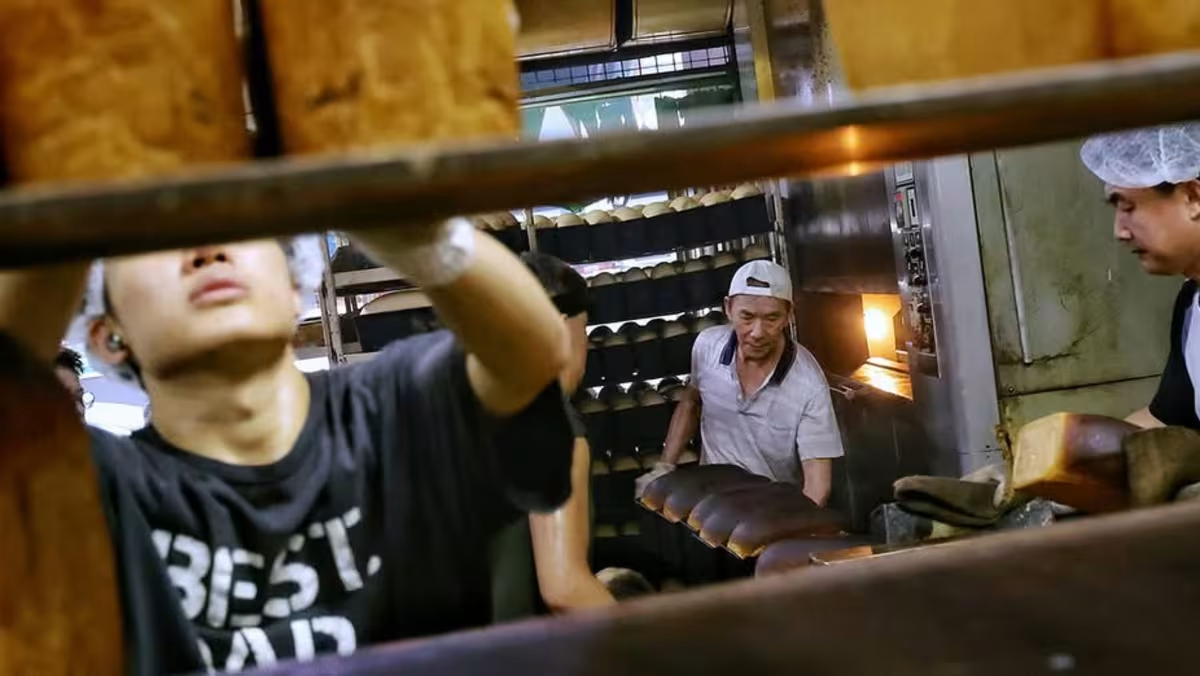
SINGAPORE: When heritage bakeries and homegrown bread manufacturers close shop or move out of Singapore, it stirs up more than nostalgia as people love an “everyday staple” that comes fresh out of an oven, said food experts.That is why whenever bread makes the news in Singapore, such as when homegrown breadmaker Gardenia decided to move its production line to Malaysia or when old-school bakery Tiong Bahru Galicier Pastry closed in 2022, consumers react strongly, they said.Said Assistant Professor of sociology George Wong at Singapore Management University: “If olfactory, visual and gustatory cues help us relate to memories and community, then the decline of these places like bakeries also signal not just a loss, but also as an irrecoverable dissipation of the familiar sensibilities of past communities.”Bread is, after all, a cultural symbol and a reflection of a changing Singapore, which originated from British colonial palates and was gradually influenced by Asian tastebuds, said experts.
From the once familiar sight of cream-filled buns sold by “roti men” on bicycles to the artisanal sourdough loaves sold in shopping malls, they said the evolution of what people are eating and where they are buying from mirror how lifestyles, cultures and preferences have changed over the years.Associate Professor of the School of Business at the Singapore University of Social Sciences (SUSS) Dianna Chang said bread is entrenched in Singaporeans’ daily routines.“Bread offers an interesting lens through which to understand Singaporean society,” said Assoc Prof Chang.“As an everyday staple for many individuals and families, bread occupies a unique place in daily life. Its relatively short shelf life necessitates frequent purchases, making it naturally integrated into consumers' lifestyles and shopping habits.”To track Singapore’s love affair with bread, CNA spoke to several breadmakers and experts to see how and why the simple act of buying a loaf has transformed from a matter of convenience into a reflection of Singapore's socio-economic identity.EVOLUTION OF BREADWhen Hainanese immigrants from China arrived in Singapore during the 19th century, they often worked as cooks on British ships, in colonial households and in European-run hotels.There, they learnt Western cooking and baking techniques and adapted the traditional British breakfast to local tastes, creating new products such as kaya toast.Professor William Chen, director of the food science and technology programme at Nanyang Technological University, said: “The introduction of bread into Singapore's diet during British colonial times has evolved over time and has become an essential part of our multi-ethnic cuisines, and to a certain extent an iconic part of our Singapore’s identity.”