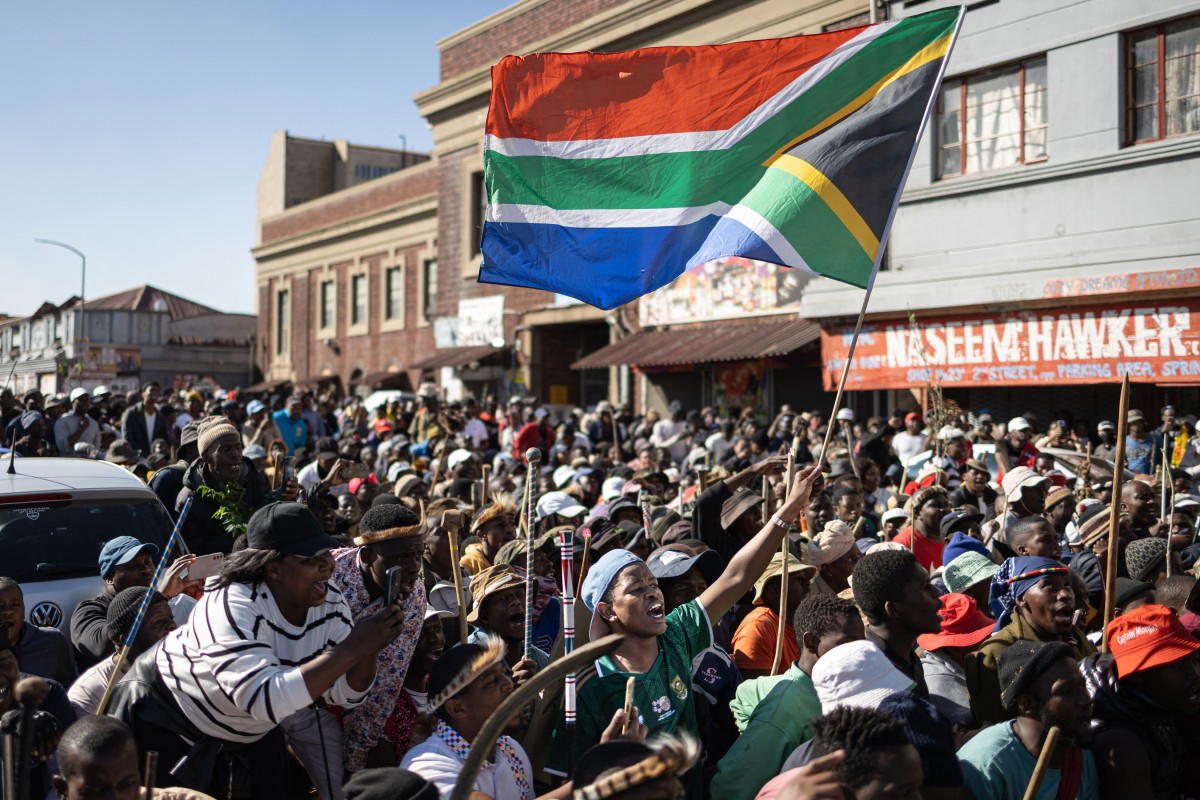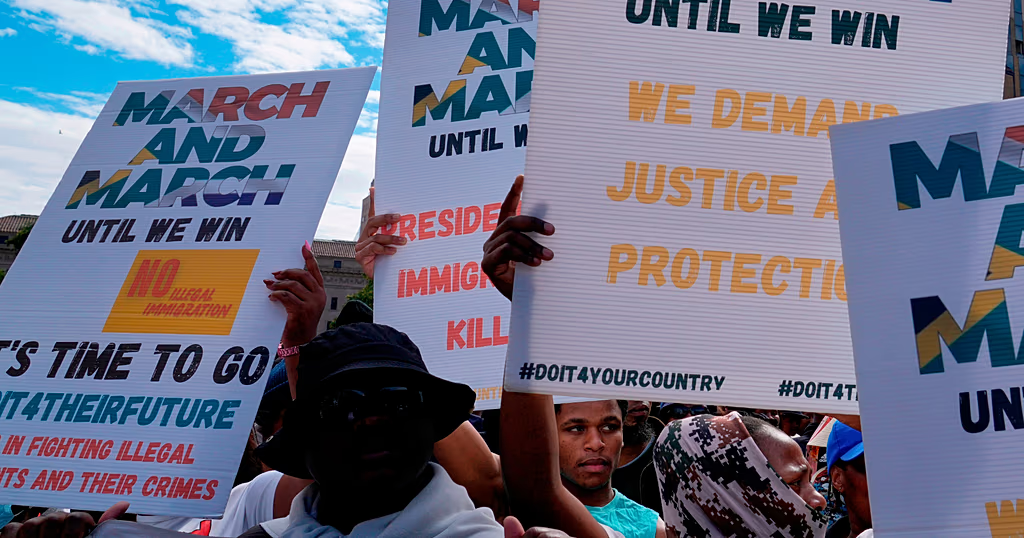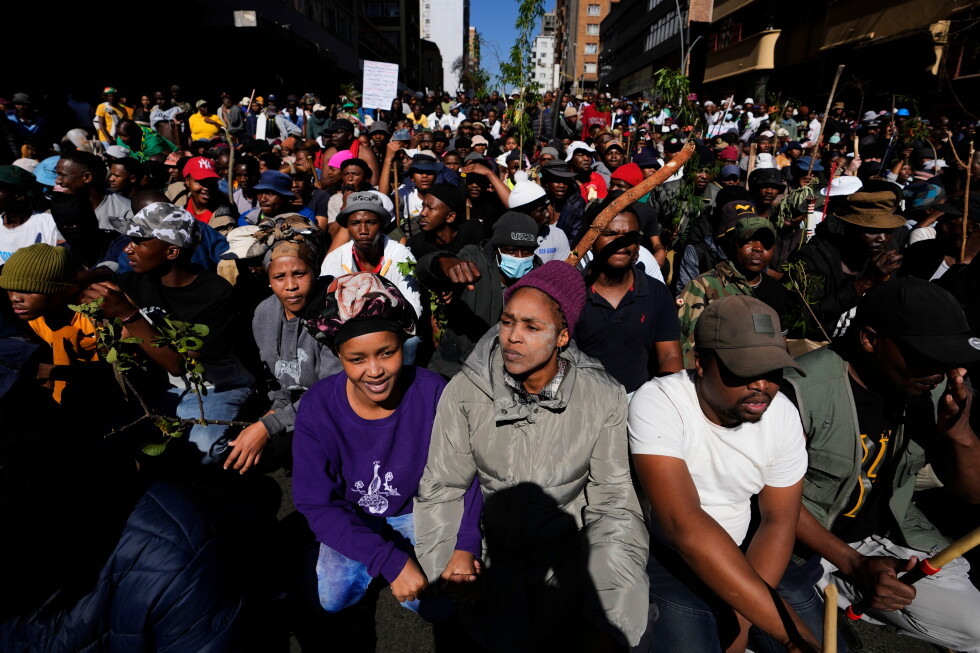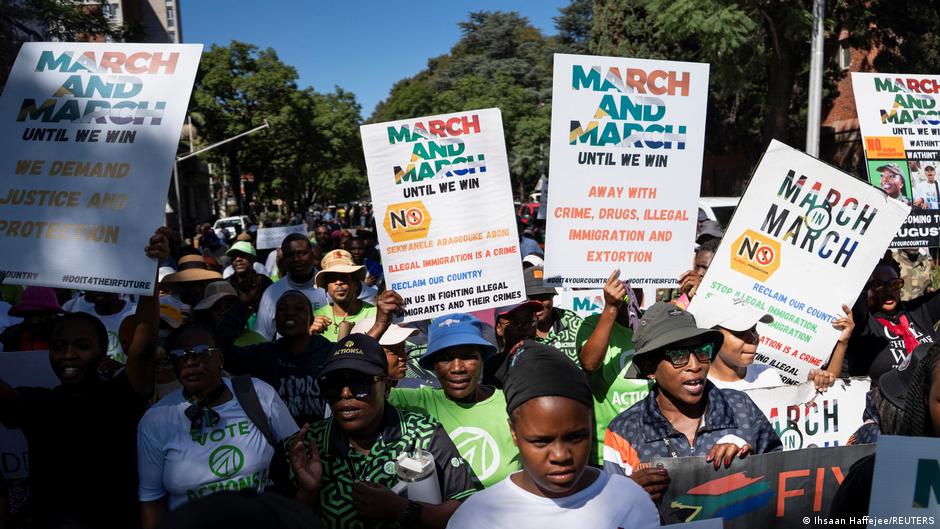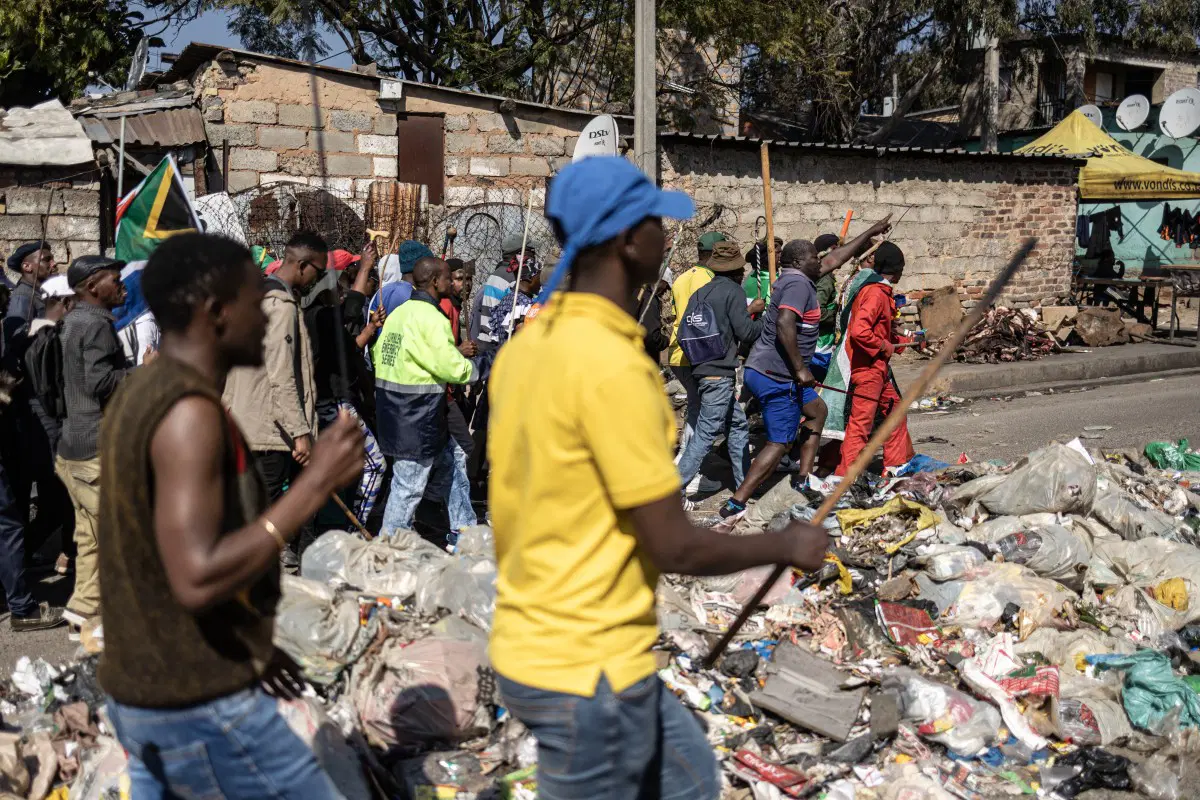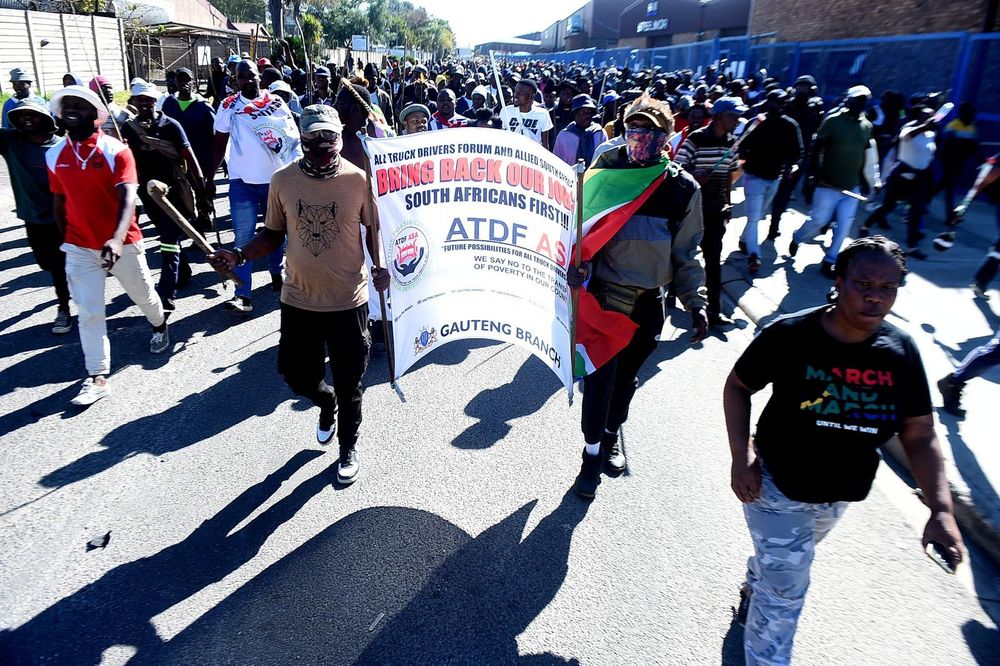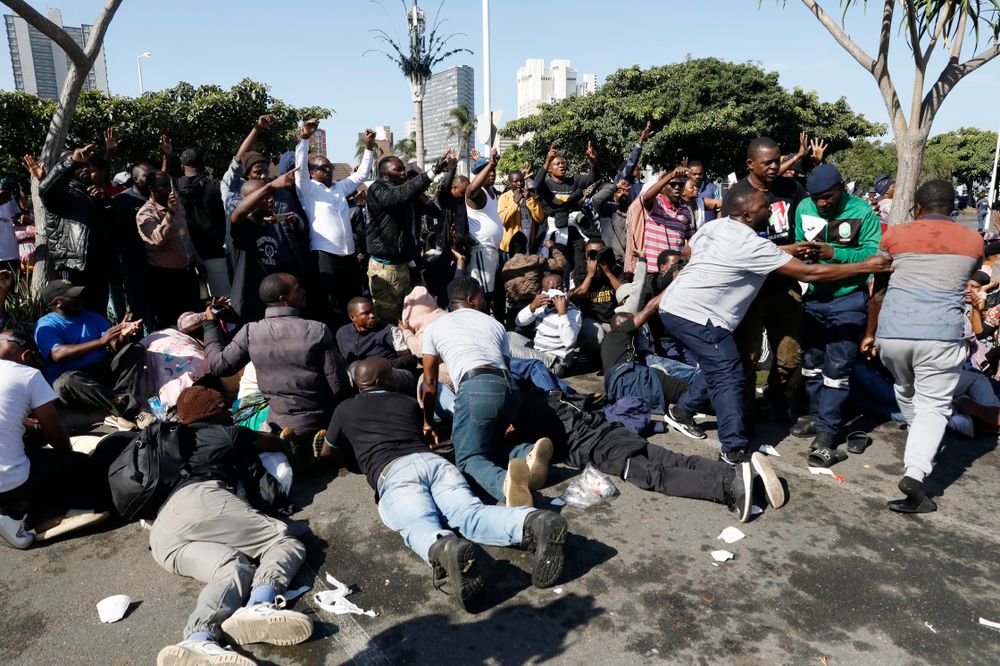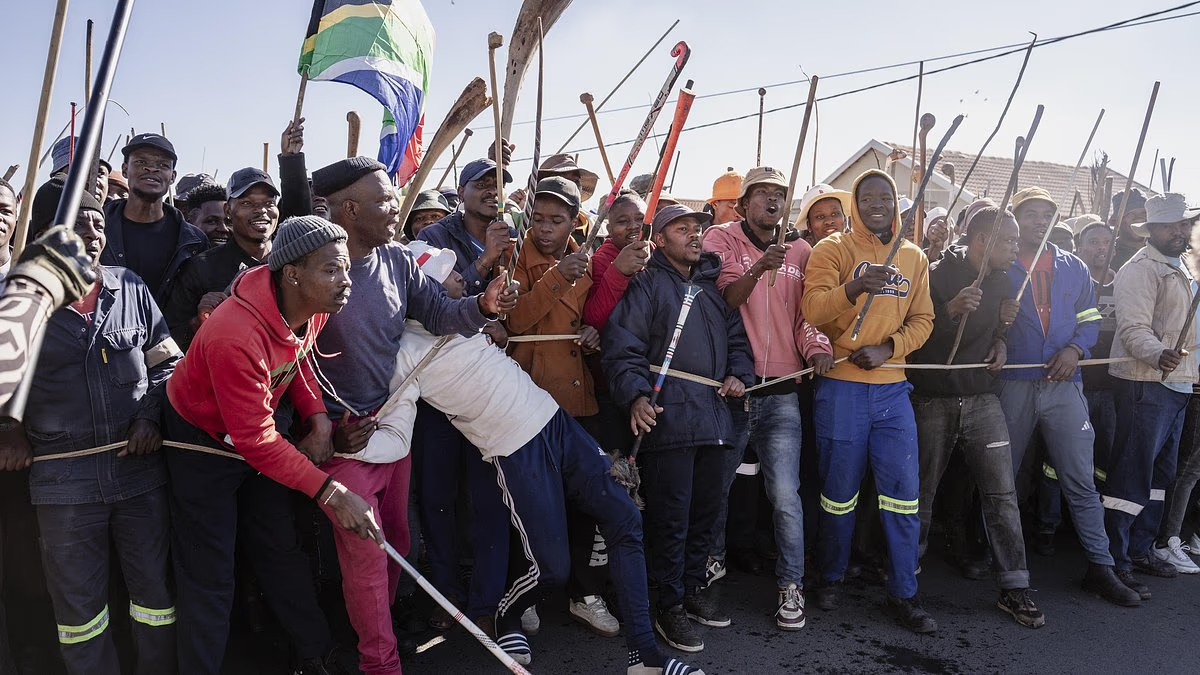
Dozens of anti-migrant protesters marched through the streets of South Africa following a spate of violence and vigilante threats. The demonstration took place on Monday in Springs, east of Johannesburg, where protesters were seen donning traditional dress and carrying speared weapons.It came a day after South African President Cyril Ramaphosa pledged action against groups accused of fuelling xenophobic violence.South Africa has seen recurring bouts of anti-migrant violence, with protests intensifying this year as vigilante groups ordered undocumented foreigners to leave by June 30.The campaign group at the forefront of the recent protests, March & March, did not specify what would happen to those who do not leave. Chanting and singing as they moved through the area, protesters called for tougher government action against illegal immigration.The March & March leader, Jacinta Ngobese-Zuma, who has campaigned for mass deportation, claims that illegal immigration 'ranges from 15 million to about 30 million'.'South Africa is currently being invaded. South Africans have become refugees in their own country,' she said last month.Protesters gather with traditional weapons during a rally against undocumented immigrants in Springs, east of Johannesburg, South Africa A wave of anti-immigrant protests has affected South Africa demanding undocumented immigrants to leave the countryThe demonstration took place on Monday in Springs, where protesters were seen donning traditional dress and carrying speared weaponsThe march was peaceful, with some participants carrying sticks, footage aired by the SABC public broadcaster showed.Ramaphosa acknowledged public concerns over illegal immigration but warned that the authorities would not tolerate anyone taking the law into their own hands.'We will and must not allow groups to use the legitimate concerns of South Africans to destabilise our country through inciting lawlessness and violence,' he said in a national address late Sunday.'We will act against forces who are exploiting the concerns of our people about illegal immigration to further their own political, personal or criminal agendas.'He promised a tougher crackdown on illegal immigration and on corruption within the country's border authorities, and emphasised that only state officials were permitted to demand proof of nationality.'We will and must not allow groups to use the legitimate concerns of South Africans to destabilise our country through inciting lawlessness and violence,' Ramaphosa added.Organisers of the protests responded swiftly, saying they were encouraged that Ramaphosa had put the issue on the national agenda, but vowed to press ahead with their campaign.Among Africa's leading economies, South Africa is home to more than three million foreigners, just over five per cent of the population.But unemployment is running at more than 30 per cent, fuelling tensions with migrant workers.In the worst violence against immigrants in the last two decades, 62 people were killed in 2008.Violent clashes also erupted in 2015, 2016 and 2019.Mozambique said five of its citizens were killed in 'xenophobic attacks' at the end of May.South African police said two Mozambicans and one South African had died during an outbreak of violence in Mossel Bay on the south coast. The march was peaceful, with some participants carrying sticks, footage aired by the SABC public broadcaster showedZulu cultural figure and anti-immigration activist Phakela uMthakathi (C) takes part in a rally against undocumented immigrants who live in the area in Benoni, east of Johannesburg, on June 6South Africa's President Cyril Ramaphosa addressed the population to diffuse growing anti-immigrant tensions during a speech on national televisionChanting and singing as they moved through the area, protesters called for tougher government action against illegal immigrationLast month, hundreds of foreign nationals, including citizens from the Democratic Republic of Congo, Rwanda and Somalia, sought protection in the eastern port city of Durban, saying locals had gone door-to-door ordering them to leave by the end of the month.Many told Reuters news agency they wanted help from their governments to return home. Ghana has arranged flights for several hundred of its citizens to leave South Africa.'Every day and almost everyone I meet, they are in fear, extreme fear,' said an Ethiopian entrepreneur who moved to South Africa in 2000 and is married to a local woman. The couple have a 19-year-old daughter.'The sad part is it's not because they are undocumented… But none of the legal documents will protect you from the violence.'The unrest has prompted several countries to organise the return of their citizens.Ghana has arranged repatriation flights for hundreds of nationals, while Malawi and Mozambique organised buses to bring people home.More than 600 Ghanaians were processed for departure over the weekend, South Africa's border authority said on Monday, taking the tally of those who have left to 995.The first group of Nigerians is due to leave on Wednesday.Kenya, Lesotho and Zimbabwe are among the countries that have urged their citizens in South Africa to exercise caution.
Anti-migrant protesters march through South African streets
The demonstration took place on Monday in Springs, east of Johannesburg, where protesters were seen donning traditional dress and carrying speared weapons.
778 words~4 min read