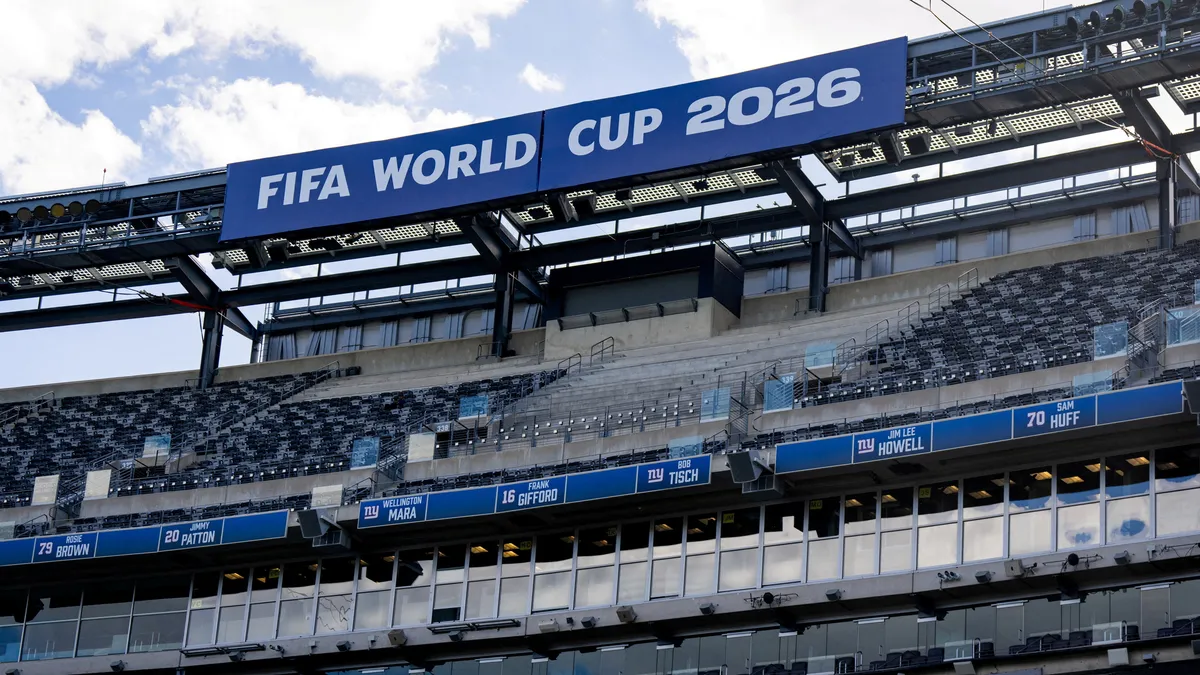
FIFA’s new rule lets fans bring one small, sealed disposable water bottle into World Cup stadiums in the U.S. and Canada, but it has not yet confirmed whether that change will extend to Mexico venues.Show Caption
Southern host cities such as Dallas, Houston, Miami and Atlanta routinely see long runs of 90°F‑plus days between mid‑June and mid‑July.Mid‑Atlantic and Northeast sites including Philadelphia, New York/New Jersey and Boston often warm into the mid‑80s and higher, with hot days becoming more frequent in recent decades.Kansas City typically ramps from hot to very hot across the window, while Los Angeles and Seattle stay warm but less extreme due to coastal and regional moderation.San Francisco is the outlier, with mild summer highs in the mid‑60s that make it one of the coolest World Cup host cities in North America.It’s getting hot out there — and World Cup fans will feel it in stadium cities across North America.After announcing a ban on water bottles for World Cup 2026 stadium entry, FIFA reversed course just a day later following backlash. At the time of the initial decision, FIFA said the policy was meant to standardize rules already in place at several venues.Buy USA Men's Soccer TicketsThe reversal now allows fans to bring one small, factory-sealed water bottle into stadiums across the U.S. and Canada as host cities move into their hottest stretch of the year, with frequent 90-degree days expected in some locations and only a few venues featuring roofs.Here’s a look at what average summer temperatures typically look like across World Cup host cities during the tournament window, according to historical data from the local National Weather Service offices, dating back to 1920.Buy Mexico Men's Soccer ticketsAtlanta average weather during World Cup windowIn Atlanta, the mid-June to mid-July period falls in the peak of summer heat. June averages about 10 days at or above 90°F, while July averages about 14 such days, meaning roughly half of the World Cup window typically reaches 90°F or higher.Rain is near its summer peak during this window, with June and July both among the wettest months of the year at about 3.9 and 4.8 inches, respectively.World Cup tickets for teams based in Georgia: UzbekistanBoston average weather during World Cup windowIn Boston, the mid-June to mid-July period marks the transition into peak summer conditions, with heat building quickly but staying less extreme than southern host cities.June averages about 3–5 days at or above 85°F, while July averages about 10–15 such days, meaning roughly a third to half of the World Cup window typically reaches 85°F or higher. However, in recent decades, those hot days have become more frequent, with many summers now reaching roughly 15–25 days at or above 85°F.Rain is steady with June averaging about 3.6 inches and July about 3.2 inches, sitting near the middle of the annual rainfall range.World Cup tickets for teams based in Massachusetts: France | GhanaDallas average weather during World Cup windowIn Dallas, the mid-June to mid-July period sits in the peak of summer heat. June averages a mean maximum temperature of about 91.6°F, while July rises to about 95.8°F, meaning sustained extreme heat is the norm across the World Cup window.Heat is reinforced by frequent 90°F+ days. June averages about 21 days at or above 90°F, and July averages about 28 days, meaning essentially the entire period is dominated by triple-digit-adjacent heat risk. Rainfall is less consistent but still present, with June averaging about 3.16 inches and July about 1.98 inches, typically arriving in short, intense thunderstorms rather than steady rain.World Cup tickets for teams based in Texas: Colombia | Congo DR | Czechia | Saudi Arabia | SwedenHouston average weather during World Cup windowIn Houston, the mid-June to mid-July period sits firmly in the peak of summer heat and humidity. June averages a mean maximum temperature of about 90.8°F, while July rises to about 93.1°F, meaning sustained high heat is the dominant pattern across the World Cup window.Heat is reinforced by frequent extreme temperature days. June averages about 20 days at or above 90°F, and July averages about 26 such days, meaning essentially the entire period regularly reaches or exceeds 90°F, with little break from heat stress conditions.Rain is a consistent part of the pattern as well. June averages about 4.93 inches of precipitation, and July averages about 4.04 inches, with rainfall typically coming in short, heavy bursts tied to afternoon and evening thunderstorms rather than prolonged rain events.World Cup tickets for teams based in Texas: Colombia | Congo DR | Czechia | Saudi Arabia | SwedenKansas City average weather during World Cup windowIn Kansas City, the mid-June to mid-July period sits firmly in the peak of summer heat. June averages a mean maximum temperature of about 84.4°F, while July rises to about 89.2°F, meaning conditions often build from hot to very hot across the World Cup window.Heat also ramps up through frequent 90°F+ days. June averages about 8 days at or above 90°F, while July averages about 15 such days, meaning much of the second half of the window typically falls into sustained high heat.Rain is a consistent part of the pattern as well. June averages about 4.98 inches of precipitation, and July averages about 3.99 inches, with rainfall largely driven by short, heavy thunderstorms rather than long-lasting systems.World Cup tickets for teams based in Kansas and Missouri: Algeria | Argentina | England | NetherlandsMiami average weather during World Cup windowIn Miami, the mid-June to mid-July period sits in the peak of summer heat and humidity. June averages a mean maximum temperature of about 88.1°F, while July rises to about 89.4°F, keeping conditions consistently hot across the window.Heat is common. June averages about 10 days at or above 90°F, while July averages about 16 such days, with July more often seeing sustained 90°F+ conditions.Rain is a dominant summer factor, with June averaging about 9.03 inches and July about 6.76 inches, making June the wettest month and July still firmly in the wetter stretch of the year.World Cup tickets for teams based in Florida: Cape Verde | Curaçao | PortugalLos Angeles average weather during World Cup windowIn Los Angeles, the mid-June to mid-July period sits in a steady warm phase shaped by strong coastal moderation, with temperatures rising gradually but rarely reaching extreme levels compared with many other host cities. June averages a mean maximum temperature of about 77.3°F, while July rises to about 82.8°F, meaning conditions typically move from mild-warm to solid summer warmth across the window.Heat remains limited at the high end during this period, but does increase slightly through the month. June averages about one day at or above 85°F, while July averages about 3 such days, meaning most of the World Cup window stays below the upper-80s threshold. The broader peak in 85°F+ days tends to arrive later in the summer, especially August and September.Rain is minimal to nearly absent during this period. June averages about 0.1 inches of precipitation, while July averages about 0.0 inches, reflecting Los Angeles’ dry-season pattern where measurable rain is rare and most days during this window are dry.World Cup tickets for teams based in California: United States | Australia | Austria | Qatar | New Zealand | Switzerland | ParaguayPhiladelphia average weather during World Cup windowIn Philadelphia, the mid-June to mid-July period sits in the transition into peak summer heat, with conditions steadily warming through the window. June averages a mean maximum temperature of about 82.2°F, while July rises to about 86.7°F, meaning afternoons become consistently hot as the month progresses.Philadelphia has seen a clear rise in hot days in recent decades, with many recent summers producing roughly 20–30 days at or above 90°F, compared with lower historical averages where 90°F days were less frequent and more variable year to year.Rain is steady through the summer stretch, with June averaging about 3.89 inches of precipitation and July about 4.20 inches, placing both months in a moderate-to-wet portion of the annual cycle. Rain typically comes in short, heavy thunderstorms rather than long-duration systems.New York average weather during World Cup windowIn the MetLife Stadium (New Jersey) area, the mid-June to mid-July period sits firmly in peak summer heat, with conditions that have warmed notably in recent decades. June averages a mean maximum temperature of about 81°F, while July rises to about 86°F, meaning afternoons are consistently hot through the World Cup window.Heat at or above 85°F is a major feature of this stretch. June averages about 11 days at or above 85°F, while July averages about 19 days, meaning roughly two-thirds of the World Cup window typically reaches at least 85°F or higher. However, in recent decades, the area has experienced more frequent and sustained heat, with summers often reaching roughly 20–30 days at or above 85°F, compared with lower long-term averages earlier in the record.Rain is steady through the summer stretch, with June averaging about 3.77 inches of precipitation and July about 4.45 inches, placing both months in a moderate-to-wet portion of the annual cycle. Rain typically comes in short, heavy thunderstorms rather than long-duration systems.New York officials say city is ready for the 2026 World CupNew York officials say agencies and transit are prepared to welcome fans for the 2026 World Cup.San Francisco average weather during World Cup windowIn San Francisco, the mid-June to mid-July period is noticeably cooler than other World Cup host cities. June averages a mean maximum temperature of about 66.1°F, while July averages about 65.9°F, meaning conditions stay consistently mild with very little day-to-day heat buildup across the window.Extreme heat is rare during this period. Days at or above 85°F typically remain limited to a handful at most in a given summer month, often near zero in many years, meaning sustained heat is not a defining feature of the tournament window.Rain is minimal during this stretch as the region sits firmly in its dry season, with most days remaining dry and overcast-to-sunny patterns dominating rather than storm-driven weather.World Cup tickets for teams based in California: United States | Australia | Austria | Qatar | New Zealand | Switzerland | ParaguaySeattle average weather during World Cup windowIn Seattle, the mid-June to mid-July period falls into the core of the dry, mild summer season, with temperatures warming but rarely reaching extreme heat levels. June averages a mean maximum temperature of about 69.9°F, while July rises to about 75.3°F, meaning conditions typically shift from comfortably mild to warm-but-tempered across the World Cup window.While fairly average historically, hot days have become more frequent. In recent years, Seattle has averaged closer to about 10–20 days per year at or above 85°F, compared with much lower counts earlier in the record, signaling a noticeable increase in short-duration heat during the World Cup window.Rain is at its lowest point of the year. June averages about 1.44 inches of precipitation, and July drops to about 0.64 inches, reflecting Seattle’s dry-season pattern where long stretches of the World Cup window are typically rain-free, with occasional light systems rather than sustained wet weather.Seattle airport kicks off 'summer of soccer' ahead of World CupSeattle-Tacoma International Airport launches summer of soccer as the city prepares to welcome fans for six World Cup matches.Buy World Cup tickets by cityAtlanta | Boston | Dallas | Houston | Kansas City | Miami | Los Angeles | Philadelphia | New York | San Francisco | Seattle | Guadalajara | Mexico City | Monterrey | Toronto | VancouverBuy World Cup tickets by teamUnited States | Algeria | Argentina | Australia | Austria | Belgium | Bosnia and Herzegovina | Brazil | Cape Verde | Canada | Colombia | Congo | Croatia | Curaçao | Czechia | Ecuador | Egypt | England | France | Germany | Ghana | Haiti | Iran | Iraq | Ivory Coast | Japan | Jordan | Mexico | Morocco | Netherlands | New Zealand | Norway | Panama | Paraguay | Portugal | Qatar | Saudi Arabia | Scotland | Senegal | South Africa | South Korea | Spain | Sweden | Switzerland | Tunisia | Turkey | Uruguay | UzbekistanBrandi D. Addison is the Weather Connect reporter for the USA TODAY Network.