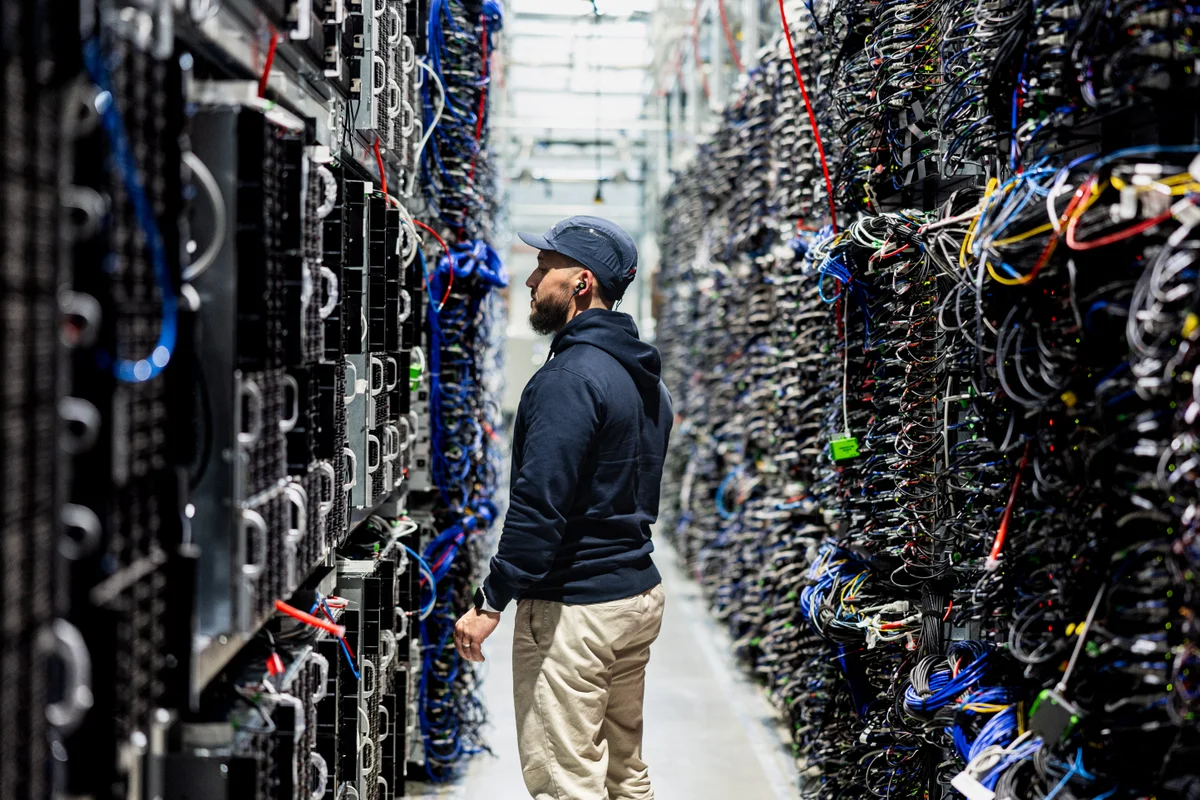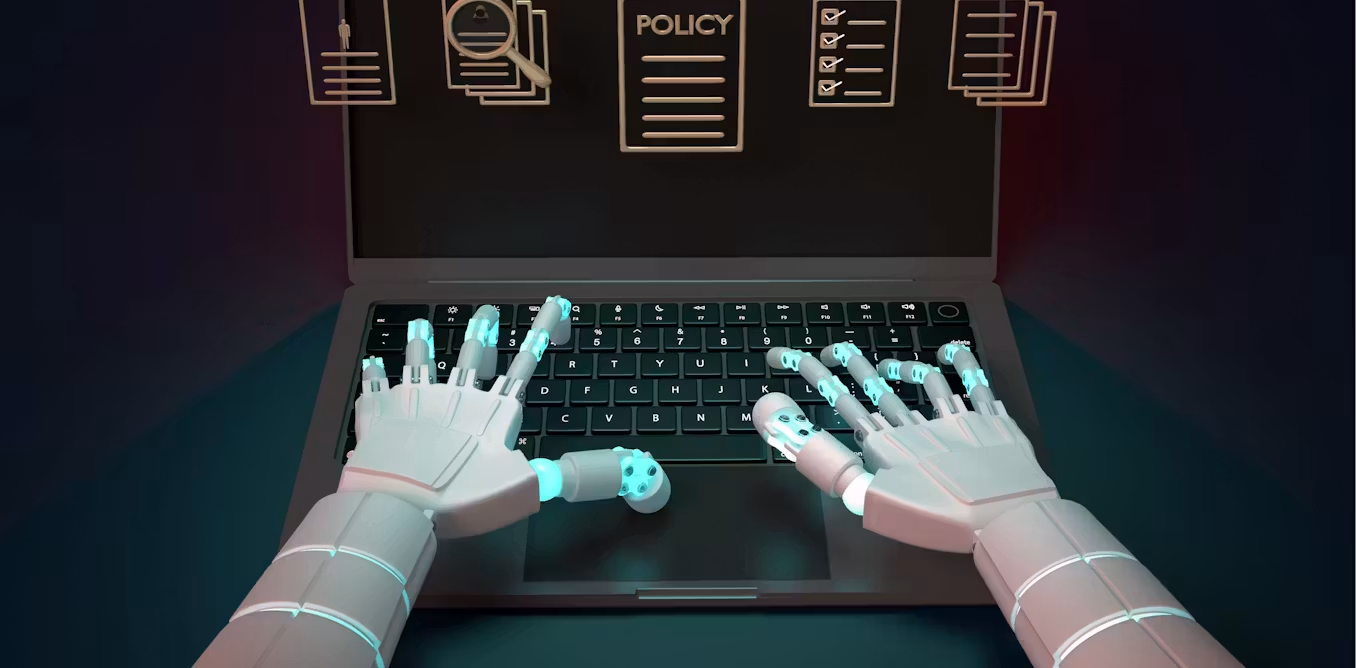
An AI that can build a better AI could theoretically keep on improvingJust_Super/Getty Images
One of the world’s leading artificial intelligence companies has implored the industry to pause development on AI, because the latest models could be reaching a tipping point where they become capable of redesigning themselves, growing ever more powerful and finally escaping our control. At least, that’s what the headlines said.
In truth, Anthropic’s co-founder Jack Clark and the boss of spin-out think-tank The Anthropic Institute, Marina Favaro, have published a long blog post bigging up the capabilities of their Claude model, shortly before the company floats on the stock exchange in an initial public offering (IPO) for a rumoured $1 trillion.
Let’s, for a moment, ignore the vast financial elephant in the room and look at the technological claims. An AI that becomes capable of designing a more powerful version of itself, which is in turn able to pull off the same feat, is an obvious gamechanger, but it is also not a new idea. While Anthropic now calls this “recursive self-improvement”, people have spent decades talking about “the singularity” as the moment that this occurs.
It’s not clear we are actually any closer to such a moment than before. The pace of AI research today is admittedly dizzying, but we’ve had spurts of progress before that were followed by dormant periods when improvement was as hard to come by as investment – the so-called AI winters. Even Favaro and Clark admit in their blog post that recursive self-improvement isn’t inevitable.