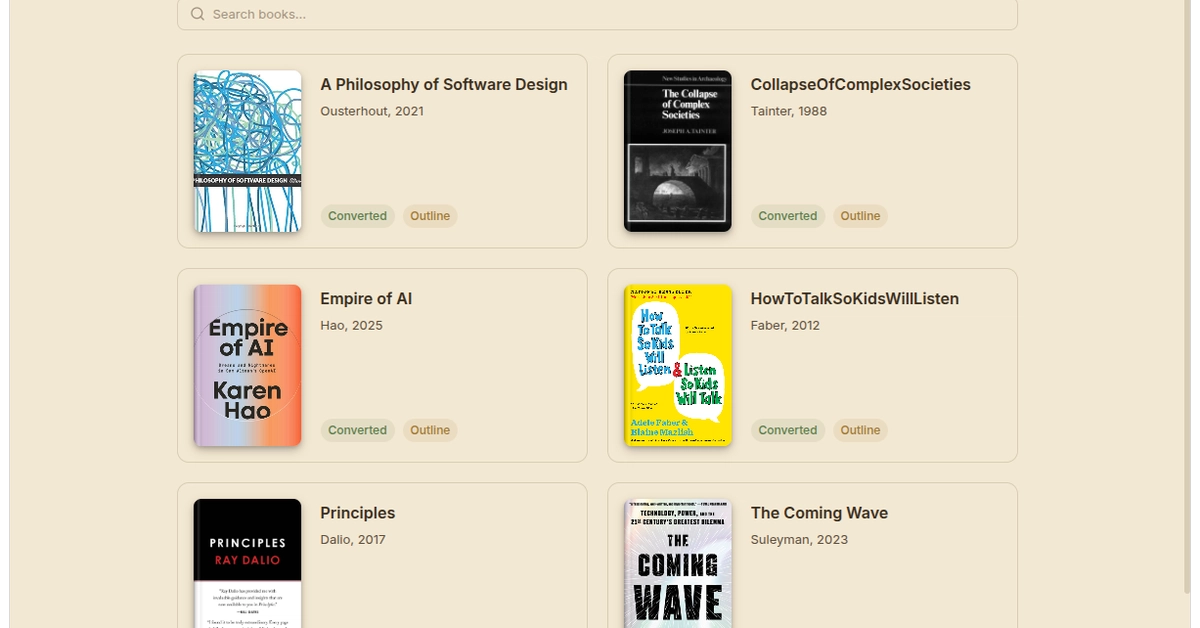
I was reading books with Pi in the terminal — a minimalist AI agent with tree-structured conversations — and it was genuinely the best way I'd ever read non-fiction. Branch into a tangent, explore it deeply, jump back without losing context. Every session was a map of how I actually thought about the material.
But it was a terminal tool. My wife reads more books than I do. My kids are curious about everything but need something they can click around in. My parents would never open a terminal. The gap between "this is incredible" and "nobody else can use it" felt like a problem worth solving.
So I built pi-books — an open-source, local-first reading companion that turns any book into a conversation you navigate like a tree.
The Problem with Flat Chat
Most AI tools treat books the same way they treat any prompt: paste text in, get an answer, context gone. You go on a tangent — "wait, how does this connect to X?" — and now your entire thread is polluted. There's no structure, no persistence, no sense of journey through the material.