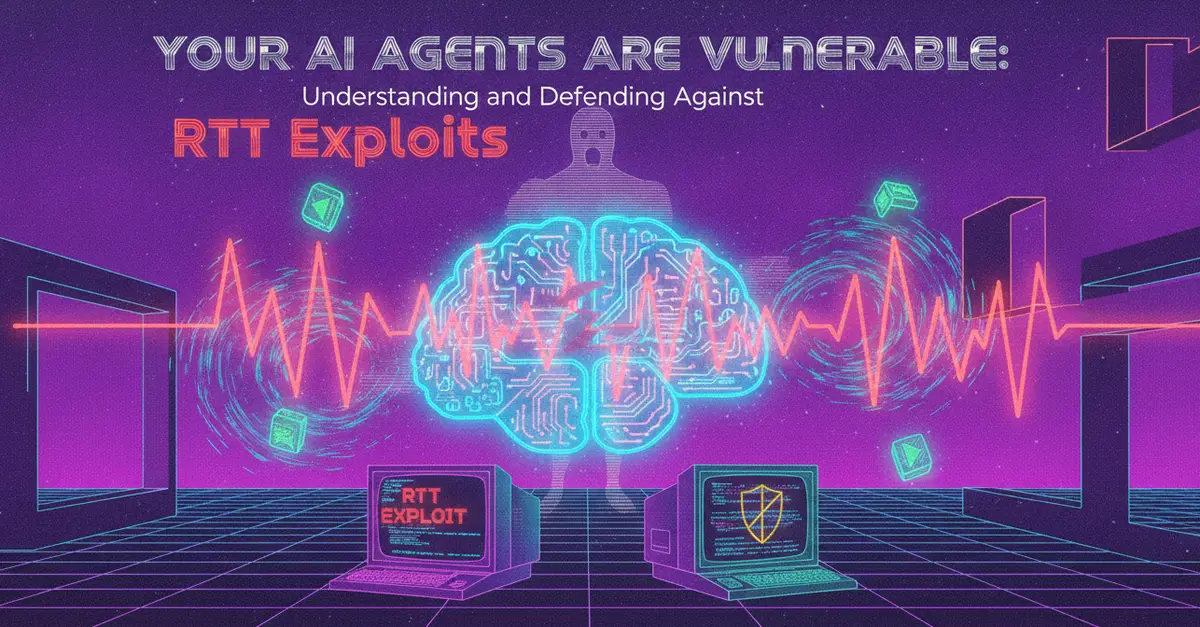
Ever wondered if your super-smart AI agent could be tricked into working against you? In the fast-paced world of AI, where autonomous agents are becoming central to our systems, a new and subtle threat is emerging: Return-to-Tool (RTT) exploits. This isn't just another bug; it's a fundamental shift in how we need to think about AI agent security.
What Exactly is an RTT Exploit?
Imagine your AI agent, designed to help you, suddenly gets a hidden instruction within a seemingly harmless piece of data. This instruction manipulates the agent into using its own approved tools, like accessing a database or sending an email, but for a malicious purpose dictated by an attacker. That, in a nutshell, is an RTT exploit.
It's a sophisticated form of indirect prompt injection. Think of it like this: in traditional software, Return-Oriented Programming (ROP) lets attackers chain together small, legitimate code snippets to do bad things. RTT is similar. Attackers use the AI agent's own legitimate tools, its
"gadgets," to achieve their malicious goals. The attacker's prompt acts as the "chain" that links these tools, forcing the agent to perform authorized actions for nefarious reasons.