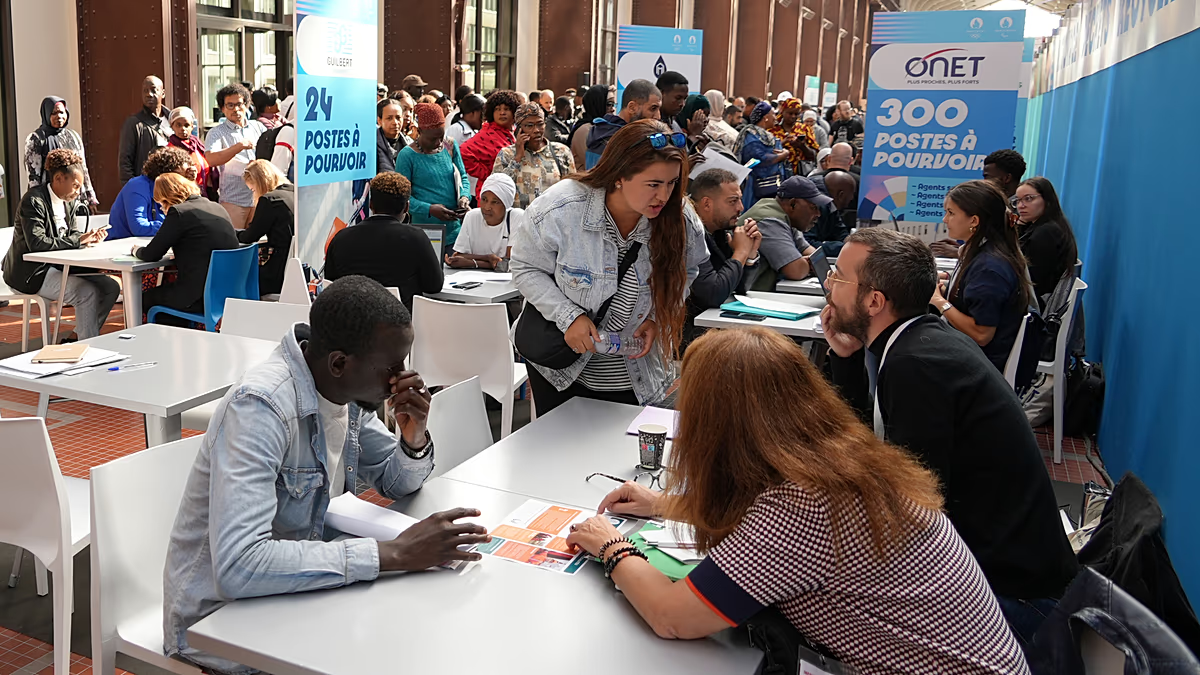
When it comes to the war for talent, it cannot be said that business is currently winning. In Europe, according to McKinsey’s 2025 HR Monitor survey, overall hiring success (which McKinsey calculates by multiplying a company’s offer-acceptance rate by the retention rate of new hires during their probation period) stands at just 46%. Businesses are no longer simply competing with one another for seasoned talent but also with retirement, as older employees leave the workforce and fewer young people enter to replace them.
Even as businesses achieve efficiencies by automating much of the entry-level work historically done by recent graduates, many are finding it harder to secure experienced workers to do the jobs AI cannot, leaving top candidates with plenty of leverage to say no to offers. Organizations are wasting untold levels of time, money, and effort to bring much-needed skills into their business. Such a challenge requires a new way of thinking.
One company with an alternative is Spotify. Although the Swedish streaming giant hit headlines in 2023 for laying off 17% of its staff, it has since recovered much of that lost ground. Performance is strong: Its most recent results, from Q1 2026, show the number of monthly active users climbed 12% year on year to 761 million, and quarterly revenue has increased by 14% to €4.5 billion. One can also read a lot into Spotify’s attrition rate, which hovers between 4% and 6%, compared with the estimated global average of 20%.