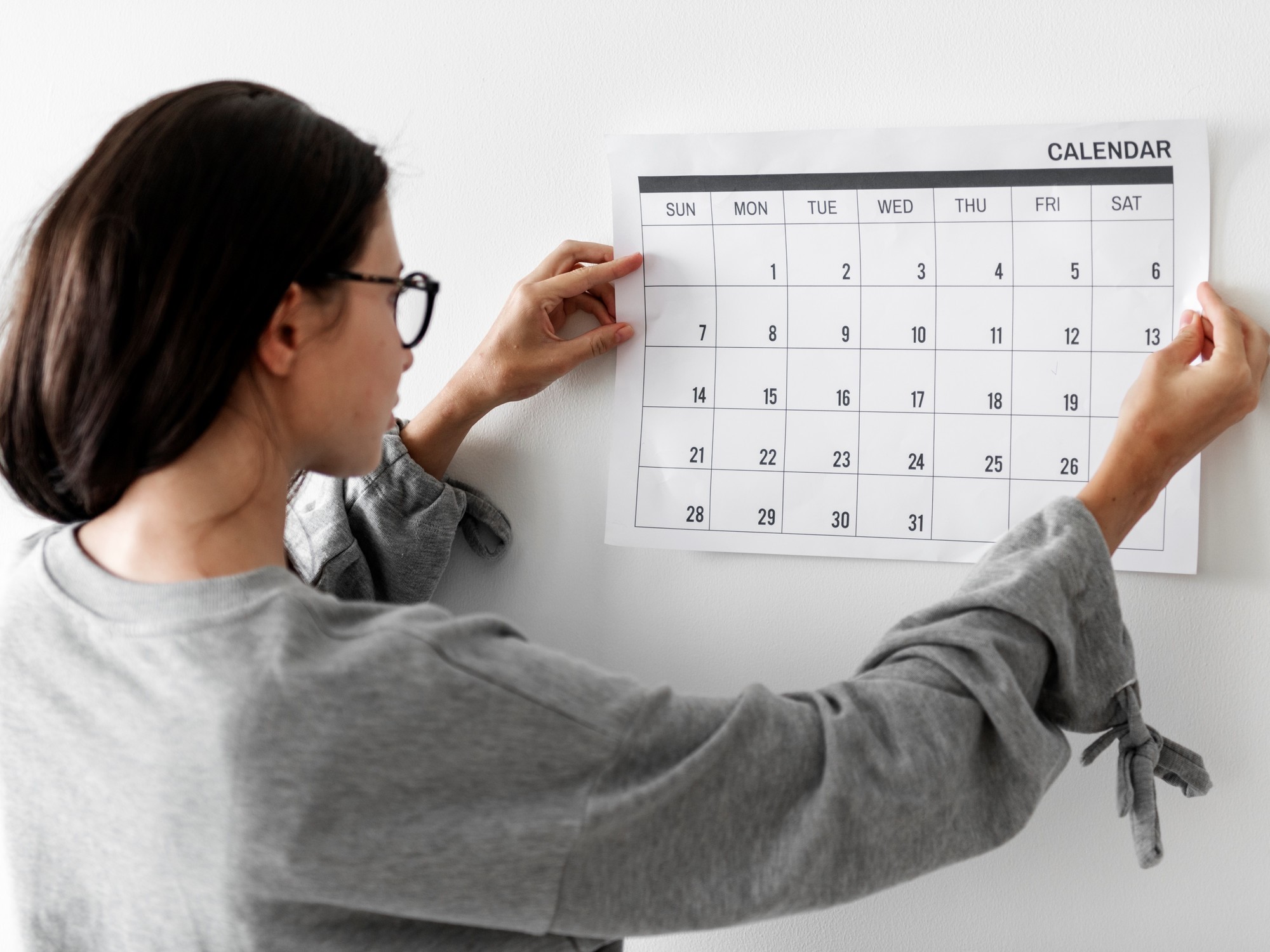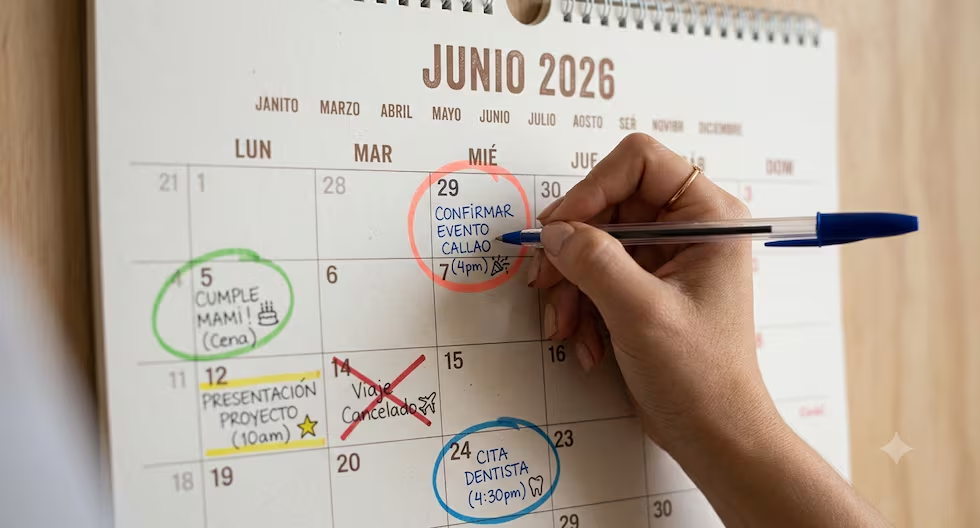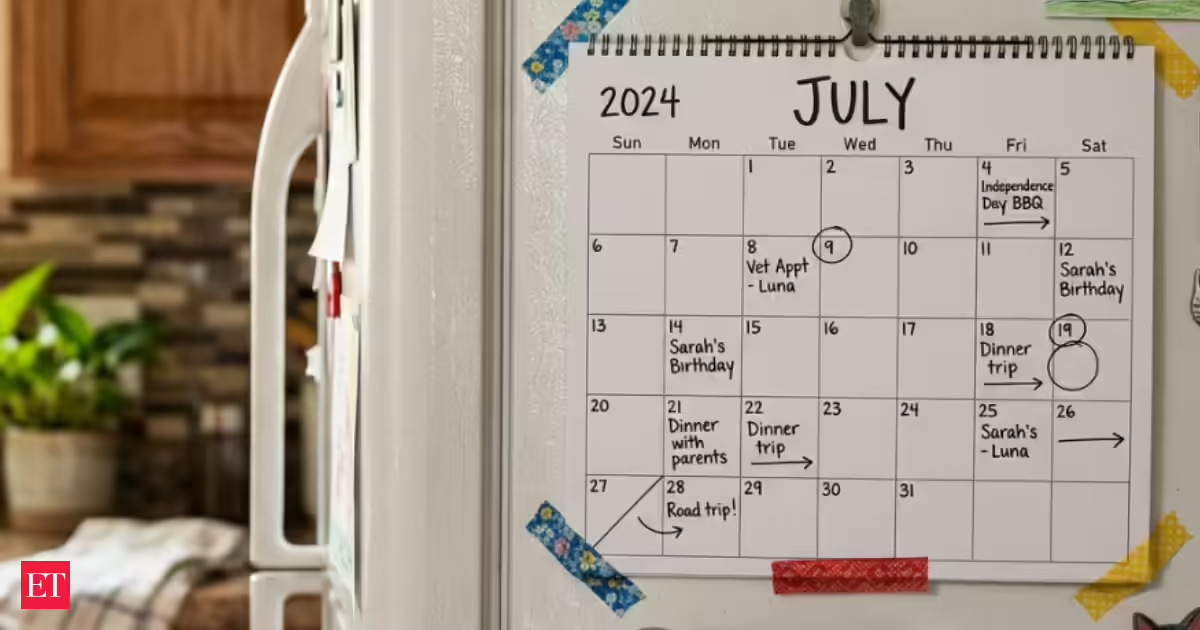
A paper calendar stuck to the refrigerator door is reminiscent of an outdated practice from bygone days, since in an age of smartphones, common applications, smart speakers, and digital notifications, it might be redundant to write down dates and appointments on paper. However, psychologists see this phenomenon from an altogether different angle.What appears to be a routine family activity is nothing more than one of the ways cognitive psychologists have been working for many years: the use of environmental cues to compensate for memory deficits. Instead of relying on their memory, people prefer to leave information outside themselves by transforming their homes into memory helpers.The brain is not built to remember every future taskA number of obligations that individuals have on a daily basis require them to use what psychologists call prospective memory, which involves remembering to perform an intended action at the right time. For example, appointments, picking children from school, paying bills, taking medications, celebrating birthdays, and conducting certain repetitive actions are examples of such tasks that depend on prospective memory. A review on this topic in the journal Current Directions in Psychological Science concluded that problems with this type of memory usually arise not from the loss of information, but from the absence of appropriate cues to carry out intended actions.A number of obligations that individuals have on a daily basis require them to use what psychologists call prospective memory | GeminiResearch findings from Neuropsychology, Development, and Cognition on the use of memory compensation techniques in daily living revealed that people tend to use calendars, notes, alarms, lists, and visual cues in order to assist their memory. These devices are not a sign of having a bad memory; rather, they are techniques used to allocate the mental workload between the person and the environment. In that sense, the use of a fridge calendar operates based on exactly the same principle. Rather than keeping one’s plans internal, one places them in a location where they will automatically surface during daily activities. As shown in a recent 2025 experiment investigating prospective memory, external reminders have been proven to significantly reduce the effects of aging on remembering intentions.Why a visible calendar can outperform a digital reminderThe presence of paper calendars when smartphones abound may initially appear strange before one brings focus to attention. A paper in Memory & Cognition on External cueing and intentional retrieval delay shows that future intentions are often retrieved through environmental cues rather than through mental effort. Put simply, humans remember because the environment reminds them, rather than by trying to keep their tasks in mind the whole time. That is why the survival of less advanced memory aids is quite understandable. A phone alert flashes and disappears; it can be ignored, hidden behind other notifications, or forgotten after locking screens. A paper calendar on a fridge does the opposite; it is constantly there, giving the individual several chances to remember. Each visit to the kitchen means seeing the same information.It is important to note that scholars addressing ecological validity in prospective memory often emphasize the need to examine memory where it actually occurs: in homes, offices, daily routines, etc. Family planning, bill paying, school activities, and appointments are all done in the context of one's environment. Hence, a fridge calendar is effective because it is there where things need to be remembered.Humans remember because the environment reminds them, rather than by trying to keep their tasks in mind the whole time | PexelsThe calendar often reminds the whole familyPerhaps the strongest case for the fridge calendar should not be considered in terms of individual recall but in relation to collective recall. Research on long-married couples, published in the Journal of Applied Research in Memory and Cognition, shows that, in most cases, couples use calendars, diaries, and even written schedules as collective memory aids. One spouse enters the information, and the other confirms it later, making the remembering process a joint effort rather than an individual endeavor. This argument correlates directly with the concept of transactive memory, which is widely applied in cognitive and organizational psychology. Transactive memory systems research reveals that efficient performance is attained when tasks are divided between people and collective memory resources. The fridge calendar does just that: it provides tangible evidence that anyone can check without having to keep asking the same questions over and over.Experiments analyzing the effects of using calendars and reminders yielded positive results, especially when these reminders were incorporated into participants’ routines. Another study assessing the effects of smartphone applications on memory also confirmed this, revealing the usefulness of location- and time-based reminders. The key difference here lies not in the psychological concept involved. The difference lies in the physical location of the cue: the former is located inside some kind of device, while the latter is embedded in the surrounding environment in which the family lives. This may very well be the reason why fridge calendars have stayed alive for so many years. They do not compete with technologies. Rather, they have a completely different purpose. Indeed, psychology teaches us that memory works better when part of the cognitive burden is transferred to the environment.
Psychology suggests people who keep a paper calendar on the fridge aren’t old-fashioned: They’re turning memory into something the room can help hold
In a world dominated by screens, paper calendars on refrigerators still hold their ground. Experts in psychology highlight the power of tangible reminders in boosting our memory retention. These physical tools aid not just in tracking our appointments and to-dos but also serve as a bonding element for families, fostering shared recollection.
859 words~4 min read