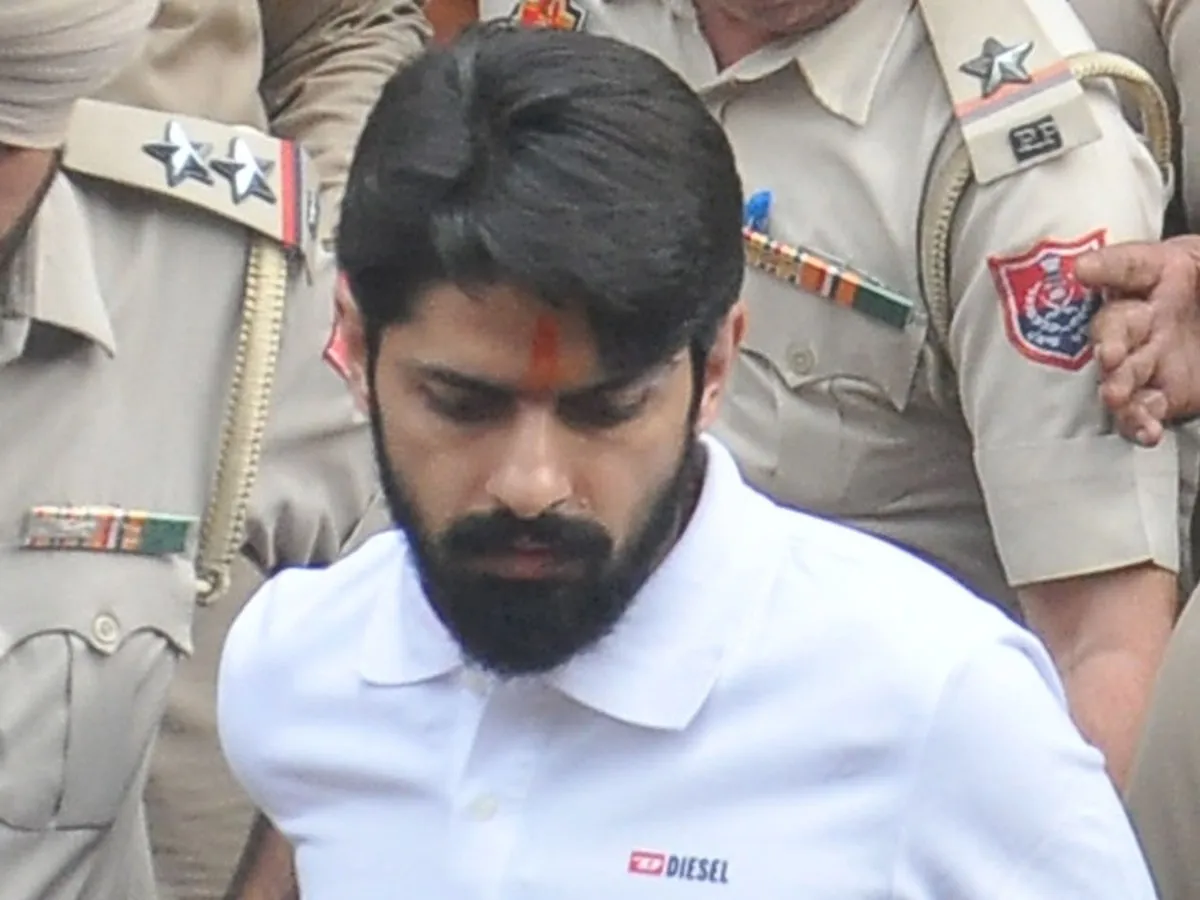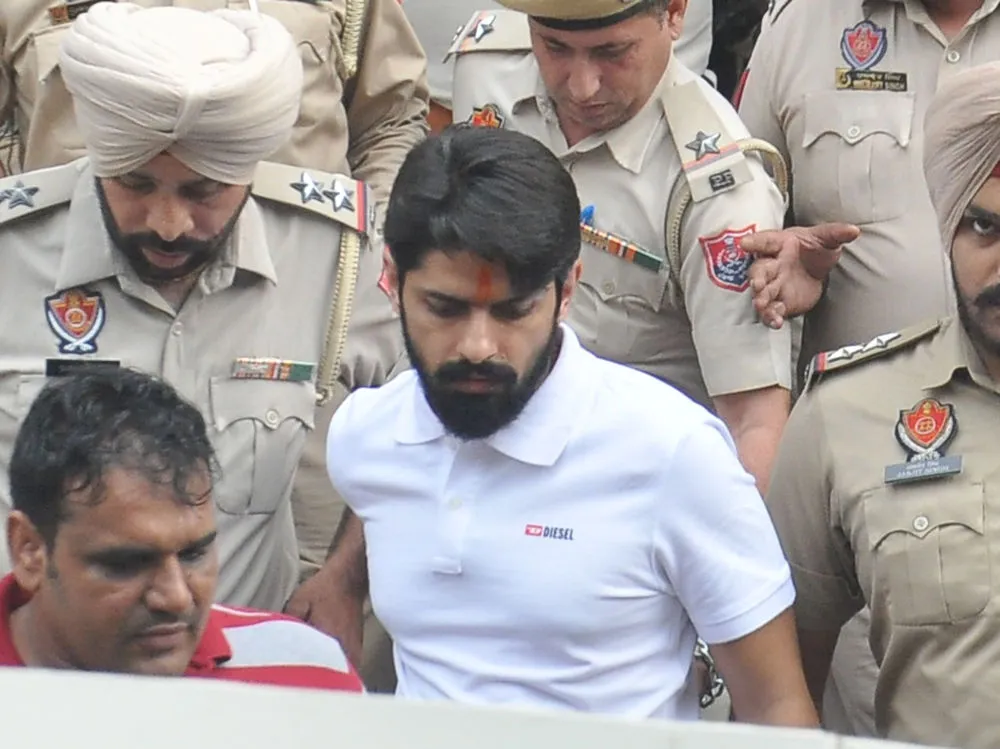
Skip to Content Subscribe Our Offers My Account Manage My Subscriptions FAQ Newsletters Canada Canadian True Crime Canadian Politics Health World Israel & Middle East Financial Post NP Comment Longreads Puzzmo Diversions Comics NP News Quiz New York Times Crossword Horoscopes Life Eating & Drinking Style Sponsored Play for Ontario Travel Travel Canada Travel USA Travel International Cruises Travel Essentials Culture Books Celebrity Movies Music Theatre Television Business Essentials Advice Lives Told Tails Told Shopping Buy Canadian Home Living Outdoor Living Tech Style & Beauty Kitchen & Dining Personal Care Entertainment & Hobbies Gift Guide Travel Guide Deals Savings National Post Store More Sports Hockey Baseball Basketball Football Soccer Golf Tennis Driving Vehicle Research Reviews News Gear Guide Obituaries Place an Obituary Place an In Memoriam Classifieds Place an Ad Celebrations Working Business Ads Archives Healthing Epaper Manage Print Subscription Profile Settings My Subscriptions Saved Articles My Offers Newsletters Customer Service FAQ Newsletters Canada World Financial Post NP Comment Longreads Puzzmo Diversions Life Shopping Epaper Manage Print Subscription HomeNP CommentFIRST READING: How lax immigration brought one of Canada's most dangerous gangs to lifeRise of the Bishnoi Gang helped along by unprecedented spike in Indian nationals coming to Canada on study permits You can save this article by registering for free here. Or sign-in if you have an account.Indian ganster Lawrence Bishnoi pictured in 2022. Despite being in an Indian prison, he's one of the key figures in an extortion crisis sweeping Canada. Photo by Photos by Sameer Sehgal/Hindustan Times via Getty ImagesFirst Reading is a Canadian politics newsletter curated by the National Post’s own Tristin Hopper. To get an early version sent directly to your inbox, sign up here.Enjoy the latest local, national and international news.Exclusive articles by Conrad Black, Barbara Kay and others. Plus, special edition NP Platformed and First Reading newsletters and virtual events.Unlimited online access to National Post.National Post ePaper, an electronic replica of the print edition to view on any device, share and comment on.Daily puzzles including the New York Times Crossword.Support local journalism.Enjoy the latest local, national and international news.Exclusive articles by Conrad Black, Barbara Kay and others. Plus, special edition NP Platformed and First Reading newsletters and virtual events.Unlimited online access to National Post.National Post ePaper, an electronic replica of the print edition to view on any device, share and comment on.Daily puzzles including the New York Times Crossword.Support local journalism.Create an account or sign in to continue with your reading experience.Access articles from across Canada with one account.Share your thoughts and join the conversation in the comments.Enjoy additional articles per month.Get email updates from your favourite authors.Create an account or sign in to continue with your reading experience.Access articles from across Canada with one accountShare your thoughts and join the conversation in the commentsEnjoy additional articles per monthGet email updates from your favourite authorsSign In or Create an AccountorAt the immigration hearing for an accused Indian gangster last week, an Edmonton Police officer attempted to illustrate the scale of the criminal operation that law enforcement was now dealing with.The hearing concerned Jashandeep Singh, an Indian national who had been photographed joking around with an illegal firearm linked to extortion-related violence in Edmonton.This newsletter from NP Comment tackles the topics you care about. (Subscriber-exclusive edition on Fridays)By signing up you consent to receive the above newsletter from Postmedia Network Inc.We encountered an issue signing you up. Please try againSingh told the hearing through a Punjabi translator that he had no idea that the man who had given him what he thought was a replica gun, Arshdeep Singh, worked in organized crime. And it was these criminal links that got Arshdeep himself deported under guard in January, with the Canada Border Services Agency declaring him inadmissible due to “membership in a criminal organization linked to extortion, arson, drug trafficking, and firearm offences.”Both Singhs in this saga had entered Canada on student visas in 2022, and as Edmonton Police Constable Kevin St. Louis told the hearing, this was pretty typical.“Every individual that we’ve identified during this investigation … is a temporary foreign worker or on a student visa and relatively new to Canada,” St. Louis told the hearing, according to the CBC.Between 2022 and 2024, Canada experienced a surge of temporary migration unlike anything in its history. Millions of students, asylum-seekers and temporary foreign workers entered the country, overwhelming Canada’s usual security checks on foreign migrants.As the country comes to terms with the consequences of this, one of the most flamboyant seems to be that it caused a powerful Indian gang to materialize almost overnight.In September, 26-year-old Indian national Abjeet Kingra was sentenced to two years in prison for participating in a shooting attack on the home of AP Dhillon, an Indo-Canadian rapper living in Greater Victoria.According to a Global News profile, Kingra had entered Canada on a student visa.His case, and many like them, are connected to the Bishnoi Gang, a “transnational criminal organization” that Canada listed as an official terror entity last September.The gang is run out of India by 33-year-old gang leader Lawrence Bishnoi, despite the fact that he’s been in a high-security Indian prison for the last 10 years.The Bishnoi Gang’s primary racket in Canada is extortion. South Asian business owners are contacted for exorbitant sums of money and threatened with violence or arson if they don’t pay up.“WARNING. we are Indian gang members, we want our share from your business like protection money,” reads one extortion letter circulated by the RCMP in 2023.“Extortion events typically begin with anonymous calls or messages over encrypted chat applications demanding large payments, sometimes in the range of hundreds of thousands to millions of dollars. Circumstances escalate to gunfire at homes or storefronts and, in some cases, arson when demands are refused,” reads a summary by FINTRAC, Canada’s official financial intelligence agency.The crimes have occurred in Canadian cities with South Asian communities, but have particularly reached crisis levels in Surrey, B.C., where shootings and arson attacks are now sometimes occurring multiple times per day.In January, Surrey Mayor Brenda Locke called on the federal government to declare a national state of emergency, or “invoke equivalent extraordinary measures,” to clamp down on the wave of foreign extortionists.Lax Canadian border policies are already known to have led to situations in which foreign criminal organizations moved their people into Canada for the specific purpose of committing crimes.Just on Friday, for instance, the Durham Regional Police announced the details of Project Jetsetter, a massive dragnet of “organized groups travelling to Canada for the purpose of executing high-profit crimes.”Known as “criminal tourism,” Project Jetsetter arrested more than three dozen predominantly Romanian nationals accused of entering Canada via legal means before embarking on predetermined crime sprees featuring everything from insurance scams to organized shoplifting.The Bishnoi Gang’s strategy is slightly different in that it’s usually able to skip the first step of moving its operatives into Canada.Instead, it’s known to recruit from Indian nationals who were already in Canada, particularly in the wake of the 2022-2024 migration surge.In April, a special bulletin by FINTRAC described how Bishnoi and groups like it were comprised largely of “individuals already living in Canada.”“These groups appear to recruit or rely on individuals already living in Canada to act as financial intermediaries (‘money mules’), enforcers, or ‘foot soldiers’, typically financially vulnerable, young male Indian nationals in Canada on study permits,” it wrote.In February, B.C. publicly urged the federal government to crack down on Canada’s various temporary migration streams, citing their open exploitation by foreign criminal organizations.“Law enforcement agencies in B.C. have encountered cases where individuals connected to extortion-related activities may possess expired visas, have pending refugee claims, or non-compliant student visas, while actively participating in or linked to violent offences,” read a statement.In the immediate wake of COVID lockdowns, the government of then-prime minister Justin Trudeau oversaw Canada’s largest-ever surge in Canadian immigration numbers, with more than one million foreign nationals per year entering the country between 2022 and 2024.According to an October analysis by CIBC, 60 per cent of that surge was “non-permanent residents.”“Many of these NPRs initially arrived as students, but transitioned to work permits through a patchwork of lax rules, some which exempted employers from labor market assessments, and little government oversight,” read the report.In 2023 alone, immigration officials approved an unprecedented 684,000 study permits. It was nearly double the 356,000 study permits issued as recently as 2018.Perhaps more relevant to Bishnoi recruiters, however, was how many of those extra students ran into financial problems shortly upon arrival.One of the most immediately visible outcomes of the post-2022 surge was large numbers of foreign students looking for entry-level work. Particularly in the Toronto area, job fairs for only a handful of positions were routinely attracting crowds of hundreds.One Toronto Star profile of the phenomenon in 2024 called it evidence of “the tough employment market international students face here in Toronto.”Abjeet Kingra, the 26-year-old Bishnoi operative jailed for staging a shooting attack on an Indo-Canadian rapper, was one of those who reportedly entered Canada without any thoughts of entering crime.As per Global News, Kingra’s family had sacrificed to purchase his way into Canada via a student visa, and upon completion of his studies, he had initially been a model employee at a Winnipeg moving company.According to court documents cited by the broadcaster, he switched from the moving trade to the extortion trade simply because it was more lucrative. This is the first B.C. poll to be published following the victory of Kerry-Lynne Findlay in the BC Conservative leadership race. Findlay was easily the most hardline candidate, and one of the chief criticisms against her was that it would prove alienating to the wider electorate. And in a trend that’s also shown up at the federal level, the BC Conservatives under Findlay is more popular among young British Columbians than among people Findlay’s age (she’s 71). Among voters under 34, support for the BC Conservatives stood at 44 per cent against 40 per cent for the BC NDP. Among voters over 55, it was an almost complete reversal; 40 per cent for the BC Conservatives, 47 per cent for the BC NDP. Photo by LegerFirst Reading is a Canadian politics newsletter curated by the National Post’s own Tristin Hopper. To get an early version sent directly to your inbox, sign up here. Get the latest from Tristin Hopper straight to your inbox Join the Conversation This website uses cookies to personalize your content (including ads), and allows us to analyze our traffic. Read more about cookies here. By continuing to use our site, you agree to our Terms of Use and Privacy Policy.
FIRST READING: How lax immigration brought one of Canada's most dangerous gangs to life
Rise of the Bishnoi Gang helped along by unprecedented spike in Indian nationals coming to Canada on study permits.
1,764 words~8 min read