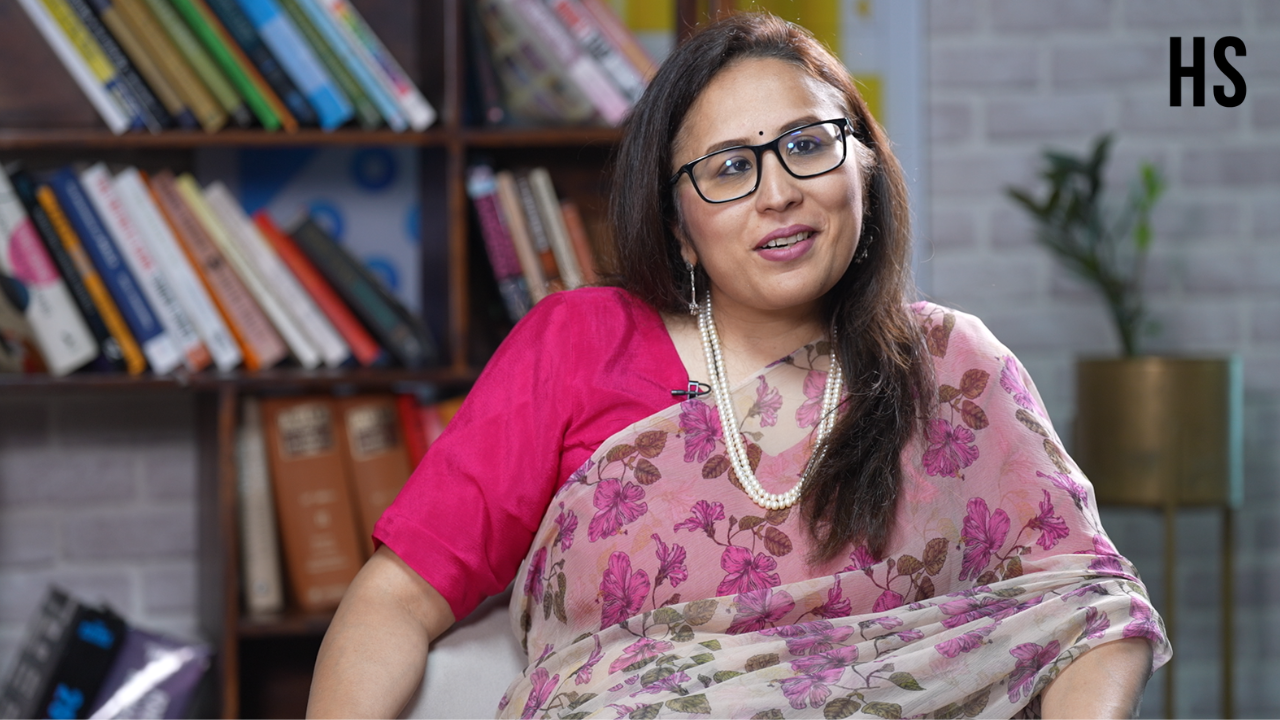
Everyone wants a multibagger. Almost nobody builds lasting wealth from one. That is the uncomfortable truth at the heart of Radhika Gupta's session at the ET Alpha Summit. The Edelweiss Mutual Fund MD and CEO made the case for something far less exciting but far more powerful: patience, allocation, and compounding.Talking to ETMarket.com's Kshitij Anand at the sidelines of the summit, Radhika Gupta dismantled the multibagger myth and made the case that boring, disciplined compounding, not social media tips, is the only reliable path to a ₹100 crore portfolio.Stop treating 12% returns like a disasterThe first thing Gupta wants investors to unlearn is their disdain for moderate returns. In a market shaped by five years of outsized gains, the shift to a 10–12% return environment feels like failure. It is not."10% to 12% was always the return environment," she said. "It is just that the last five years have misled us." Nifty's long-term annualised return sits around 11–12%. India's nominal GDP growth has historically run at the same rate. The world's smartest allocators, family offices, institutional endowments, typically target inflation plus 4–5%, which in India translates to roughly 11–12%.At that return, money doubles every six years. A ₹1 crore investment held for 25 years reaches ₹15–16 crore. Layer in annual top-ups and income growth, and a ₹100 crore portfolio is not a fantasy — it is arithmetic.You Might Also Like:The asset that compounds fastest is not in your demat accountOne of Gupta's most pointed observations was directed at young investors. When a 17-year-old asked her for the single best investment advice, her answer was not about stocks or funds."At 17, you do not have capital. You are in the business of earning capital," she said. Human capital, the ability to grow income, build skills, and earn more, compounds faster than financial capital for most of the working years of a person's life. The ₹100 crore journey starts not with a hot fund pick, but with investing in yourself.The practical implication: increase your SIP by 10–12% every year, in line with income growth. Gupta and her husband do this consciously every May, resetting their investment plan to match their updated financial picture. An investor who does this consistently, she argues, will dramatically outperform one who invests a fixed amount year after year.You Might Also Like:Asset allocation matters more than fund selection; go BATHere is a number that should settle a long-running debate. When Gupta ran an attribution analysis on her own portfolio, 59% of her returns came from asset allocation decisions. Only 41% came from fund selection — the thing most investors spend nearly all their time obsessing over.Her framework for thinking about portfolio construction is what she calls BAT: Beta (the return markets give you), Alpha (outperformance over benchmarks), and Tax and efficiency (ensuring returns are optimised after costs and taxes). In a high-return environment, beta arrives easily. In today's market, you need to work harder for alpha and be more disciplined about efficiency.On gold, her stance is clear: a 10–15% allocation makes sense as a portfolio diversifier - insurance, not a core holding. Beyond that, commodities do not have a structural reason to appreciate and are not fundamentally wealth-creating assets. On real estate, she is sceptical: most investors, she argues, do not make a fair apples-to-apples comparison of real estate returns against liquid financial assets once illiquidity, holding costs, and time are properly accounted for.Social media is the enemy of compoundingGupta saved her sharpest remarks for social media's role in distorting investor behaviour. The problem, she says, is not misinformation, it is compressed time horizons and the glamorisation of outlier outcomes. Investors see the doubled portfolios, never the leverage behind them or the failures alongside them.You Might Also Like:Her analogy is vivid: investing in India over 25 years leads to a pot of gold, but like every road in Mumbai, the short-term journey is always under construction, full of potholes, and social media amplifies every pothole into a crisis.The antidote? Boring, consistent discipline. It is not glamorous. It is just what works.
Patience, allocation & compounding, not social media tips, only reliable path to a ₹100-crore portfolio: Radhika Gupta
Radhika Gupta of Edelweiss Mutual Fund emphasizes patience and disciplined compounding for wealth creation. She advises investors to accept 10-12% returns as normal, not a failure. Investing in oneself to increase income is crucial. Asset allocation is more important than fund selection. Social media's focus on quick gains distorts investor behavior. Consistent discipline is the proven path to financial success.
673 words~3 min read