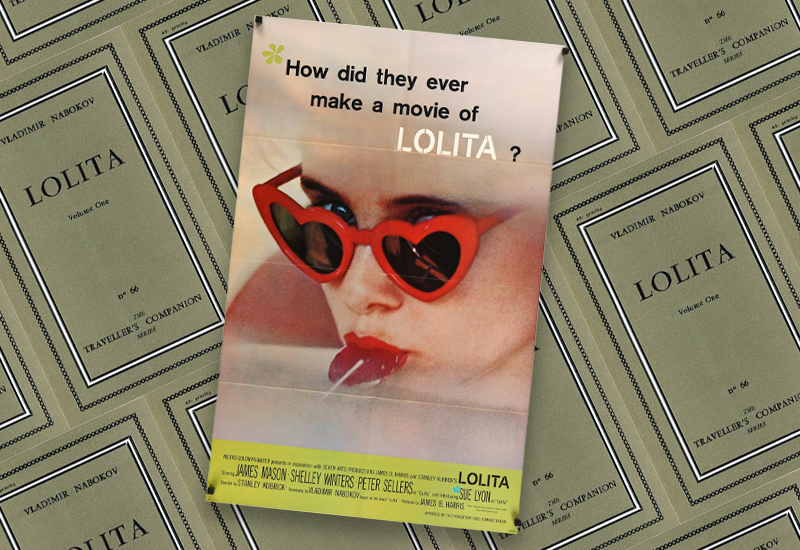
Vladimir Nabokov’s Lolita was first published in 1955, after many rejections from American publishers, by the Paris-based Olympia Press, who really specialized in books of a different sort entirely (other titles included Until She Screams, Tender Thighs, and There’s a Whip in My Valise). The novel was initially ignored, and then—after Graham Greene called it one of the best books of the year—dismissed, and then banned, first in the UK and then in France.
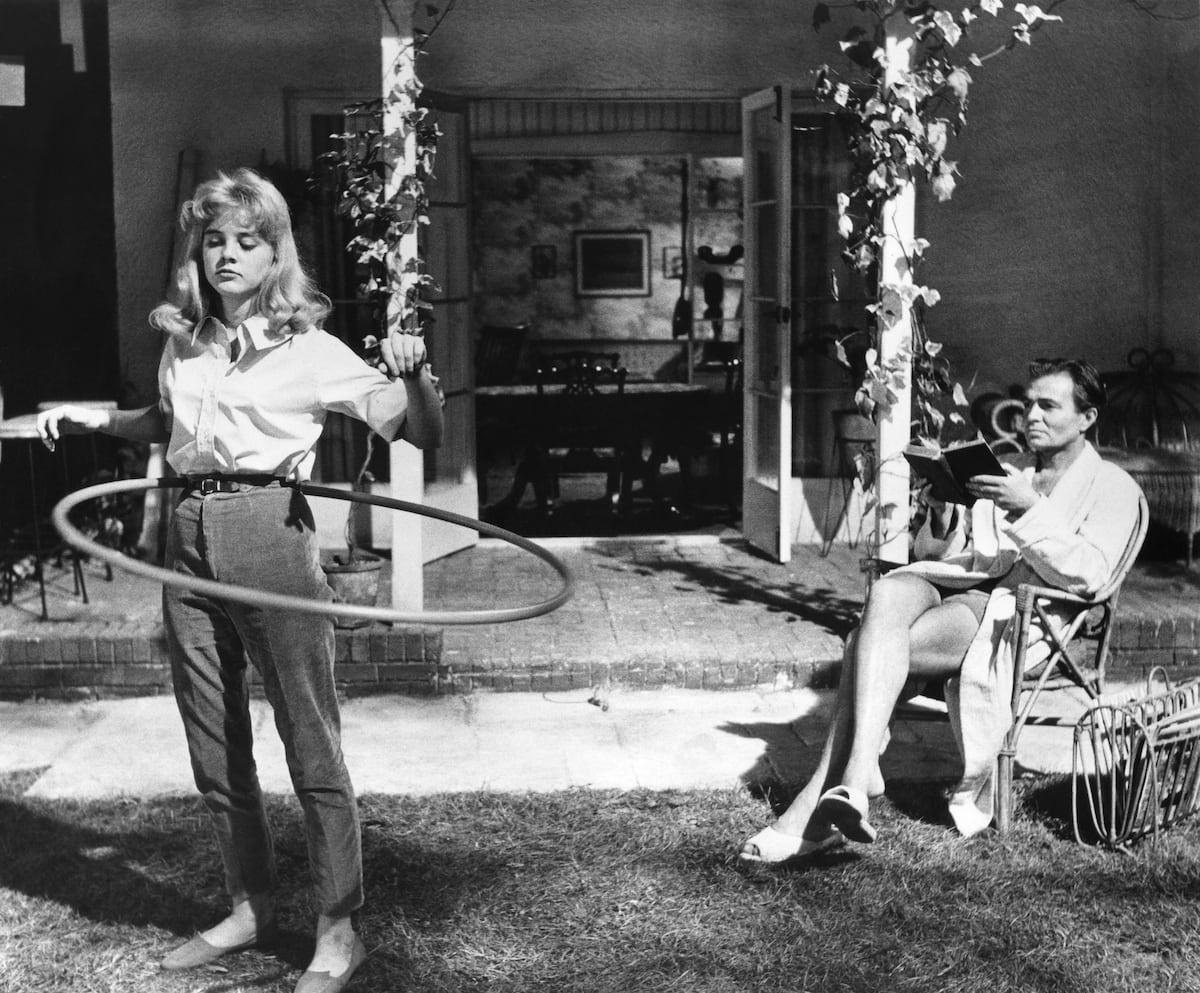
When Lolita was finally published in the US, by G.P. Putnam’s Sons in 1958, it became an instant sensation; the novel sold 100,000 copies in its first three weeks, the first book to do so since Gone With the Wind. Stanley Kubrick was no doubt pleased; he and producer James B. Harris had bought the film rights a few weeks before, for $150,000.
The pair asked Nabokov to write the script, but he wasn’t keen on the idea: “the honorarium they offered was considerable, but the idea of tampering with my own novel caused me only revulsion,” he later wrote in the foreword to Lolita: A Screenplay. But he changed his mind later that year, and soon began, as he put it, “an amiable battle of suggestion and countersuggestion” with Kubrick—and by extension, with the censors. In order to appease the Production Code, and facing pressure from the Roman Catholic League of Decency, Lolita’s age was never referenced in the film, and the physical relationship between Lolita and Humbert Humbert went undepicted. In the final film, hints abound.