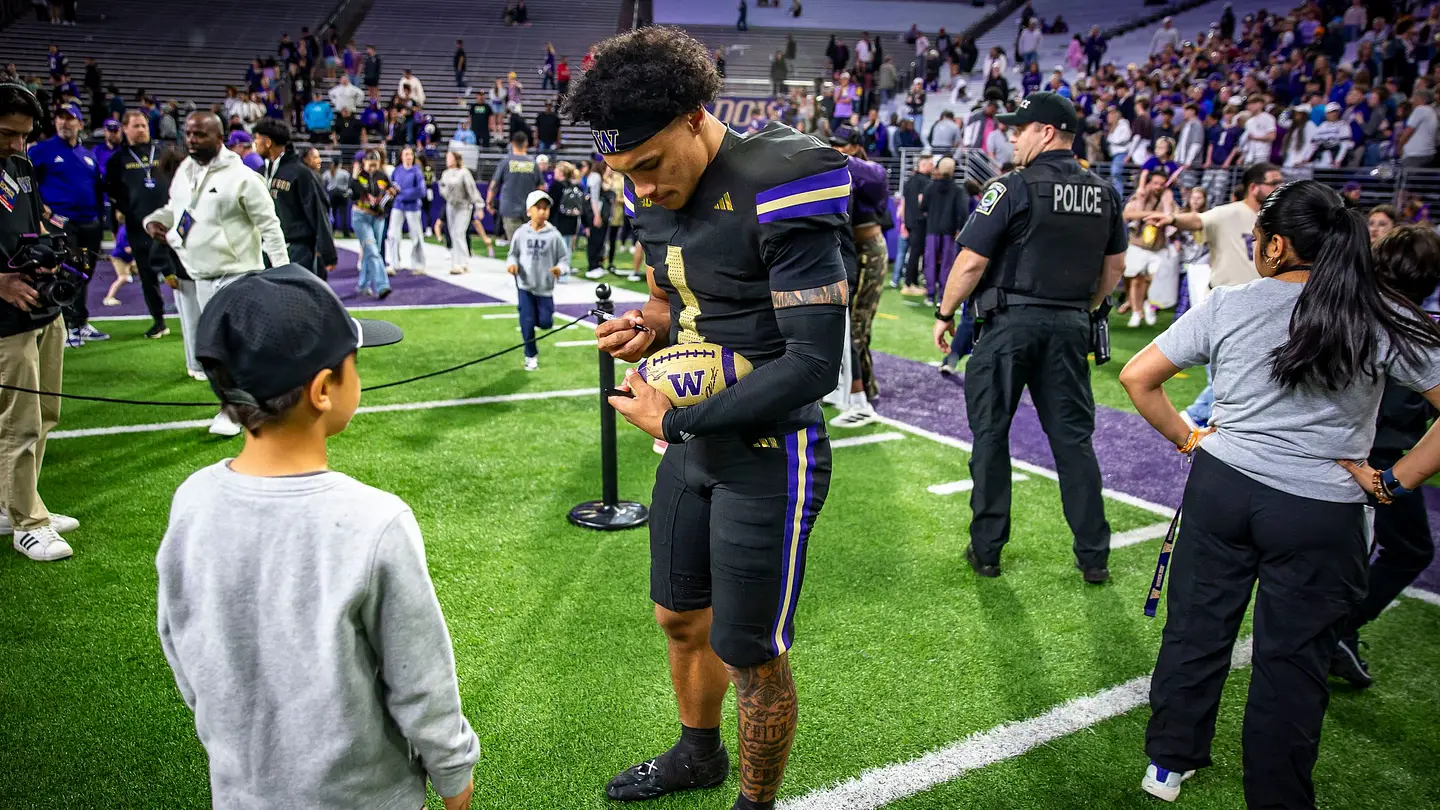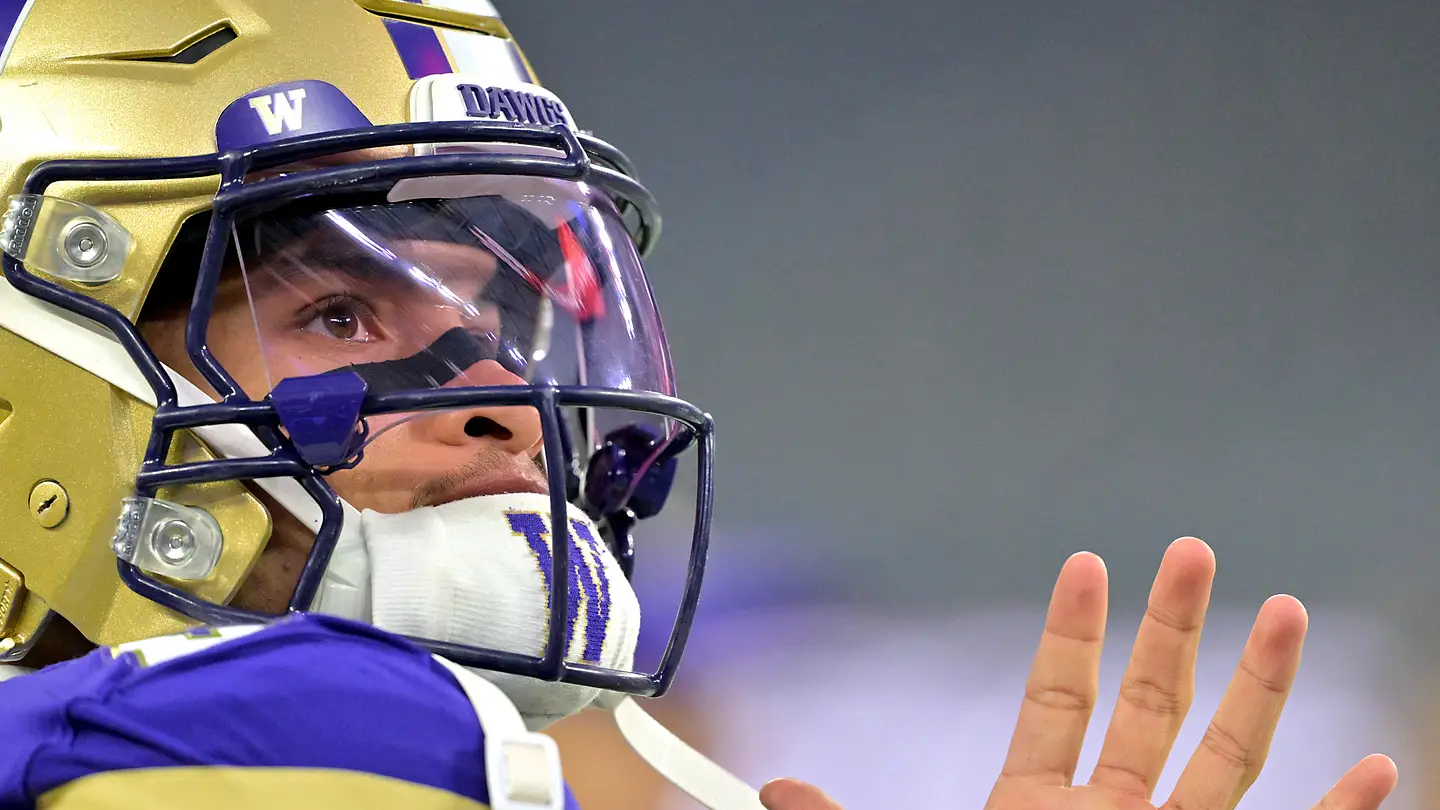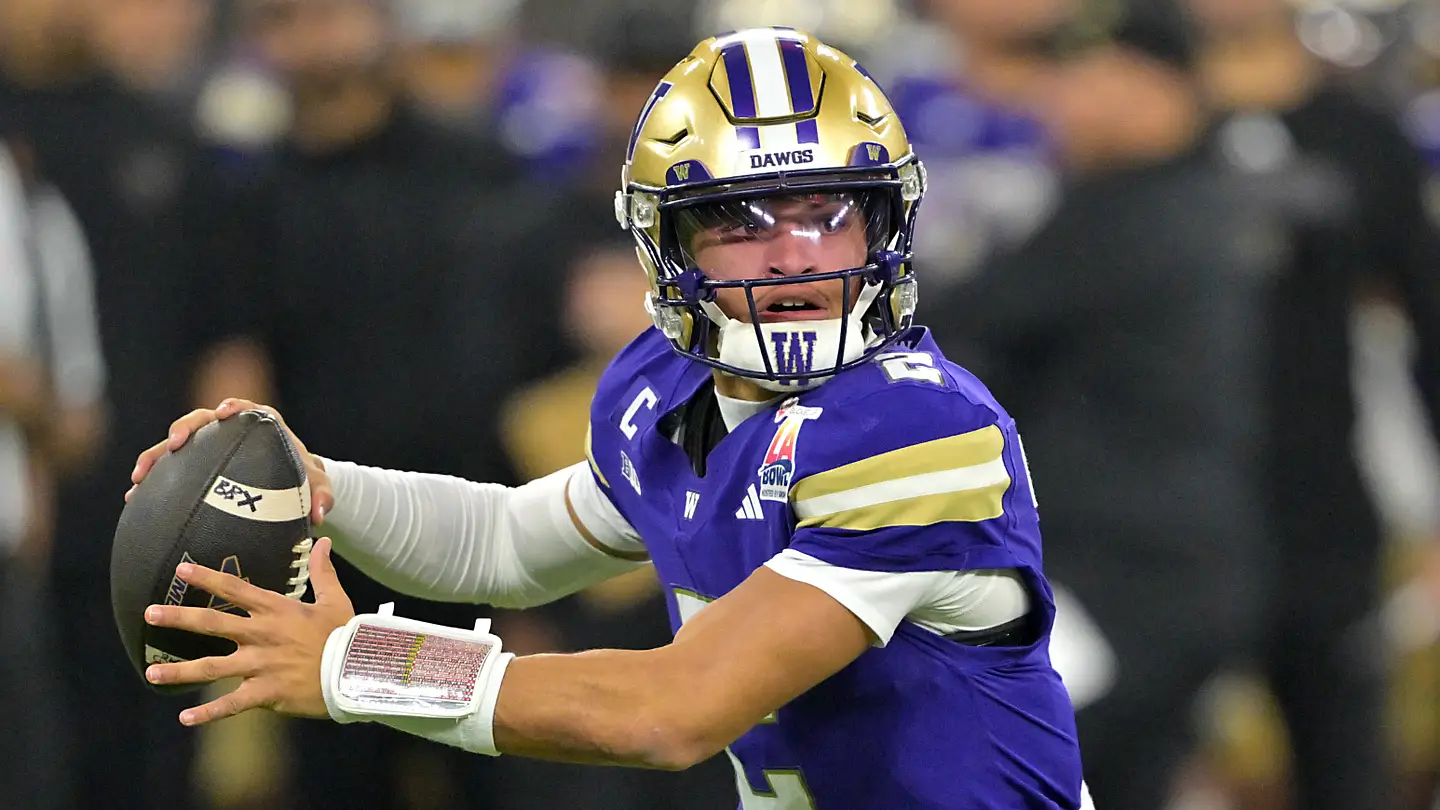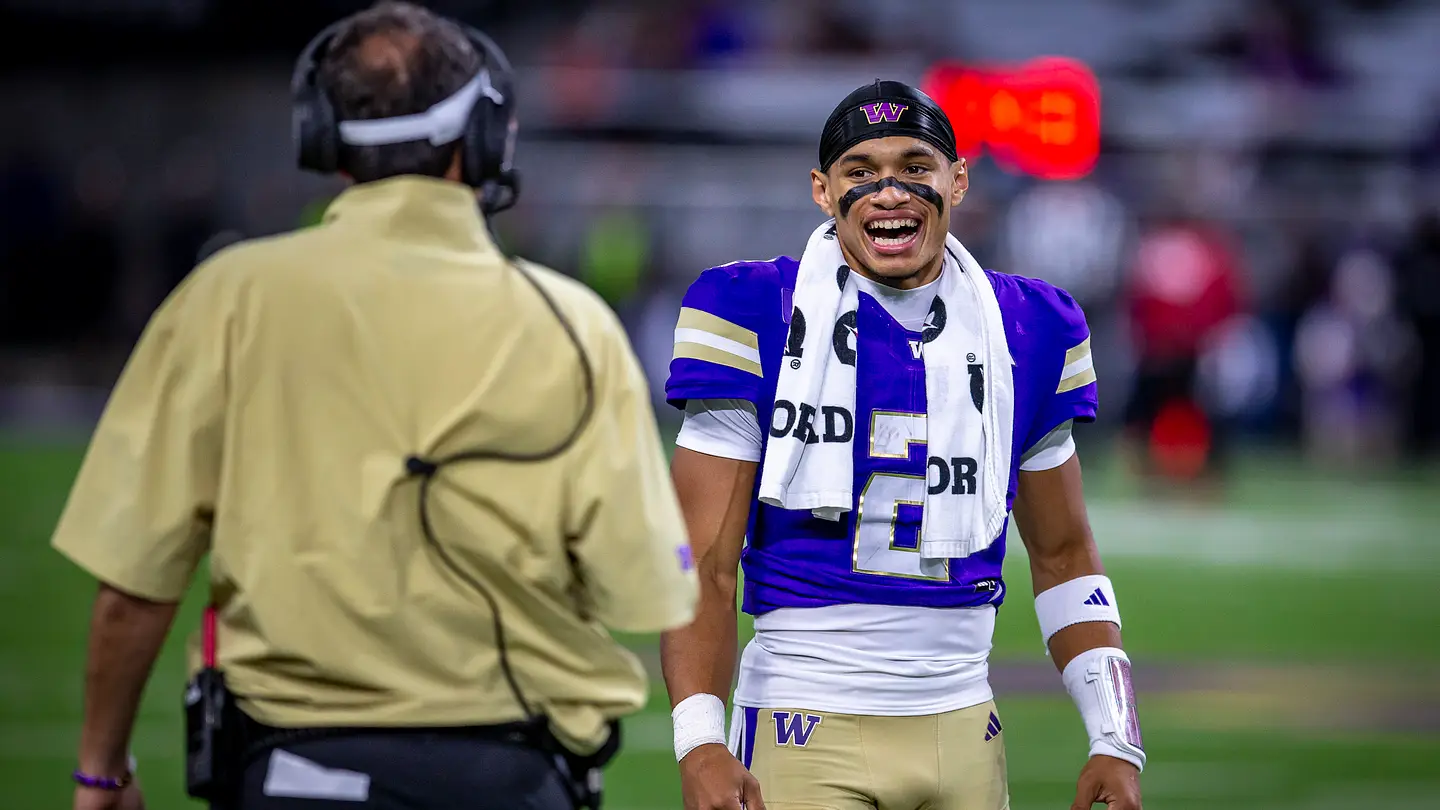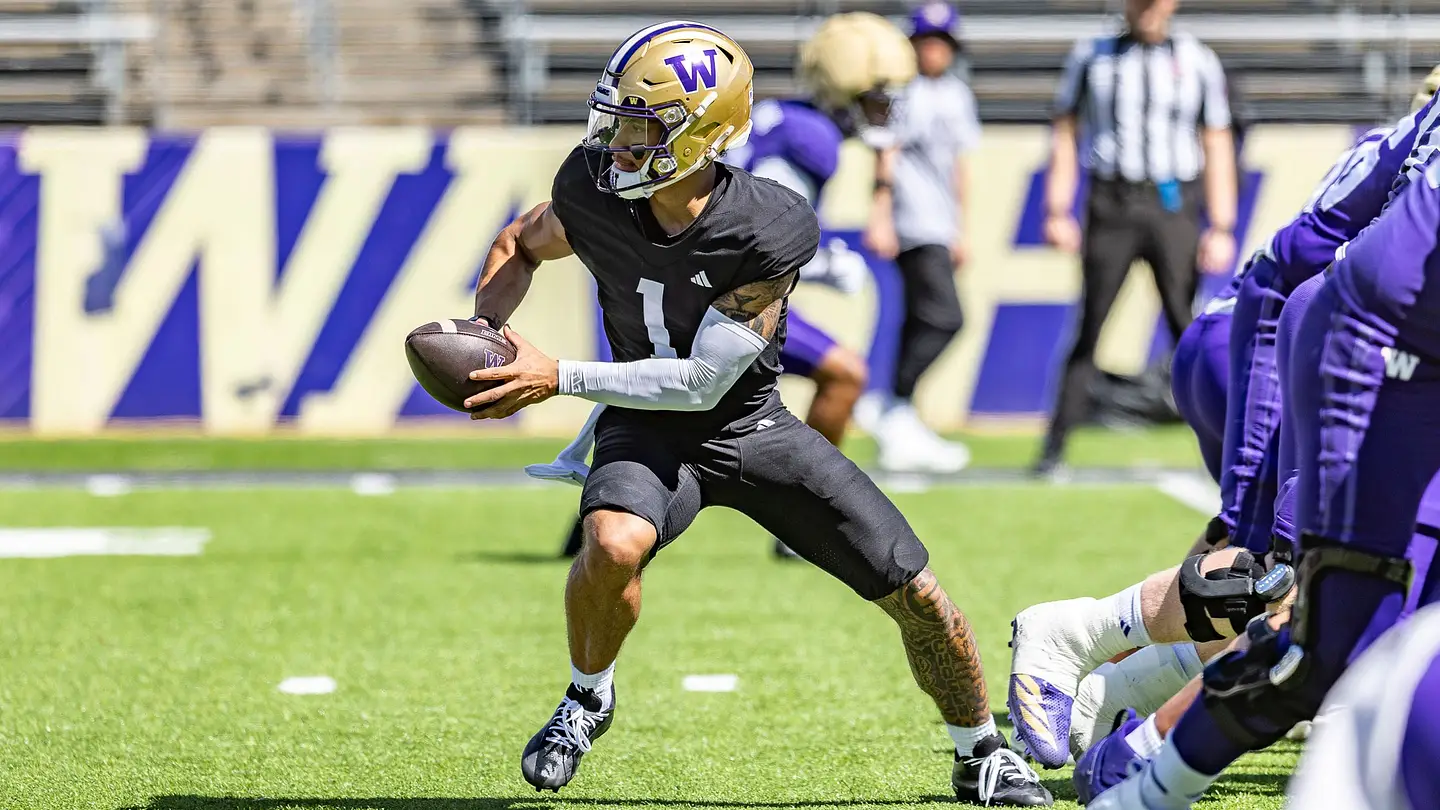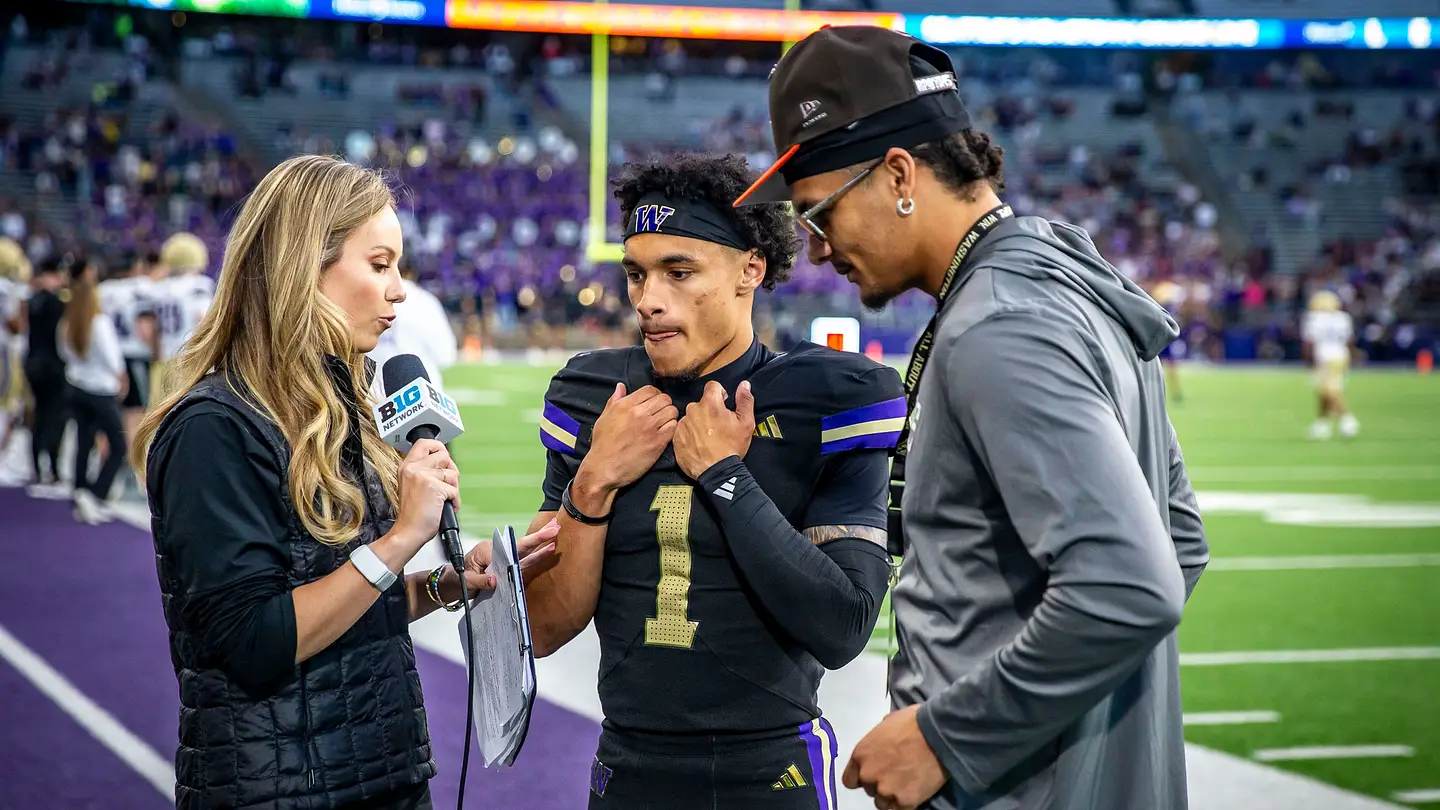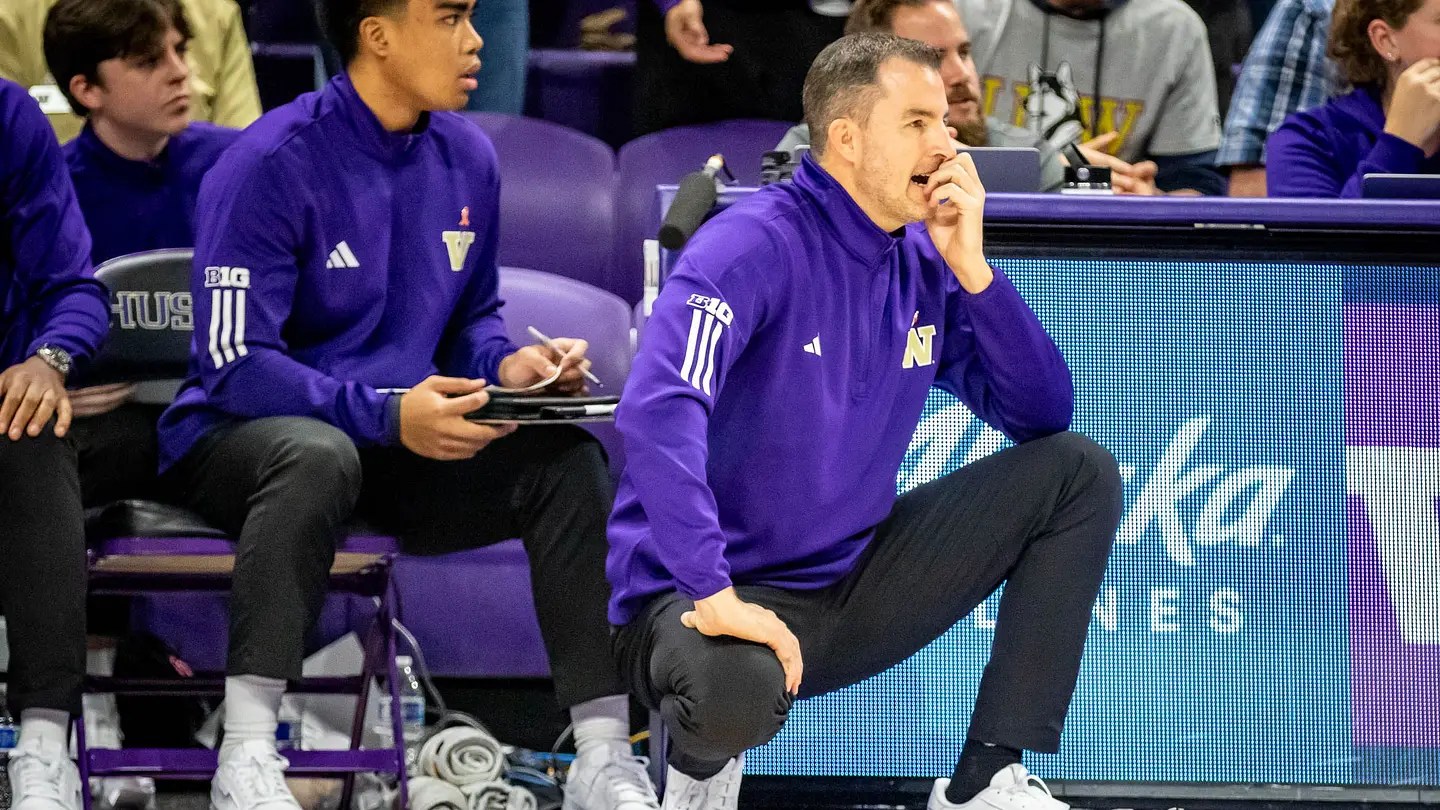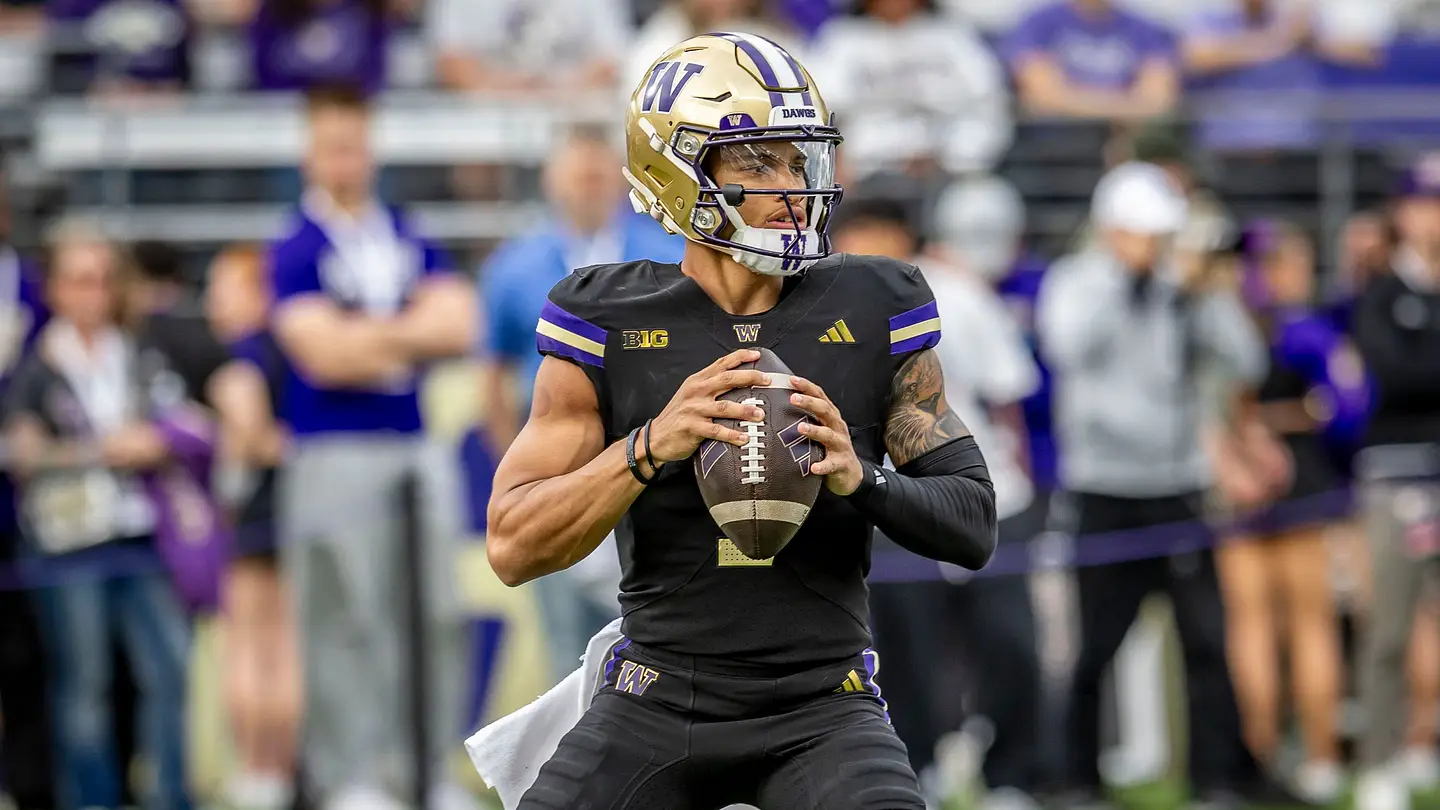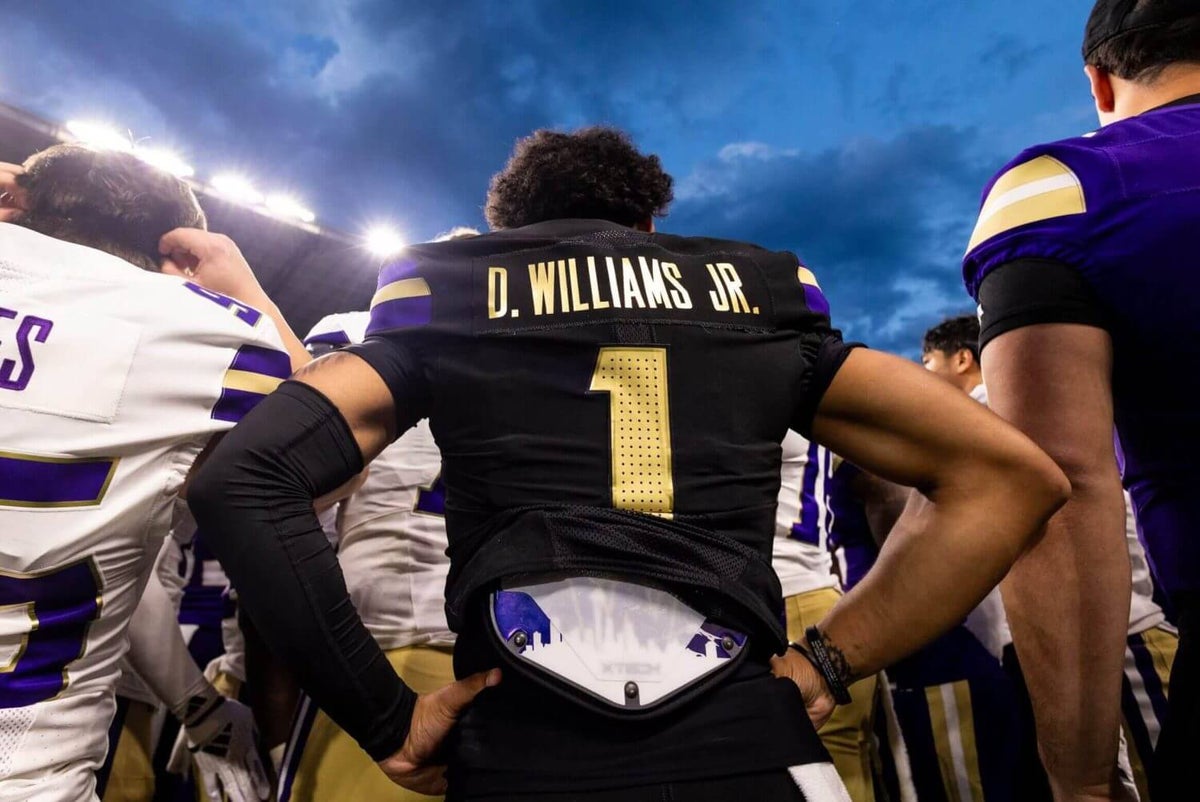
SEATTLE — It was the calmest spring in years around college football. The elimination of the sport’s spring transfer portal cleared the way for optimism, warming weather and general good vibes to fill the deep offseason. But not everything had settled.Take for example the beautiful 62-degree night in early April when Demond Williams threw the ceremonial first pitch at a Washington softball game. Much of the crowd of nearly 1,500 cheered the Huskies’ junior starting quarterback.It was a moment of appreciation for Williams that belied the limbo he has resided in for the last few months. The Huskies are focused on improving on last year’s nine-win season, but some fans are still upset with their star QB after he briefly jilted the program last winter. A few had taken to the comments of the softball team’s Instagram post promoting Williams’ pitch. One asked if the first pitch was part of an apology tour. Another called for Williams’ appearance to be canceled.In January, four days after signing a revenue-sharing agreement to stay at Washington, Williams announced that he would enter the transfer portal instead.Two days later, after losing his agent and adding legal counsel, Williams announced he’d stay at UW, making him the first high-profile college QB of the NIL era to attempt to leave a school and not get out. The saga left some scars.“It was super stressful, for sure,” Williams told The Athletic of his January drama. “But I’m just glad to be where I’m at right now, glad it’s behind me and I’m able to focus on the team at hand.”The Washington football team and the athletic department are moving forward arm-in-arm with Williams, saying the fallout from his unprecedented failed exit is all in the past. If the Huskies win in 2026, all will be forgiven. But the rest of the college football world has also kept an eye on that January firestorm with a question that may show up on their own campuses: Was this a one-off situation or a sign of more major contract disputes to come?Jedd Fisch, Pat Chun and Tony Petitti walked together to Alaska Airlines Arena in the late afternoon on Jan. 6. They were headed to a memorial service for Washington women’s soccer player Mia Hamant, who had died in November from a rare form of kidney cancer. Hamant was one of the top players in the Big Ten before the diagnosis forced her to sit out her senior year. The UW community rallied around her fight, and the football team put an orange ribbon sticker on their helmets late in the season. Hundreds of people showed up for the celebration of life event. Petitti, the Big Ten commissioner, had flown in to join the Huskies head football coach and athletic director as the campus mourned.During the walk over, Fisch got a call from Williams and stepped aside to take it. On the phone, an emotional Williams told his head coach he was changing his mind and leaving Washington.“I didn’t think it was a possibility at all,” Fisch said. “I just said to him, ‘Take a deep breath,’ because he was crying and was very upset. I said, ‘Let’s talk in an hour.’”Williams’ newly signed deal with Washington was worth around $4 million in 2026, according to people familiar with the agreement. Suddenly, that was in question.Fisch continued his walk to the memorial. Inside the building, the athletic director Chun and his coach stayed off their phones out of respect. Hours later, Williams posted a social media graphic announcing his plans to enter the transfer portal, sending the Washington base into an uproar and the college football world into a panic. Fans attacked Williams on social media, both over the decision and the choice to do it on this night, of all nights.“It was pretty immature,” said TV analyst Brock Huard, a former Washington quarterback, “and the timing was horrendous.”Administrators and coaches at other schools began texting each other and reporters, asking whether a player could really back out of a contract signed with a school. Last summer’s House v. NCAA settlement allowed schools to sign players to revenue-sharing deals, and the stability that system was supposed to create had just been loudly called into question.Williams was represented by Doug Hendrickson, an agent with a slew of high-profile clients — including Fisch.Washington leadership informed Williams’ camp that it was legally prepared to hold Williams to the contract. Chun said in a public statement that contracts should be “respected by everyone within the college sports ecosystem,” a not-so-subtle shot at schools interested in Williams. Among the teams known to be in need of a quarterback at that time were portal power players LSU and Miami (Fla.).It helped Washington to have the Big Ten commissioner in town. It was Petitti who’d led the charge for Big Ten schools to create a template revenue-sharing contract with players. According to a copy of one deal from another Big Ten school, a school “is not obligated to enter the student-athlete into the transfer portal or otherwise assist or facilitate the student-athlete’s transfer to another college or university.”“It was invaluable guidance and help that Tony and his staff provided during that time,” Chun said.In the immediate aftermath, Big Ten ADs on a conference call supported Washington’s defense of the contract. Even many player agents told The Athletic at the time they hoped Williams would stay with UW. It would be a bad look for their profession and the system as a whole if a player backed out of a signed deal with a school, a step further than the one former Tennessee QB Nico Iamaleava had taken in ditching the collective associated with the Vols’ program the year prior.The offense around Williams was also in flux. Top players like running back Jonah Coleman and receiver Denzel Boston were going to the NFL. Leading returning running back Adam Mohammed announced he would transfer to Cal the same day Williams informed Fisch of his decision, while receiver Raiden Vines-Bright had left for Arizona State after starting seven games as a true freshman. In total, six receivers left the UW program over the winter. The Huskies added running back and receiver depth pieces, but the turnover was another reason why keeping Williams was so important.Less than 40 hours after Williams’ portal post, Hendrickson announced he had ended his representation of Williams “due to philosophical differences.” Hendrickson did not respond to multiple requests for comment for this story.What was the driving force behind Williams’ attempted move? Player adviser Cordell Landers, who worked with Iamaleava during his transfer, took to social media to deny initial reports that implicated him, posting a text message exchange with Williams’ father Demond Sr. as purported proof. Multiple requests for comment sent to a number registered to Demond Sr., a former player at Michigan State in the mid-2000s, were not returned.Before Hendrickson removed himself from the situation, he’d referred the Williams family to Darren Heitner, a Florida-based attorney who has worked on many high-profile NIL cases. Shortly after Hendrickson’s post, Heitner posted on X that he would represent Williams.Seven hours later, during the Miami-Ole Miss College Football Playoff semifinal game, Williams announced he would stay at Washington.Heitner says months later that his job was to provide the best information he could to the family. He told them this situation was different from cornerback Xavier Lucas, whom Heitner had helped unenroll at Wisconsin and enroll at Miami outside of the portal window in the spring of 2025. Here, dealing with a different contract and a shorter window than Lucas had, Williams was in an “unenviable situation,” Heitner said, but “he handled the aftermath exceptionally well.”Fisch stayed in communication with his quarterback, emphasizing Washington was the best place for him and that he would be welcome back on the team.“As we fleshed through the options, I told him he made the right determination (to stay),” Heitner said.And Washington did want him back. Fisch has known Williams since the QB was 14. Williams first committed to Fisch at Arizona before following the coach to Washington.“There was a relationship that had been formed, and this was an adverse moment in which the relationship was challenged,” Chun said. “Relationships matter, and we’re all grateful that it ended like it did.”Williams still won’t say much about what happened. In a February press conference, his first public appearance after the firestorm, Williams kept it brief, saying everyone makes mistakes and that he was happy to be back. He said his attempt to leave was a result of “really bad advice,” without elaborating further, and he declined to comment when asked directly if LSU had tried to lure him into the portal.Speaking to The Athletic in April in the Husky Stadium players lounge, Williams’ answers on the topic remained short. Asked if he’d do anything differently or if there were misconceptions to clear up, he stayed focused on looking forward.“I just take it one day at a time and trust what God has planned for me,” he said.After the decision to return, fences still had to be mended. Fisch went on local radio and asked fans for patience.“Give us eight months,” he said on KJR in late January. “The first game is not until September. We are going to work extremely hard as a football team to continue to be a part of this community, and to reach out, and to be in the forefront, and to show the type of guys that we have brought in here and we will continue to bring in here.”Most importantly, Williams had to make right with the women’s soccer team. The timing of his original announcement was the deepest cut. Williams apologized to the women’s soccer team in his return post and also met with them in person shortly after.“He handled it in a very mature way,” Chun said.At the spring football game in early May, women’s soccer coach Nicole Van Dyke served as the honorary coach of Williams’ Purple team. Both the women’s and the national championship-winning men’s soccer team were honored during breaks in the action. There were no reports of boos toward Williams from the fans in attendance.“Our team has a wonderful relationship with the UW football program, and that includes Demond,” Van Dyke said in a statement to The Athletic. “He has personally apologized to every one of our players for the unfortunate timing of events, and we accepted that apology. Demond is a great representative of our university who simply made a mistake, and we’ve all moved past it. We’ll be cheering on Demond along with the rest of Husky Nation this fall.”Within his own team, Williams spoke to players from last year’s squad, and both Williams and his coach said there haven’t been issues since.“He’s stepping up vocally,” safety Rylon Dillard-Allen said. “Last year, he wasn’t very vocal and we didn’t need that from him then. But we definitely need that from him now, and he’s doing his thing well.”Fisch wasn’t concerned about the team being a problem. With all players having the opportunity to transfer every year, teammates understand the situation, he said. Coaches take calls while under contract. Player holdouts and trade requests happen all the time in the NFL, too, only for both sides to forgive and move on. Or at least, that’s the idea.“I’ve coached the NFL 15 years, and none of that is crazy to me,” Fisch said. “We talked about it, and I’m excited that he’s back, but I never really feel like that should affect anything within our fan base, players or our administration.”With a new “GODSPEED” tattoo on his left forearm, added in January, and a new No. 1 jersey number, Williams bounced around at a practice in April. When a receiver and a cornerback started shoving each other, Williams got involved to separate them. It looked like any other spring practice, a young QB working on his leadership. Within those walls, it seems that everyone has moved on.But some fans are less sure of how to feel.Seattle KJR radio host Dave “Softy” Mahler was on the air when Williams released his first announcement and reacted live after being read the statement: “F him, there’s no loyalty in college football whatsoever.” Mahler, a prominent sports voice in the city, describes Washington football as the frequent 1B topic on his show, alongside the Seahawks. Fisch’s first public comments about the Williams drama came on Mahler’s show.Months later, Mahler regrets some of what he said, but he stands by the anger fans felt in that moment.“I think it’s dissipated a little bit, time probably heals all wounds,” Mahler said. “But I do know there are still a good chunk of Husky football fans, including myself, that are uneasy a little bit about the idea of the starting quarterback for the Huskies being a guy that tried to quit the team and go play in the SEC, you know? I mean, how do you just move on from that and forget that?“And then you wonder, is he going to be here next year? If he doesn’t go to the NFL, are we doing this same song and dance again next December or January with him?”The eight months of grace Fisch requested are halfway complete.“It’s going to be a talking point at least until the season starts,” Mahler said. “The way that Demond plays and the way the team plays will decide how much of a talking point it continues to be after Week 1.”Huard, a fellow Seattle radio host who still holds multiple school passing records, said Williams’ short public appearances and comments were missed opportunities to open up and rebuild public trust.“I thought it’d have been simple to have a press conference and be vulnerable and transparent,” Huard said. “He did to a degree, but to really do it and answer some of these things. (Instead), there’s a void there, and everybody fills it with the way they want to, their own hurt, their own frustration.“Because of that, you have to go win. And it’s not beating Wazzu and Utah State, it’s making sure you beat the teams you’ve not been able to beat yet and take that next step.”Elsewhere, college sports industry leaders hoped Washington’s successful retention of Williams would be a valuable precedent. It only partially played out that way.Just before the portal closed in January, Duke quarterback Darian Mensah announced he would leave the Blue Devils. Duke sued Mensah, the sides reached a resolution, and Mensah landed at Miami, which was still desperate for a QB.Heitner worked with Mensah on that dispute as well, but he would not divulge the specifics of how Mensah left while Williams did not, only saying they were completely different contracts with different language.In late April, the NCAA Division I Board of Directors adopted a rule change at the request of the Big Ten: Schools do not have to enter an athlete into the portal if the player’s contract released the school from that requirement. The Big Ten’s template is now an officially sanctioned workaround.“The association saying you can contract around our rules, I think, sets a bad precedent for the NCAA,” Heitner said. “It perhaps opens up the door to challenging other bylaws. I’m troubled by the fact that we’re telling what they refer to as student-athletes can contract away their right to move institutions.”Back in Seattle, expectations are high for the 2026 season. The people alongside and around Williams have collectively moved forward. Demond Williams Sr. has been at practice. A program three years removed from the national championship game is climbing back.The word “growth” was used frequently this spring by those talking about Williams. He only turned 20 in March, after all, and he’s a millionaire thanks to the constantly evolving player compensation market. What’s another million or two elsewhere? For a player whose NFL ceiling might be questioned because of his size, it can matter. And when one quarterback can change a trajectory of a program, battles for big-money QBs are ruthless.“The kid was 19,” Fisch said. “Kid got some phone calls. Kid listened to a couple calls. Coaches do it all the time… I’ve known D since he was 14. I love him, I’m proud of him and how he’s handled it. … I’m glad he’s a Washington Husky.”
Demond Williams, Washington and the road back from an attempted transfer portal breakup
Washington's team and administrators are moving forward arm-in-arm with Williams, but fans and the rest of the sport are watching closely.
2,716 words~12 min read