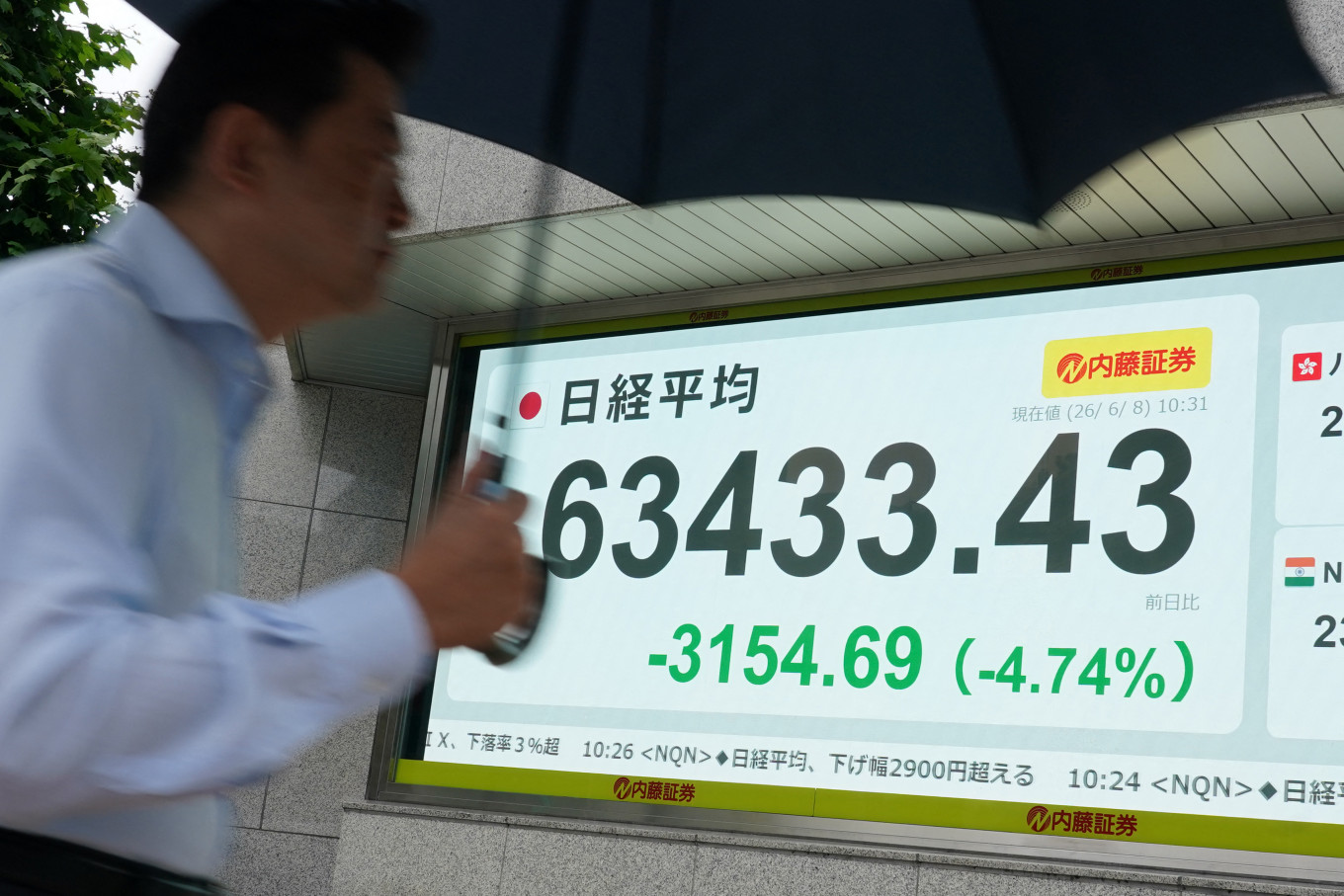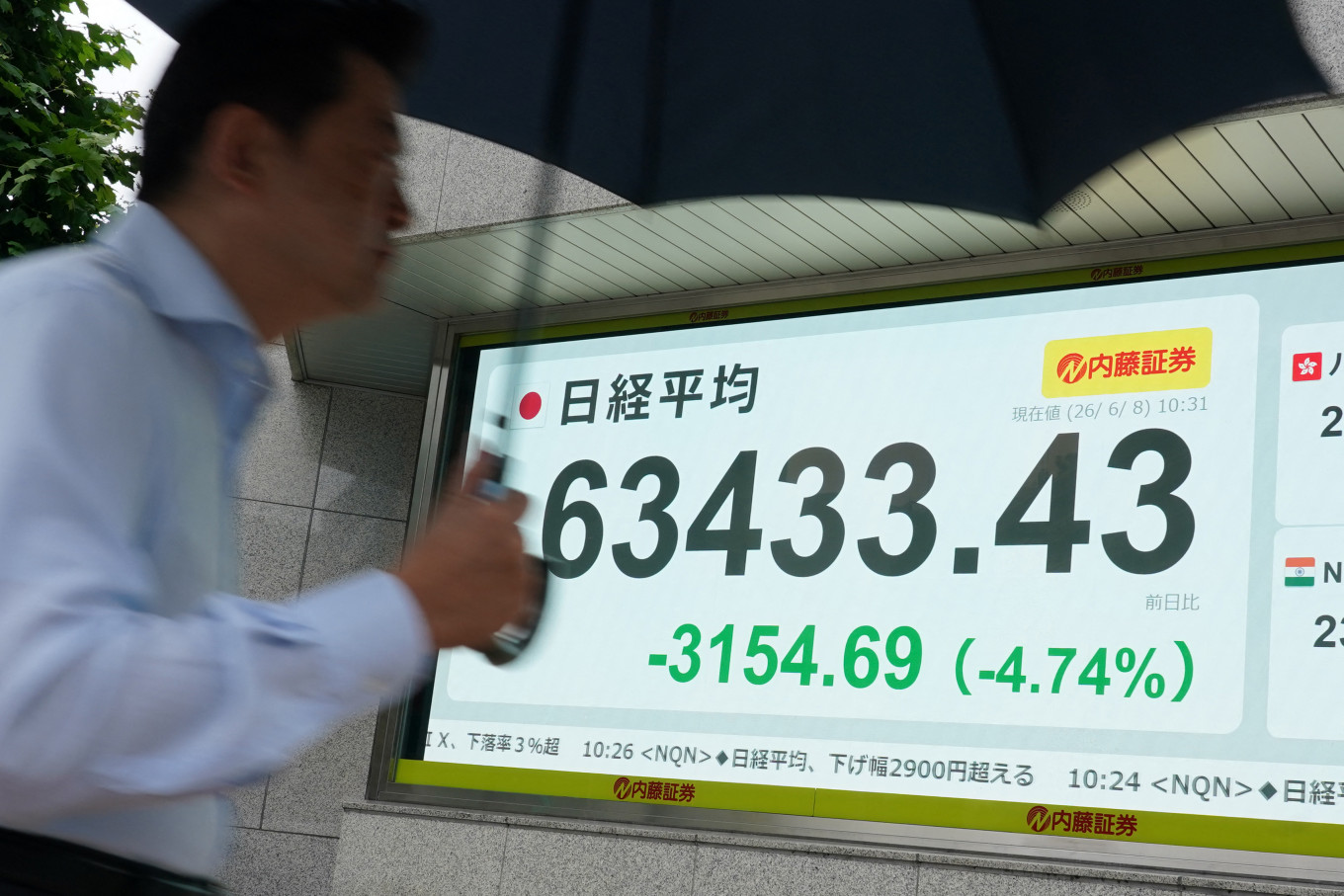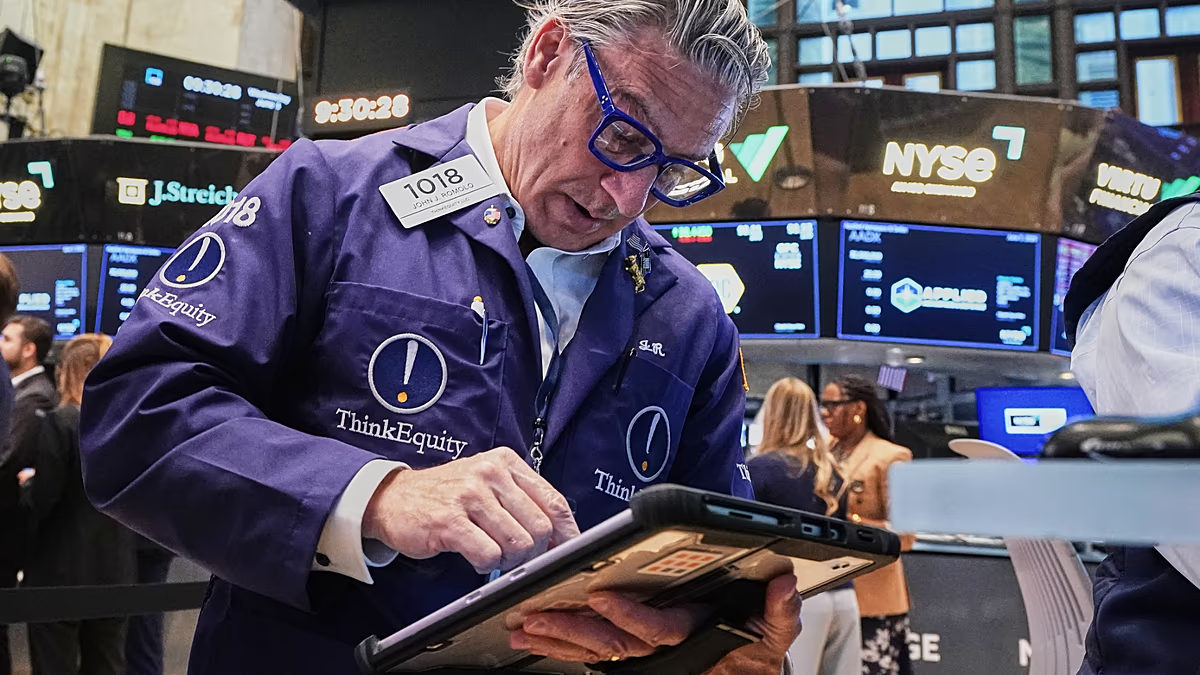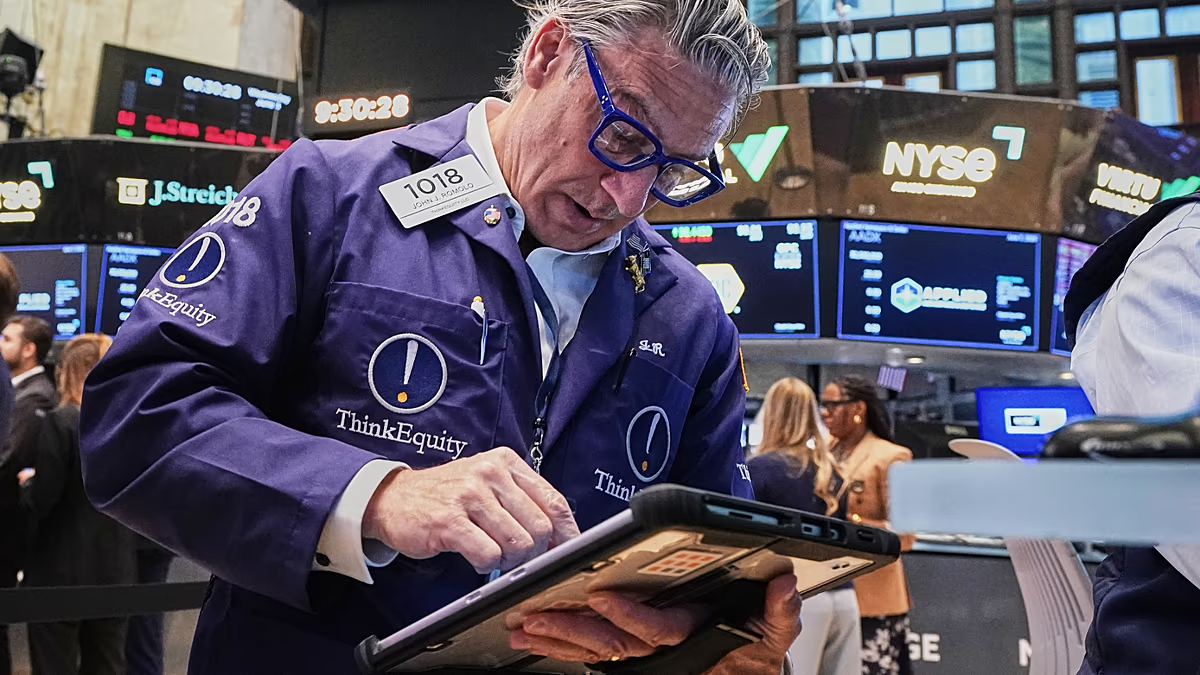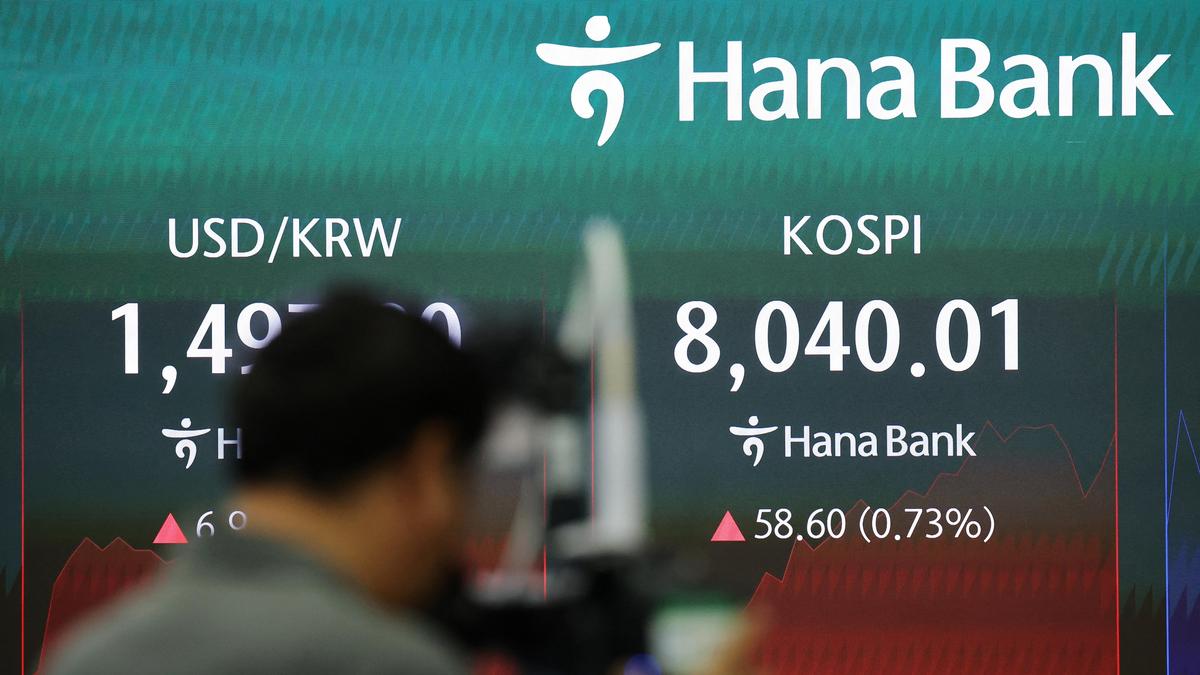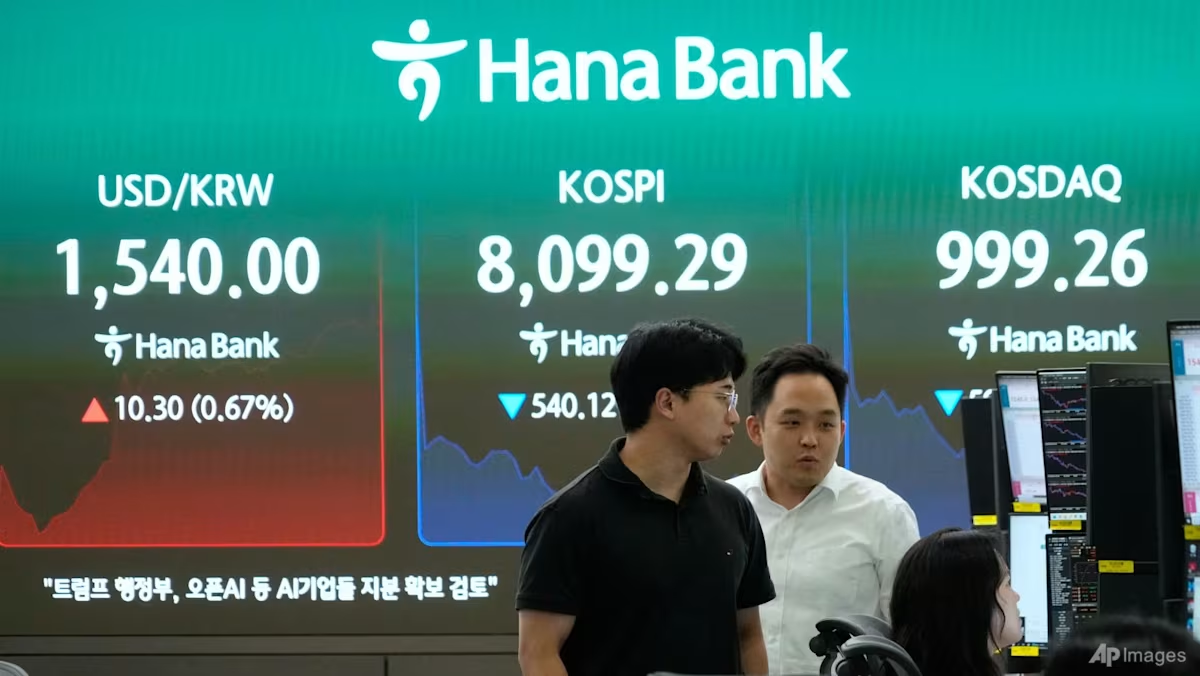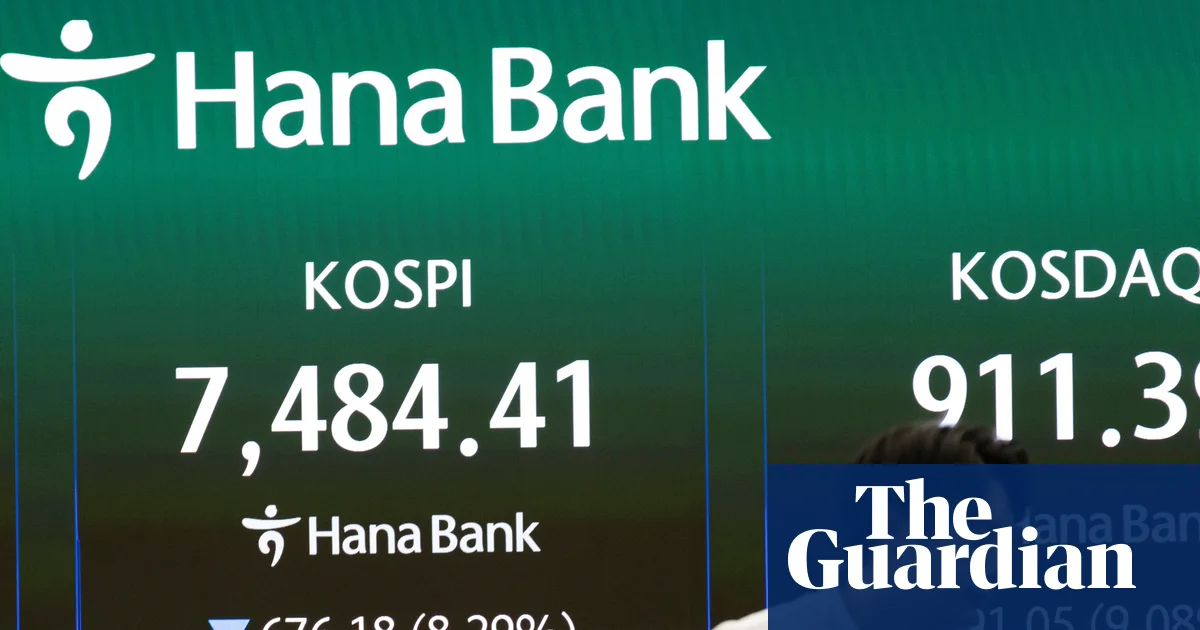
Global stock markets have fallen amid concern about the prospects for tech stocks while oil prices have risen after renewed conflict in the Middle East dampened hopes that the strait of Hormuz would soon reopen.Stock markets in Asia and Europe fell on Monday after a sharp sell-off in US tech stocks late last week, as investors fretted over how firms at the forefront of the artificial intelligence boom would fund their “eye-watering” spending plans.Meanwhile, Brent crude, the international benchmark for oil, rose by nearly 5% to $97.60 a barrel on Monday after Iran and Israel exchanged fire following an Israeli strike on Beirut.In Asia, a region heavily dependent on oil imports, stock markets dropped sharply on Monday. The South Korean Kospi index slumped by nearly 9% at one point, forcing trading to be briefly suspended. The fall was led by the chipmakers Samsung Electronics and SK Hynix, whose share prices dropped by 9% and 6%, respectively.In Japan, the Nikkei 225 index fell 3%, while Hong Kong’s Hang Seng dropped by 1.5%.In London, the FTSE 100 opened down 0.4%, with the jet engine maker Rolls-Royce and British Airways’ parent company, IAG, among the biggest fallers. Shares in the oil companies BP and Shell rose.Stock markets in Germany, France and Spain also fell. US markets are expected to open down later on Monday.Shares in European companies at the heart of the AI boom fell sharply at the start of trading. Chip firms such as Besi – BE Semiconductor Industries – was down 4.5% and ASML fell by 3.2%, and were among the big fallers on the pan-European Stoxx 600 index, which is down by almost 0.9%.The German tech firm Aixtron has dropped almost 6%, while Finland’s telecoms firm Nokia fell 5%.The declines on Monday followed a sharp sell-off in tech stocks at the end of last week, when the tech-heavy Nasdaq index lost nearly 5% of its value. The US blue chip S&P 500 index also dropped 2% on a weekly basis, ending nine weeks of gains.Investors are growing more nervous about the valuation of AI stocks, especially amid the rising prospect of higher inflation and interest rates this year.Susannah Streeter, the chief investment strategist at the broker Wealth Club, said markets were now pricing in a greater likelihood of an interest rate rise from the Federal Reserve this year.“Fears of higher interest rates come just as tech giants, which have some of the deepest cash pockets, are seeking fresh funding to help finance eye-watering capital expenditure plans,” she said.“The demand is voracious right now, but there is concern that assets being invested in today, at a time when the technology is so expensive, could become obsolete further down the road.”Charu Chanana, the chief investment strategist at the investment bank Saxo, said: “The market is becoming more selective on AI. Investors now want clearer proof of earnings delivery, monetisation, capex discipline and funding returns.“This looks more like a positioning reset than a regime break. The AI story is not over, but easy AI enthusiasm may be.”The rise in Brent crude, which had fallen as low as $93 a barrel last week, followed the first exchange of direct strikes between Iran and Israel since a ceasefire paused the war in April.Fears are growing that the clashes could escalate and prevent the reopening of the strait of Hormuz, a significant shipping channel through which a fifth of the world’s oil and gas supply normally flows.Donald Trump, speaking to the Financial Times before the Israeli strikes on Iran, said he would dictate to Israel’s prime mnister, Benjamin Netanyahu, how the war should be conducted.However, after the Israeli bombing in Beirut and Iran’s retaliation, Trump told Fox News that Israel’s strikes in Lebanon were not coordinated with the US and that he was “not happy about it”.
Global stock markets fall as concerns persist over tech firms at heart of AI boom
Drops follow sharp sell-off of US tech stock last week while oil prices jump after Iran and Israel exchange strikes
631 words~3 min read