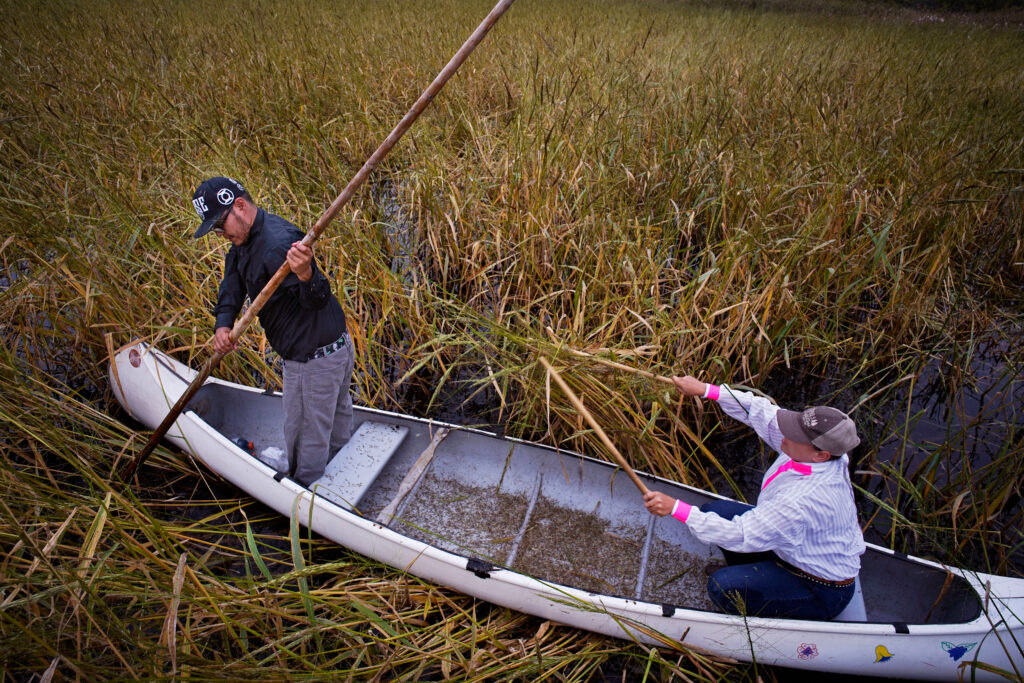
Bazile Minogiizhigaabo Panek, a member of the Red Cliff Band of Lake Superior Chippewa, was 7 years old when he attended his first rice harvest in northern Wisconsin. He and his sister rode in a canoe while his mom pushed the boat with a pole through the plants growing out of the shallow water. Together, they tapped the plants with sticks. Rice seeds rained into the canoe; others fell into the water.
Indigenous peoples have harvested wild rice, or manoomin, in the upper Midwest for millennia. They care for the plant, which they consider a relative and critical to their cultural identity. They watch it grow through the summer and spread its seeds as they reap them.
“There’s just this moment of excitement and the acknowledgement that we are doing something that my ancestors have done for thousands of years, or doing a similar process that works to honor them,” says Panek, founder of Good Sky Guidance, a company that advises public institutions and corporations on Indigenous knowledge and environmental initiatives.
But the manoomin that once abounded in the region—memorialized in names like Wild Rice Lake—has been declining due to factors like changing land use and global warming. Finding all the water bodies that support these plants and exactly where they grow can be time-consuming and expensive. Restoring them can take years, and the Trump administration pulled funding for some restoration projects.