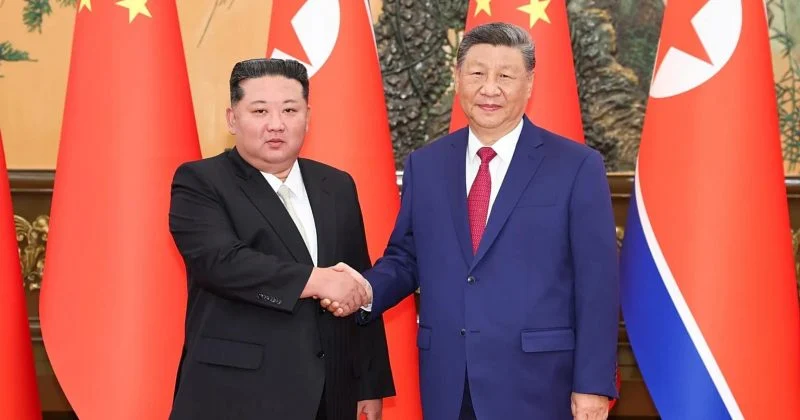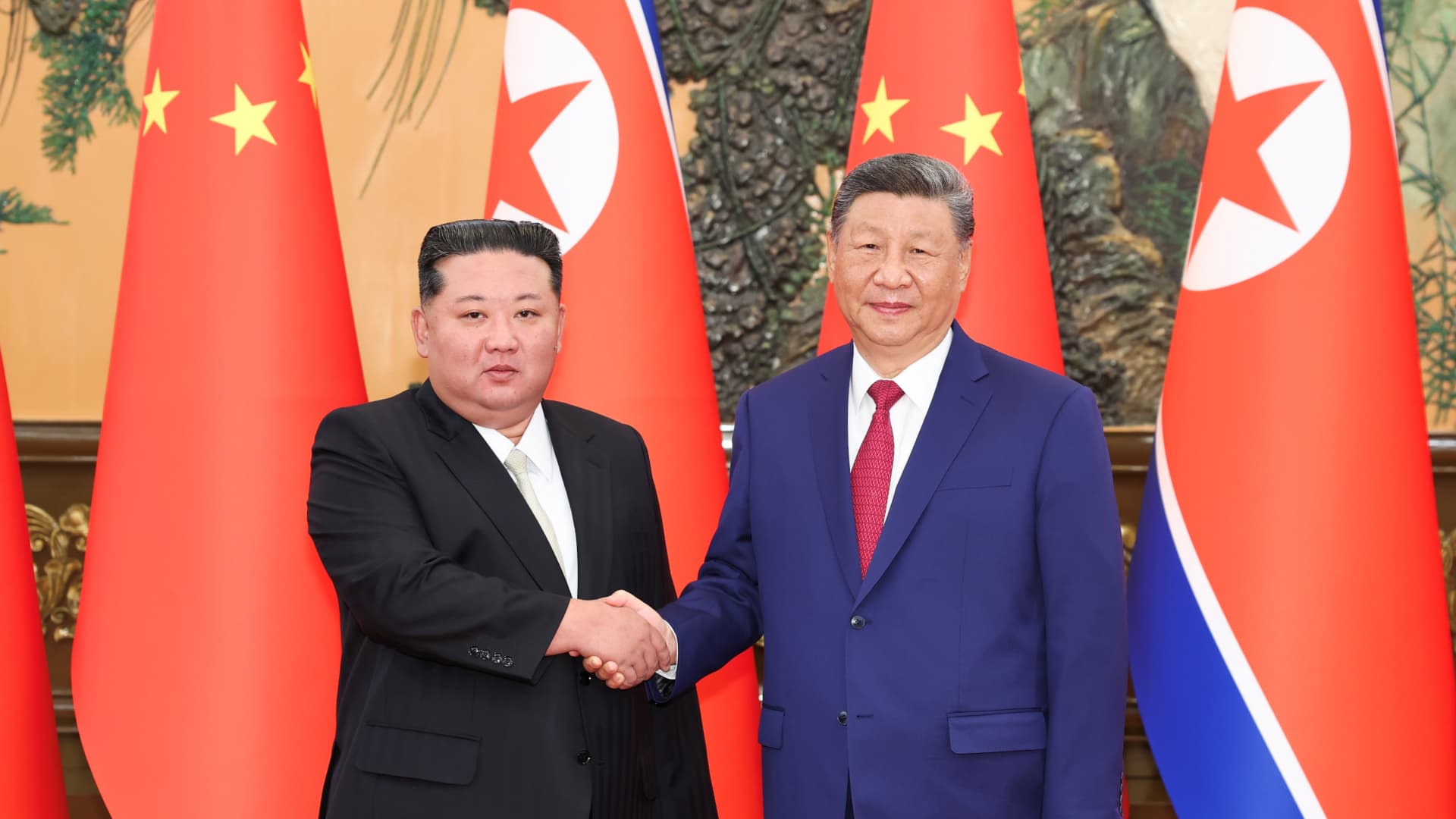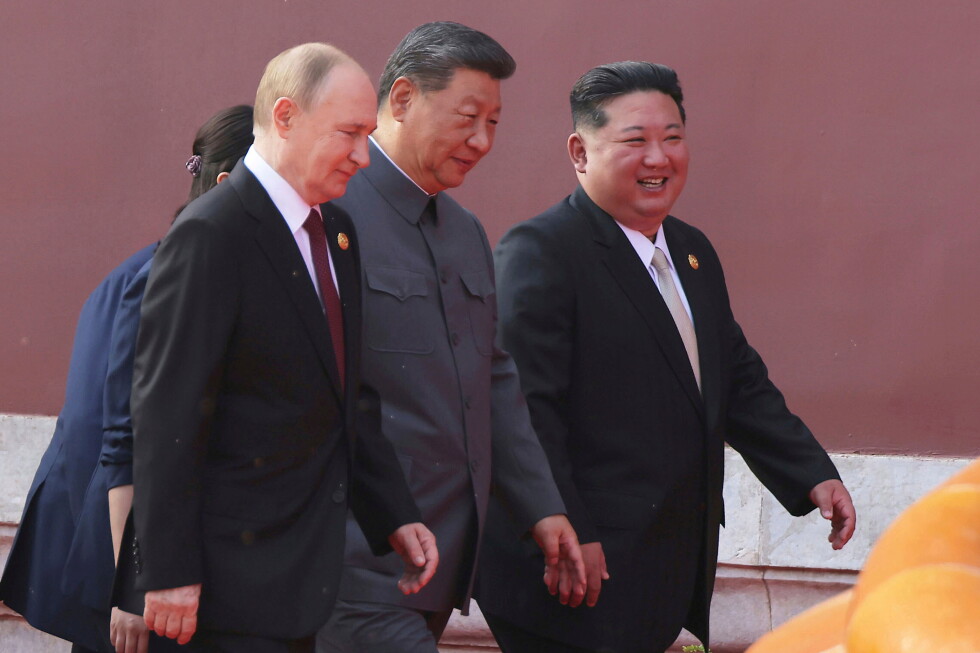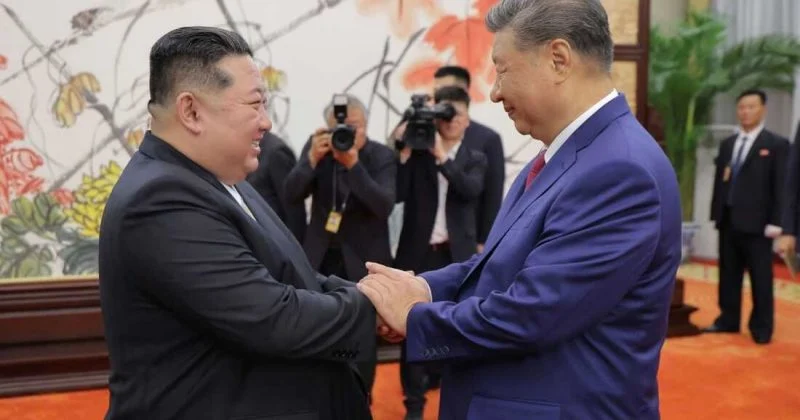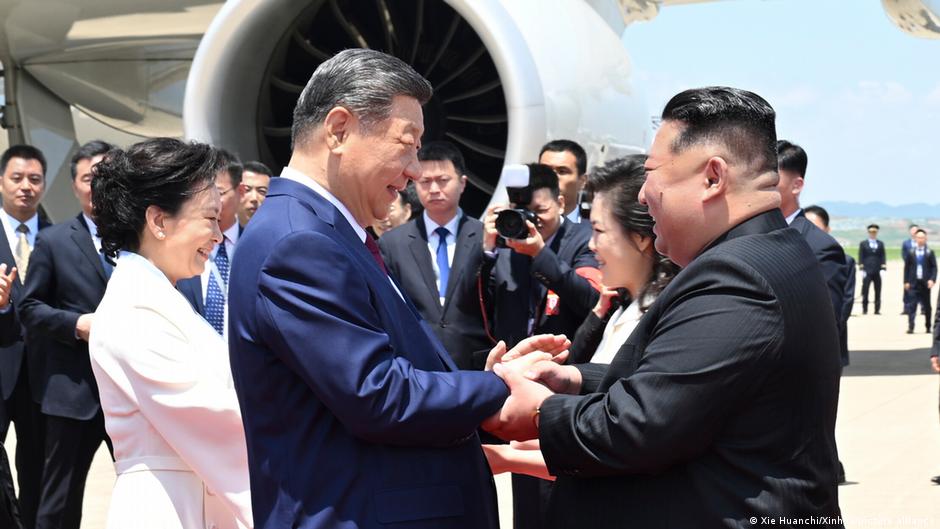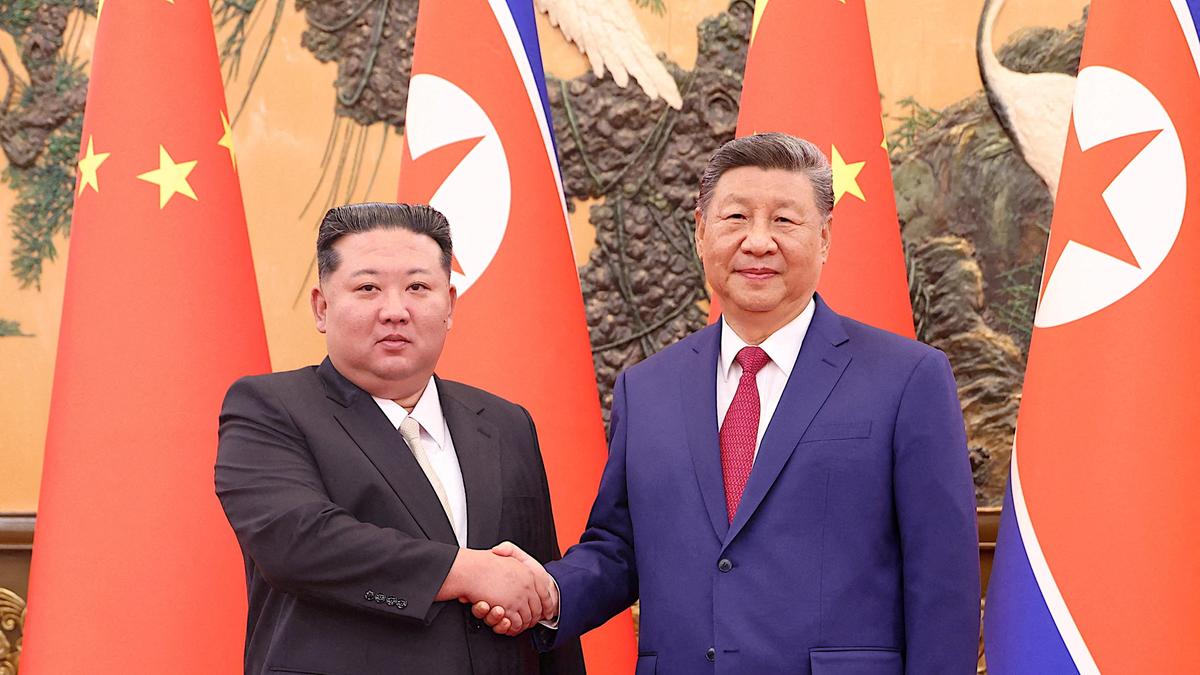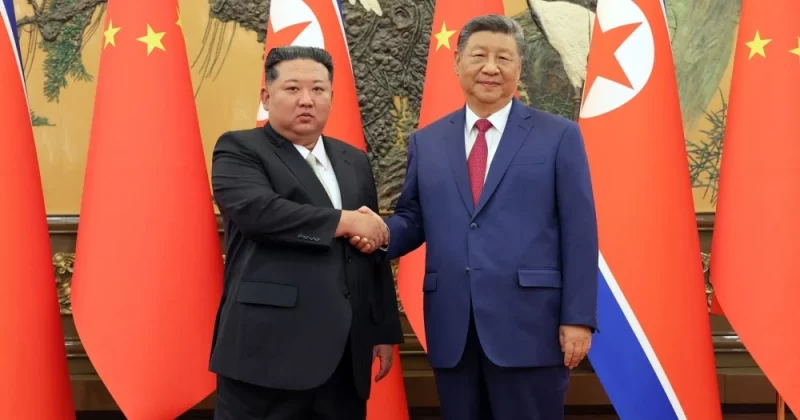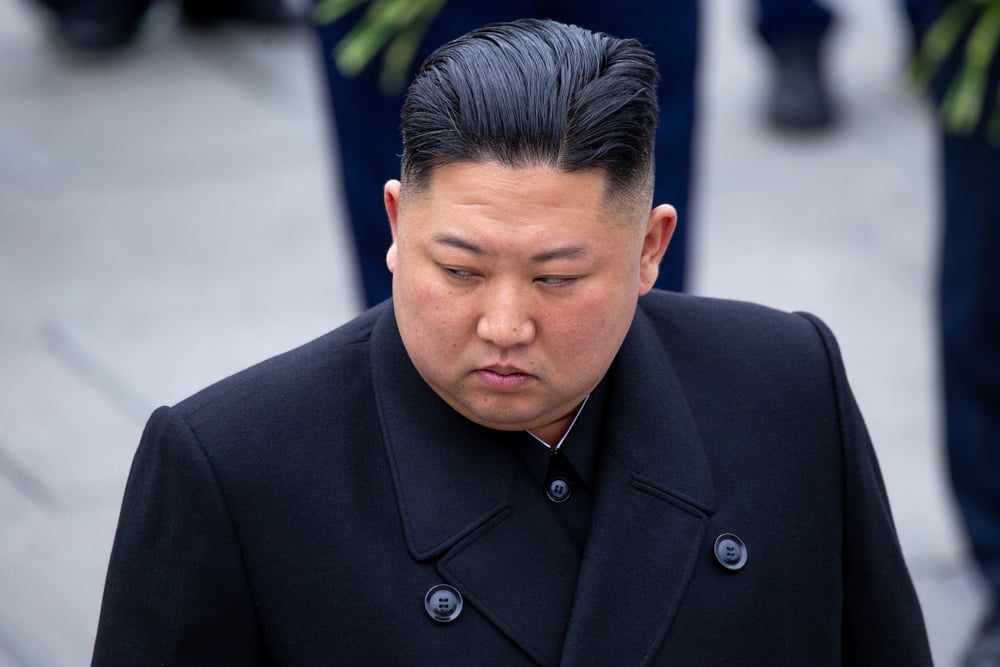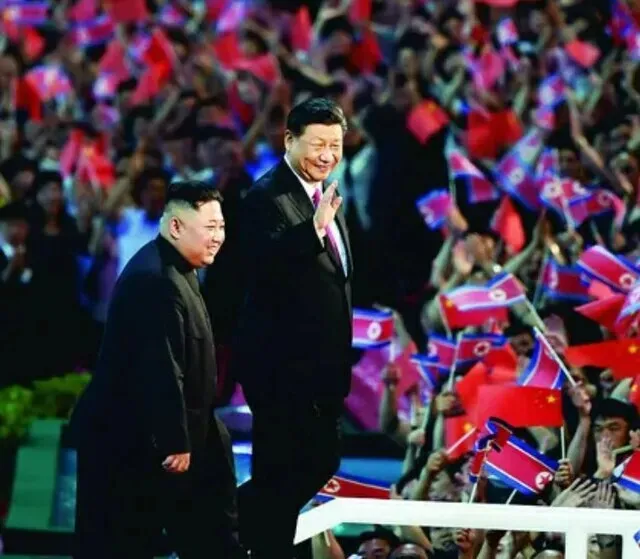
On June 20, 2019, President Xi Jinping of China enters Rungrado 1st of May Stadium in Pyongyang with North Korean leader Kim Jong-un. (AP/Yonhap)
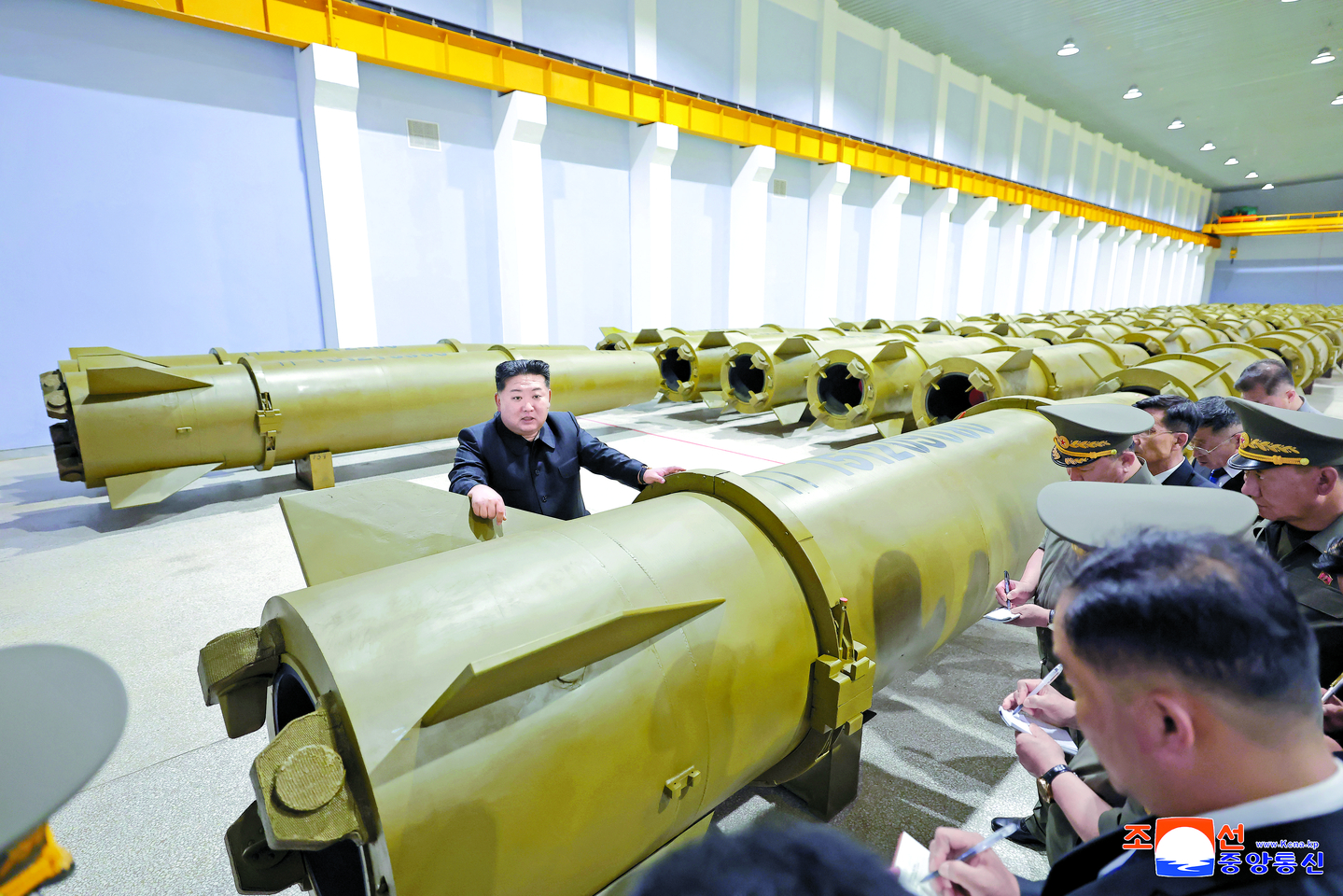
Ahead of Chinese President Xi Jinping’s first visit to North Korea in seven years on Monday, Pyongyang has been flexing its nuclear capabilities and strongly signaling that it wants Beijing to acknowledge its status as a nuclear power. North Korea and China each head into this bilateral summit with a complex set of calculations as the former deepens its ties with Russia and the latter continues its strategic rivalry with the US. A Sunday press statement from Kim Yo-jong, the powerful sister of Kim Jong-un, as released by the state-run Rodong Sinmun, declared that North Korea’s status as a nuclear power is an “irreversible final conclusion to be carried out unconditionally” that “sends the world a clear signal that we will never compromise as regards the issue of national defence and sovereignty.”She further slammed claims by the White House last month that the leaders of China and the US had confirmed their “shared goal” of North Korea’s denuclearization, saying that such comments were “complete fabrication[s] and false information,” adding that North Korea has “accurate information” attesting to the falsity of such claims. Such remarks suggest that China directly explained to North Korea that it did not agree with the US’ goal of denuclearization on the Korean Peninsula. North Korean leader Kim Jong-un himself stressed the importance of bolstering nuclear capabilities during a field guidance visit to new uranium enrichment facilities on Wednesday. The very next day, he viewed a test navigation of the new 5,000-ton destroyer Kang Kon with his daughter Ju-ae. On Saturday, he ordered the expansion of missile capabilities during a visit to a major munitions company.Commenting on Pyongyang’s unusual activities, Hong Min, a senior research fellow at the Korea Institute for National Unification, suggested it “came across as a show of pressure against China to get it to confront the advanced state of North Korea’s nuclear capabilities and acknowledge it as a nuclear weapons state and equal strategic partner rather than a subject for denuclearization.”Based on this interpretation, Pyongyang is carefully making advance preparations to head off the possibility of denuclearization coming up as a topic at the summit with China and convince Beijing to tolerate North Korea’s nuclear status and counteract sanctions against it.How will Beijing react to these demands from Pyongyang?Experts predicted that while China is not likely to explicitly acknowledge North Korea’s nuclear capabilities, there will be growing signals of its “acceptance” of them through large-scale bilateral economic cooperation and other areas.The key focus of Xi’s strategic calculations is on managing North Korea in the context of Beijing’s rivalry with Washington.“The chief goal of Xi Jinping’s trip to North Korea is to manage North Korea in consideration of the broader framework of US-China relations,” said Kim Heung-kyu, the director of the Ajou University US-China Policy Institute.“They’re going to want to manage things so that North Korean provocations don’t negatively influence the situation ahead of the summit scheduled between Xi Jinping and [US President Donald] Trump in September, while bolstering Beijing’s influence by checking the closeness between Pyongyang and Moscow,” he predicted.As for how Beijing would respond to demands from Pyongyang that it recognize North Korea as a nuclear weapons state, the director said any recognition wouldn’t be explicit. “While I don’t think China will explicitly recognize North Korea’s nuclear status or neutralize the sanctions against it, it will probably move increasingly in the direction of tacitly condoning a nuclear North Korea,” he said. “North Korean denuclearization is no longer on China’s list of policy priorities for the Korean Peninsula,” he concluded.Along similar lines, Institute for National Security Strategy senior research fellow Yang Gab-yong suggested that Xi considers North Korea issues within the framework of the “constructive relationship of strategic stability” agreed upon between the US and China.“There is a possibility that China will play a mediator role where it implicitly condones North Korea’s possession of nuclear weapons while encouraging it to participate in dialogue with the US by persuading it to return to the Treaty on the Non-Proliferation of Nuclear Weapons, in exchange for extracting concessions from Trump on the Taiwan issue,” he predicted.Another key question for the North Korea-China summit is whether Pyongyang will agree to China establishing access to the East Sea (also known as the Sea of Japan) via the Tumen River.Currently, China’s route to the sea is cut off at a point 15 kilometers downstream. It has long sought North Korea and Russia’s consent to gain access to the East Sea — and from there, to the Pacific Ocean.From Beijing’s standpoint, the matter is urgent to the resolution of economic issues in China’s three northwestern provinces, as well as for the advance that access to Arctic routes would provide for the strategic competition with the US.A joint statement released after a China-Russia summit in May said the two sides would continue trilateral discussions with the North on the matter of ocean access via the Tumen River, known as the Tuman in North Korea. China has already obtained consent from Russian President Vladimir Putin, leaving only the matter of persuading North Korea. This essentially provides Pyongyang with a major card to play with Beijing.Choi Eun-ju, a research fellow at the Sejong Institute, suggested the “possibility that it might persuade China to use the North Korean ports at Rajin or Chongjin or propose co-development of the Tumen River basin.”This “big deal” scenario between the two sides could lead to a large-scale expansion of economic cooperation, including the potential for China to send large numbers of tourists to North Korea for the 65th anniversary of their Treaty on Friendship, Cooperation and Mutual Assistance on July 11, along with the opening of the New Yalu River Bridge, which has remained unused for over a decade after its completion.By Park Min-hee, senior staff writer; Jang Ye-ji, staff reporterPlease direct questions or comments to [english@hani.co.kr]