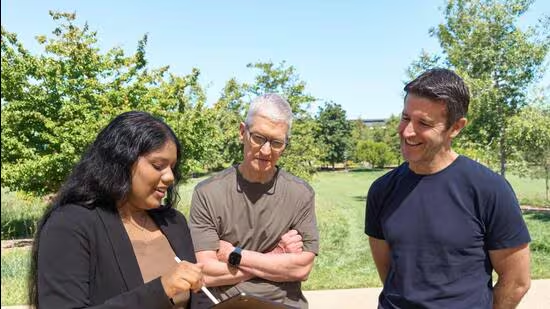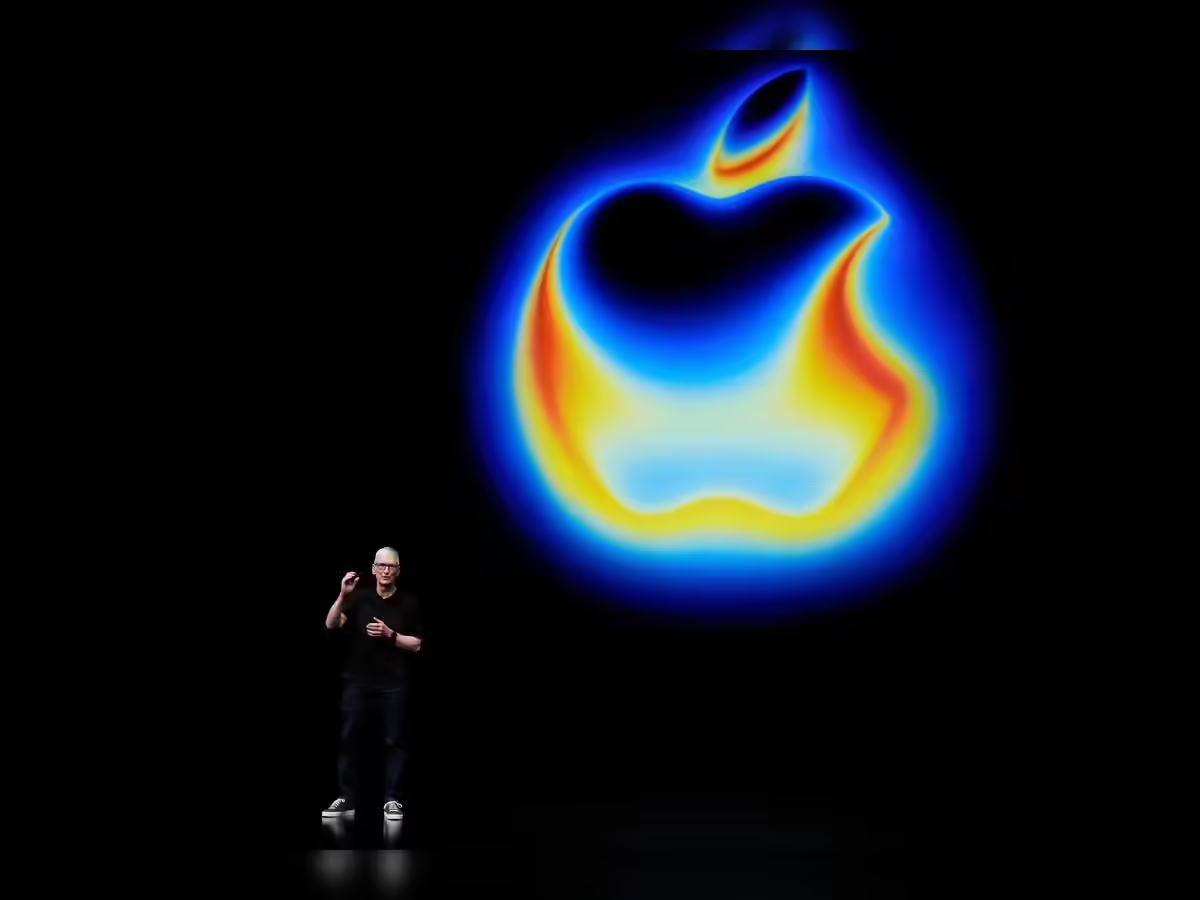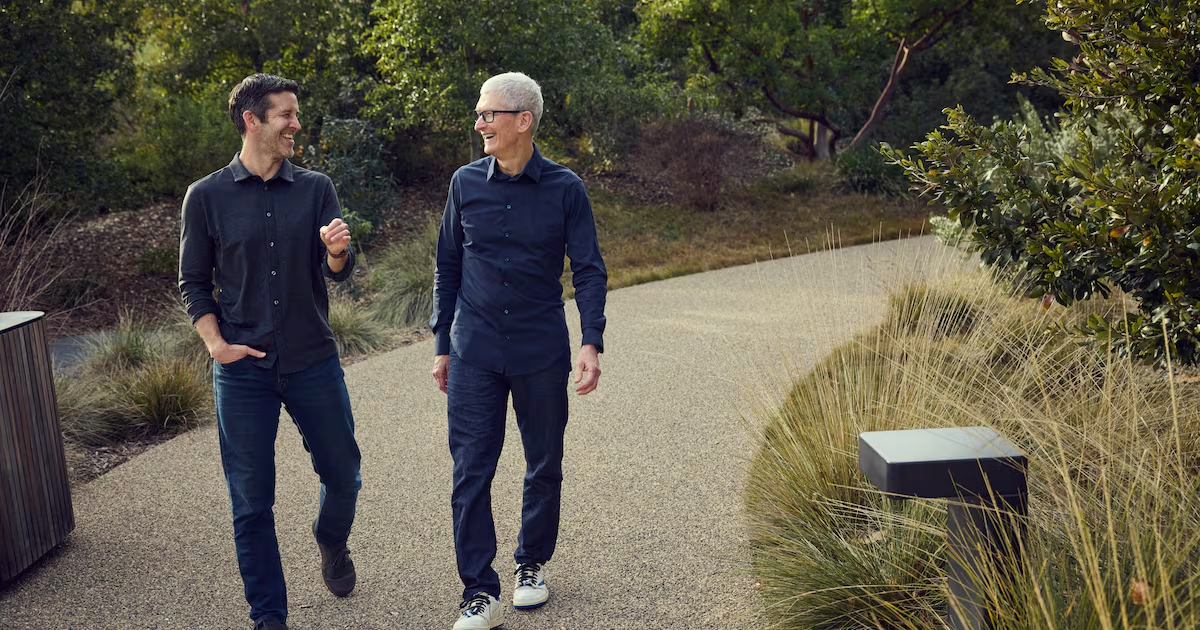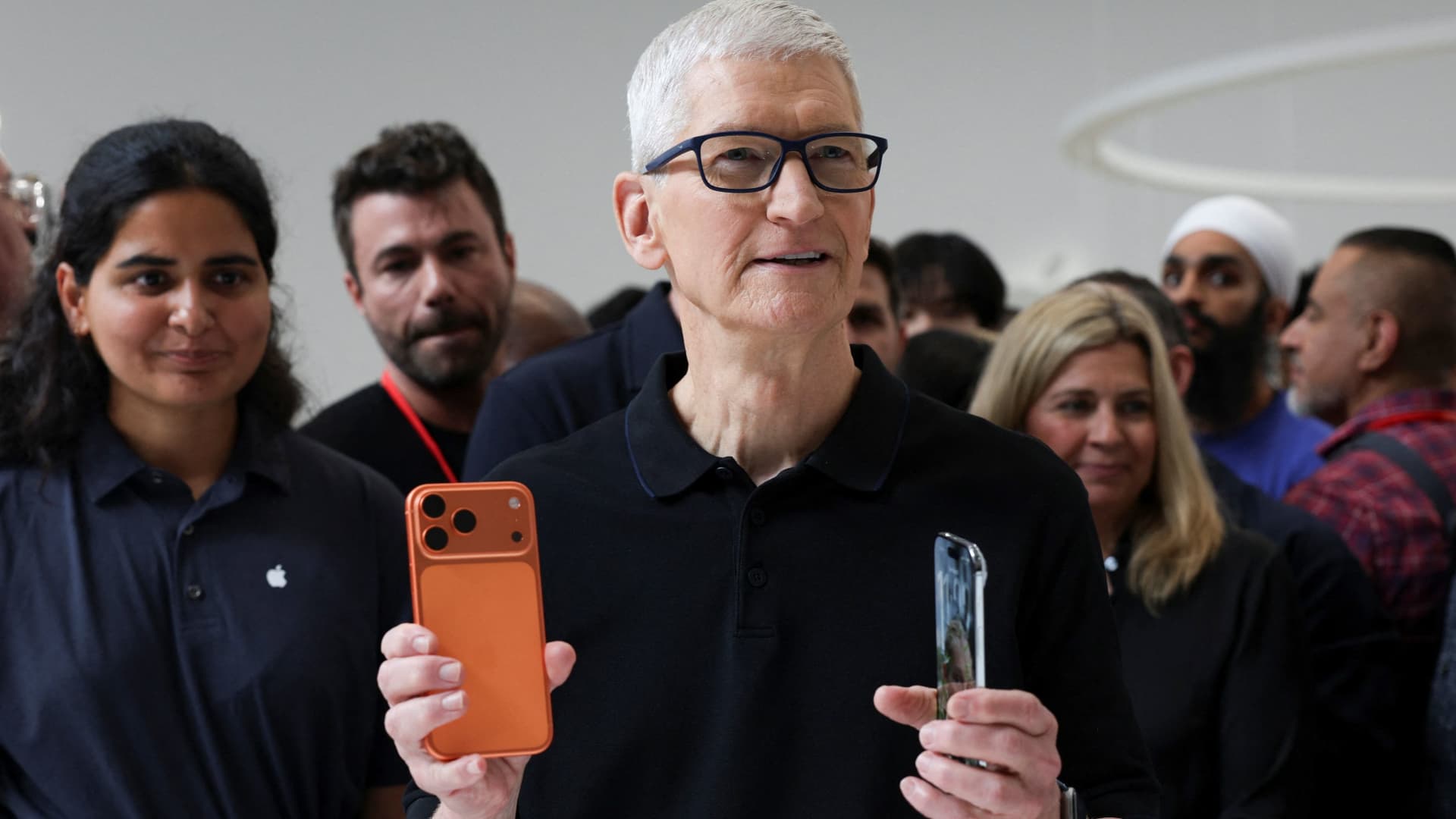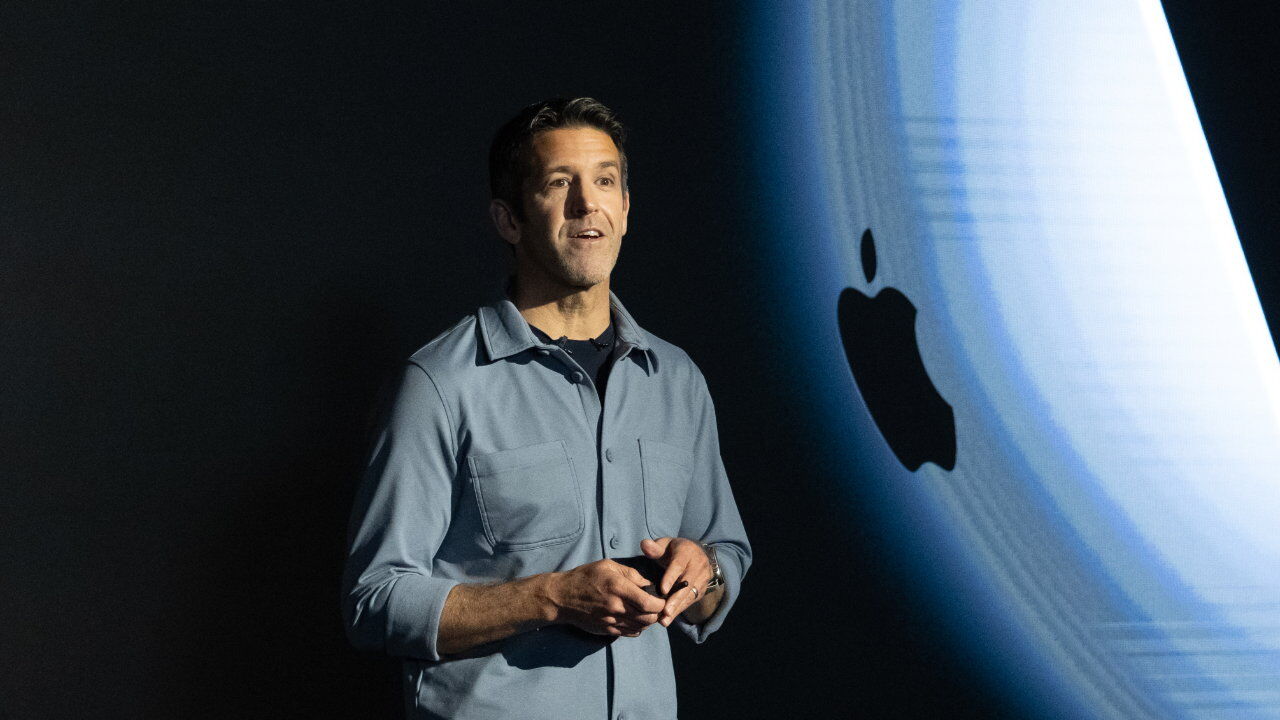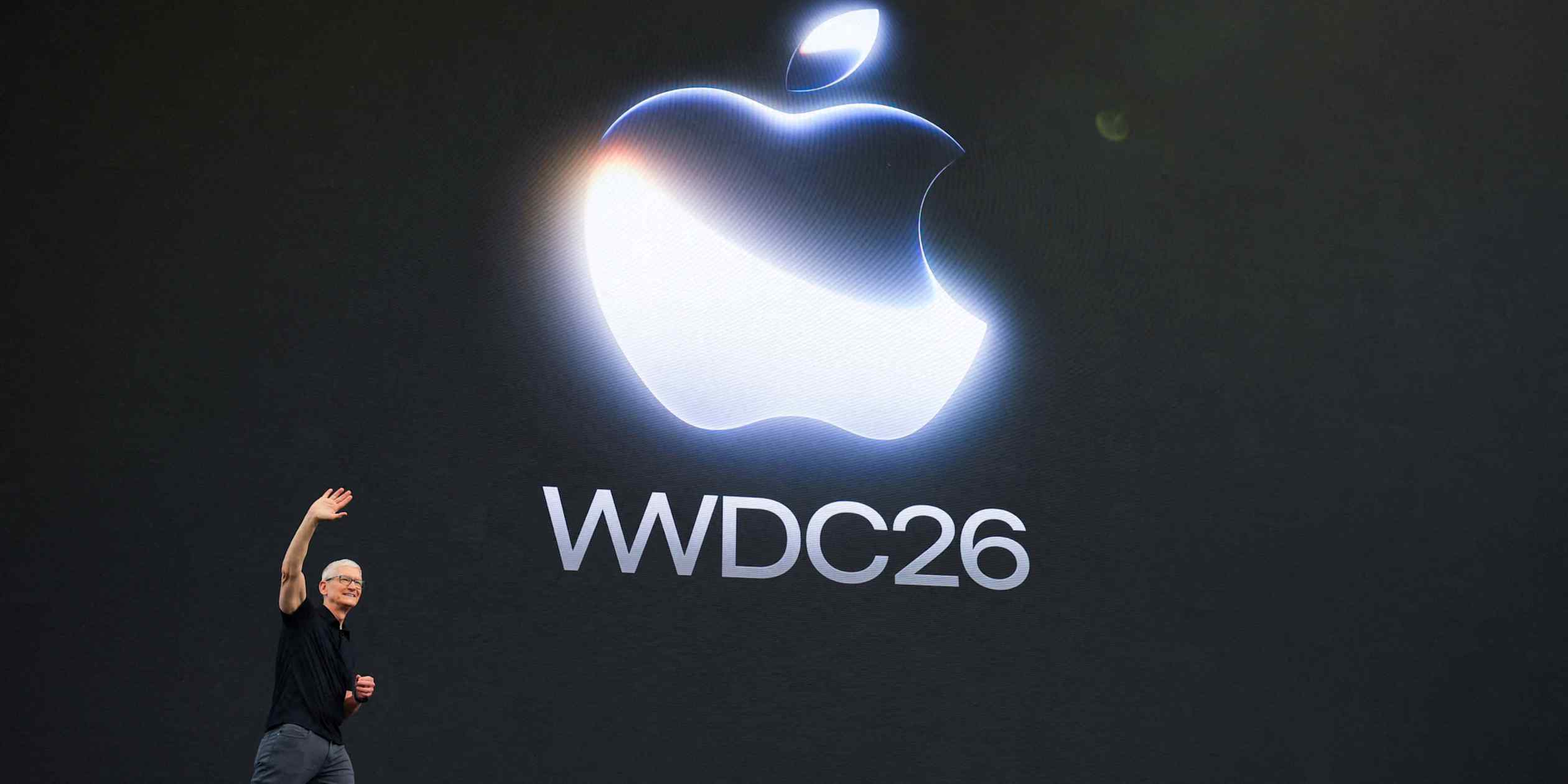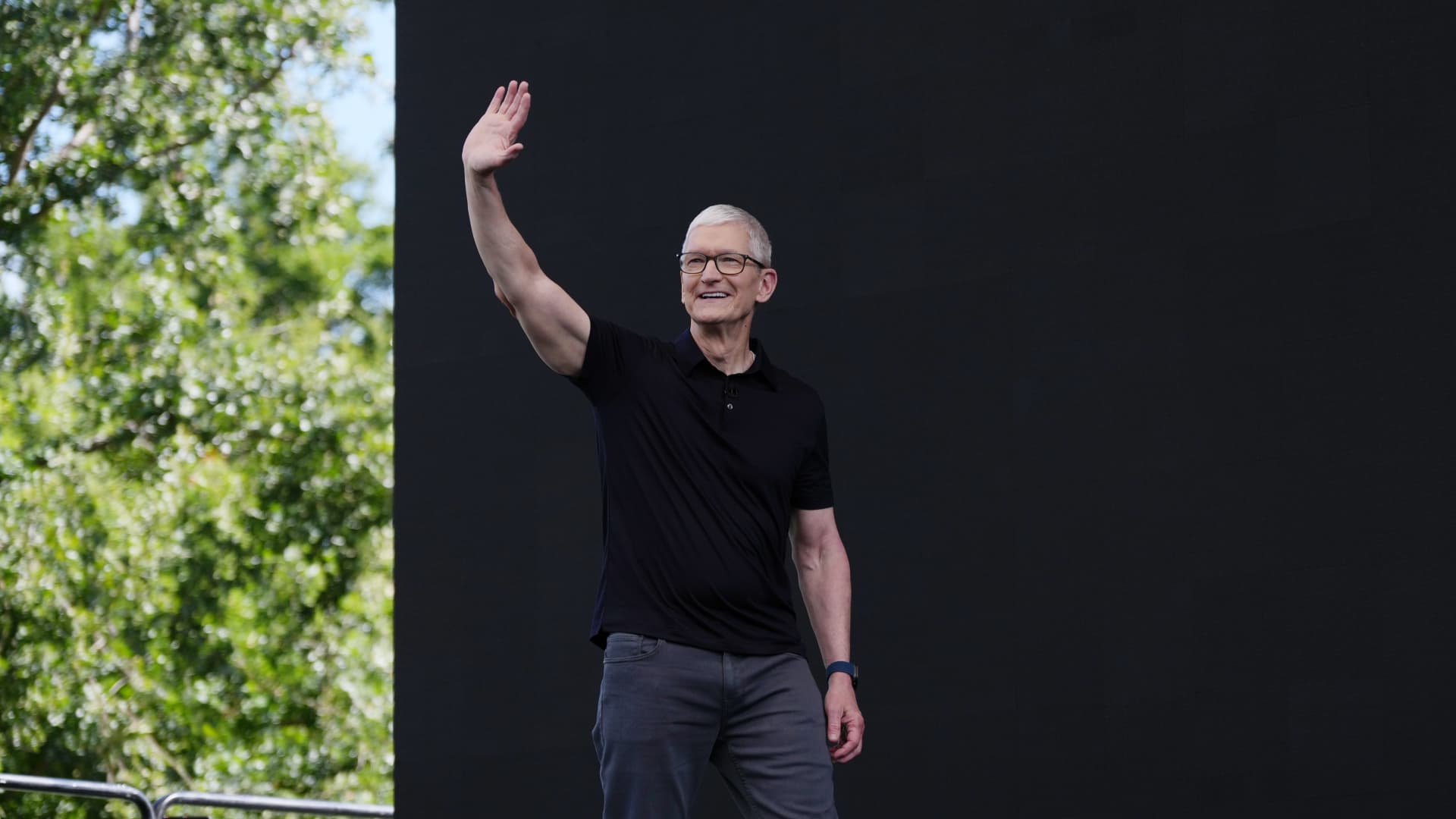
In the grounds of Apple Park on 7 June, a day before WWDC 2026 opens, a 20-year-old from Pune set an iPad on a stand and showed Apple's two most senior leaders how to take the shake out of a drawing. Gadgets Now watched it exclusively. Gayatri Goundadkar walked Susan Prescott, chief executive Tim Cook and incoming CEO John Ternus through Steady Hands, an Apple Pencil app that reads a hand tremor as it happens and lifts it out of the line. A student showing a clever trick, on the surface. On a longer view, a marker of where India now sits in the company Cook is about to hand on.Key TakeawaysGadgets Now exclusively witnessed Gayatri Goundadkar, 20, of Pune, present Steady Hands — her Swift Student Challenge 2026 app playground for people with essential tremor — to Apple's Susan Prescott, Tim Cook and incoming CEO John Ternus at Apple Park on 7 June.Steady Hands reads a user's tremor in real time and removes the shake from each stroke, using Apple's PencilKit and Accelerate frameworks to separate intentional movement from the tremor. She is the latest in a steady line of Indian Swift Student Challenge winners, alongside a 2026 cohort in which India-based developer Bijoy Thangaraj's Guitar Wiz won the Apple Design Award for Inclusivity. The recognition lands as Apple posts record India revenue of Rs 79,378 crore and assembles roughly a quarter of the world's iPhones in the country, weeks before Cook hands the chief executive role to Ternus on 1 September. What Does Steady Hands Actually Do?It pulls the tremor out of a drawing while you draw it. The app reads the shake as the Apple Pencil moves and corrects the stroke in real time, so the line that lands on the canvas is the one the artist meant to make. "It detects the hand tremor in real time and then tries to remove it dynamically from the drawings," Goundadkar told Gadgets Now. From that live reading it assembles a tremor profile unique to each person — a fingerprint of how their hand wavers.That profile carries the load most apps hand back to the user. Filter strength and stroke stabilisation scale themselves to the severity of the tremor, and the settings sort themselves out. "The user don't have to go through the process of understanding complex settings," she said. "It would be automatically set for them on the basis of their tremor scan profile." Someone with a heavy tremor gets aggressive correction; someone with a slight one gets a gentler touch. The work happens out of sight.Steady Hands at a GlanceDetailSpecificationDeveloperGayatri Goundadkar, 20, PuneEducationThird-year computer science, MIT World Peace UniversityAppSteady Hands (Swift Student Challenge 2026 app playground)PlatformiPad with Apple PencilBuilt withSwift, SwiftUI, PencilKit, Accelerate, RealityKit, SceneKitPrimary userOlder adults living with essential tremorStandout featuresReal-time tremor removal, personal tremor profile, Steady Sessions, 3D museumThe Grandmother in Pune, and a Lost PencilThe whole thing began at a kitchen table. Goundadkar grew up drawing and painting with her grandmother in Pune, the two of them sharing a love of Warli, the centuries-old folk art built from simple triangles, circles and lines. As her grandmother aged, her hands began to shake and she had to set the practice aside — a loss that pushed Goundadkar to build Steady Hands.The emotional goal shaped the engineering one. She wanted the technology to help her grandmother draw, and she wanted her to feel steady enough to trust her own hands again. Her main audience is older adults, and she built the interface to feel calm rather than clinical, for a generation that can find technology intimidating. The point she keeps returning to is dignity: the museum she added, where finished pieces hang on a wall the user can walk through, exists so people feel like artists rather than patients.Removing the shake from a drawing solves only half of it. The other half is control, and that is the job of a mode called Steady Sessions. It carries five exercises, among them a Corridor Task that asks the user to trace from a green dot to a red dot while holding inside a narrow channel. "These are exercises which neurologists and… physicians have been using for decades," Goundadkar said, with the iPad and Apple Pencil standing in for the pen and paper clinicians have always reached for. With practice, she argues, the same hard-won control carries into eating, writing and the everyday tasks tremor makes difficult.Damping the Shake: The Engineering UnderneathEvery car you have ridden in solves a version of the problem Steady Hands solves. A suspension exists to separate the message from the noise — to let the chassis read the road while the bumps get absorbed before they reach you. The engineering that matters is the judgement about which motion to keep and which to throw away. Goundadkar's app makes that same call, thousands of times a second, on a moving Apple Pencil.The mechanism is signal processing rather than guesswork. The app captures raw motion data from the iPad and Apple Pencil and reads the frequency and intensity of the tremor, then draws on PencilKit and the Accelerate framework to tell the deliberate stroke from the shake and strip the tremor out. A tremor sits in a recognisable band — a rhythmic, involuntary oscillation laid over the slower, intentional arc of a hand drawing a line. Read the band, damp it, pass the rest through. The finished piece lands in a personal 3D museum that Goundadkar built, she said in her demo, with RealityKit and SceneKit.The tuning is the difficult part, because no two tremors share a setting. Damp too little and the shake survives; damp too much and the drawing loses the human looseness that makes it the artist's own. The tremor profile is what keeps the app from over-correcting — a calibration step, run once, that tells the system how hard to push for this particular hand.Where Did AI Come In?In the research, rather than the core build. Asked by Gadgets Now whether she leaned on AI coding tools, Goundadkar said she used them to understand a condition that refuses to sit still as data. "Every person's tremor is unique. The severity, the detection intensity, everything is different," she said. She has described using Anthropic's Claude to unpack concepts such as how PencilKit handles stroke data, with Apple's own Touch Accommodations among her inspirations. The pattern recurs across this year's cohort: students reaching for AI to learn faster, then doing the design judgement themselves.Inside the Demo: What Cook Asked, What Ternus SaidThe meeting landed as a surprise — "I was not aware," Goundadkar said of being pulled in to present. Once she began, she talked Cook through the app one feature at a time, and he reacted to each turn. When she explained that the correction tunes itself to each person's tremor, Cook said, "Wow. Unique to the individual. That's cool." As she showed the filters setting themselves while she simply drew, he came back with, "Ah, alright. Wow." The personal museum drew a quieter "Ah, ah, cool."Then he pushed past the demo. "Now this is focused on drawing. What about handwriting? For people that have essential tremors?" Cook asked. Goundadkar explained that the Steady Sessions exercises, lifted from physician routines, build the kind of hand control that reaches into writing and eating as much as art. "I see, I see, excellent," he said.The verdict arrived in stages. "You're going to help a lot of people," Cook told her, before naming the gap she had found: "It's such a common ailment and there's very few tools out there." His fuller assessment was warm: "Gayatri's app is a beautiful example of how technology can empower creativity and make art more accessible for everyone. By harnessing the power of iPad and Apple Pencil, she is helping individuals with tremors express themselves and share their art with the world. It's so inspiring to see Indian developers like Gayatri use their talents in service of others, and I know her future is bright," said Tim Cook, Apple's chief executive.He called for a photograph — "Let's get a photo" — and, as the group gathered, came back to her country: "India is so dynamic. I love going there. Very vibrant." His parting line carried the same warmth: "Glad you could make it. Welcome. Congratulations." Ternus, who had followed the run-through beside Cook, offered his own greeting as they broke up: "Nice to meet you."She Is the Latest Indian Winner, Not the FirstIndia has been a fixture in this contest for years. An Indian-origin teenager, Abinaya Dinesh, won as far back as 2021. Asmi Jain of Medi-Caps University in Indore won in 2023 with an app to train eye muscles. Gaurav Kukreja of IIT Kanpur won in 2024 with Fast Aid, an emergency first-response app. And in 2025 the Indian presence turned from individuals into institutions: ten students from Galgotias University's iOS development centre alone took home wins.YearIndian winner(s)Institution / baseApp2021Abinaya Dinesh (Indian-origin)New Jersey, USGastro at Home2023Asmi JainMedi-Caps University, IndoreEye-muscle training app2024Gaurav KukrejaIIT KanpurFast Aid2025Arihant Marwaha; ten Galgotias University studentsGalgotias University and othersGuGu and more2026Gayatri GoundadkarMIT World Peace University, PuneSteady HandsWhat that table shows is a pipeline, not a one-off. This year's challenge produced 350 winners across 37 countries, and India now sends its winners through dedicated university iOS programmes year after year. Goundadkar is the newest cap, not the debutant.A Second Indian Name on Apple's Stage This WeekShe is also in company. Days before Goundadkar's demo, Apple named Guitar Wiz a winner of the 2026 Apple Design Award in the Inclusivity category — the work of Bijoy Thangaraj, a solo India-based developer, and the only Indian winner among the twelve this year. Guitar Wiz, built in SwiftUI, gives guitarists spoken VoiceOver guidance on pitch, chords and finger placement, and supports Dynamic Type, Increased Contrast and Differentiate Without Color so players of all abilities can use it.Set the two side by side and the symmetry is hard to miss. One app helps a hand that shakes to draw; the other helps a player who cannot rely on sight to learn an instrument. Both are made by Indians, both are creative-arts tools, and both treat accessibility as the starting point rather than a feature bolted on at the end. Apple chose to hand both a moment in the same week. That is the signal worth reading.Why Apple Keeps Looking at IndiaBecause the numbers now justify the attention, on both the buying and the building side. Apple India posted record FY2025 revenue of Rs 79,378 crore, up 18 per cent, and roughly a quarter of the world's iPhones — about 55 million units — are now assembled in the country. India reached 28 per cent of the smartphone market by value in the first quarter of 2026 on Counterpoint's data, and Apple now runs six stores, including one in Koregaon Park in Pune — Goundadkar's own city.Apple in IndiaFigureFY2025 India revenueRs 79,378 crore (up 18 per cent)Global iPhone output assembled in India (2025)About 25 per cent (~55 million units)Smartphone value share, Q1 2026 (Counterpoint)28 per centApple Stores (early 2026)Six — Delhi, Mumbai (×2), Pune, Bengaluru, NoidaDeveloper outreachBengaluru iOS Accelerator (2017); Apple Education Hub with Manipal Academy (Swift courses from March 2026)The developer side has been quieter and slower, which makes it the more telling half. Apple opened an iOS App Design and Development Accelerator in Bengaluru back in 2017, and a new Apple Education Hub in Bengaluru, run with Manipal Academy, began teaching Swift and manufacturing skills from March 2026. A market gives Apple revenue; a developer base gives Apple a reason to stay. The first is measured in a quarter; the second compounds over a decade. The annual run of Swift Student Challenge winners, the university iOS centres, the design-award names — these are the early returns on outreach that began when Apple's India business was still mostly symbolic.The Captaincy Changes Hands at an Awkward Moment to Look AwayAll of this arrives at a handover. Cook becomes executive chairman on 1 September, and John Ternus, the hardware engineering chief, takes over as chief executive — a long-planned succession, the kind a side telegraphs for seasons before the armband actually changes hands. Ternus has been given the bigger turns at recent keynotes the way a vice-captain is handed the new ball in the dying overs: visible grooming, in full view of the crowd.What he inherits in India is a strong position rather than a rebuilding job. Cook spent years turning the country into a manufacturing base and a fast-growing market; the talent layer is the newer innings, and it is the one Ternus, an engineer by temperament, may read most naturally. The risk in any captaincy change is that the incoming leader plays the conditions of the last match rather than this one. India's value to Apple has quietly shifted from cost base to creative base — and a side that keeps picking India only for its bowling will miss the batting coming up through the ranks.Cook spent his Apple decade turning India into the place that assembles a quarter of the world's iPhones. He leaves it, in September, as the place that is starting to draw them too.FAQWhat is Steady Hands and who built it?Steady Hands is an iPad and Apple Pencil app playground that detects a user's hand tremor in real time and removes the shake from their drawings, using Apple's PencilKit and Accelerate frameworks. It was built by Gayatri Goundadkar, a 20-year-old computer science student from Pune, and won a place in Apple's Swift Student Challenge 2026.Is Gayatri Goundadkar the first Indian to win the Swift Student Challenge?No. India has produced winners for years, including Asmi Jain (2023), Gaurav Kukreja (2024) and a large 2025 cohort that featured ten students from Galgotias University alone. Goundadkar is the latest in that line, not the first.What is Guitar Wiz and how is it connected?Guitar Wiz is an app by India-based solo developer Bijoy Thangaraj that won the 2026 Apple Design Award for Inclusivity, announced ahead of WWDC. It gives guitarists spoken VoiceOver guidance and other accessibility support, making it a second India-origin, accessibility-first creative app recognised by Apple in the same week as Steady Hands.How big is Apple's business in India now?Apple India recorded record FY2025 revenue of Rs 79,378 crore, up 18 per cent, with about a quarter of global iPhone output assembled locally. India reached 28 per cent smartphone value share in early 2026, and Apple runs six retail stores in the country.When does Tim Cook hand over to John Ternus?Cook becomes executive chairman on 1 September 2026, with hardware engineering chief John Ternus taking over as chief executive on the same date.Is Steady Hands available to download in India?Steady Hands is a Swift Student Challenge app playground; a public App Store release and pricing were not confirmed in the available material. Check the App Store and Apple's announcements for updates.end of article
Exclusive: Tim Cook, John Ternus Meet India's Steady Hands Developer at Apple’s WWDC 2026 Conference
Gadgets Now watched exclusively as Gayatri Goundadkar presented Steady Hands to Susan Prescott, Tim Cook and incoming CEO John Ternus in the grounds of Apple Park on 7 June — and, in the same WWDC week that another Indian developer won an Apple Design Award, marked how far India has moved inside Apple's world.
2,485 words~11 min read