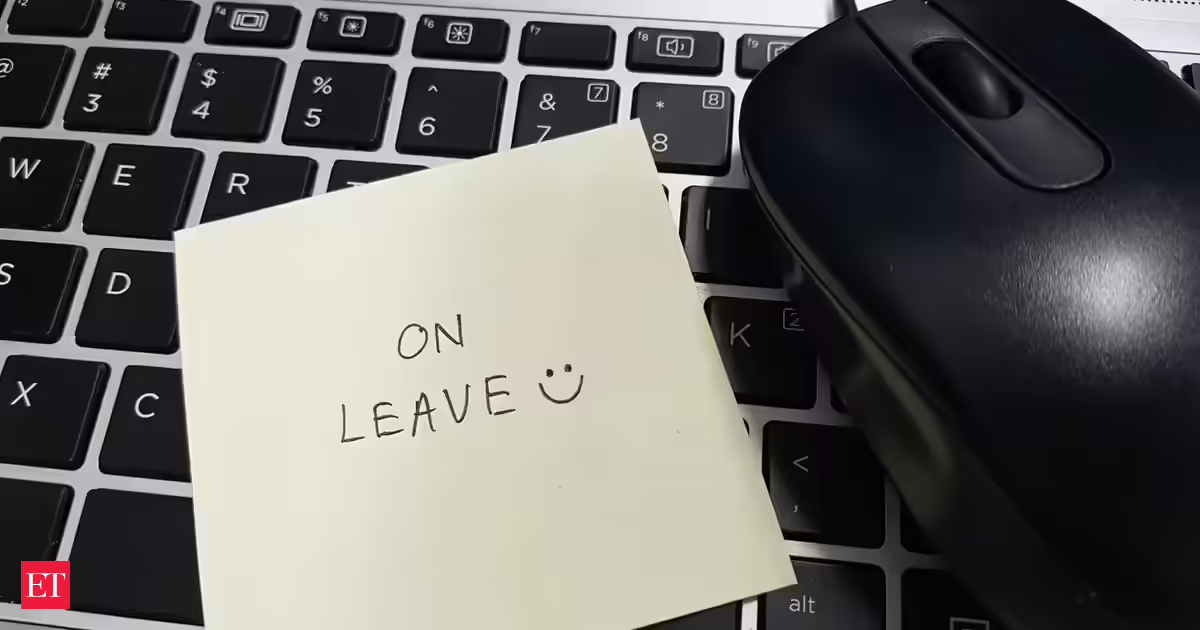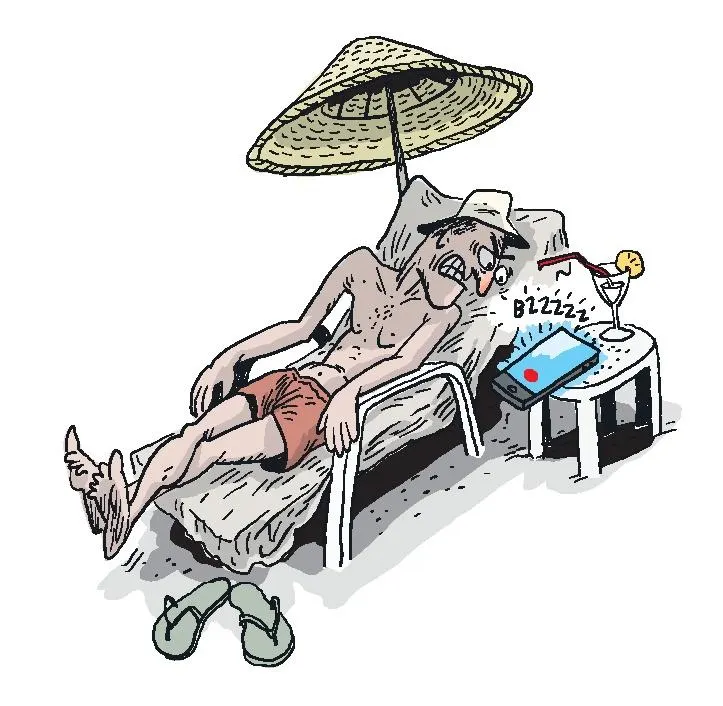
Why Employees Cannot Disconnect From Work During PTOgettyA friend of mine has so much unused PTO saved up that I joke she could probably disappear for a year and still have days left over. That may be an exaggeration, but her reaction to taking time off is very real. She has told me more than once that if she can be gone for a week or two and everything still functions normally, then maybe the company does not really need her. She sees being indispensable as proof of value, commitment, and work ethic. She is an extreme example of a workaholic, but I meet a lot of people who struggle with the same issue in smaller ways. Some employees never use their PTO at all. Others technically take PTO but spend the entire trip checking email, responding to texts, or attending meetings from hotel rooms. Many have bosses who contact them during vacation, and they feel pressure to respond immediately. Even when nobody reaches out, many people still find it incredibly difficult to disconnect from work during PTO.Why PTO Feels Risky To So Many EmployeesgettyWhy PTO Feels Risky To So Many EmployeesFor many employees, PTO no longer feels like a benefit. It feels like a test. People worry about falling behind, appearing replaceable, or missing something important while they are away. In highly competitive workplaces, there is often an unspoken belief that the most committed employees are the ones who are always available.That belief creates a strange contradiction. Companies encourage employees to take PTO because they know burnout hurts productivity and retention. At the same time, employees often see promotions, praise, and opportunities go to the people who answer emails at midnight, respond instantly to messages, and remain constantly connected. Workers receive mixed messages, and mixed messages create anxiety.Research on psychological detachment from work has found that many employees struggle to recover from work stress because they remain mentally connected to work even when they are physically away from it. Studies have linked that lack of detachment to higher emotional exhaustion and reduced recovery from stress. In other words, PTO does not help much if your brain never leaves the office.MORE FOR YOUWhy PTO And Work Identity Have Become So ConnectedgettyWhy PTO And Work Identity Have Become So ConnectedOne of the biggest reasons employees cannot disconnect from work during PTO has less to do with technology and more to do with identity. Many people have tied their sense of value directly to productivity. Their title, responsiveness, achievements, and visibility at work become closely connected to how they see themselves.That creates a dangerous cycle. The more praise employees receive for always being available, the more difficult it becomes to step away. Rest begins to feel unproductive, and unproductive starts to feel irresponsible. Even relaxing can trigger guilt because people associate slowing down with falling behind.I have interviewed many business leaders over the years who admitted they struggled with this themselves. Some proudly described answering emails from hospital beds, vacations, and family events as proof of dedication. Others later admitted those habits damaged relationships, increased stress, and created cultures where employees felt pressure to do the same.Why PTO Becomes Harder In Highly Visible Work CulturesgettyWhy PTO Becomes Harder In Highly Visible Work CulturesTechnology has amplified the pressure surrounding PTO because employees are now visible almost all the time. Teams can see who is active online, who responded to a message, and who stayed silent in a group chat. Many workers fear that disappearing for too long makes them look disengaged.In previous decades, leaving the office often meant being unreachable. Today, smartphones have erased many of those boundaries. Employees carry work in their pockets everywhere they go. Even sitting on a beach can feel stressful when notifications continue appearing every few minutes.Some employees also worry that taking PTO will create more work for them later. They imagine returning to overflowing inboxes, missed deadlines, frustrated coworkers, and hundreds of unread messages. That anticipation alone keeps many people mentally connected to work during their vacation because they are already thinking about the pile waiting for them when they return.Why PTO Culture Often Starts With Leadership BehaviorgettyWhy PTO Culture Often Starts With Leadership BehaviorEmployees pay close attention to leadership behavior surrounding PTO. A company can encourage work-life balance all day long, but employees notice whether executives actually disconnect themselves. If leaders send emails during vacation, contact employees during weekends, or brag about never taking time off, workers absorb those signals immediately.Some leaders unintentionally create pressure by praising employees for sacrificing personal time. Statements like “Thanks for responding while you were on vacation” may sound harmless, but they reinforce the expectation that PTO should remain partially connected to work. Employees begin to believe they are supposed to stay reachable at all times.How Employees Can Create Healthier PTO BoundariesgettyHow Employees Can Create Healthier PTO BoundariesDisconnecting from work during PTO requires intentional boundaries. Employees who expect themselves to suddenly relax after years of constant connection are often disappointed. Habits around availability become deeply ingrained over time.One helpful step is preparing coworkers before leaving rather than trying to manage everything remotely during vacation. Clear communication, delegated responsibilities, and realistic expectations reduce anxiety for everyone involved. Employees are far more likely to disconnect when they trust that important issues can be handled without them.Another important step involves reducing unnecessary visibility pressure. Turning off notifications, removing work apps temporarily, or setting designated check-in times can help create separation. Some employees feel immediate relief simply by removing the temptation to constantly monitor incoming messages.Leaders also play a critical role here. Employees are more likely to respect their own PTO when leaders respect it as well. That includes avoiding nonessential contact during vacations and creating cultures where taking time off is treated as responsible behavior rather than weakness.Why PTO May Become Even More Complicated In The FuturegettyWhy PTO May Become Even More Complicated In The FutureAs AI and workplace technology continue increasing efficiency expectations, the pressure surrounding PTO may become even more intense. Employees already feel pressure to respond faster, produce more, and remain constantly informed. When technology accelerates workplace pace, many people begin feeling as if they can never fully step away. That creates an important challenge for organizations because companies need employees who are creative, emotionally intelligent, curious, collaborative, and adaptable, and those qualities become harder to maintain when people operate in a constant state of mental exhaustion. Organizations that want healthier, more innovative, and more engaged employees may need to examine whether their culture truly supports PTO or simply claims to support it while rewarding constant availability instead. Employees also need to recognize that being valuable at work should not require being perpetually available, because people tend to perform at a higher level when they have opportunities to recover mentally, reconnect with life outside the office, and return with renewed energy and perspective.
Why Employees Cannot Disconnect From Work During PTO
Employees struggle to disconnect during PTO because work identity, visibility pressure, and constant connectivity make many people feel guilty stepping away.
1,142 words~5 min read