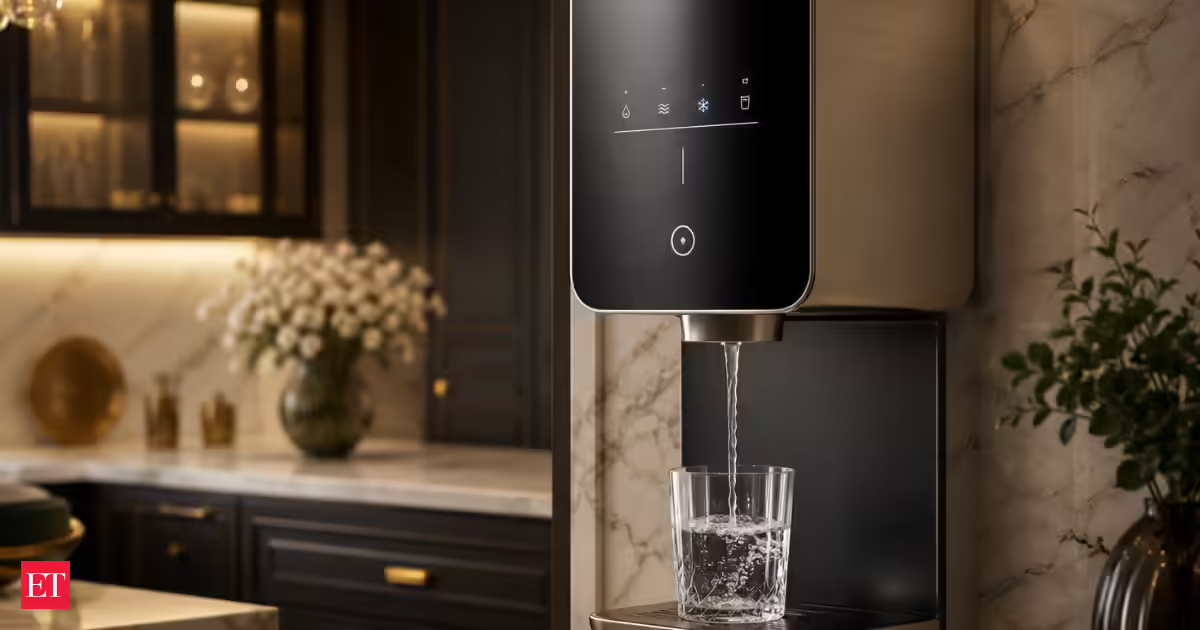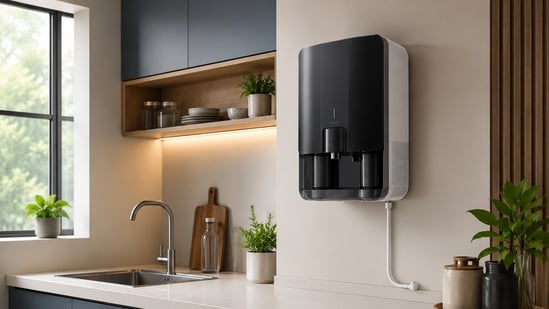
When selecting an RO water purifier, consumers should focus on total ownership costs rather than just initial pricing. Choosing an RO water purifier is not a casual purchase. Most households research it for weeks, compare specifications across brands, read reviews, and weigh the decision carefully because they know the machine they pick will sit on their kitchen counter for the next eight years. What the research phase rarely surfaces is what those eight years actually cost.Buying an RO in June 2026? Avoid These 5 Costly Mistakes Most People MakeThe purchase price is only the beginning. Filter replacements run ₹2,000– ₹4,000 per cycle. Technician visits cost at least ₹500 each. AMC renewals, out-of-warranty repairs, and parts that quietly fall outside coverage accumulate on top. A purifier bought at ₹14,999 can cost upward of ₹50,000 across its ownership life. That number rarely features in the buying decision and it is where most purchases go wrong.Treating TDS as a complete measure of water safetyTDS, or Total Dissolved Solids, measures the combined concentration of dissolved substances in water but it does not tell you what those substances are. According to the World Health Organization (WHO), TDS includes inorganic salts such as calcium, magnesium, and sodium, along with small amounts of organic matter. It may also contain potentially harmful contaminants like fluoride, nitrates, and heavy metals.We are conditioned to associate lower or “balanced” TDS readings with cleaner water. However, a glass of water with a TDS of 180 could be mineral rich or chemically compromised, the number alone cannot distinguish between the two.TDS should be looked at to ensure total dissolved solids fall under the acceptable drinking range. Additionally, the right type of purification should be chosen based on the water supply at the buyer’s home. Combination of both will ensure that filtered and uncompromised water is dispensed.Buyers should be cautious about systems that use MTDS or blending mechanisms, where untreated source water is mixed back into RO-purified output to maintain taste. In practice, this functions as a bypass and whatever the source water carries, fluoride, nitrates, heavy metals, re-enters the output stream through it.In India, this risk is compounded by the fact that water sources are neither stable nor consistent. Municipal supply quality shifts across seasons, localities switch between groundwater and surface water without notice, and TDS levels can change significantly within the same building across months. A blending mechanism calibrated for one source profile offers no protection when that profile changes. 100% RO removes nearly all dissolved solids regardless of what the source water contains on any given day which is the only guarantee that holds across an eight-year ownership period.Optimising for Upfront Price Instead of Long-Term Ownership CostA ₹15,000 purifier and an ₹19,000 one often appear to belong in a similar category and at the point of purchase, the ₹4,000 gap can often become the deciding factor. But what that comparison rarely includes is the cost of operating the machine over the years that follow.TimelineOwnership CostPurchase + Year 1 ₹14,999Years 2–8 ( ₹5,000/year) ₹35,000Total~ ₹50,000The table above illustrates what ownership actually costs when a purifier is built around yearly AMC and service revenue. The purchase price ends up being the smallest line item.A purifier engineered around a two-year filter life, a comprehensive renewable warranty, and smart diagnostics that reduce unnecessary service visits will distribute those costs very differently.Ignoring Maintenance and Service Dependency at PurchaseMost buying decisions focus on the machine. Almost none evaluate the ownership experience that begins after installation such as how quickly service arrives, what a routine visit costs, and whether the purifier signals degrading performance before water quality actually drops.In cities across India, service response times vary significantly by location. A household in a peripheral area can wait days for a technician visit, with no access to purified water in the interim. More critically, traditional RO systems offer no feedback on filter health between visits. Water quality degrades gradually as filters age, but there is no indication of this until a scheduled service event or until the problem becomes severe enough to notice.Smart purifiers address this directly. App-based diagnostics, real-time filter tracking, and automated alerts shift the ownership model from reactive to proactive. This is less a convenience feature than a safety one.2. Trusting Brand Familiarity Over Actual Product DesignThe brands that dominate India’s water purifier market have spent decades building consumer trust through large service networks, widespread availability and strong category recall. That trust is not misplaced. But these brands have not been able to keep up with product innovation and the transition that the industry is undergoing. New age challenger brands have been at the forefront of it, questioning existing business models and changing long standing industry standards.A familiar brand name remains a reasonable starting point for evaluation, but it cannot be the entire evaluation. The purifier being sold today should be evaluated based on its filtration technique, maintenance model, warranty structure and approach to water treatment.Several brands rely on MTDS. A bypass-based approach that mixes non-RO treated water back into the output, making it possible for contaminants to seep back into drinking water. This mechanism is marketed as a feature for taste adjustment and TDS retention.100% RO filtration with a low maintenance model and a transparent warranty structure is the combination that buyers should look for before making the purchase decision.3. Assuming the Warranty Covers What Actually Fails"Comprehensive 2-year warranty" appears prominently across multiple product listings. What it covers in practice varies significantly. The components most likely to need replacement such as RO membranes, carbon filters, UV lamps, and pumps are frequently excluded as consumables, covered only in year one of a stated two-year warranty, or protected only under conditions that are difficult for buyers to verify.For most households, the first significant maintenance expense arrives within 12–18 months. If it falls outside meaningful warranty coverage (which it frequently does) buyers discover the gap between what the warranty sounded like and what it actually covers. A warranty that renews comprehensively, covers membranes and service visits, and does not impose opaque voidance conditions based on input water quality is meaningfully different from one that does not. The distinction is worth confirming before purchase.Comparison of the Current Water Purifier LandscapeBelow is a comparison of popular ROs ranging from ₹15,000 to ₹20,000.#ModelPricePurificationFilter LifeWarrantyOwnership Cost1Native M2 Pro (Urban Company) ₹18,999100% RO + UV + Copper + Alkaline2 yearsComprehensive 2-year, renewableLow2Atomberg Intellon ₹17,999RO + UV + Minerals + MTDS2 yearsComprehensive 2-year, renews on replaced parts onlyLow-Medium3Aquaguard Ritz Pro ₹16,999RO + UV + UF + Alkaline + Copper + MTDS2 years2-year, subject to input water conditionsMedium-High4Kent Supreme Plus ₹14,999RO + UV + UF + Alkaline + Copper + MTDS1 year1-year, subject to usage conditionsHighThe Native M2 Pro by Urban Company is the only product in this comparison that runs on 100% RO without any blending mechanism. Every litre dispensed has passed fully through the membrane. The two-year warranty renews comprehensively, covering membranes, filters and service rather than shifting those costs to the buyer after year one. That combination of no MTDS, no AMC dependency, no warranty gaps is what keeps its long-term ownership cost the lowest in this segment despite the higher upfront price.The smart layer reinforces this. Real-time filter health tracking, TDS monitoring and app-based diagnostics mean filter degradation is visible before it affects water quality, reducing the need for scheduled technician visits. It is a purifier designed around predictable ownership rather than recurring revenue.Atomberg IntellonThe Intellon delivers capable RO and UV purification with a clean design and strong smart features. Auto-TDS Adjustment that blends non RO treated source water back into purified output to maintain taste. The mechanism is marketed as a feature; in practice, it reintroduces whatever the source water carries into the output stream.The warranty structure follows a pay-per-use model: filters are replaced when clogged rather than on a fixed cycle, and renewals apply only to replaced components rather than the purifier as a whole. Over a longer ownership period, this creates maintenance costs that are harder to predict than the upfront price implies.App-based monitoring and generally low day-to-day upkeep make it a strong option for households prioritising connectivity. The trade-offs consisting of TDS adjustment and a pay-per-go model are worth weighing against that.2. Aquaguard Ritz ProThe Ritz Pro has the most extensive filtration stack in this comparison with RO, UV, UF, Alkaline, and Copper which makes it look comprehensive on paper. In practice, the MTDS mechanism means not all water passes through that stack before dispensing, which limits what the specification sheet actually guarantees.The warranty is narrower than the filtration list implies, and the product is built around frequent servicing . For households dealing with inconsistent water conditions, that dependence compounds.IoT connectivity is present and reliable. The gap is between what the product signals at the point of purchase and what owning it actually involves once the servicing cycle begins.3. Kent Supreme PlusThe Kent Supreme Plus enters this comparison at the lowest upfront price, and it is also the most expensive to own over time. A one-year filter life means the first replacement cycle arrives faster than any competitor here. The warranty is limited in both duration and coverage, shifting membrane and service costs to the buyer earlier than most households anticipate.MTDS is present. The ownership model is service-dependent by design. Kent's category presence and service network remain genuine strengths but the product reflects a maintenance model that the rest of this segment has moved away from.The Actual Buying DecisionThe purifier bought for its lower sticker price can easily become the most expensive machine to own. The one with the longest specification list may be built around a service model that converts those features into ongoing costs. The one with the most familiar brand name may not reflect where that brand's product design currently stands.What a household is actually buying is eight years of daily use. The relevant question is not what the purifier costs on the day of purchase, but what it costs — and how reliably it performs — across the years that follow. That evaluation is available before purchase. It just requires asking different questions than the ones the market is designed to answer.Note to readers: This article is part of HT's paid consumer connect initiative and is independently created by the brand. HT assumes no editorial responsibility for the content, including its accuracy, completeness, or any errors or omissions. Readers are advised to verify all information independently.Want to get your story featured as above? click here!
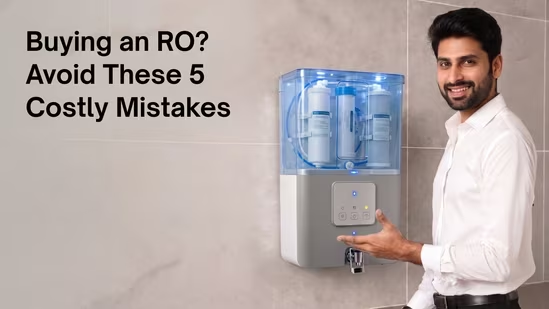
Buying an RO in June 2026? Avoid These 5 Costly Mistakes Most People Make
When selecting an RO water purifier, consumers should focus on total ownership costs rather than just initial pricing.
1,742 words~8 min read