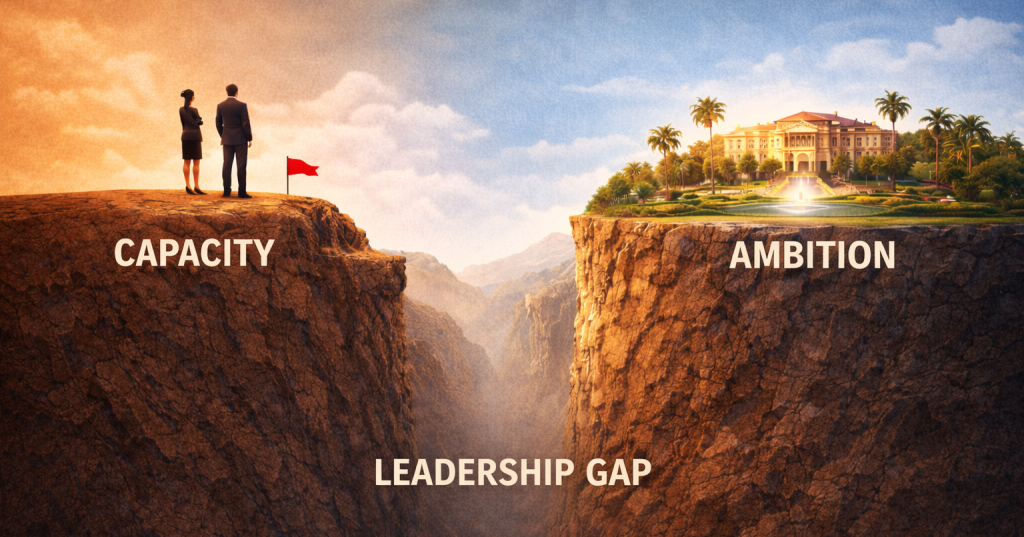
Every company has a few people it cannot imagine operating without.They are not always the most senior employees or the most visible leaders. Sometimes they are the people who know why a major client relationship works. Sometimes they are the people who understand a process that has evolved over years. Sometimes they are the ones everyone calls when a difficult problem appears and nobody is sure where to start.Most businesses view these individuals as strengths. They often hold valuable context, strong judgement, and years of experience that help teams avoid mistakes and make better decisions. The problem is not their importance. The problem begins when too much depends on them.As companies grow, they naturally add more people, more customers, and more complexity. What does not always grow at the same pace is shared understanding. New employees join, teams expand, and responsibilities become broader, yet critical knowledge often remains concentrated among the same small group of individuals. They become the people who explain how things work, why decisions were made, and what should happen next.At first, this does not appear to be a problem. In fact, it can feel efficient. If someone already has the answer, it makes sense to ask them. Over time, however, reliance can quietly turn into dependency. Teams begin waiting for a handful of experts before moving forward. Decisions slow because important context sits with a limited number of people. New hires take longer to become effective because much of what they need to learn exists in conversations rather than systems they can easily access.This challenge becomes more significant as businesses attempt to scale. Most companies have spent decades learning how to expand operations, increase revenue, build technology, and enter new markets. Far fewer have developed effective ways to ensure that experience spreads as quickly as growth does.The distinction matters. A new employee can be given access to software, documentation, and training materials on their first day. What takes far longer to acquire is the judgement that comes from years of solving problems, navigating difficult situations, understanding customers, and learning from mistakes. That knowledge often sits in people's heads rather than in formal processes.As a result, many leadership teams are beginning to ask a different set of questions. How quickly can expertise move across the company? How can new employees learn faster? How can businesses reduce dependence on a small number of individuals without losing the value those individuals create? These questions are no longer limited to HR or training functions. They increasingly influence growth, productivity, succession planning, and long-term competitiveness.The conversation is becoming even more important as industries face constant change. Markets shift faster than before. Customer expectations evolve quickly. New technologies alter the way work gets done. In that environment, companies cannot afford to relearn the same lessons repeatedly or allow valuable insights to remain isolated within specific teams.This is one of the reasons knowledge management, workforce development, and organisational learning are attracting renewed attention from business leaders. The companies that adapt most effectively are often not the ones with the largest teams or the biggest budgets. They are the ones that become better at ensuring what one person learns can benefit many others.These are among the questions that will shape discussions at the Future of Knowledge Work Summit in Bengaluru on 17 June. As business leaders, technology executives, HR heads, and transformation experts come together, the focus will extend beyond technology and productivity alone. The conversation will examine how companies can capture, share, and apply knowledge more effectively in an increasingly complex business environment.For years, growth was largely measured through revenue, market share, and headcount. Increasingly, another measure may matter just as much: how effectively a company turns individual experience into collective capability. The answer may determine which businesses continue to scale smoothly and which find themselves constrained by knowledge that never moved beyond a few key people.Join the leaders redefining work, talent, and growth.
What happens when expertise stops scaling? The leadership challenge companies can't ignore
Most companies know who their most valuable people are. The bigger question is whether what those people know can scale. As businesses grow, leaders are being forced to confront a challenge that technology alone cannot solve: turning individual experience into a capability the entire company can benefit from.
651 words~3 min read