Ji Da-gyum
For over a decade, I’ve navigated the complexities of North Korean affairs, security, and foreign policy from both Seoul and Washington, D.C. As the National Desk Political Team Lead, I track the pulse of geopolitics, closely following developments from the Unification Ministry and the Foreign Ministry. My mornings start with Rodong Sinmun—North Korea’s state mouthpiece—before diving into the day’s headlines from Seoul and Washington.
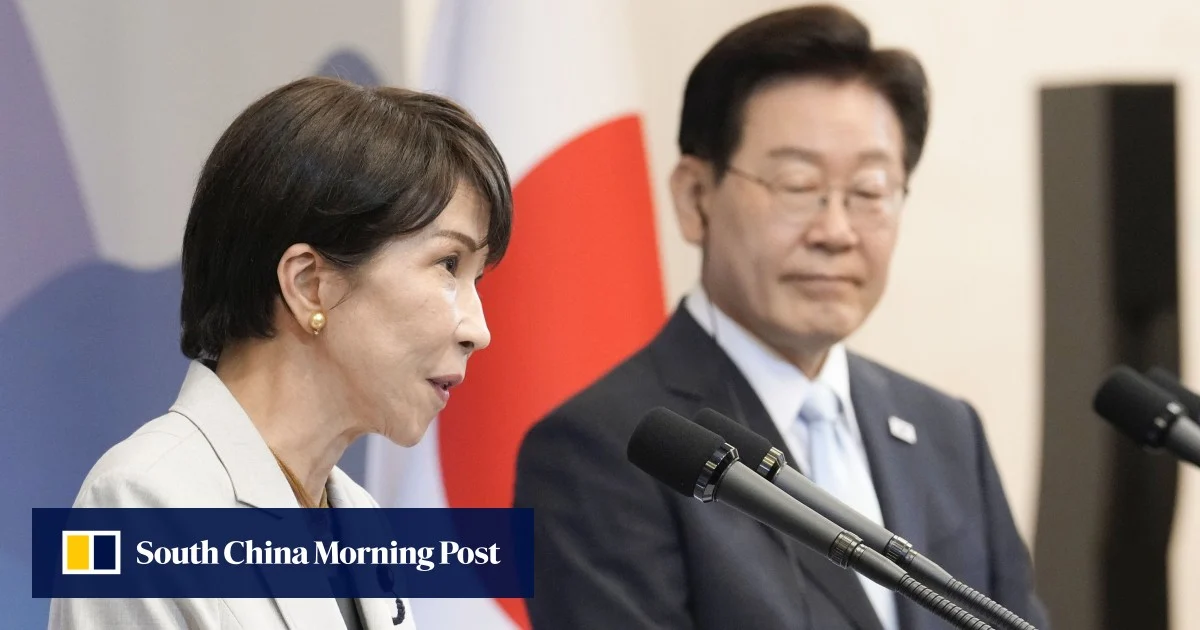
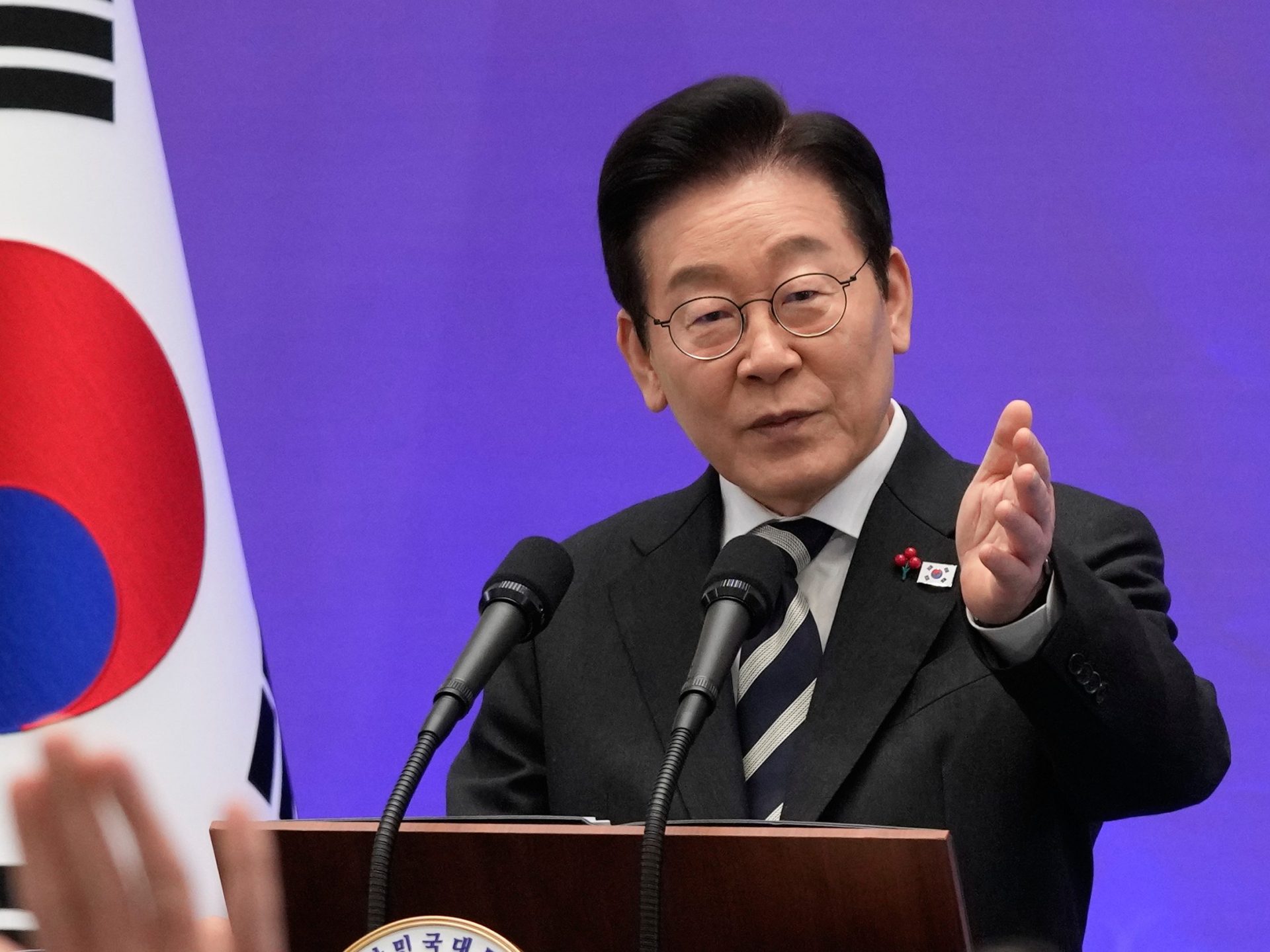
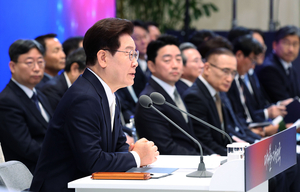
Lee laments ballot shortage, questions his 'sensitivity to sovereignty' President Lee Jae Myung speaks during a press conference on Monday, marking the first anniversary of his inauguration on June 4 the previous year (Yonhap) President Lee Jae Myung said Monday that deeper military cooperation with Japan would remain difficult unless Tokyo offers a "sincere" apology for historical issues stemming from Japan's 1910-45 occupation of the Korean Peninsula.Lee revealed that he had explained to Japanese Prime Minister Sanae Takaichi that a military logistics support agreement would be difficult to pursue despite its practical necessity, following their summit in his hometown of Andong, North Gyeongsang Province, on May 19."Northeast Asia's security issues are somewhat complex. In the long run, I believe we should move toward a multilateral security system," Lee said during a news conference marking his first year in office.Lee, however, concurrently disclosed that he had cautioned during the summit that South Korean public sentiment toward Japan remains a significant hurdle."On the issue of a military logistics support agreement, many people in the Republic of Korea would say, 'What are you talking about?' Yet from my perspective, there is a practical necessity for it," Lee said, referring to South Korea by its official name."But practical necessity is one thing. Emotionally, many of our people still find it difficult to accept at this point. If I say things like this, I'll get into trouble. So I told her, 'Please understand our position as well.'"The agreement, formally known as an Acquisition and Cross-Servicing Agreement, would allow the two neighboring US allies to share and mutually procure military supplies and logistical support, including fuel, food and ammunition. Japan has sought to conclude such an arrangement with South Korea.Lee further suggested that a sincere Japanese apology over historical issues remains a prerequisite for deeper military cooperation and a genuinely closer bilateral relationship."But that is the situation we face today. It is because these (historical) issues have not been fundamentally settled. I believe they must be resolved one day — they absolutely must," Lee said."Only then can a genuine Korea-Japan relationship be achieved. There must be a sincere apology — one that sincerely says, 'I'm really sorry for hurting you.' I believe that day will come eventually."Lee concurrently pointed out that historical and territorial disputes with Japan should be managed separately from areas where cooperation serves South Korea's national interests."There are conflicts over historical issues and territorial issues," Lee said. "But that does not mean we have to become so tied down by them that we give up everything else."No realistic path to Seoul's nuclear armamentOn North Korea's nuclear program, Lee called for a phased approach that keeps denuclearization as the long-term objective while setting more realistic short-term goals for negotiations."We need to be realistic," Lee said. "That is why we should set short-, medium- and long-term goals and engage in actual dialogue based on them."As an initial step, Lee said negotiations should focus on freezing North Korea's nuclear and missile programs rather than demanding immediate denuclearization."As a first step, I believe negotiations should be aimed at stopping the additional production of nuclear materials, preventing their transfer overseas and establishing a moratorium," Lee said. "North Korea should also halt the development of ballistic missiles and intercontinental ballistic missile technology. Those alone should serve as the short-term objectives of negotiations."Lee said he had conveyed the need for a phased denuclearization approach to US President Donald Trump and other world leaders on several occasions, while arguing that economic sanctions on North Korea have largely lost their effectiveness."At this point, sanctions are serving little purpose," Lee said. "Everything is coming in through Russia now. As for China, it does not appear to be working very well there either, though I can't say for certain. That's the situation we're facing today."At the same time, Lee pointed out that South Korea's nuclear armament is "neither desirable nor possible in reality," saying, "That is why we must ultimately move toward denuclearization in the long run.""If the Republic of Korea arms itself with nuclear weapons, do you think Japan would stay still? Do you think Taiwan would stay still? Do you think East Asia would stay still?" Lee said. "Everyone would arm themselves with nuclear weapons, and the entire region would become saturated with them. That is not desirable."Lee also said nuclear armament would expose South Korea to severe international sanctions that the country could not withstand, given its "extremely high level of dependence" on the outside world."Acquiring nuclear weapons would require us to endure enormous international sanctions, but we cannot become like North Korea," Lee said.Lee acknowledged that "inter-Korean relations have deteriorated to the point where it is hard to see how they could get any worse." However, Lee said his government would continue seeking a path of "dialogue, communication, cooperation, coordination and shared prosperity" with North Korea.Against that backdrop, Lee criticized the former Yoon Suk Yeol administration over allegations it sent drones into North Korea in an attempt to provoke tensions and create a pretext for imposing martial law."But for political reasons, it did not show respect. Instead, it treated (North Korea) with hostility. It even tried to provoke a war," Lee said. "It must have been very difficult for North Korea to endure."Lee added, "Imagine how humiliated (North Korea) must have felt while putting up with that."Lack of ‘sensitivity to sovereignty’On the domestic front, Lee called for a thorough investigation into ballot shortages that disrupted the June 3 local elections, saying authorities must determine whether the failure stemmed from negligence, structural flaws or possible criminal wrongdoing.Lee said the ballot shortage controversy had prompted him to reflect on whether political leaders, including himself, had become too numb to the basic principle that voting is an exercise of popular sovereignty.“Watching many young people raise the issue, I wondered whether I, too, had become far less sensitive to it,” Lee said, referring to protests against ballot shortages.“Maybe people like us had grown numb to it, or perhaps it was a lack of ‘sensitivity to sovereignty.’ That was the kind of reflection I had.”Lee said the controversy was “not about the number of votes or the outcome,” but “a matter of principle” and “a fundamental issue concerning the exercise of sovereignty in the Republic of Korea.”