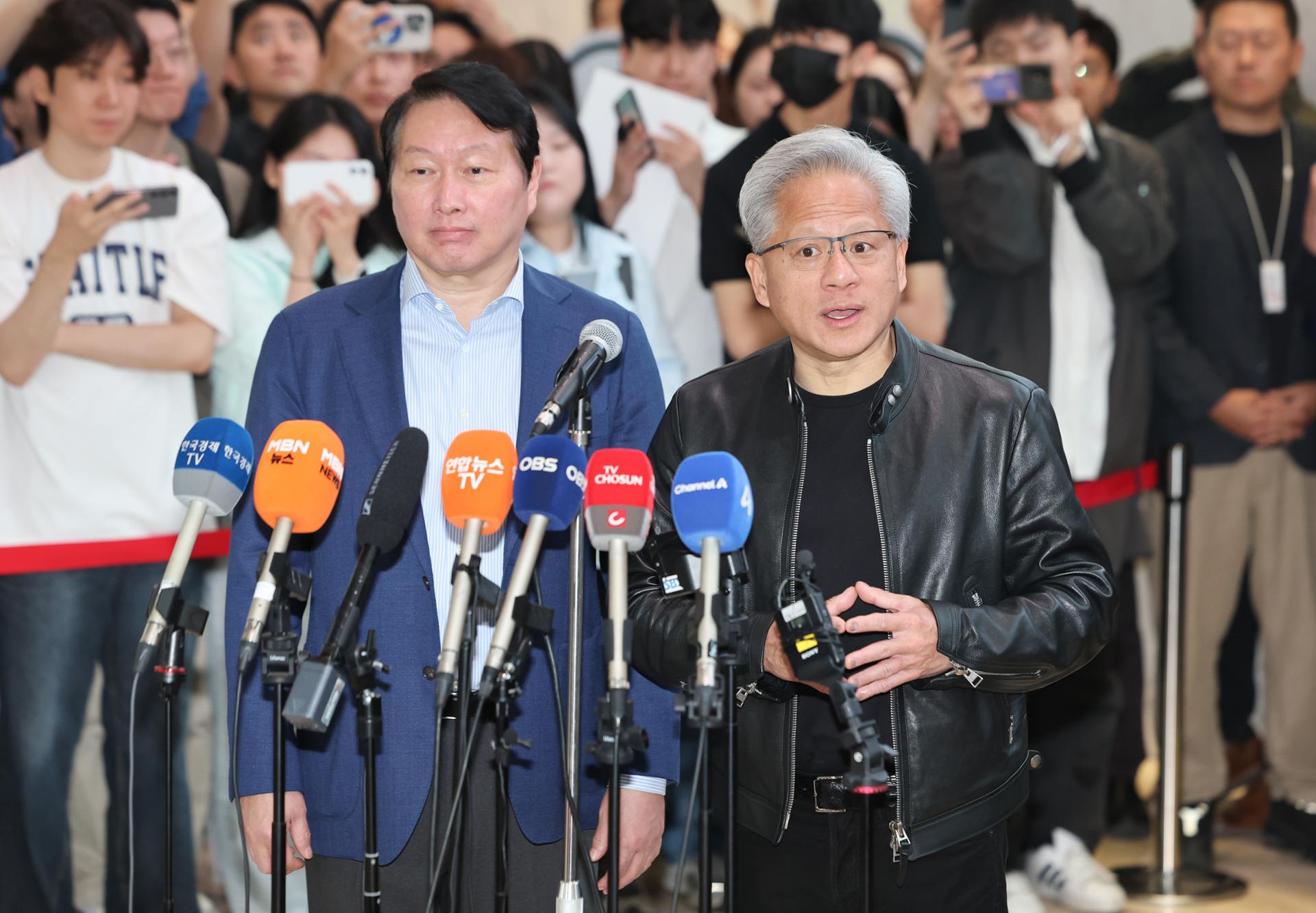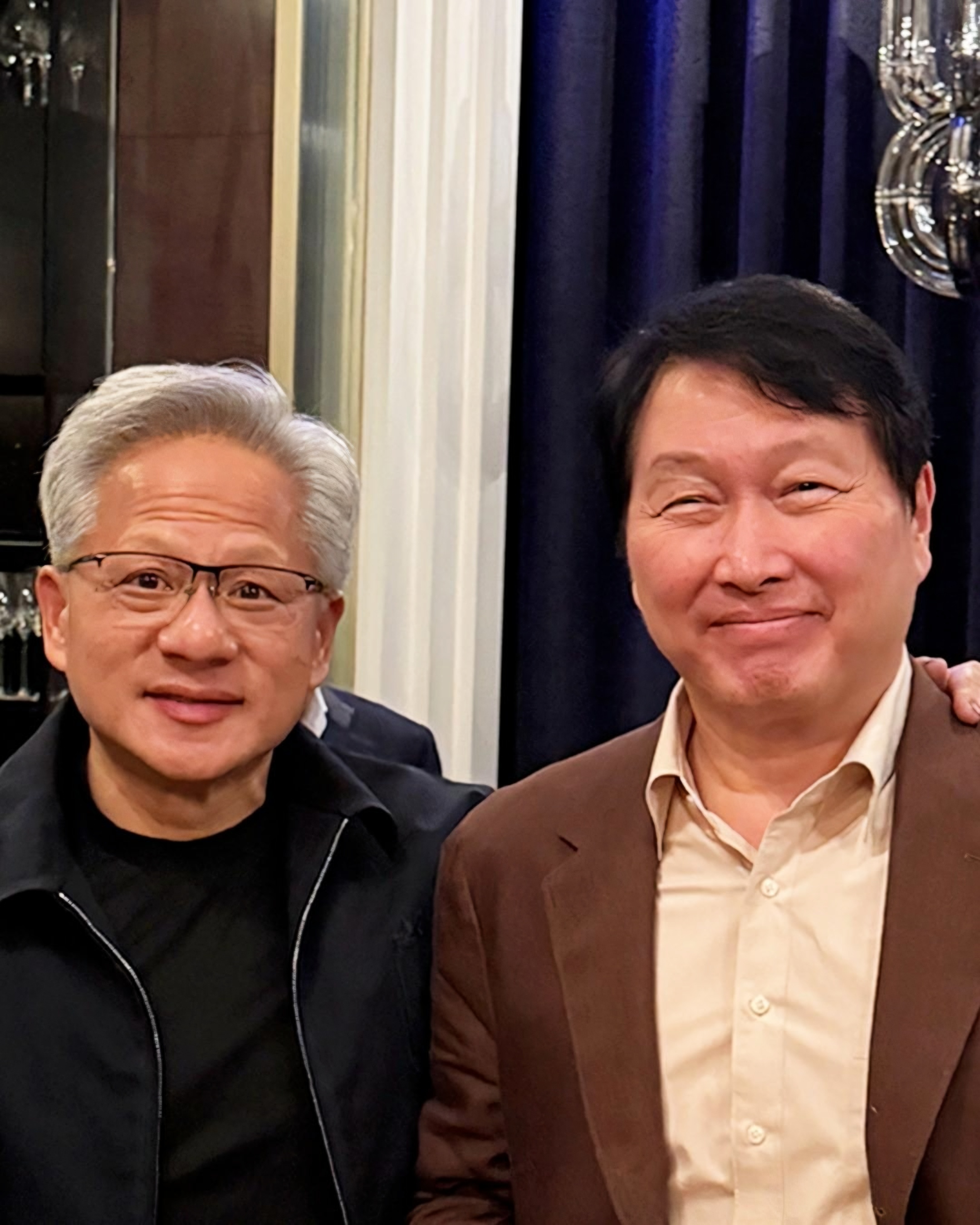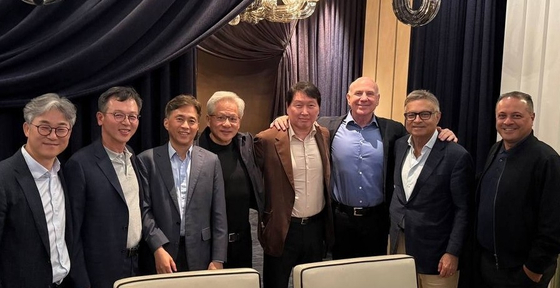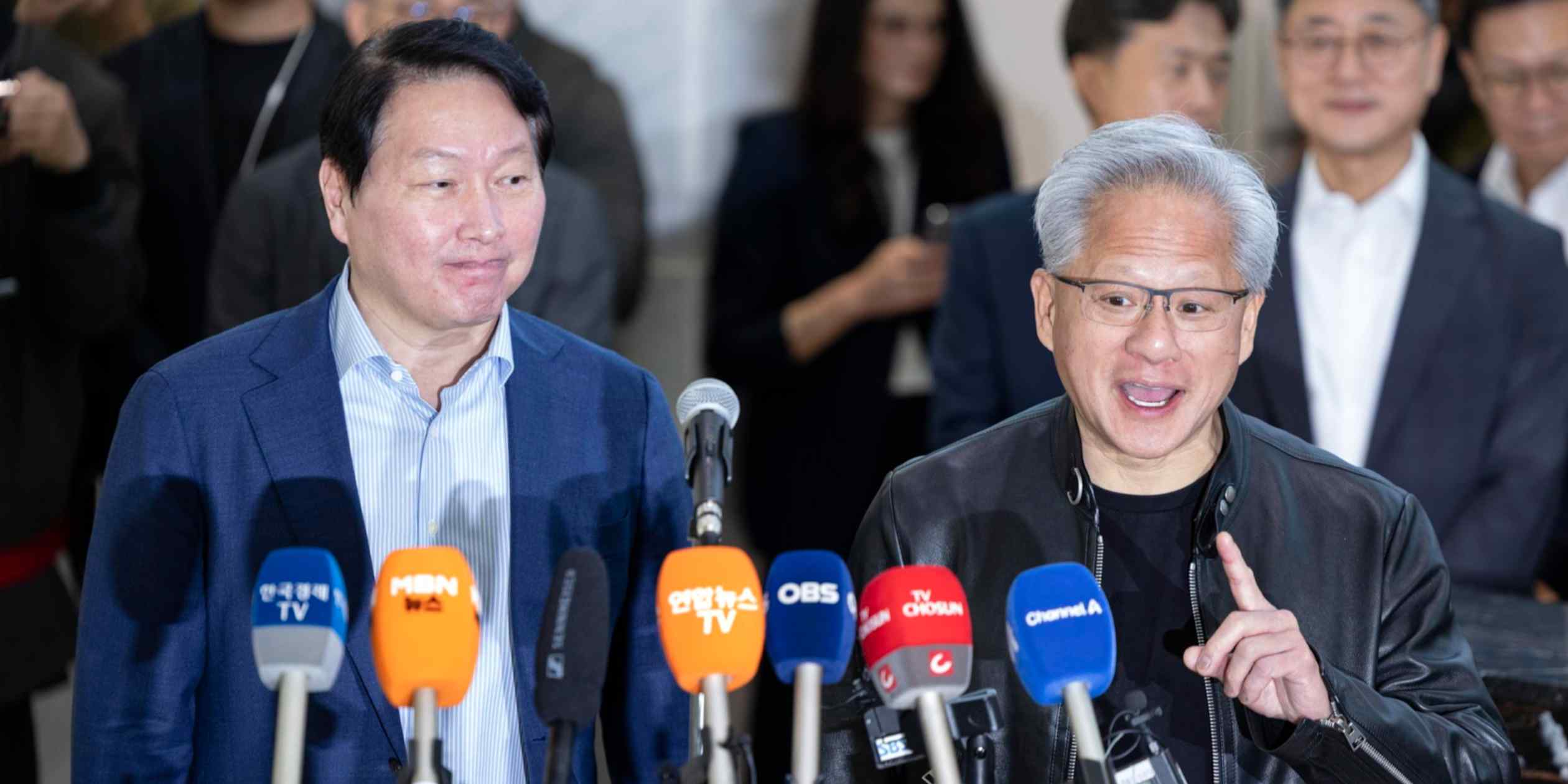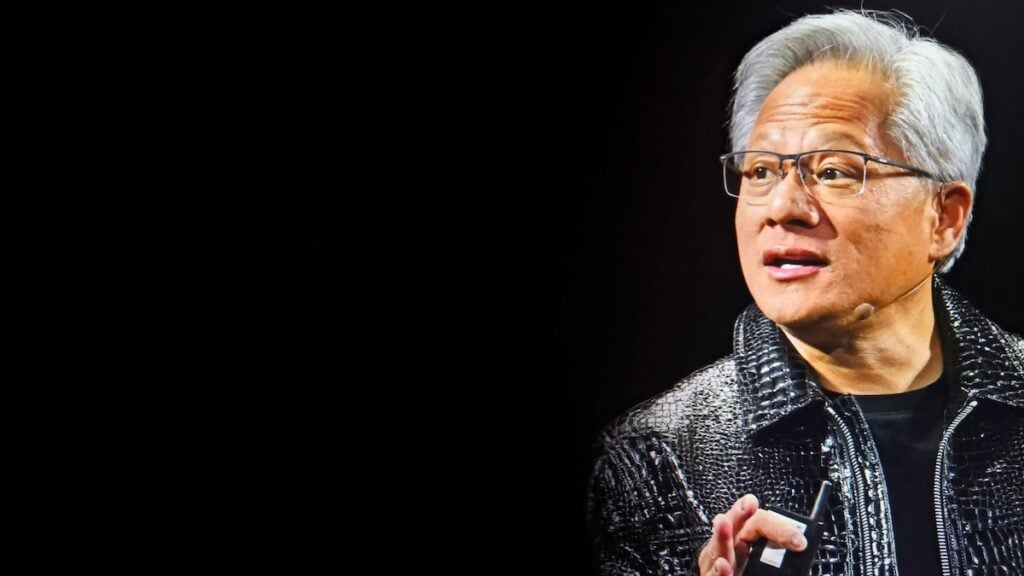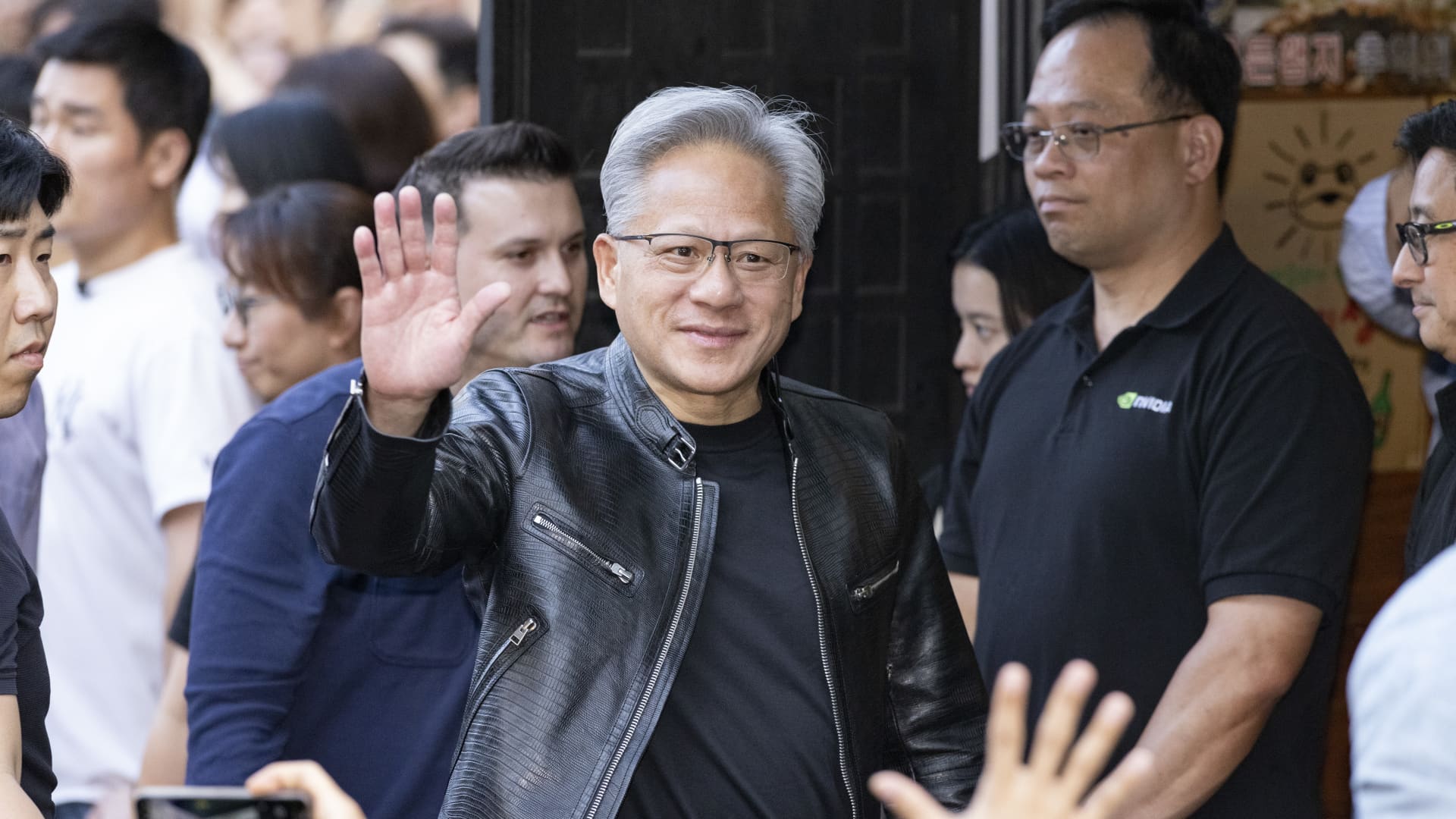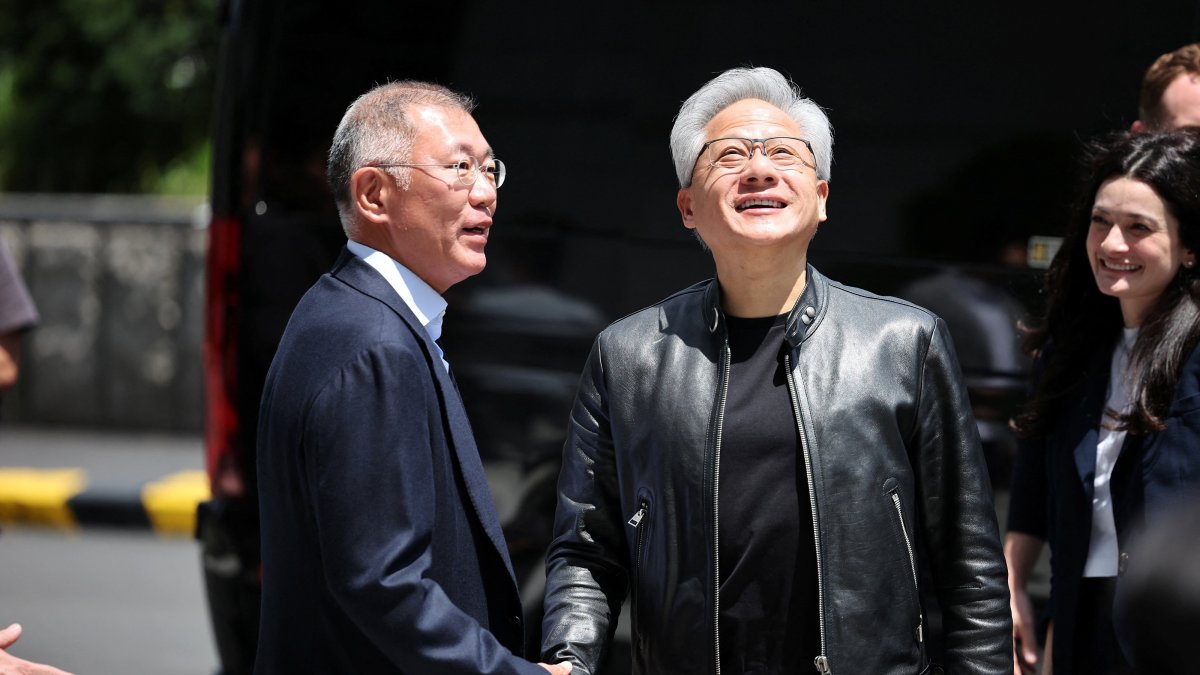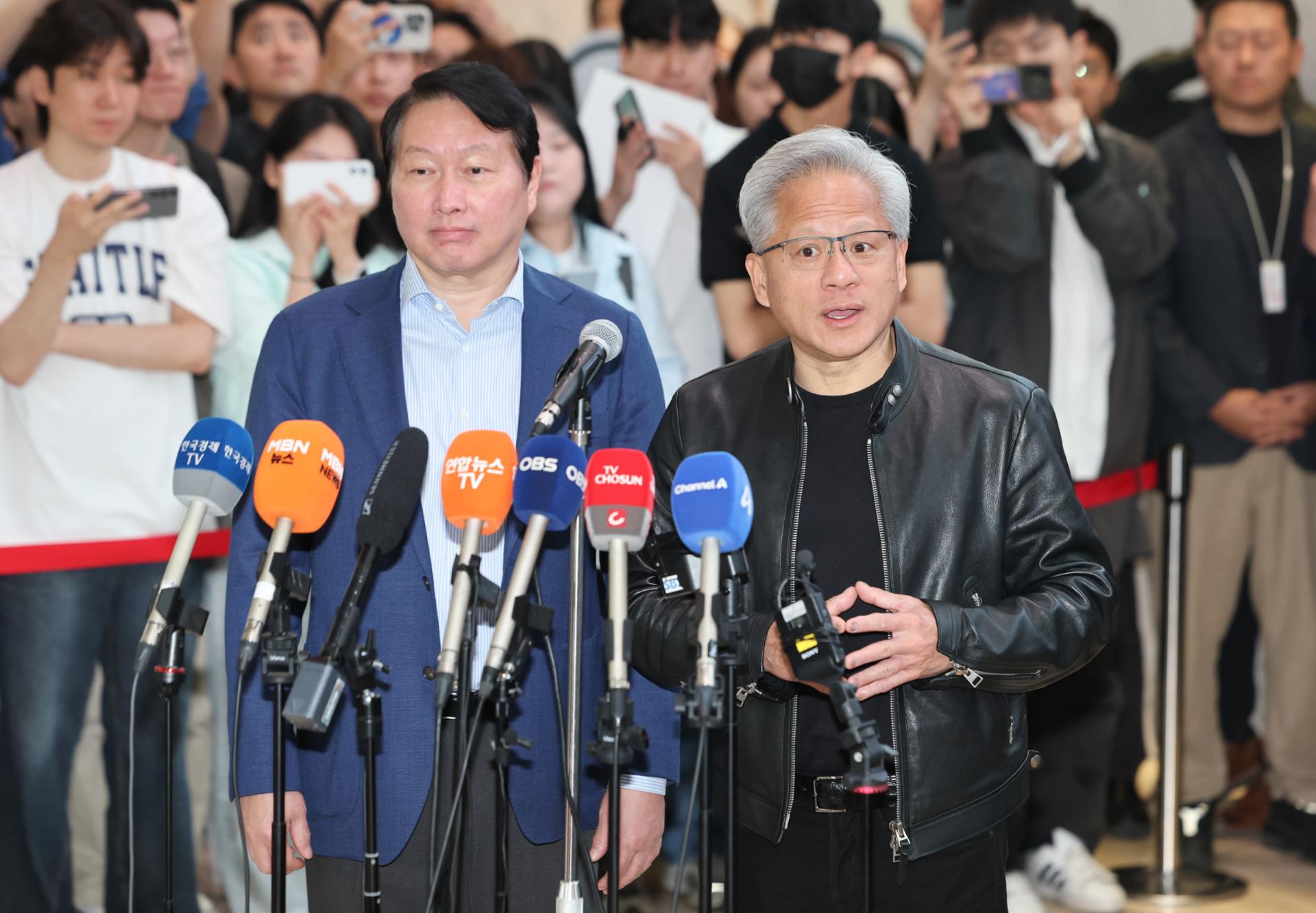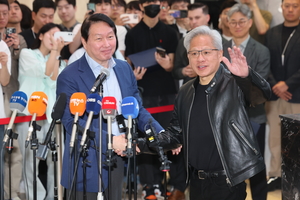
Chey Tae-won, Jensen Huang unveil plans to deepen cooperation beyond memory chips Nvidia CEO Jensen Huang (right) shakes hands with SK Group Chairman Chey Tae-won after a joint briefing at SK Group’s headquarters in central Seoul on Monday. (Yonhap) SK Group and Nvidia are taking their long-running chip partnership into the artificial intelligence infrastructure race, with plans to build what they call “AI factories” in Korea.SK Group Chairman Chey Tae-won and Nvidia CEO Jensen Huang laid out the plan Monday during a joint briefing at SK Group's headquarters in central Seoul, signaling a broader alliance that moves beyond the memory chips that have tied the two companies together through the global AI boom.“Most of our cooperation so far has been centered on memory, but from now on, we will raise the partnership to the SK Group level,” Chey said. “We will build future AI factories together with Nvidia.”Chey said the term AI factory refers broadly to AI data centers and related infrastructure, including SK hynix’s semiconductor fabs. He added that SK and Nvidia would work together on a research and development road map to better respond to fast-changing demand for AI computing.Huang said demand for AI infrastructure is rising rapidly worldwide, describing the industry as still in the early stages of a much larger buildout.“We're seeing great demand, the businesses booming around the world for more AI factories. And so that's the reason why we're entering this partnership, so that we could extend our partnership, increase the scale of our partnership quite substantially,” Huang said. “We're at the beginning of the AI infrastructure build-out, and the future is quite bright.”He also highlighted Korea as a market where AI infrastructure will become increasingly important.“SK Telecom and Nvidia have a partnership to build AI factories here in Korea,” Huang said. “AI factories are essential for the population of Korea, education, the universities, the scientific labs, but also the startup companies and the industries themselves, just like electricity, just like water, just like the internet.”He said AI would eventually be used by every country, company and industry, adding that Korea’s next stage of growth would depend heavily on whether it can secure enough AI computing capacity.“South Korea needs AI infrastructure today. It has very little. As one of the world's leading ecosystems for AI, I assure you AI infrastructure will be essential to the advancement in the future,” he said.“Just as we needed fabs for semiconductors, we need AI fabs for AI, and so SK Telecom is going to help build that.”SK Telecom is expected to play the central operating role in the partnership. Working with Nvidia, the telecom unit will push ahead with SK’s plan to build what the group describes as Asia’s largest AI infrastructure platform.The two companies also reviewed an AI infrastructure road map Monday and agreed to expand cooperation across SK Group.For SK hynix, the announcement reinforces its position as a key supplier to Nvidia at a time when high-bandwidth memory chips have become one of the most important components in the AI supply chain.Huang credited SK’s memory technology as one of the factors behind Nvidia’s rapid growth in AI.“Without SK, today's AI industry would not have developed as wonderfully as it has. Our mutual business today is booming. We are also expanding our partnership to include many new markets,” he said.“SK hynix has been Nvidia's largest memory partner. SK hynix will continue to be Nvidia's largest memory partner, and this is a partnership and a friendship that has gone back a long time,” he added.Chey responded by saying SK hynix would remain Nvidia’s biggest memory supplier, while Nvidia would also remain SK hynix’s biggest customer.“We are doing everything we can to ensure a stable supply of chips to Nvidia,” Chey said.According to SK hynix’s quarterly report, sales to Nvidia reached about 7.78 trillion won ($5.05 billion) in the first quarter of this year. Nvidia is widely seen as SK hynix’s largest single customer.
SK, Nvidia expand chip alliance into AI infrastructure
SK Group and Nvidia are taking their long-running chip partnership into the artificial intelligence infrastructure race, with plans to build what they call “AI
656 words~3 min read