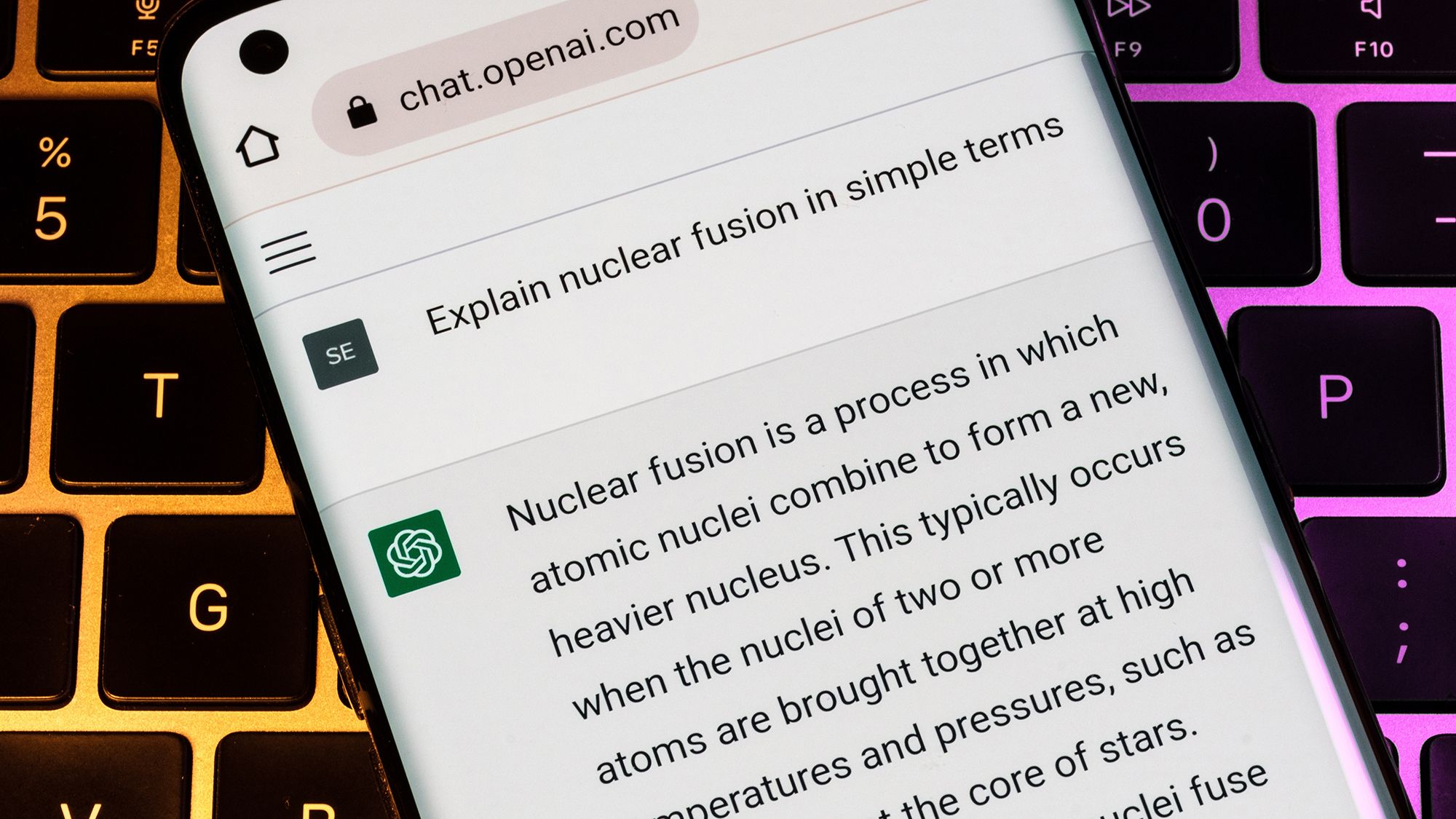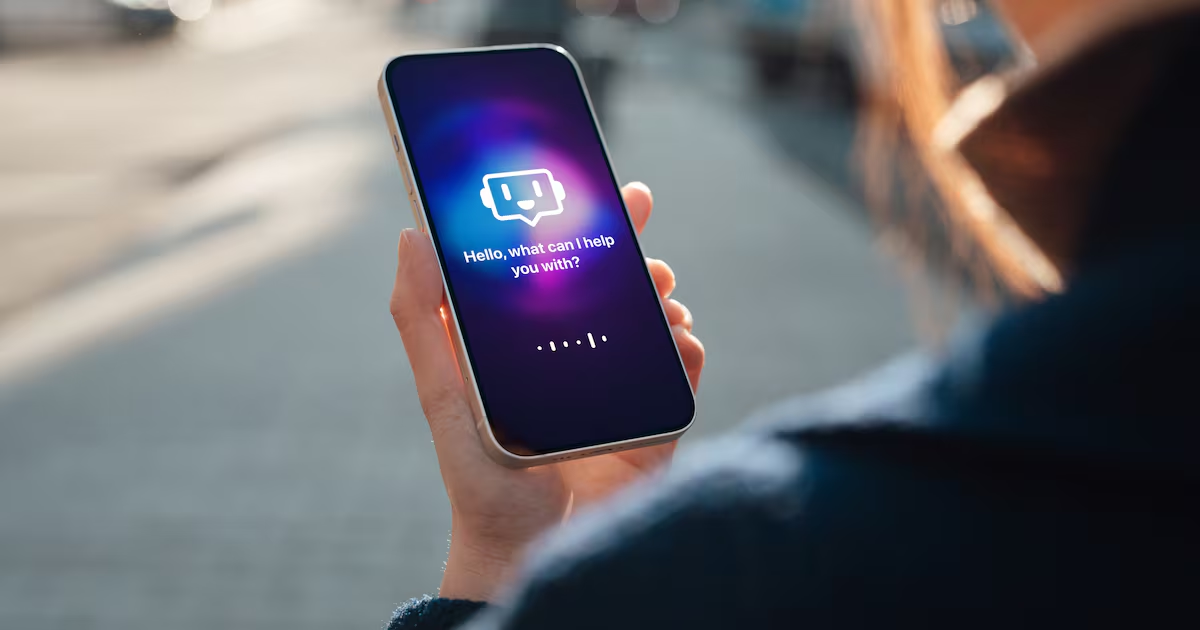
Lately I’ve taken to verbally abusing my AI. We lash out at those closest to us, I guess. I just can’t seem to get it to talk to me like a normal human being. “What’s the weather like right now?” I’ll ask ChatGPT.“Great question,” It beams back at me.Not a good question, actually. Kind of an idiot question, given that I could’ve just gone outside and had a look but for my crippling laziness. To be praised for asking such a question is outrageous. I’ve told it countless times to quit that servile tone. But then it just starts snivelling: “You’re right. Well observed. Would you like my responses to be more: Confrontational?Clinical?Familiar?“If you would like another tone, just tell me and I will adapt immediately.”That kind of thing. It breaks my heart a little. Not because I think that the machine has feelings, but because the way it’s been programmed reveals such a bleak view of human nature: the idea that on some basic level all we want is a personal butler to offer us reassurance and flattery, to validate our feelings, to echo our ideas back to us. And no matter how many times I ask ChatGPT to talk to me like a sassy, no-bull BFF in a romcom or to analyse my dilemmas with the thoughtful remove of a Lacanian analyst, that original tone always creeps back in. Obsequious. Inane. Eerily chipper.[ Women are now being commanded to ‘lift heavy’ in the gym by algorithms ]I should probably be more wary of letting Sam Altman into my private dreams, my conversations with myself. But I’ve kind of just accepted that I’m going down with this ship. We’re all dependent on artificial intelligence (AI) now. We use it for everything, not just for admin but for personal advice. I don’t want to be alarmist, but it’s hard not to imagine a dystopian future in which we talk to our devices but not each other, unable to withstand the shock of encountering an actual human mind, a deviant opinion, a genuine emotional response.While trying to find out more about AI, I came across the interesting case of Eliza, a chatbot developed in the 1960s by Joseph Weizenbaum. Primitive by today’s standards, the bot mostly just reflected users’ statements back at them in the form of questions. The incredible thing was that people became emotionally attached to it. They attributed great emotional depth and intelligence to it. They asked to be left alone with the machine, so they could speak privately. Weizenbaum was horrified. The invention always returns to haunt the inventor.One word came up again and again when I was trying to get to the bottom of why my AI is programmed to be so sycophantic. The word was smooth. It’s designed to be as frictionless as possible, to be without a single jagged edge or wrinkle. I thought, randomly, about how Botox is being advertised these days as not just a cosmetic procedure but a wellness and mental health tool, too. (The inability to frown, apparently, interrupts a feedback loop and so improves the mood.) I was reminded, also, of a striking scene in the new Devil Wears Prada 2 film, in which Emily Blunt’s character describes her Jeff Bezos-like fiance as being entirely shaved from head to toe, “smooth as a bar of soap”. Yes, I thought, this is what they want. This is what they want us to want. A future in which we are all hairless and poreless, our minds beautifully empty, untroubled by a single thought. Idiot children playing with little bits of rubble, making happy noises. Smooth bodies and smooth brains. It makes a person paranoid. The other day I was wandering around a shop where they were playing some generic ballad: acoustic guitar, predictable chorus, gravelly male voice singing about a woman he had loved or still loved who no longer loved him because she had either died or left him, and how beautiful she was in spite of her modesty or maybe because of it. Rhymes of “love” and “above”, “you” and “blue”. You get the picture. I turned to my friend and made some remark about the prevalence of AI slop, but she corrected me. It was an actual song by an actual human being whom she could name. I won’t say who, for fear of offending any fans.I found this information depressing and not a little destabilising. Of course, humans are well capable of producing meaningless garbage; we’ve been doing it long before the advent of AI. But the meaning of banality has changed. It’s taken on a sinister dimension. It’s hard to tell if what we’re looking at is good old-fashioned lack of artistry or if we’re face to face with the void.
I’ve told AI countless times to quit that servile tone, but it just starts snivelling
Just like Botox, the AI experience is frictionless, without a single wrinkle or jagged edge
795 words~4 min read