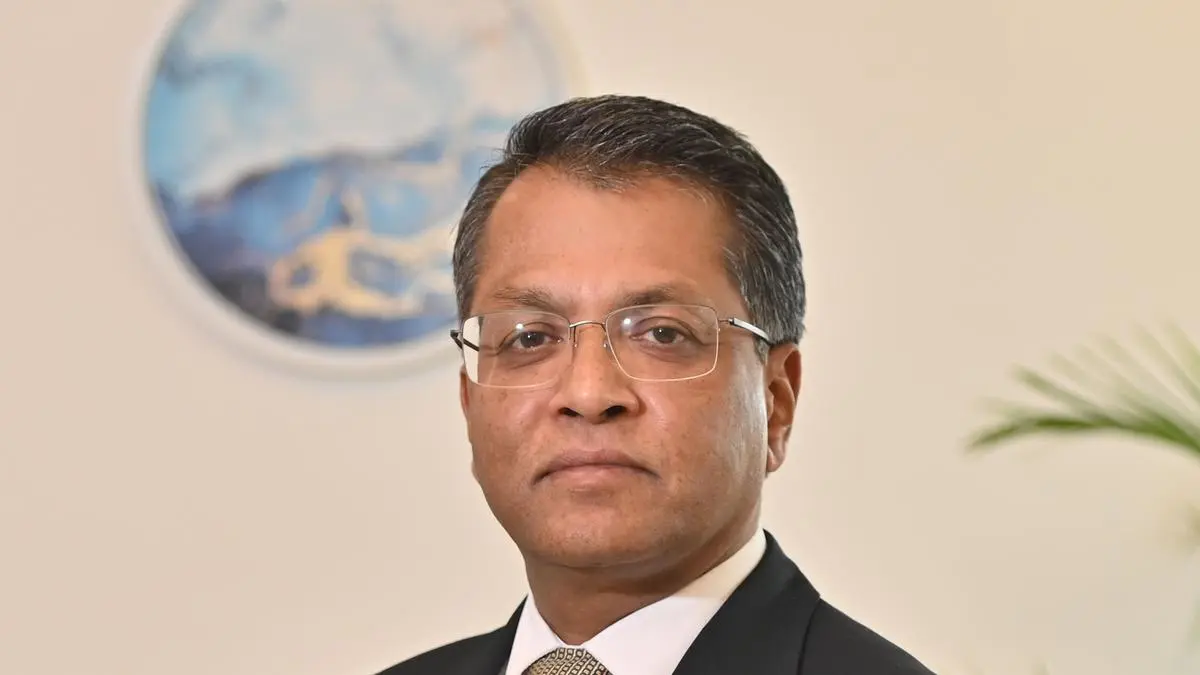
“We are pitching 2026-27 as the year of disruptive growth,” declares Rahul Mithal, CMD of RITES. With an all-time high order book of ₹9,416 crore, as of March 31, Mithal can afford to be confident that revenue growth will be on par with the PSU’s mounting ambitions.Since 2022-23, when the 52-year-old Navaratna — in which the Ministry of Railways has majority shareholding (72 per cent) — went in for a complete internal re-engineering, it has been furiously chasing orders, especially exports.The infrastructure consultancy has 13 verticals (including railways, ports, airports, metro system, highways, ropeways, bridges, and sustainability) and covers three broad areas of work — techno-feasibility studies, project management consultancy, and third-party audits. It is currently executing 700 orders across these verticals.
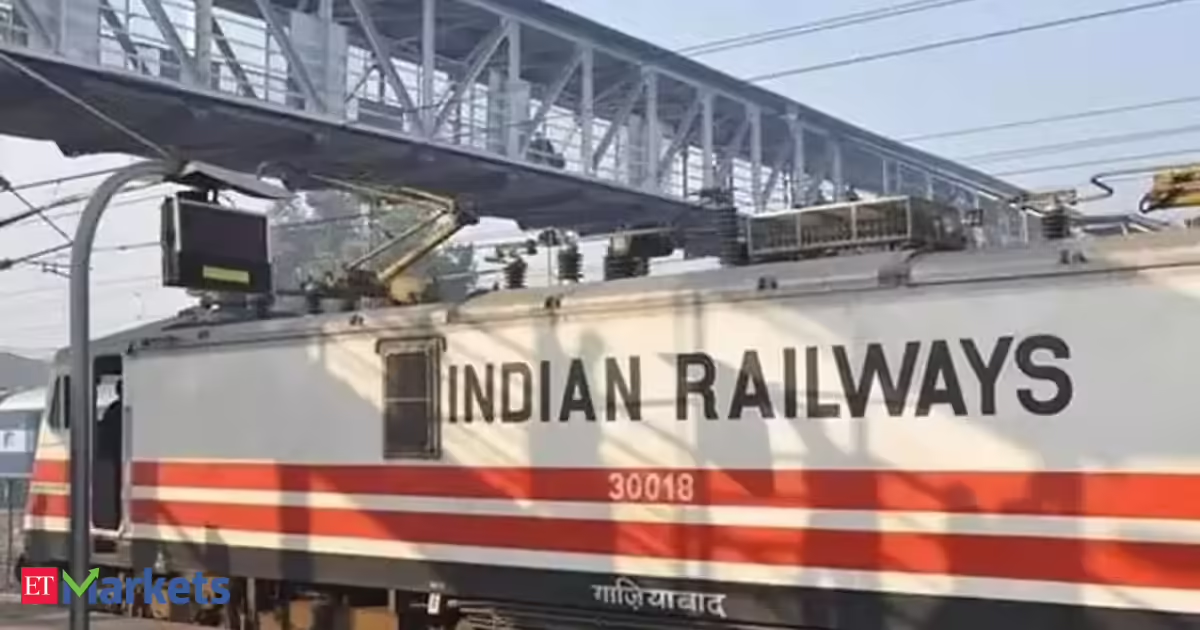
RITES exports customised, high-capacity Cape gauge locomotives to Mozambique
“We have been tapping the growth in infra — both domestic and international — across these verticals,” says a gung-ho Mithal.There is a sea of opportunity opening up in the maritime sector, he says, with India investing in new shipbuilding clusters and port expansions. “We are creating the master plan and doing studies for Visakhapatnam port, which is developing shipbuilding facilities in Dugarajapatnam, and for Kandla port, which is developing a cluster at Veera,” says Mithal.Similarly, the opening up of skies has meant more projects in the aviation sector. “For example, we recently got an order for making a feasibility report for two airports in Bihar,” says Mithal.On ground, the thrust on expressways has resulted in more projects. “We are doing the third-party audit for many expressways, such as the Purvanchal Expressway. On Ganga Expressway we are doing the safety audit,” he says.But it’s in the key area of design and export of railway rolling stock that the transformation exercise is really fetching dividends. Ideally, as Mithal points out, exports — a good margin business — should yield 25 per cent of RITES topline.Post-Covid revivalFor two years post the Covid pandemic, the order book remained blank as many of the African and Southeast Asian countries that RITES traditionally exported to were struggling for funding. Typically the orders from these nations were on a line of credit (LoC) extended by the Indian government, but this dried up.For Mithal, who took charge in October 2021, this was a challenging time.“We had to rediscover the global market and start pitching for the first time in open global tenders,” he says. And the company was up against highly competitive Korean and Chinese rivals.“Bidding for global tenders required spending on market analysis, studying the competition, price points, timelines and, most of all, having the aggressive mindset to win,” he says.The breakthrough came in 2023-24 with two orders — the first from Mozambique for 10 locomotives for about ₹300 crore, and the other from Bangladesh for 200 coaches for about ₹900 crore.“This was the turning point in our export business as these wins were through open global competition and not through LoC,” says Mithal. “After a gap of nearly two years, FY25-26 saw ₹300 crore revenue realisation,” he reminisces.While the structural changes initiated internally helped, the opening up of the coach and locomotive manufacturing ecosystem in India was a boon too.For instance, BEML has expanded its production capabilities and has joint ventures for high-speed rolling stock projects. Titagarh Rail Systems has expanded into the locomotive and passenger coach segments.Private players have entered the fray. “So now we have more options — whether it is locomotive or coach, the dynamics have changed,” he says, pointing out how, for any rolling stock export, RITES is free to get the best deal — whether from a railway production unit or a private player.Currently, RITES’ rolling stock export order stands at about ₹1,750 crore, which includes a recent order for five locomotives from Mozambique that was won on a competitive bidding basis.Green transitionMithal is chuffed about an interesting new initiative in the export domain — modifying and retrofitting old diesel locomotives.“As Indian Railways has become nearly 100 per cent electrified, a large number of diesel locomotives have become redundant with substantial codal life left in them. So we took up this initiative last year to repurpose them with a changed gauge,” he says. Many southern African nations run on Cape gauge, while the Indian track is mainly broad gauge. “We’ve got an order for 30 retrofitted locomotives, totalling about $50 million,” says Mithal, describing it as a win-win — for railways it is asset use, for the clients it is lower cost.The first two retrofitted locomotives are ready to be shipped soon, says Mithal. It’s a pilot case, and once tested it has the potential to open up a whole new business opportunity, since Indian Railways has over 4,000 diesel locomotives.Newer geographiesNow clubbed under a department named RITES Videsh, the international business strategy has in the last few years changed significantly. Besides export of rolling stock, the company has begun pitching for project consultancies internationally, beyond the familiar terrain of Africa and Southeast Asia.“We’re exploring opportunities in Latin America... in Argentina, Paraguay, Uruguay, and in Central American nations like Panama and Costa Rica. We have started getting some highway projects in Guyana, and that has encouraged us to open an office there,” says Mithal.He adds that, like with exports, RITES has begun seeing green shoots in international project consultancies too.“We opened an office in Abu Dhabi about a year ago and already have a small order in Jordan. We are working in the UAE closely with Etihad Rail, DP World and Abu Dhabi Ports,” he says.“In our RITES Videsh initiative, we have ended the year with an order book of ₹2,100 crore — about ₹1,750 crore in export of rolling stock and the balance of about ₹350 crore in project consultancy,” says Mithal.What pleases the CMD the most is the fact that RITES has now become a one-order-a-day company from just 0.6 two years back. In Q4 of 2025-26, it bagged 120 orders. And this through competitive bidding — no longer through nominations, like it did in the old days as a Railways company. Today it has to fight for every order. The PSU is well on track to becoming a hyper-competitive player.Published on June 8, 2026