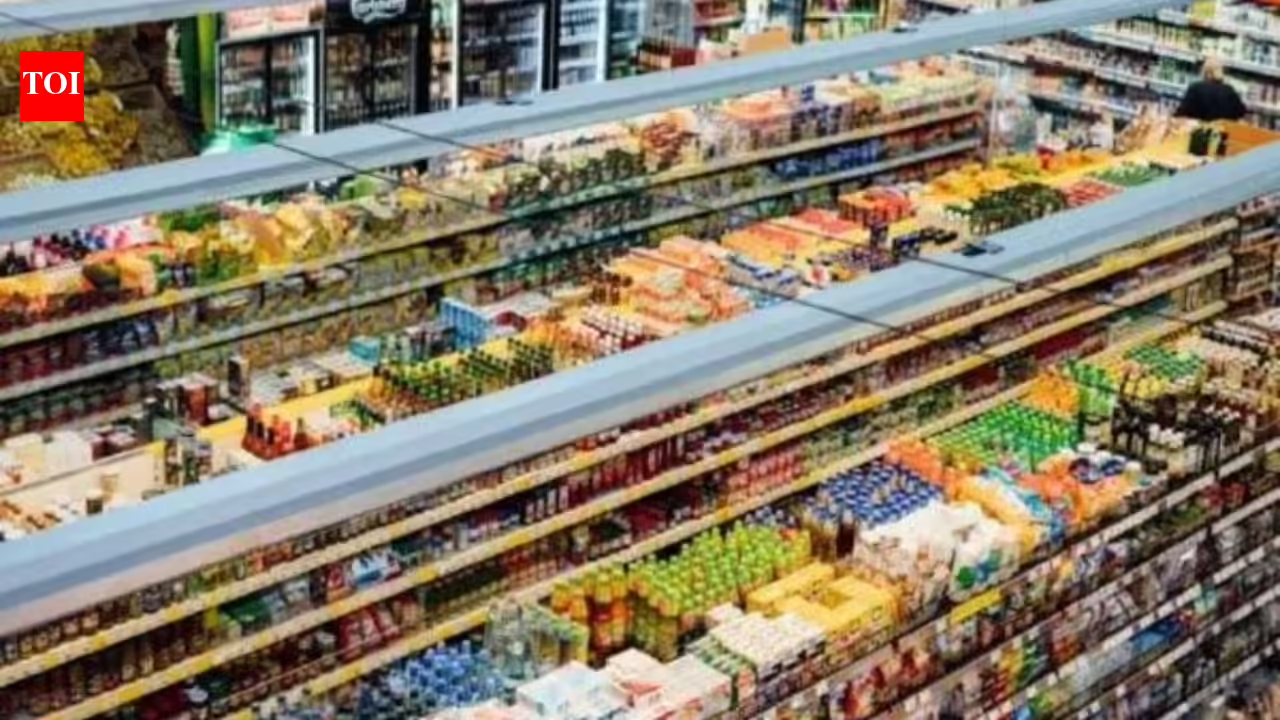
New Delhi | Mumbai: Domestic consumption ranging from everyday essentials to beauty and personal care products has remained resilient so far, largely undeterred by the supply disruptions linked to the Iran war and inflation in April and May, said top company executives. They expressed optimism about demand sustenance though suggested keeping a cautious stance in the coming two to three quarters due to the underlying inflationary pressures."While the West Asia geopolitical turmoil and the subsequent rise in commodity prices is beyond what the industry can control or forecast, top-of-the-pyramid demand remains resilient in the current situation," Manish Tiwary, chairman at Nestle India, told ET.HUL, ITC, Nestle, Marico, and Godrej Consumer Products were among companies reporting mixed earnings in the quarter ended March 2026, benefiting from cuts in goods and services tax rates last year and premiumisation trends.Cost Factor at Play for CosThe start of the Iran war from February 28 however began stirring inflationary pressures in the Indian economy, starting April, largely due to supply chain disruptions, particularly for energy supplies, which impacts packaging, freight, and raw material costs for makers of personal care and packaged foods.Meenesh Shah, chairman at Mother Dairy and National Dairy Development Board (NDDB), said he doesn’t see any significant drop in consumption patterns. “India is at a stage where most dairy products, whether cheese, yogurts or ice-creams, are seeing growth of 25%-plus,” he said. “If there is sustained inflation pressure, there could be some impact, but in the short term, for select income groups.”Most packaged goods makers raised prices by 3-8% or reduced grammages in packs to offset rising fuel and commodity costs. Company executives said demand is holding up as of now, adding that the impact on household consumption may be felt with a lag effect but among price-sensitive consumers.“While near-term cost headwinds may emerge, the long-term fundamentals of India's consumption story remain strong, and we remain confident in the underlying demand outlook,” said Tarun Arora, CEO at Zydus Wellness, which makes Complan health drink and Everyuth Naturals skincare. “If geopolitical pressures persist over the next few quarters, the larger concern is likely to be cost inflation…we are managing such volatility through supply-chain efficiencies, productivity initiatives, and calibrated pricing strategies.”“Except for the general environmental concerns, we are not seeing any specific concerns yet,” Falguni Nayar, managing director at FSN E-Commerce Ventures, the parent of beauty and fashion retailer Nykaa, said on a recent earnings call. “I would like to remind everyone that our consumption categories are small luxuries. And as a result, their consumption is not as impacted during tougher times.”Some caution“Global concerns, which are being translated to high currency, oil prices and depreciating currency and its impact on inflation makes us cautious for the next year,” said Nayar.India’s organised FMCG sector may report “slightly faster revenue growth this fiscal year, but rising crude-linked input costs and slowing demand growth will squeeze profitability,” Crisil said in a May 21 report. The ratings agency projected the sector’s revenue growth at 8-10% in FY27, compared to 8% last fiscal, on the back of price increases, cautioning that key risks to the sector include prolonged high oil prices, weak domestic consumption, and uncertainty surrounding the monsoon season.“We have to wait and watch, but I don't see any significant reason to reduce our outlook for optimism,” said Saugata Gupta, MD at Marico, maker of Saffola edible oil.
India’s consumer demand remains resilient despite Iran war, inflation pressures; FMCG firms stay cautiously optimistic
Despite geopolitical turmoil and inflation, domestic consumption of essentials and personal care products remains resilient. Company executives express optimism for demand sustenance but advise a cautious approach for the next two to three quarters due to ongoing inflationary pressures and supply chain disruptions.
559 words~3 min read