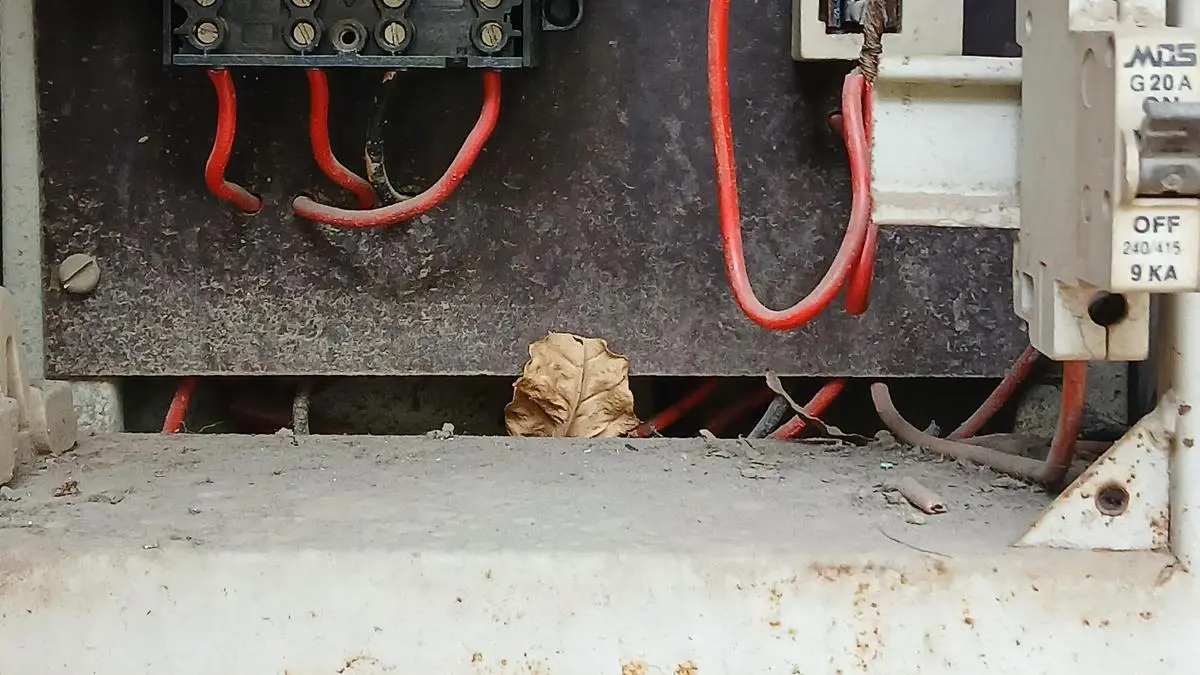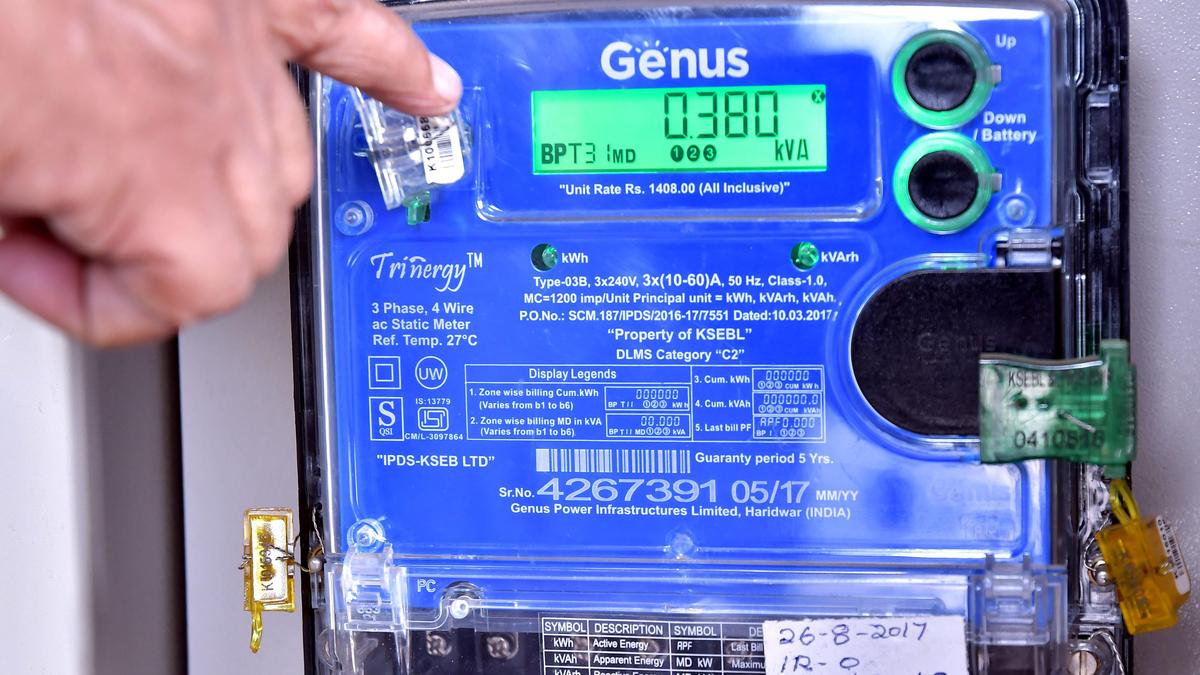
Kozhikode, Kerala, 18/05/2018: The KSEB will replace the conventional metres in around 44,000 households with smart metres after the successful completion of the pilot project. Photo: S. Ramesh Kurup
| Photo Credit:
For the first time in decades, India’s electricity distribution companies (discoms) have turned profitable, recording profit-after-tax of ₹2,701 crore in 2024-25. A main reason behind this turnaround is the smart metering initiative under the Revamped Distribution Sector Scheme (RDSS), which improved billing accuracy, slashed losses and restored operational discipline across the sector.Beyond meter deployment, this sector promises to unlock exponential value through data-driven services, predictive analytics, grid optimisation, consumer behaviour insights and energy trading platforms. And yet, the rollout is not fast enough, mainly due to financing constraints and a lacuna in how the government classifies smart metering.The $30-billion opportunity needs long-term debt funding. India has the potential to become the most attractive market for energy technology investment globally but the financing architecture is unable to raise capital at scale and for longer durations.A chief problem is its classification under the ‘harmonised master list of infrastructure’ (HML) maintained by the finance ministry’s department of economic affairs.HML defines what qualifies as infrastructure for policy support, financial incentives and regulatory benefits. This, in turn, determines which projects can access long-term financing from infrastructure-focused institutions, sovereign wealth funds and global institutional investors.It governs regulatory exposure norms for banks and non-banking financial companies (NBFCs). It unlocks access to infrastructure investment trusts (InvITs) and signals to the global investment community that the government stands behind a sector with regulatory and policy commitment.HML currently recognises electricity generation, transmission, distribution and energy storage systems, but stops short of including the advanced metering infrastructure (AMI) systems being deployed nationwide under the RDSS programme.Smart metering is a new sub-sector within electricity distribution, carrying heightened perceived risk because of its exposure to discoms, whose financial track record is not good. Given the substantial debt requirements, participation from large infrastructure-focused institutions is essential, alongside traditional banks. However, the absence of mention in the HML creates regulatory ambiguity, which prevents large infrastructure finance institutions from extending credit to this critical sector.Nor can smart meter InvITs be established. The RBI extends to infrastructure projects a two-year grace period on commercial operation dates, compared with one year for others — this benefit too eludes smart meters. The resultant financing gap is slowing one of the world’s largest power sector digitalisation programmes.Future needsSmart meters are deeply embedded in India’s broader energy strategy.They enable time-of-day (ToD) tariffs, the success of the solar rooftop programme, integration of renewables in the grid, and other transformational programmes in the grid.As solar generation drops after sunset, grid demand spikes sharply, creating stress on distribution infrastructure and driving up power purchase costs for discoms. ToD tariffs incentivise consumers to shift discretionary consumption — such as for appliances, electric vehicle (EV) charging, water heating.ToD tariffs are only possible with smart meters, which can record, transmit and bill consumption on a time-differentiated basis. Flattening the evening peak is essential for the financial sustainability of the grid as India’s energy mix becomes increasingly renewable and the EV ecosystem expands.The government must modify the HML to read “Electricity distribution along with smart metering infrastructure” under the energy distribution category. Even a footnote would eliminate ambiguity, unlock diverse financing sources and signal government commitment to the sector.(The writer is MD and CEO, IntelliSmart Infrastructure, a digital infrastructure company helping power utilities roll out smart meters and digital solutions at scale under the RDSS}Published on June 8, 2026