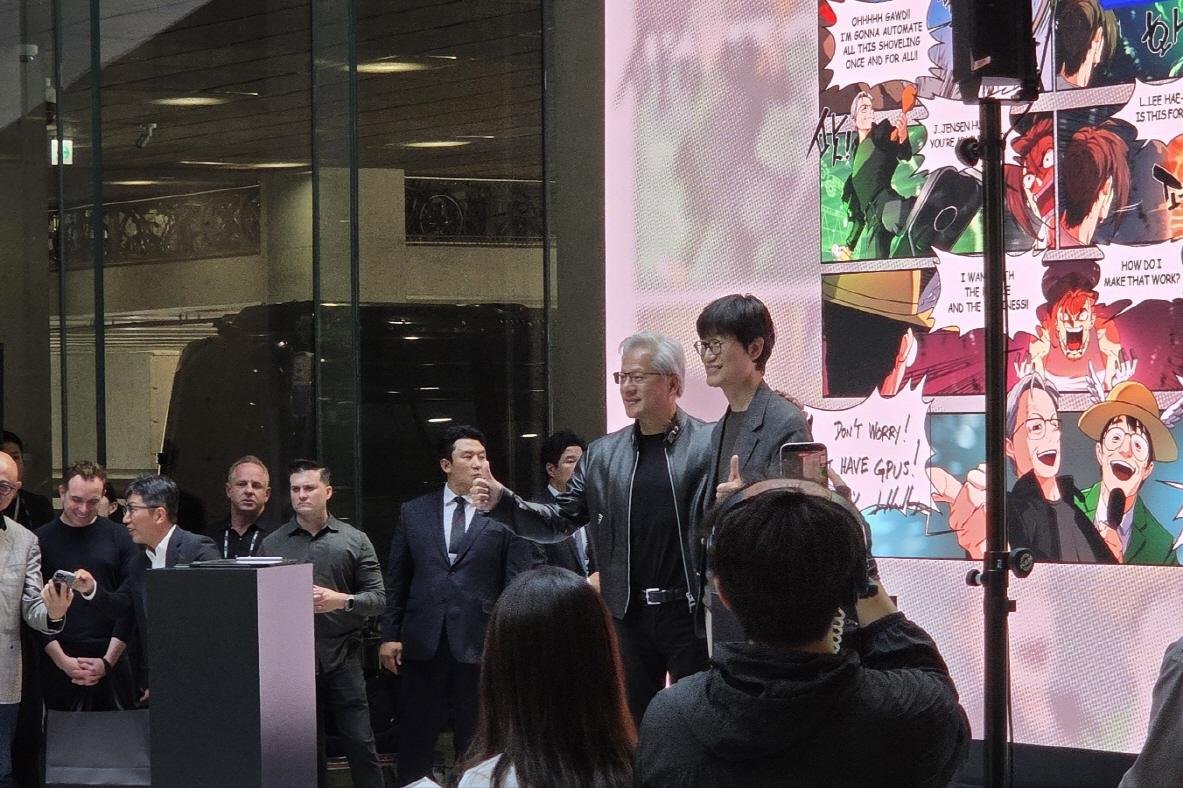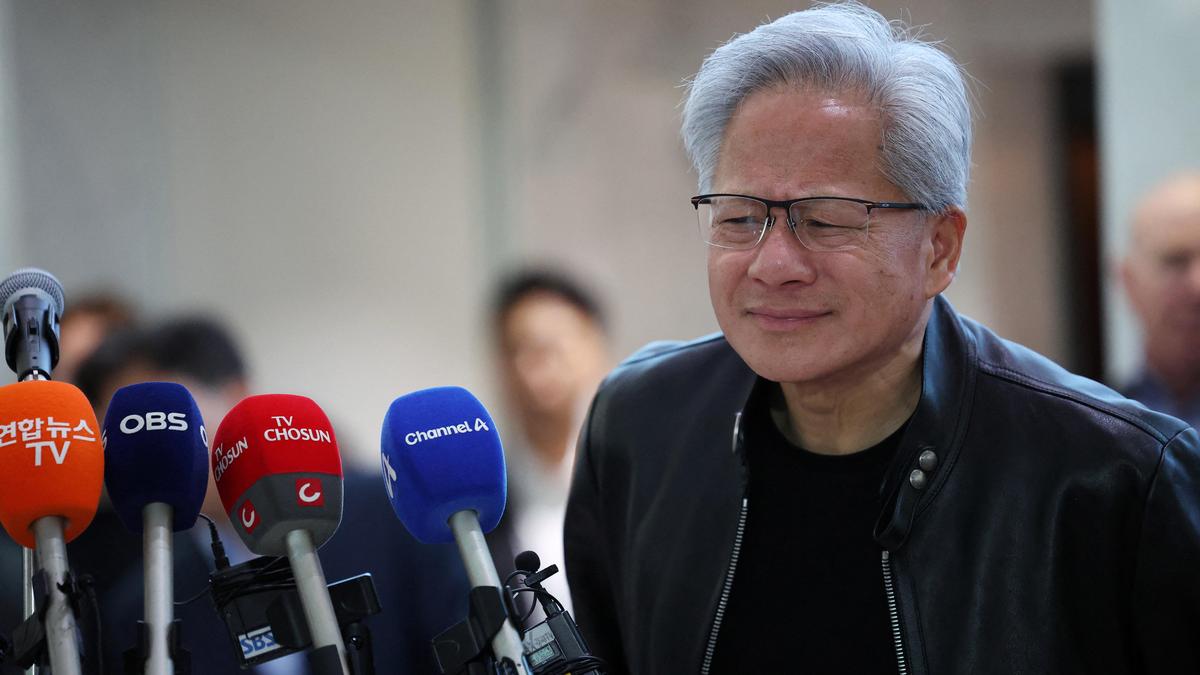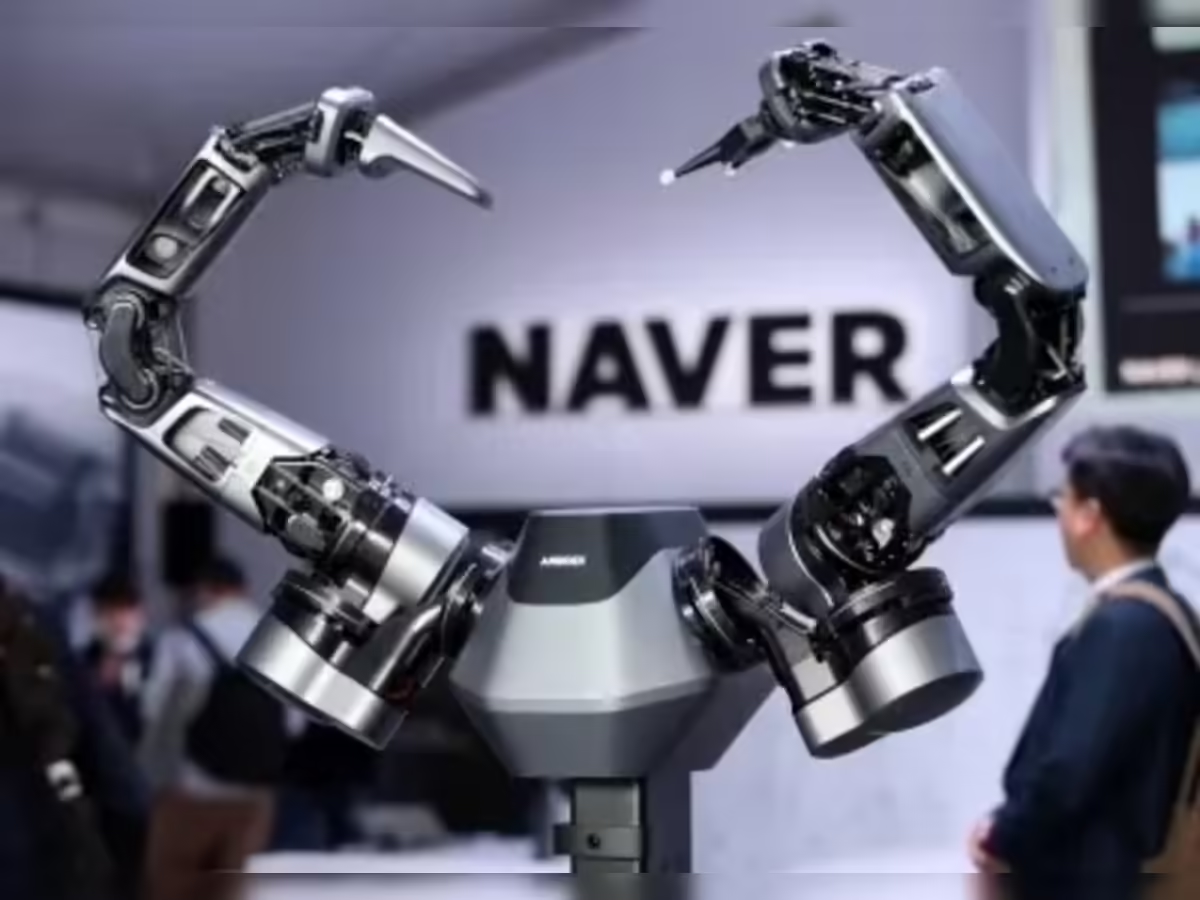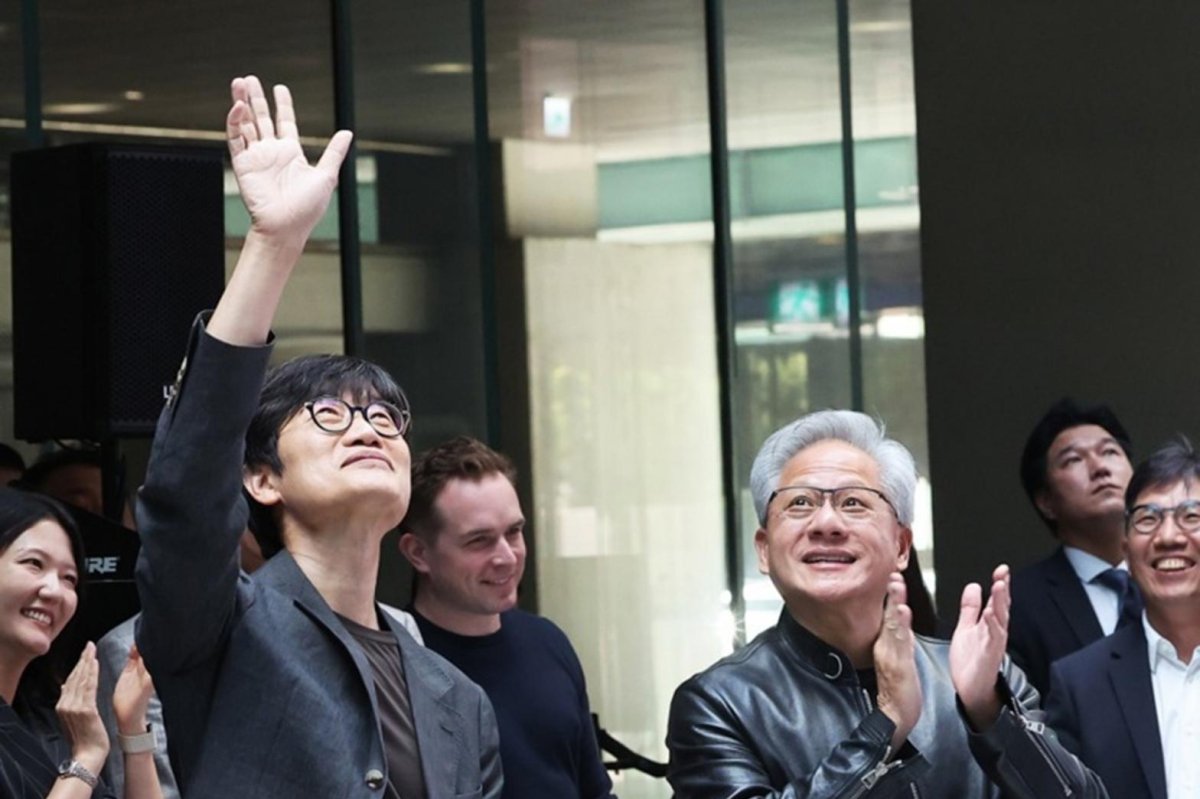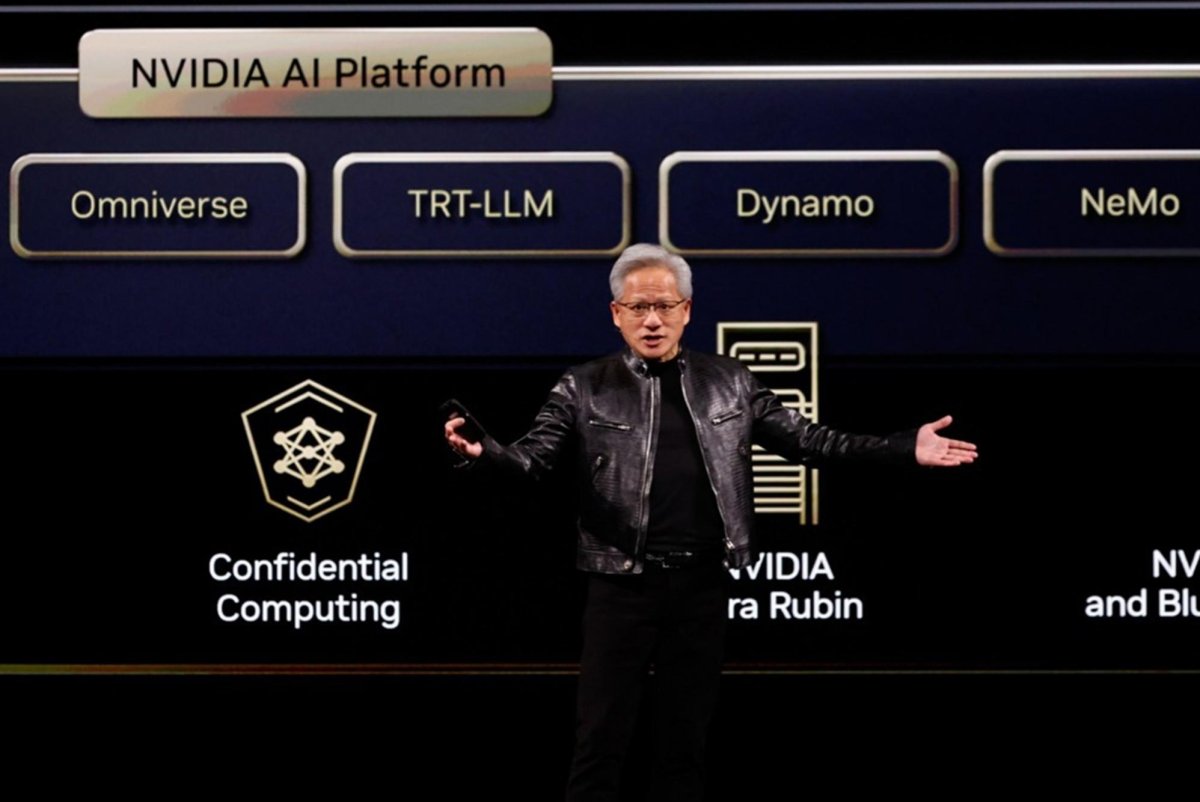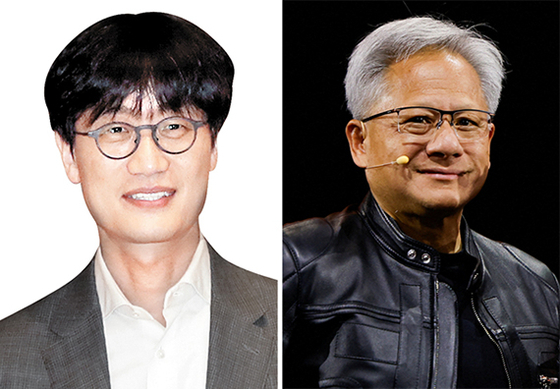
Nvidia CEO Jensen Huang discusses partnership with Naver Cloud during his keynote speech at Nvidia GTC Taipei 2026 in Taiwan on June 1. (Screen captured from Nvidia's YouTube channel) Nvidia and Naver are expanding their artificial intelligence infrastructure partnership and sovereign AI initiative, using the Korean internet giant’s existing data center in Sejong as the starting point to scale AI cloud capacity toward gigawatt-level AI factories.Nvidia said in a media prebriefing early Monday that it will work with Naver across its full AI stack, from DSX-based AI factories to Nemotron-powered sovereign AI models and Cosmos-enabled physical AI, as the US chip giant seeks to deepen its role in Korea’s AI infrastructure ecosystem.“Nvidia is very deeply interested in Korea’s ecosystem,” said Raj Mirpuri, vice president of Global AI Clouds and Infrastructure Ecosystem at Nvidia. “Korea’s ecosystem is very important for us. We want to make sure that we build our platform and support our community of AI startups and developers working with Naver.”Mirpuri cited Naver’s technical talent, advanced digital infrastructure, Korean-language AI expertise and local customer reach as key strengths behind the partnership.“Naver has very strong cloud capabilities, so we think this is a great marriage of two partners,” he said.The collaboration will begin at Naver’s data center Gak in Sejong, where the company already operates AI infrastructure. Nvidia said the two sides aim to expand capacity toward gigawatt-level AI factories, depending on power availability and future capacity procurement. Gak Sejong, Naver's data center in Sejong (Naver Cloud) According to Mirpuri, Nvidia's DSX is designed to help cloud providers deploy AI factories faster, maximize performance per watt and reduce token production costs. He framed AI clouds as a new layer of critical infrastructure, distinct from traditional cloud data centers, because they are built specifically for large-scale AI training, inference and token generation.Mirpuri did not disclose the investment size, GPU count, power capacity or expansion timeline, however, saying details would be announced later once power availability and procurement plans are clearer.“Power is a constraint around the world,” he said. “Our goal, of course, is to work toward gigawatt-level AI factories with Naver, and as and when the power comes available, they’re going to procure that and fill out AI factories partnering with Nvidia.”Naver will also use Nvidia’s AI platforms, models and software to advance regional AI models, including next-generation HyperCLOVA X models. Nvidia said Naver has used its Nemotron model technology to develop HyperCLOVA X, its Korean-language and domain-specific large language model.Naver has become the first Korean company to join Nvidia’s Nemotron Coalition, contributing to open model development across pre-training, post-training and reinforcement learning, according to Mirpuri.The collaboration also extends to physical AI. Naver will use Nvidia Cosmos, the company’s world foundation model platform, for Seoul World Model development, supporting world reasoning, simulation and synthetic data generation.“Physical AI is very quickly going to follow and become very important,” he said. “South Korea is a very large manufacturing country, so the opportunities to help optimize physical AI for all of the factories for all the sensors that are out there."Nvidia also left open the possibility of working with more Korean partners beyond Naver.“Naver is one of our best partners,” Mirpuri said, citing the company’s cloud stack, local reach, AI model and existing AI infrastructure. “However, it’s impossible to just meet all of the needs within the region as well as from global offtakers. So we’ll continue to partner across the ecosystem.”The announcement comes as Nvidia CEO Jensen Huang is set to visit Naver’s second headquarters, Naver 1784 in Seongnam later in the day. The headquarters is considered a showcase for the company’s future technologies, including robotics, cloud computing, digital twins and private 5G networks.
Nvidia taps Naver for gigawatt-scale AI cloud push in Korea
Nvidia and Naver are expanding their artificial intelligence infrastructure partnership and sovereign AI initiative, using the Korean internet giant’s existing
612 words~3 min read