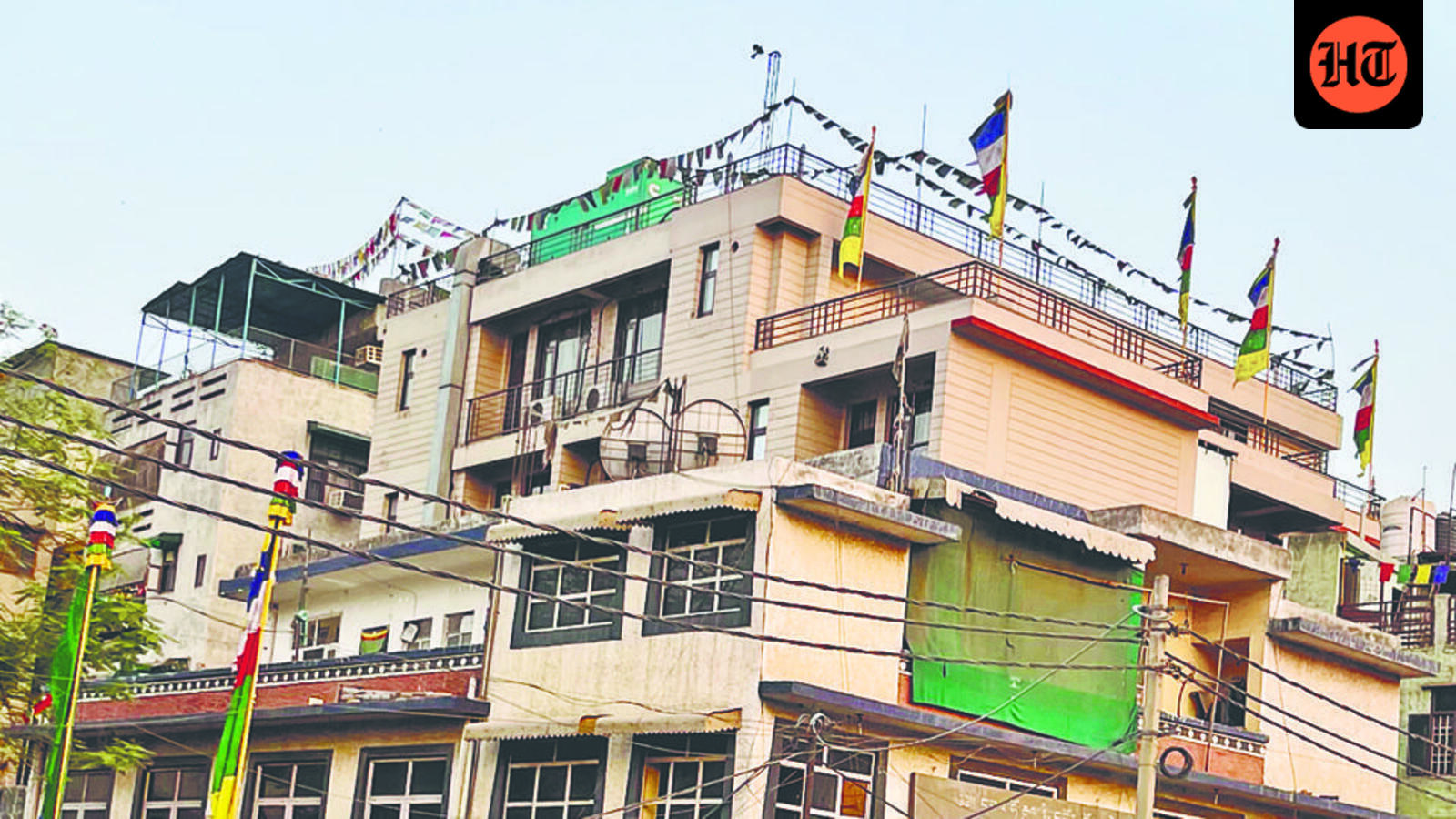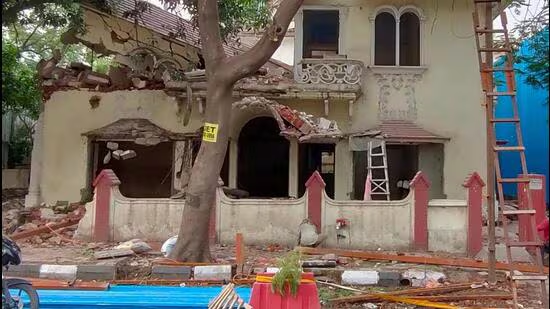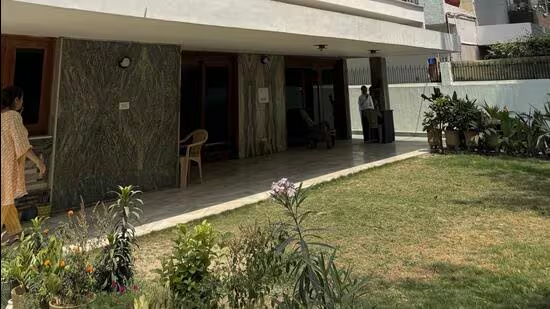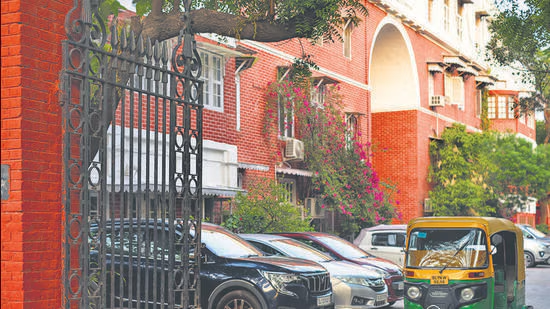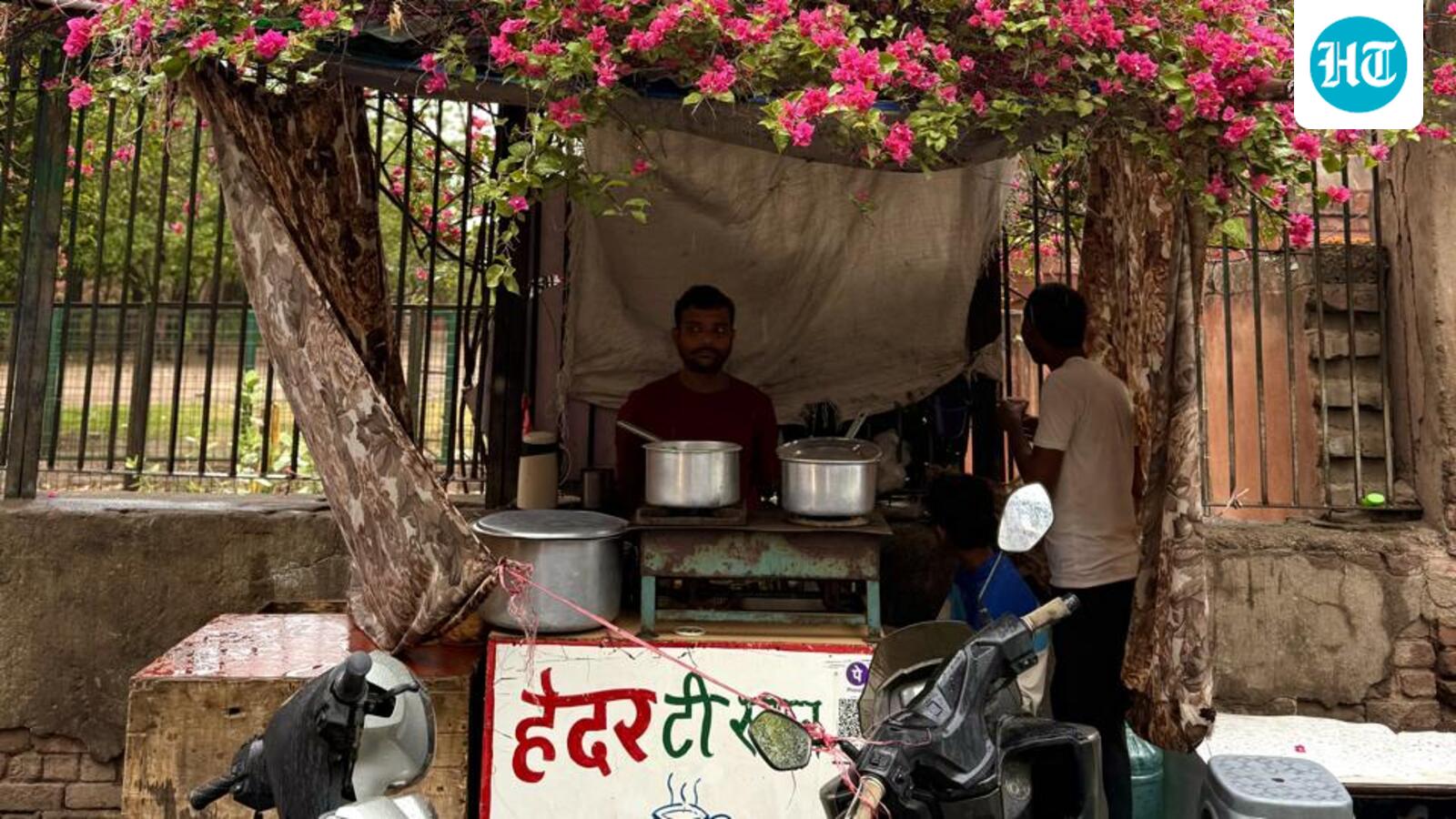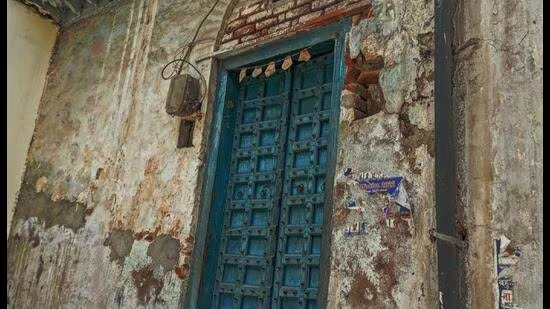
It is gone now. The bangla (bunglow), Devli’s first pucca house, the one that stood near the old chaupal, the one that older residents still describe in the present tense even though it no longer exists.Devli’s first pucca house stood near the village chaupal. (Courtesy: Puneet Singh Singhal)Devli is not easy to find if you do not already know it. It sits somewhere between Sangam Vihar and Sainik Farms in south Delhi, compressed into the gap between two neighbourhoods wildly different from each other -- one a vast unauthorised colony of working people, the other also an unauthorised colony but categorised as “affluent” and is a forested enclave of large houses and concrete lanes. Between them, almost as an afterthought of the city’s expansion, Devli continues to exist. A village that has been absorbing Delhi’s pressure for decades without ever quite becoming Delhi.The people here will tell you the village is nearly a 1,000 years old, and was founded by Meharchand Singhal, and that the families living here today belong to the 43rd generation of that founding lineage. Land records from 1880 confirm the name. This is the kind of continuity that makes the rest of the city feel provisional, all those colonies and complexes and newly named roads sitting on top of something far older than themselves.The name Devli comes from Devi. In the Haryanvi dialect spoken in the area, the elders say that the invocation “Debi ri” moved through generations of daily use. The village was built around this devotion. Shrines to Mansa Devi, Mahamai and Masani Maa are scattered through the area, and the landscape itself seemed to cooperate with the Aravallis sheltering the settlement from the west, Tughlaqabad rising to the east, Anangpur to the south. To live here was to live inside a spiritual enclosure, the sacred and the physical so thoroughly merged that it would have been difficult to say where one ended and the other began.The houses reflected this world. An older Devli home was built across three zones that together described a complete way of life. The ghar was the interior, women’s space, children’s space, meant for cooking and sleeping and the transactions of daily domestic life. The baithak faced outward, space earmarked for men where guests arrived and news was exchanged and the village’s public life quietly conducted itself. The gher was behind everything, where the animals were kept and fodder stored and dung cakes made for fuel, completing a loop between the household and the agricultural land that sustained it. These were mud houses with thatched roofs. Thorn bushes marked their edges. The lanes between them were unpaved. In the monsoon, one imagines, they became something else entirely.It all changed with the arrival of the bangla. Brick and mortar arriving in a mud village was not a small event. It was a statement about the future, an assertion that a family intended to not just live here but to remain here, and that they were building something the rain couldn’t dissolve. The bangla stood near the chaupal -- that open platform at the centre of village life where disputes were heard, festivals celebrated, and where the village elders sat through long afternoons in a way that elders sit when they have nowhere urgent to be.The fields around Devli once covered more than 11,000 bighas, according to Revenue department, Govt of Delhi. Bajra in the monsoon; wheat, barley, mustard and chickpeas in the winter. The wells were deep and the water was drawn with leather buckets called chadat, worked by bullocks and men taking shifts through the heat. When one household needed its fields ploughed, the others came with their own bullocks and the host cooked for everyone who arrived. It was a system, a form of collective organisation so efficient and so embedded in daily life that it required no name, no administration, no committee. It simply happened, season after season, generation after generation, until it stopped.It stopped because the city came. The way cities always come to the villages or one could say for the village, that they eventually consume it, sometimes whole. The colonies rose on the agricultural land, narrowing ridge access. Silting the jhohads the rural water harvesting ponds, kaccha construction giving way to bricks by the 1980s. Suddenly the village began to urbanise not through amenities but by density and address of the city without acquiring its infrastructure or its recognition.The bangla survived all of this, the transition from mud to brick, from agricultural village to urban settlement, from dehat to something harder to name. It didn’t survive the indifference of a city that has never quite learned to read its own villages as the historical and spatial documents they are.Delhi has grown from 0.23 million people on 1,800 hectares in 1911 to more than 23 million people spread across 92,000 hectares today This long-term expansion is documented across the Delhi Development Authority Master Plans (1962, 2001, 2021) and Census data compiled by the Census of India. Most of that expansion has been drawn directly from the agricultural lands of the villages that once stood where the city now stands. The number of designated urban villages grew from just 20 in 1962, when Delhi’s first master plan was drawn, to 135 today. This figure is cited in official planning documents including the Master Plan for Delhi 2021 and studies by the Delhi Development Authority., and most of these lands lack proper property records and have been left largely off the city’s successive master plans. They exist in what one planning expert described as a governance limbo -- too rural for municipal systems, too urban for gram sabhas.Devli sits inside this limbo, as it has for decades. Its shrines still draw worshippers; its old havelis and chaupals still anchor the internal geography for residents who grew up reading its signs. But the bangla, that transitional structure which marked the precise moment when the village decided to build in earnest, is gone.There is a version of this city that knows how to read these places, that understands the shrines of Devli and its pahari routes and its old water systems not as obstacles to development but as the spatial intelligence the city itself was built upon, an intelligence that, if engaged rather than erased, could form the foundation of neighbourhoods with genuine character, genuine memory, genuine beauty.The bangla did not need to fall. It needed, as these villages need, a city willing to look at what it already has, before it loses, one structure at a time, the very ground on which it stands.Research and field support by Puneet Singh Singhal (Founder/curator of Dilli Dehat Project, an initiative that documents rural histories, cultures, and lived realities of Delhi’s villages)
The house that held Devli together
Devli, a historic village in Delhi, faces urbanization's erasure, losing its cultural roots and the iconic bangla, symbolizing its forgotten heritage. | Latest News Delhi
1,121 words~5 min read