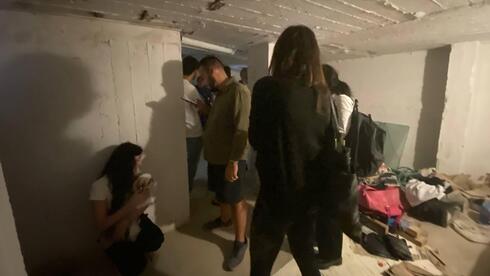
Home Front Command tightens nationwide rules after Iran missile fire; schools shut, gatherings limited and protected spaces required at work Related TopicsThe new policy means that all schools and educational activities across Israel are canceled. Workplaces may operate only if employees can reach a standard protected space in time during an alert.Public gatherings are limited to 200 people outdoors and 500 people indoors, provided the indoor location allows access to a standard protected space in time.Home Front Command has also created a three-stage alert system for civilians: an advance warning sent directly to mobile phones by location when a missile barrage is detected, about 10 minutes before impact; a regular siren warning about a minute and a half before the missiles arrive; and a message to mobile phones when it is safe to leave the protected space.Home Front Command also issued guidance on how to choose a protected space. The preferred option is a reinforced room, such as a residential safe room, a floor-level protected space or an institutional protected space. When an alert is received, the door should be closed tightly, the handle turned 90 degrees and both the outer steel window and inner glass window should be closed.If there is no reinforced room, residents should use a shelter, provided they can reach it within the available warning time. In apartment buildings, a shared shelter can be used if it can be reached in time, or regardless of warning time if it is accessible through an internal stairwell without windows.If there is no reinforced room or shelter, residents should choose an internal stairwell or an interior room. An internal stairwell should have no windows or external walls. Residents should stand in the middle of the stairwell, not on the top or bottom floor. In buildings with more than three floors, people should stay in a stairwell with at least two floors above them. In buildings with fewer than three floors, they should stay on the middle floor. People should not remain on the entrance level.If no stairwell is available, residents should choose an interior room surrounded by as many walls as possible and with as few windows and openings as possible. They should avoid rooms with ceramic tiles, porcelain or glass that could shatter. A corridor may be used if doors and windows are closed. During an alert, people should sit near an internal wall, below window level and not facing the door.Home Front Command said kitchens, showers and bathrooms should not be used as protected spaces because of the risk from tiles, ceramics and glass. People should also avoid standing in building entrances, where they could be exposed to shrapnel and blast effects from nearby missile impacts.If no protected space is available, people should lie flat on the ground and protect their heads with their hands. Anyone in a light structure, including a caravan or a building made of plaster or wood, should leave the structure and enter a protected space if there is enough time. If not, they should leave the structure, lie on the ground and protect their head.Home Front Command urged the public to keep protected spaces ready for use, make sure paths and stairwells are clear of obstacles, prepare emergency equipment and communication methods and practice how to reach the protected space. It also advised placing a chair in stairwells for elderly residents who may need to use them as protected spaces.Comments
Schools canceled, work restricted: Israel’s new emergency rules
Home Front Command tightens nationwide rules after Iran missile fire; schools shut, gatherings limited and protected spaces required at work
568 words~3 min read