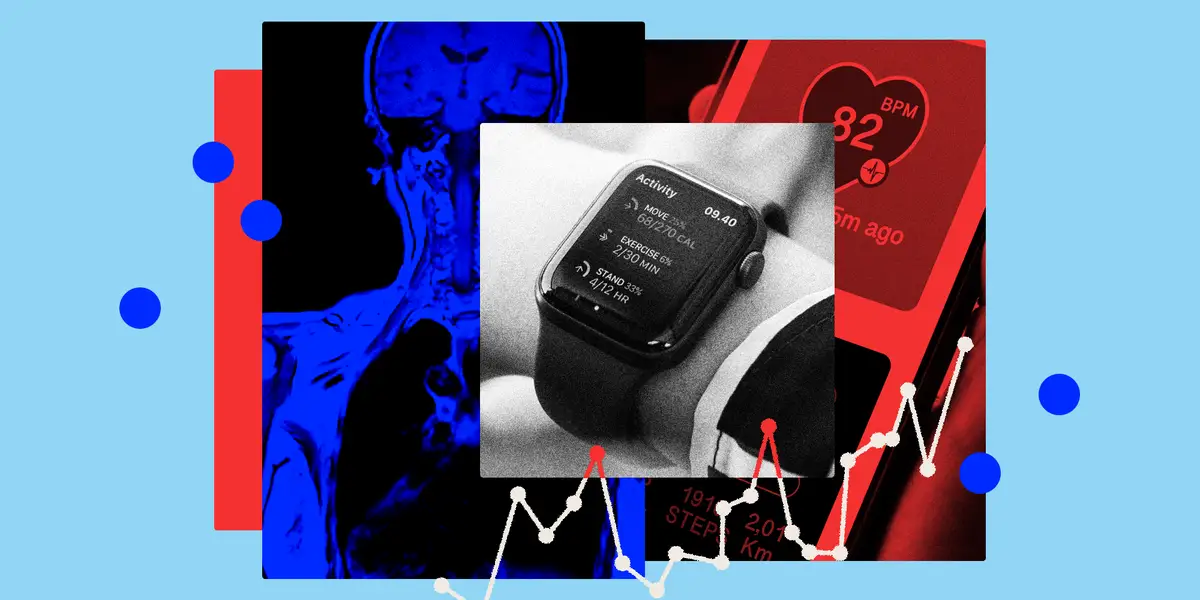
Has the optimisation rebellion begun? Something seemed to shift in the collective psyche recently when the world discovered the entrepreneur and podcaster Steven Bartlett’s reaction to having had “a couple of glasses of wine” on a school night.Speaking with Chris Williamson (the Love Island alumnus turned “wisdom” podcaster, God help us), Bartlett had explained what happened when he decided to test the effects of drinking after a year of sobriety – a sombre catalogue of catastrophes recorded by his Whoop tracker (“#ad, #sponsor”). He slept less, ate poorly, skipped the gym and – prepare yourself – “podcasted worse”. “It ruined three days of my life,” he said, seemingly in earnest.This little chat was just after Christmas, and maybe everyone was too full of goodwill to pick up on it, but last month the internet finally erupted in long-overdue mockery. Bartlett made such a meal of it, which I think particularly offended British sensibilities. I mean, I get it: I’m 51 and if I drink more than a thimbleful of gin – which would make a Sylvanian Families hedgehog mildly tipsy – my life is also ruined, but I eat crisps and make jokes until it passes, as is my patriotic duty.But behind the “Chill out, bruh” teasing was something deeper: thoughtful or sincerely pissed-off critiques of optimisation culture. Celebrity-on-celebrity verbal violence took it more mainstream, when the BBC Radio 1 host Greg James entered the fray, punchily urging people to “join my anti-optimisation/Bartlett cult” and declaring: “Optimisation is killing fun.” Emboldened by his stance, others weighed in: Fearne Cotton claimed she sometimes podcasted better hungover; the rapper Example commented, adorably: “That’s why I don’t wear those stupid fuckin’ watches. I don’t care. I don’t wanna know.”So are we rising up against the dictatorship of data-driven living, stamping our Ouras and Garmins (not sure why they sound like fantasy epic characters) to dust, steps unrecorded? I hope so, but I’m not sure.According to YouGov, which tracks ownership of wearable technology across time, it is steady: 35% of Britons have a wearable device, the same as in January 2024. Meanwhile, longevity hacking – the ultimate self-optimisation – has moved from niche billionaire hobby to mainstream preoccupation, attracting vast investment and giving birth to its own mental health problems. Women have joined the immortality bros: US Elle recently featured the “most publicly measured woman”, Kayla Barnes-Lentz, whose morning routine (colostrum, prayer, peptides, pulsed light therapy) makes eternal sleep look quite appealing.There are understandable – sensible, even – parts of this. Britain’s under-resourced healthcare system is struggling, especially with chronic and age-related conditions, so getting or staying healthy is an insurance policy. Information – data – could help; living reasonably sensible lives (eating plants, moving) definitely does.But self-optimisation also has an inherently seductive side. When I rail against the joyless rigidity of modern life, I’m mostly trying to convince myself. I don’t have a fitness tracker, but I spent decades of my life with the analogue version – a boring, inescapable tally of food consumed and exercise taken – running in my head. Keeping it from creeping back online requires enormous energy in this chillingly body- and health-focused age.That is partly why I fear there is still a malign energy to optimisation culture. Companies, not all of them particularly careful or scrupulous, have a lot invested in keeping us locked into drearily quantifying our lives – they want our money and need our data – and we’re vulnerable to images and narratives of apparent perfection that play on our anxieties and neuroses.Even so, I’m hopeful this Bartlett moment is a further sign of something that is bubbling up in other places: an increasing disenchantment with the dull lives big tech wants for us. I see that in the anger at AI muscling in on creative industries, but also in the craving for analogue experiences and in heartening outbreaks of unquantifiable joy and silliness: the rise of whimsy, cake picnics and eating pudding with a fork.When the tracker in my head was happy with me, I was miserable. There was no space for fun and I was full of dread because I knew living a rigidly “right” life was, ultimately, unsustainable. We aren’t perfectible: we’re fallible, finite flesh and blood. Things fall apart; the metrics cannot hold. Whatever Barnes-Lentz wants to believe, one day, we won’t have a heart rate to record – and we know, really, that the important stuff before that won’t be logged on a Whoop. Emma Beddington is a Guardian columnist
The health tracker backlash is here – so ditch the data and set yourself free | Emma Beddington
A rebellion is rising against the dull, highly optimised lives big tech wants for us. It’s not a second too soon, writes Emma Beddington
750 words~3 min read