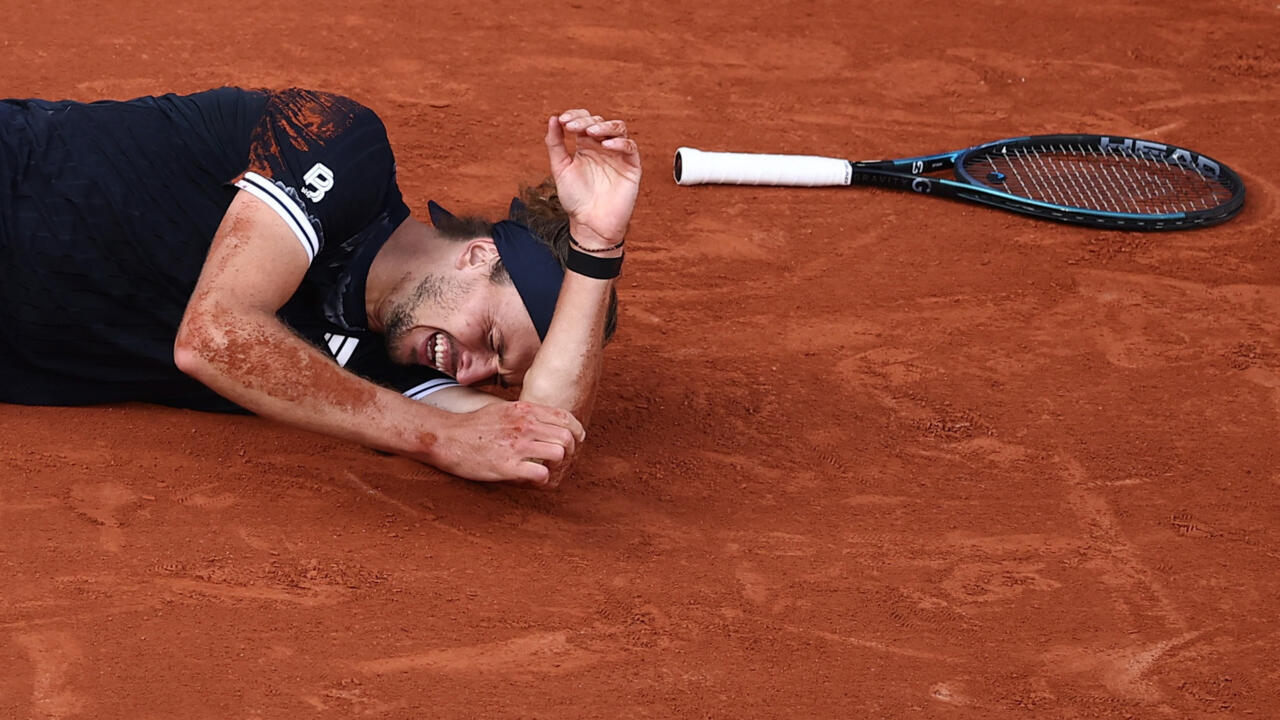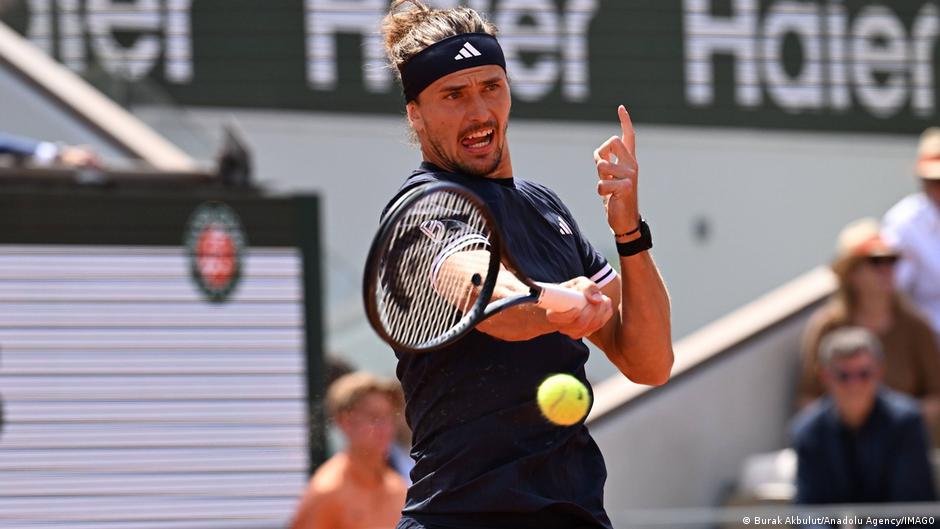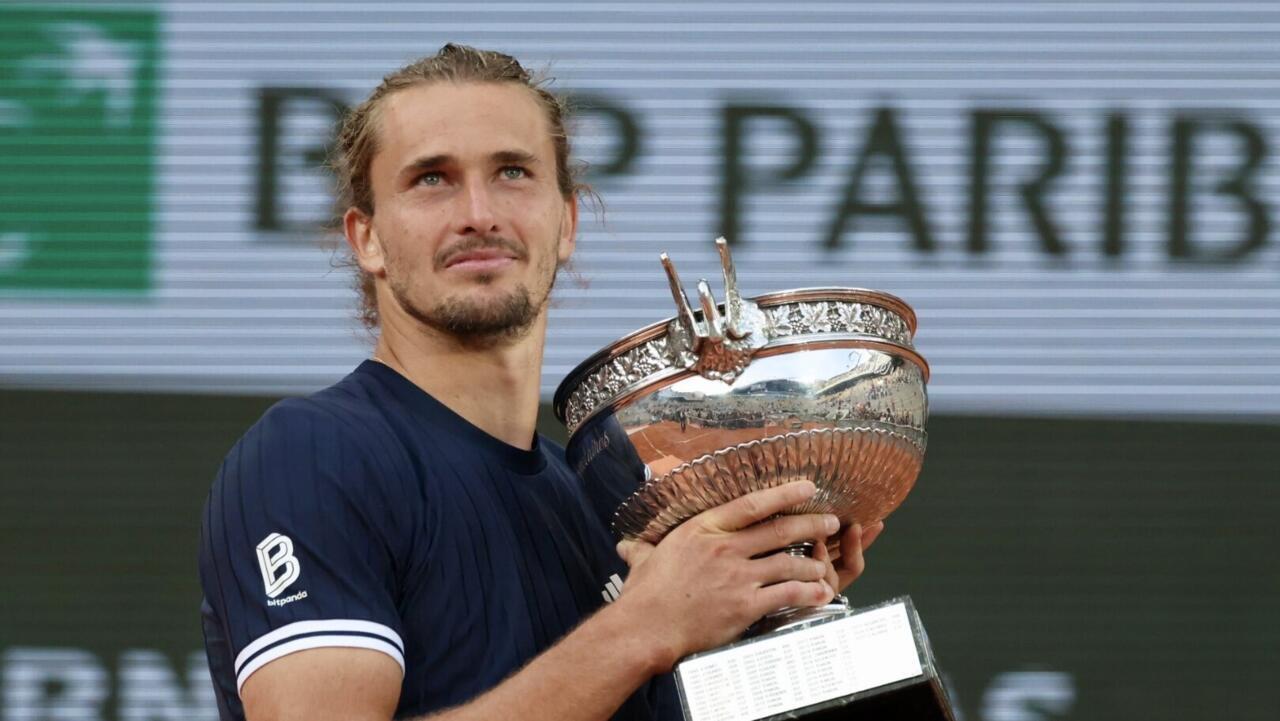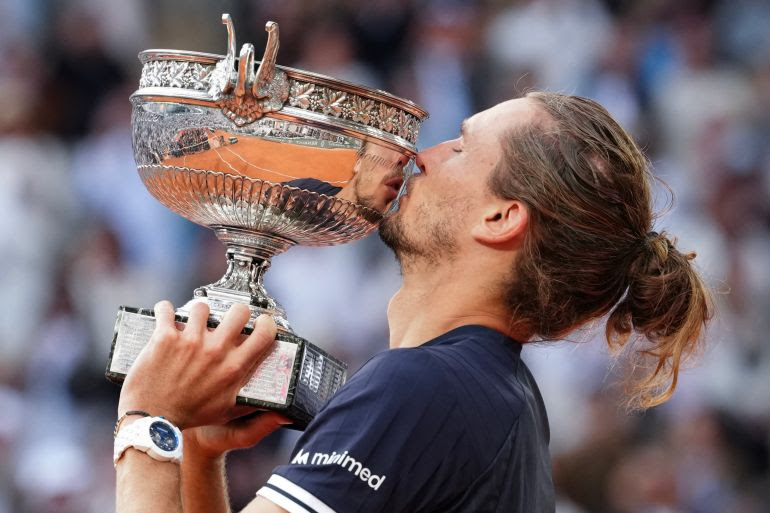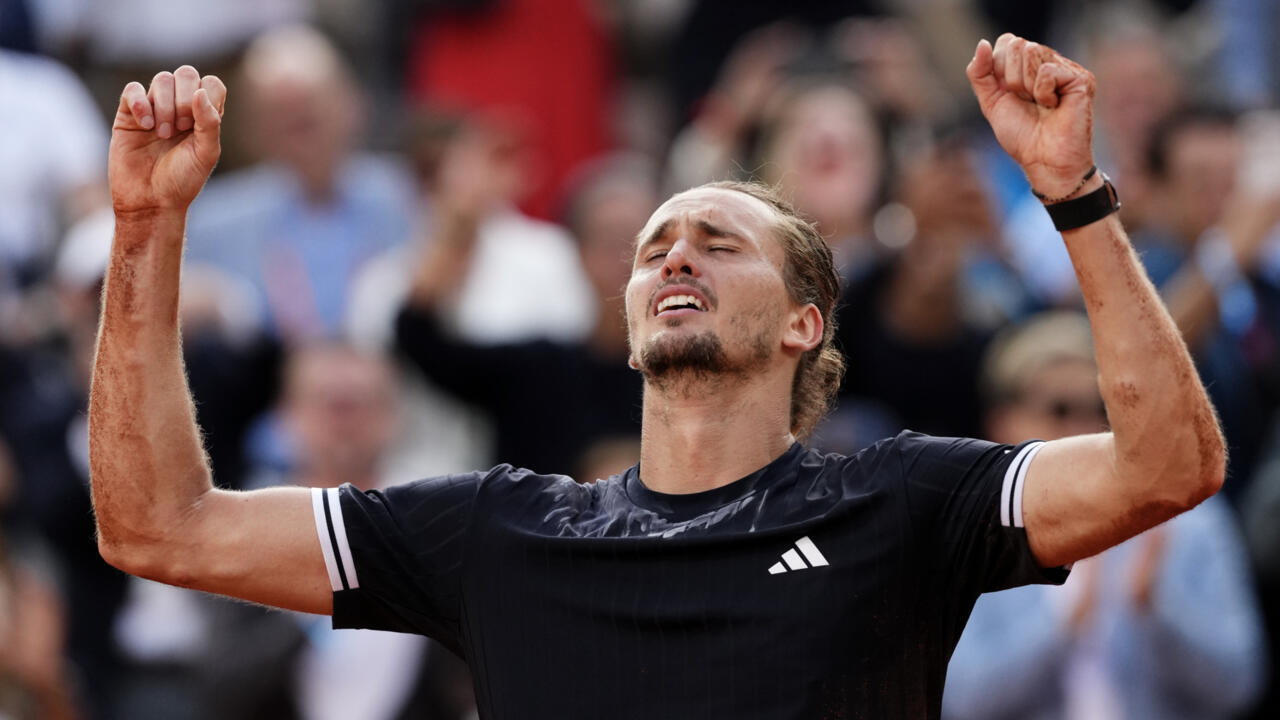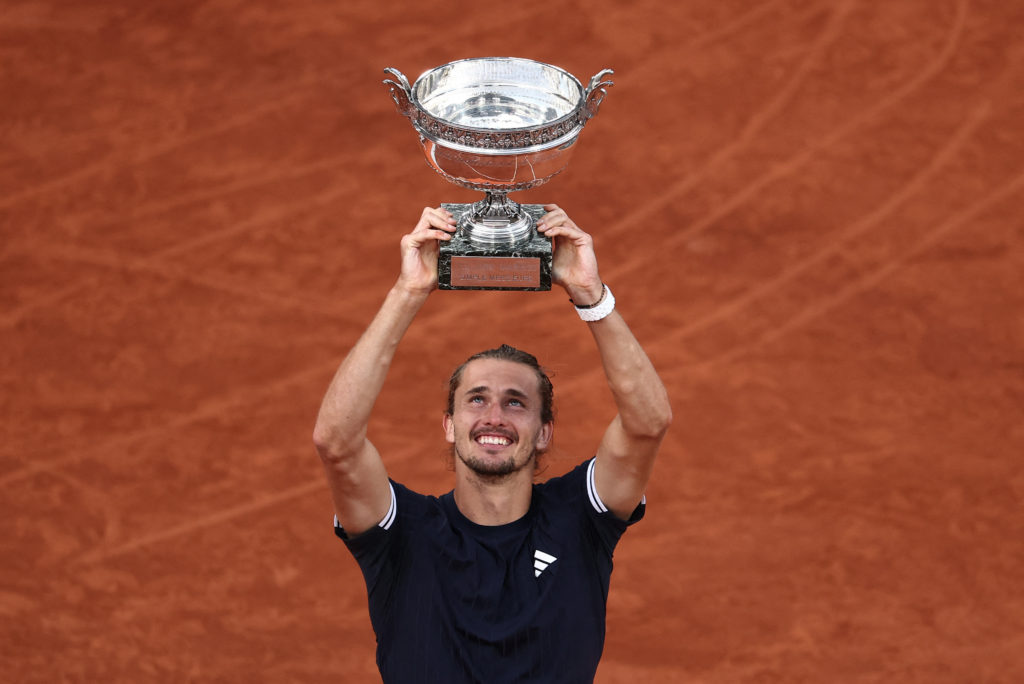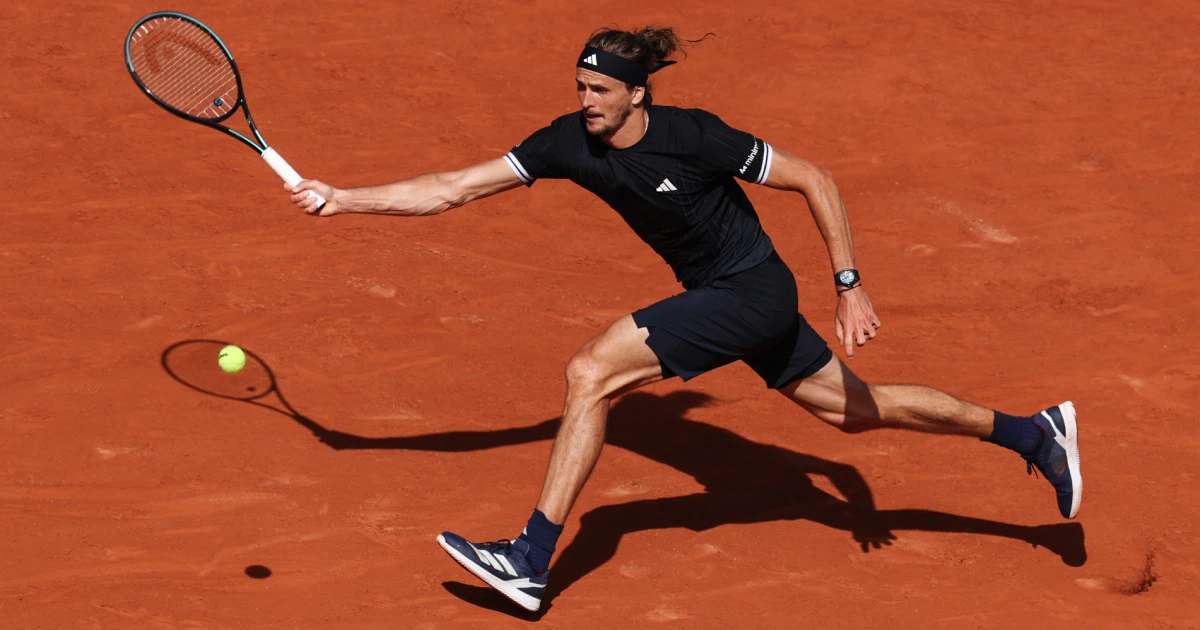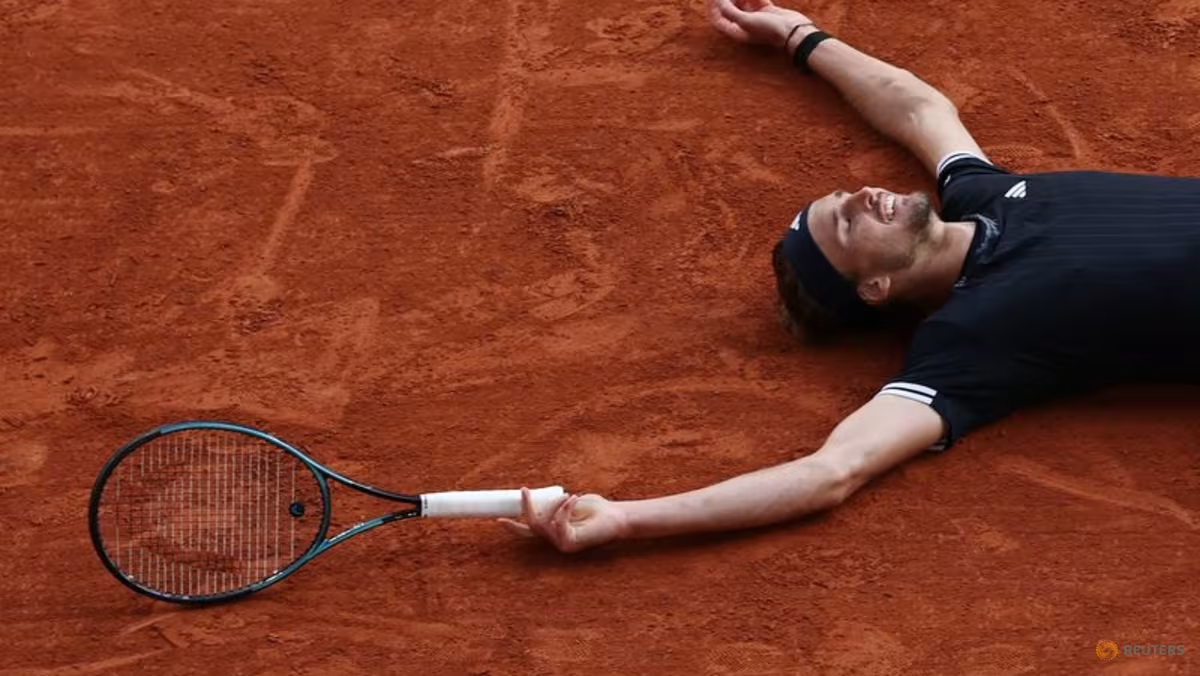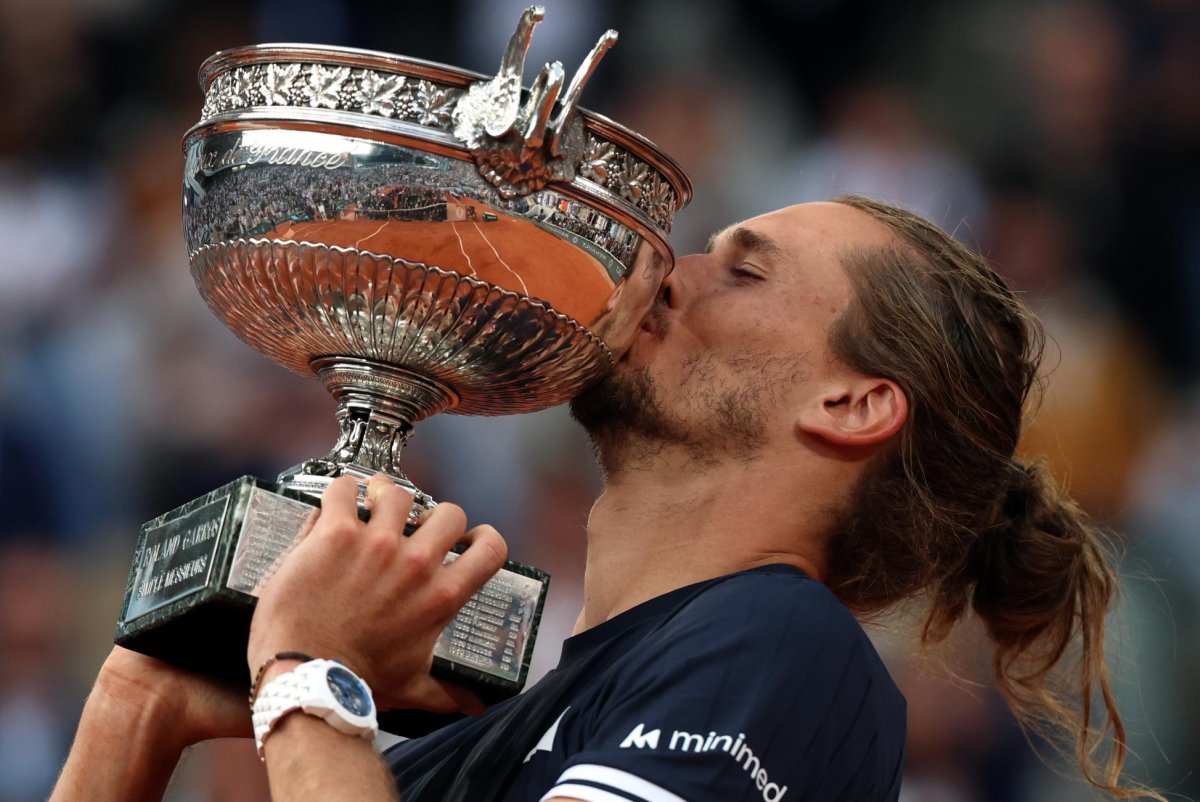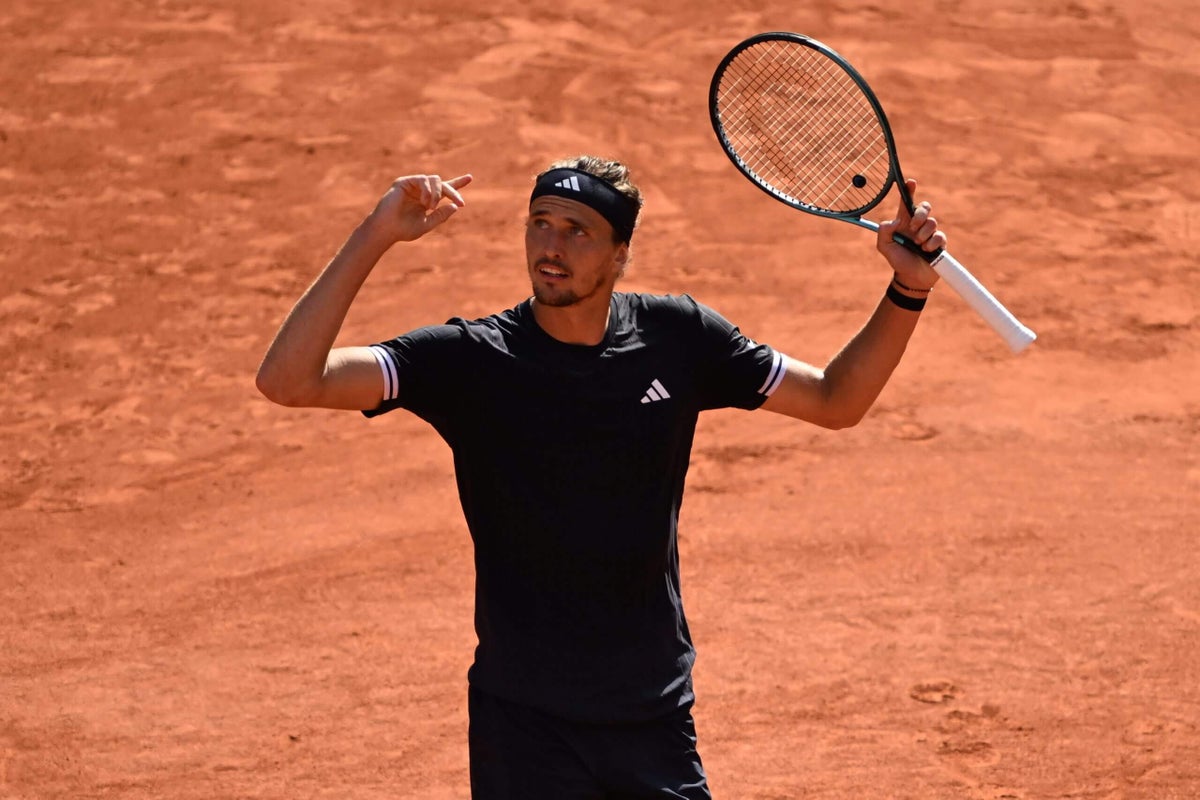
Relive the 2026 French Open men’s final with live coverage from The AthleticPARIS — Alexander Zverev defeated Flavio Cobolli 6-1, 4-6, 6-4, 6-7(5), 6-1 in the French Open final at Stade Roland-Garros Sunday.The No. 2 seed prevailed over the No. 10 seed in an edgy, tight match, ultimately decided by Zverev’s superiority on serve, Cobolli’s inability to maintain a winning tactic, and Zverev’s ability to hang in as his physicality faded.It is Zverev’s first Grand Slam singles title, at the fourth time of asking.The Athletic’s writers, Charlie Eccleshare and Matt Futterman, analyze the final and what it means for tennis.Why did Zverev win the fifth set?As they went to a fifth set, logic held that Cobolli had the momentum and Zverev had been knocked onto his heels.Instead, something like the opposite had happened.Zverev was playing his third fifth set in a Grand Slam final. He’d been there before. But he didn’t play like it. Instead of seizing the initiative, Zverev appeared physically done.But Cobolli seemed to have spent his last great shot by winning the fourth-set tiebreak with a forehand blitz down the line.Zverev was there for the taking. His forehands were looping and tentative. But Cobolli couldn’t find the court the way he had been just a few minutes before, and the thoughtfulness that went into all those deep, topspin off-speed shots, to force this match, to a decider evaporated.He tried to blitz forehands when he needed to loop them. He pushed a backhand deep at 30-40, when a re-drop shot would have won the point, and Zverev fired it past him. He hit too many backhands in general, feeding Zverev’s strength with largely ineffective balls just when the German was wavering.Down 3-0, Cobolli chased down a drop shot with the chance to recover a service break. With the opportunity to hit the ball past Zverev, he chose to dink it over him. Zverev ran back and retrieved it, giving Cobolli an overhead to put away.The Italian couldn’t find the right spot, and Zverev chased it down, asking Cobolli to hit a second overhead. as he jumped toward the baseline, he could only send it into the net, when he had the opportunity to let the ball bounce.Zverev would give him another chance, double-faulting on the next point, but when Cobolli worked the point around to another overhead, he bounced it into the seats.Two points later, Zverev was in command at 4-0 and sailing to the finish. Another missed overhead that Cobolli could have let bounce was a fitting way to end proceedings.— Matt FuttermanFlavio Cobolli missed overheads at key times in the fifth set. (Matthew Stockman / Getty Images)And how did he tighten up in the fourth?Up two sets to one, Zverev was back in the position he found himself two years ago, that time against Carlos Alcaraz.He couldn’t get the job done then, but looked to be in a much more commanding position here, against a far less accomplished opponent.And yet Zverev dropped his serve at the start of the fourth set, and then having broken back for 3-3, netted a dreadful volley to be broken again immediately himself. It brought back memories of a similarly nervy missed volley into the net, during the fifth set of that 2024 final against Alcaraz.From 15-30 on Cobolli’s serve in the next game, Zverev missed three backhands he’d normally make with his eyes closed, to let Cobolli off the hook again.Eventually, Zverev was able to get the break back, hitting a forehand and then backhand winner for 5-5 with aggressiveness that came from his physicality starting to fade. Cobolli, who was serving for the set, suddenly seemed to be the one feeling the scoreboard pressure, while Zverev loosened and started hitting out.Having been on the brink of a decider, Zverev was two games away from the title. Would he be as tight as he’d been for so much of the rest of the set? A missed smash when serving at 5-5 didn’t augur well, but an ace secured the hold.On the other side of the net, Cobolli was learning that players don’t always have to be great in a Grand Slam final. They just have to be better than their opponent at any given moment.That was Cobolli in the fourth set, at least over the first 10 games. His first-serve percentage remained below 50 percent. He had more unforced errors than Zverev, at 14-12. But Zverev’s dips were even more dramatic. His serve efficiency dropped like a stone. He was winning only half of his points on first serve.Cobolli was staying in the rallies until he saw something that looked like an opening, then shooting through it. But then Zverev found thatUntil Zverev decided he’d had enough down 5-4, with Cobolli trying to push matters to a fifth. Zverev doesn’t have a great deal of trust in his forehand, but he crushed two to opposite corners that he will long remember, being brave as he hadn’t been for most of the fourth set. Then he got a backhand in his strike zone, and slammed it down the line.The scoreboard flipped to 5-5. He’d sent a message that less bad wasn’t going to cut it for Cobolli the rest of the way.Cobolli took the lesson to heart. After holding serve to force a tiebreak, he produced a lovely backhand pass, two forehand winners, and a drop shot winner. And then, after muffing one set point with a silly, flying volley attempt, Cobolli put his head back on straight.Zverev, back on serve, played a timid first shot, but his second sent Cobolli on the run. Now Cobolli really needed to find something. He did, rocketing a forehand down the line to force the fifth set, in which he couldn’t quite repeat the trick.— Charlie Eccleshare and Matt FuttermanHow did Zverev establish superiority in the very first game?Zverev, 29, and Cobolli, 24, describe each other as friends, and Zverev was very complimentary about Cobolli when asked about their relationship during a news conference on Friday.But with Zverev the taller, older and more experienced of the pair, it felt a bit like a big brother-little brother relationship. Zverev seemed to lean into that before the match had even started on Sunday, winning the toss but electing to receive. Zverev is one of the best servers in the men’s game. Choosing to receive sent a clear message to Cobolli: ‘How’s your nerve?’It was a smart play to start Cobolli’s first Grand Slam final, a big experience deficit compared to Zverev’s fourth. Zverev has also competed in, and won, a gold-medal match at the Olympic Games.Sure enough, Cobolli missed a backhand and double-faulted to start the final. He saved three break points in the game, but the errors kept on coming, and eventually Zverev broke when Cobolli miscued a plus-one forehand, still adjusting to the magnitude of the occasion.Cobolli really needed to win that first game to settle; instead he lost it and was always swimming upstream in the first set. It only got worse from there — Cobolli was broken three times in total in the set, and won less than half (47 percent) of his first-serve points. He made 16 unforced errors, including two double faults, compared to three winners.It really felt like the alpha having his way with the little brother.— Charlie EccleshareAnd how did he initially quell his nerves?Anyone expecting that Zverev might come out shaky, given the opportunity in front of him, was met with a locked-down version of the world No. 3.The first set, which was over in less than 40 minutes, was a model of efficiency. Zverev could sense quickly that Cobolli was shaky and wasn’t sharp. He had the right reaction, playing with aggressiveness but also safety, aiming for big targets and doing the simple thing: Lulling Cobolli into backhand rallies that exploited his opponent’s weakness and accentuated his strength.Cobolli didn’t offer much in the way of trying to get out of them, so Zverev just ate his bread and butter from the start of the set until the end. He committed just nine errors across the seven games. He landed 76 percent of his first serves. He didn’t face a break point.It was enough to get Cobolli thinking he needed to do spectacular things to beat Zverev. The big, high-risk shots mostly missed. They were no match for Zverev’s machine-like effectiveness, and it took Cobolli until halfway through the second set to find the tactical composure he needed to influence the match.— Matt FuttermanHow did Cobolli stall Zverev’s momentum?The breath of life came nearly out of nowhere.Zverev had cruised through the first half of the second set. He’d lost just one point on his serve and was up 30-0 at 3-3. Cobolli looked like he’d be serving once more very quickly.Then came a missed drop shot from Zverev, and a rare backhand winner from Cobolli. Now the crowd was alive, rallying hard and loud for a Cobolli surge.It arrived, but not in the way surges tend to do in tennis. A couple of games earlier, Cobolli had eased up on the attempts at miracles. He started looping the ball up into the air, letting it arc up off the red clay with little pace and asking Zverev to generate his own power. It didn’t always work, because Cobolli would do it on the German’s backhand often enough for him to crack one crosscourt, hard and flat, but it asked Zverev a question he hadn’t yet had to answer.Flavio Cobolli had to change tactics after a disastrous opening set. (Clive Brunskill / Getty Images)A break point came and went, thanks to a 24-shot standoff, again mostly on the backhand that Zverev prevailed on as he so often does. But Cobolli seemed to have happened on a formula that would give him some hope, if he could just keep the shape on his shots and make Zverev backpedal a little more.He got some luck then, with two double faults from Zverev as the game stretched toward the 10-minute mark. Then a final gift — a miss on a wide-open short forehand on the shot after the return.Cobolli had his first lead of the match, and a lifeline at 4*-3 in the second set.— Matt FuttermanWhat did Zverev go back to that had helped him all tournament?On the previous two occasions Zverev dropped sets this tournament, he broke his opponent’s serve straight away in the next one.On both of those occasions, against Quentin Halys in the third round and Jakub Menšík in the semifinals, it was the third set that Zverev had dropped, and so the finishing line was in sight.When Zverev dropped the second set on Sunday, he was faced with a different and more testing dynamic, especially because this was a final and the possible culmination of everything he has worked toward. How would Zverev cope with the first moment of adversity?Early on in the third set, it looked as though a similar dynamic to those Halys and Menšík matches was going to play out. Zverev held a couple of break points to lead 3-1. Cobolli saved them, but eventually the pressure did pay when he sprayed a forehand wide to give up the break and the set 6-4.On his own serve, Zverev locked down. He gave Cobolli zero encouragement, and used scoreboard pressure to make the Italian feel that he was always playing catch-up. Zverev made 79 percent of his first serves in the set, and won all but one of those points, at a rate of 95 percent.It was exactly the response he needed after losing the second set almost out of nowhere.— Charlie EccleshareHow did a serve contrast put pressure on Cobolli?The number had been low all afternoon. Cobolli’s first-serve percentage was hovering in the low 50s, at times even dropping below 50 percent rate.At the top level, in the most important matches and moments, the serve has to be there as a release valve, the shot that makes all other shots easier. It’s hardly Cobolli’s biggest weapon, but it’s usually good enough to set up his forehand.As the set wore on, it became ever more important, since Cobolli was serving second, losing it was going to put Zverev inches from gaining an important two-sets-to-one lead. Cobolli, who had double-faulted twice in his first game, couldn’t get it to fire.Alexander Zverev’s serve was a difference-maker against Flavio Cobolli. (Dimitar Dilkoff / AFP via Getty Images)In the 10th game, as he served to stay in the set at 4-5, the serve let him down once more. He missed a first serve at 30-0 and rolled in a second ball at 91 mph. Then he missed a forehand.He missed another first serve at 30-30, allowing Zverev to jump on the second. He missed a third on the break point, and Zverev jumped on his 87 mph offering on the second ball, punching a backhand that led to the missed forehand that handed Zverev the set.Cobolli landed just 52 percent of his first serves for the set. He played 16 second serve points and lost half of them. Zverev played just five and lost two.What did Alexander Zverev say after the final?“I really hope that you end up holding one of these trophies,” Zverev said to Cobolli.“I lost a Grand Slam final here two years ago, but it’s a happy end,” he said.“I have probably the longest-lasting team of anybody in the world.”What did Flavio Cobolli say after the final?“I was close, and I feel it. Now that you’ve achieved your dream, let me win next time,” Cobolli said in his on-court interview.“I felt a little pressure on my side.“I never expected this kind of result. But now that I’m here, I just want to make possible something special, because for me, it’s not done, it’s only the start, and I’m still young, so I just want to enjoy every moment that I spend on court. With my smile.”
French Open final: Alexander Zverev defeats Flavio Cobolli for first Grand Slam title
Germany's Zverev, 29, outlasted Italy's Cobolli, 24, to lift his first major in Paris.
2,321 words~11 min read