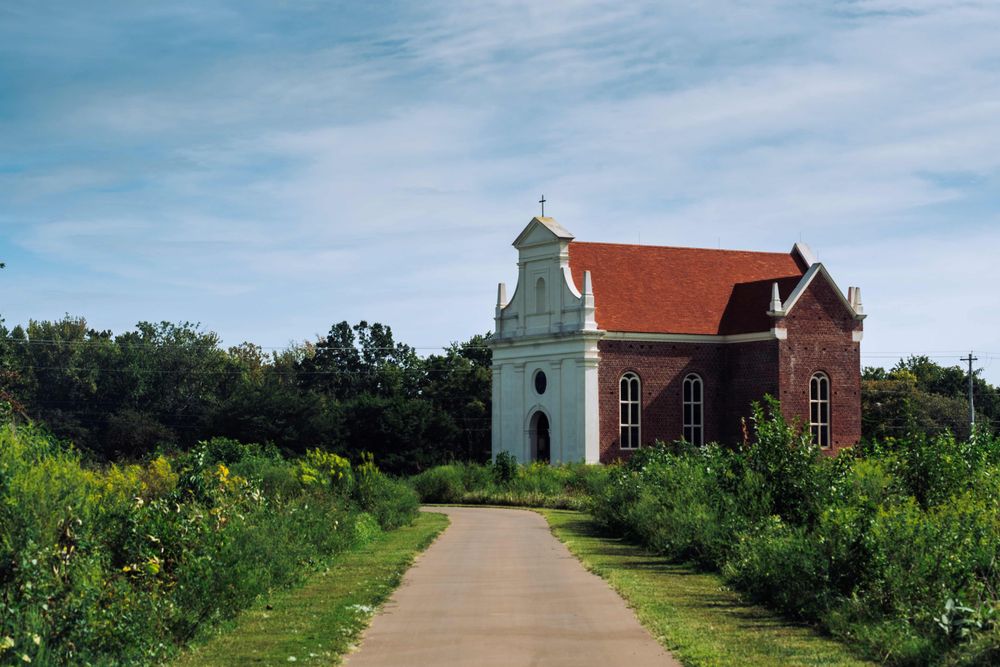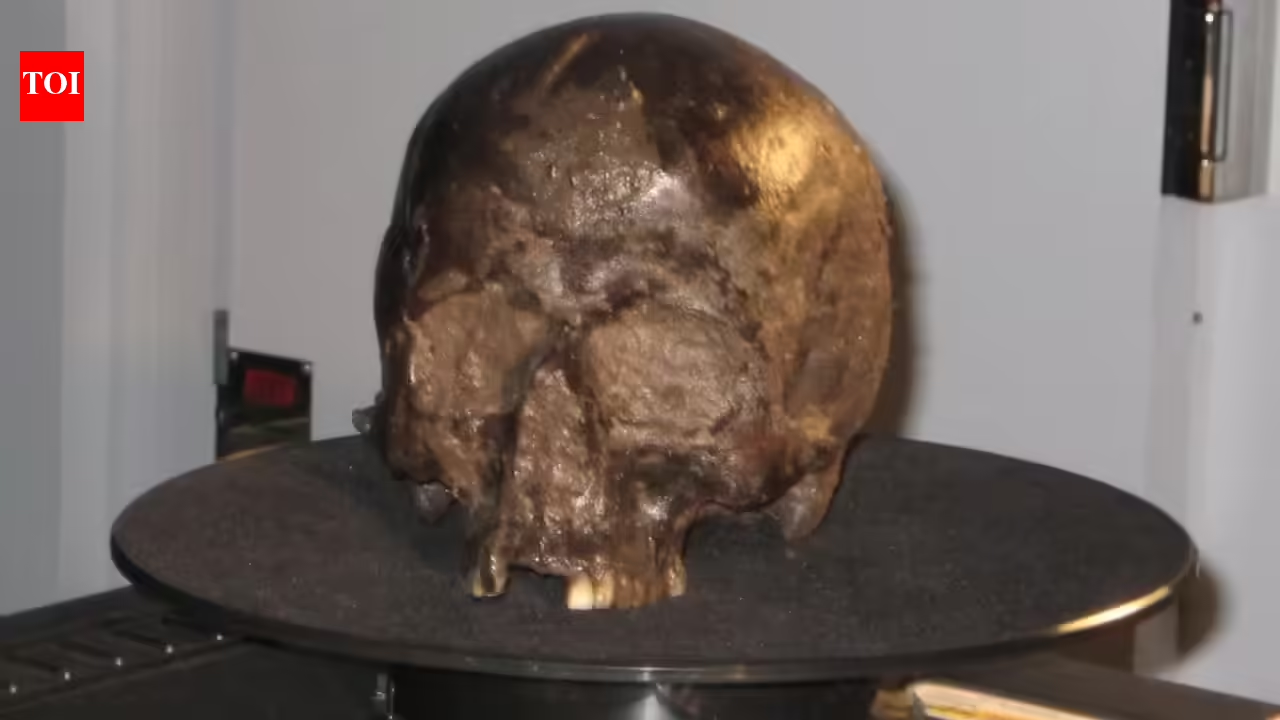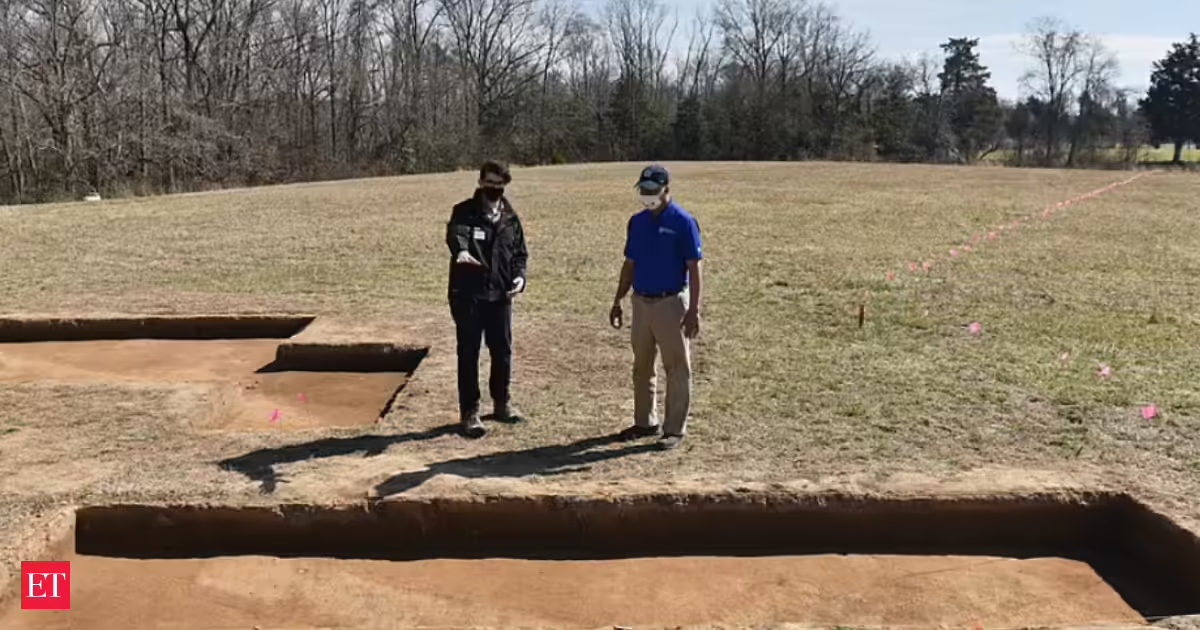
In 2022, archaeologists at Maryland's first fort finally excavated a grave they'd found 30 years earlier, and identified a teenage boy buried in the 1630s, one of the colony's oldest known deadSynopsisArchaeologists unearthed a teenage boy's grave at St. Mary's Fort, Maryland's first English colony. This discovery, dating back to the 1630s, provides a unique personal perspective on the colony's challenging establishment. The burial allows historians to understand early colonial life through an individual's experience, not just official records.Lt. Governor Rutherford Tours the Site of a 1634 Fort Discovery by Patrick Siebert at 47414 Old State House Rd, St. Mary's City, MD 20686 | Wikimedia CommonsFor many archaeologists, locating remains of those common folk who led unremarkable lives in the written record may take decades of laborious fieldwork. For example, in 2022, scholars at Historic St. Mary’s City, Maryland, made such a find while digging up the remains of a teenage boy at St. Mary’s Fort, the site of Maryland's first English colony. The grave might have belonged to a teenager who lived in Maryland in the middle to late 1630s, making it one of the oldest colonial-era burials ever discovered in Maryland.It would be too tempting to think that the uniqueness of this discovery lies in treasure or fancy grave goods; however, it lies in the rare opportunity to connect with the colony's difficult beginnings through a person, rather than through the governors, documents, and locations. This burial allows historians to see the colony's establishment through the eyes of a teenager.Lt. Governor Rutherford Tours the Site of a 1634 Fort Discovery by Patrick Siebert at 47414 Old State House Rd, St. Mary's City, MD 20686 | Wikimedia CommonsA grave that waited decades to be studiedIndeed, the burial itself had been the subject of archaeological study since before the actual excavation. Records from the board at St. Mary's College of Maryland note that the grave was discovered by archaeologists in 1992. However, for various reasons, including preservation concerns, it took many decades for a complete excavation to occur. By the time they did, the archaeologists who worked on the grave weren't studying something new at all; instead, they were exploring something that had gone unstudied for more than thirty years.The analysis indicated that this individual was likely a teenage boy of European descent who probably lived during one of the earliest years of the colony's founding. In fact, given that Maryland was founded in 1634, the burial may date back to those early days of colonization. The significance of the findings is obvious: at a dig where archaeologists want to know what life was like when the colony was still forming, the findings from the 1630s are particularly interesting. It serves as a reminder of the fragility of such findings, even in protected areas.Why St. Mary’s City remains so importantThe importance of the burial is directly related to its location. According to the National Park Service, Historic St. Mary’s City is the site of Maryland's first European settlement, established in 1634 and used as the colony's capital for more than 60 years. This place differs from other colonial settlements in that they have changed greatly due to modern construction, whereas many parts of St. Mary's City are still archaeological.This means there is an excellent chance for researchers to access primary sources about the colony's early stages and analyze this period through artifacts found in different places. Roads, forts, houses, graves: each artifact provides some piece of information needed to restore history. The teenager's burial is important because it took place in the territory where the colony was born. The dating indicates that this burial took place near the colony's founding, so we can no longer rely solely on descriptions of what happened there. Now researchers can see a connection to a real person, not a character from a historical document.A single life inside a larger storyThe tomb also reminds historians that the colony was constructed by individuals other than governors, businessmen, and bureaucrats. Adolescents, workers, slaves, and settlers appear in documents very sparingly, if at all. Only archaeology can unearth details about these individuals, regardless of whether there are any written documents concerning them. There has been no attempt by the researchers to create suspense about how the teenager met his fate, and this is one reason this finding is intriguing. The importance of the tomb does not lie in its enigma; it lies in the mere presence of the tomb itself.In this regard, the context in which the find has been made gives it an added significance. The use of Historic St. Mary’s City as a site for research into issues such as ancestry, kinship, and demographics among the early settlers in Maryland is becoming increasingly popular. The human remains found at the site are important to this wider field of research into the demographic and social history of the colony and its settlers. The burial of the teenager is therefore much more than simply another archaeological finding. Instead, it is part of a process to examine not only the identity of the colony’s earliest inhabitants, as inferred from written records, but also their lives within the colony itself. Four hundred years after the founding of the colony, the teenager's burial is a stark reminder that the most potent historical narratives are those that bring the past closer through personal stories.Read More News on(Catch all the US News, UK News, Canada News, International Breaking News Events, and Latest News Updates on The Economic Times.) Download The Economic Times News App to get Daily International News Updates....moreless
In 2022, archaeologists at Maryland's first fort finally excavated a grave they'd found 30 years earlier, and identified a teenage boy buried in the 1630s, one of the colony's oldest known dead
Archaeologists unearthed a teenage boy's grave at St. Mary's Fort, Maryland's first English colony. This discovery, dating back to the 1630s, provides a unique personal perspective on the colony's challenging establishment. The burial allows historians to understand early colonial life through an individual's experience, not just official records.
927 words~4 min read