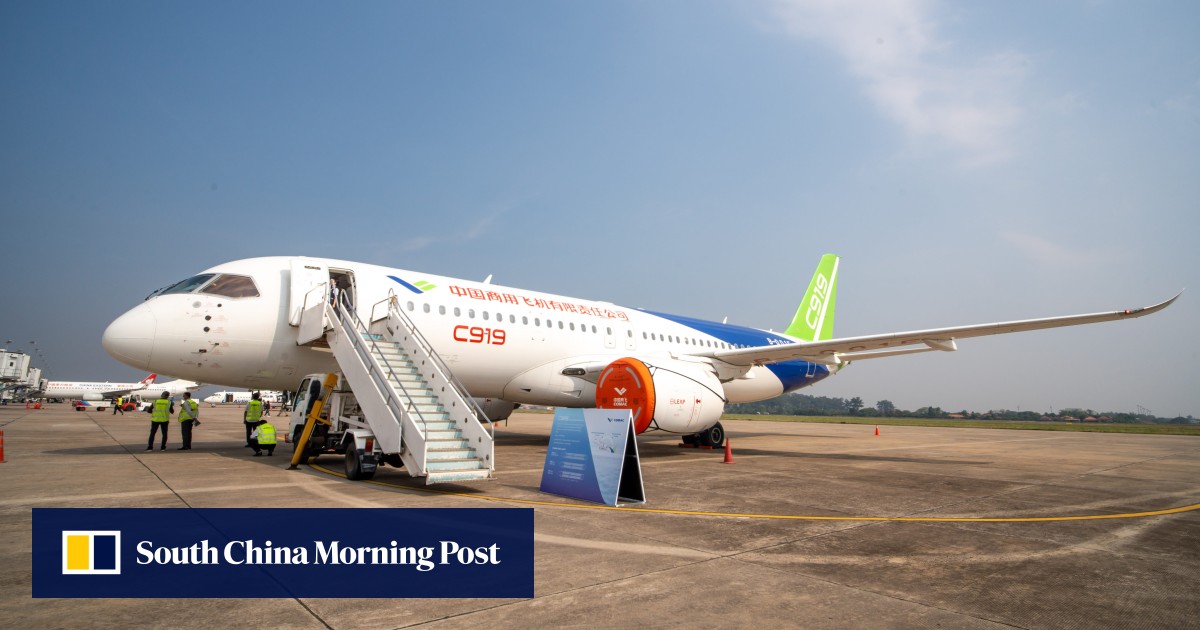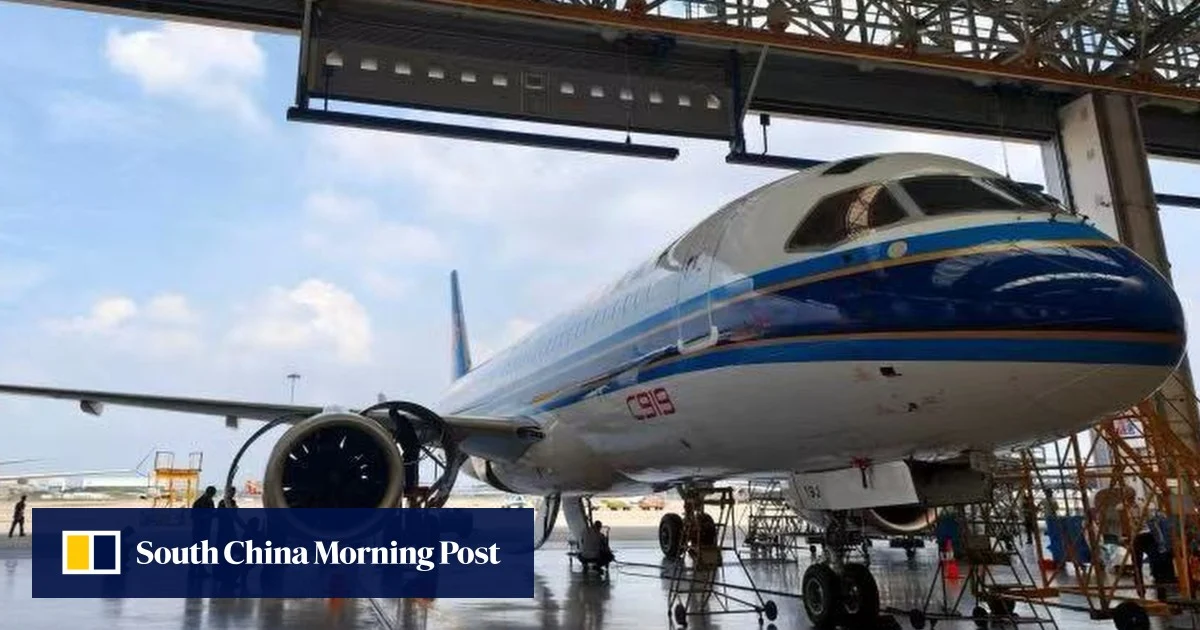
China’s home-grown airliners including the C909 and C919 series now have access to more repair and maintenance support for critical components such as engines and landing gear, as partnerships with service providers expand across the mainland and Hong Kong when jet deliveries and utilisation rise.With a wider network of support at home, these indigenous planes, assembled by the Commercial Aircraft Corporation of China (Comac), stand a better chance of riding out global supply chain disruptions when their operators ratchet up flight operations, analyst Jason Zheng, of Shanghai-based aviation consultancy and news portal Airwefly, said.Hong Kong Aircraft Engineering Company Limited (HAECO), one of the world’s leading aircraft servicing firms, finished its first overhaul of the landing gear of a C909 regional jet in May in Xiamen, in the southeastern Fujian province.HAECO, owned by Hong Kong-based Swire Group which is also the parent of Cathay Pacific, said in a statement the task marked the latest addition to its supported aircraft models to cater to operators of regional jets in mainland China and beyond.The C909, with more than 180 units now flying, is the first Chinese aircraft operating flights across Southeast Asia and central Asia and a workhorse model for foreign carriers including TransNusa in Indonesia, VietJet in Vietnam and Lao Airlines.In July 2025, HAECO signed deals with Comac and Liebherr, a multinational landing gear and hydraulic systems supplier, for repair and maintenance for the C909 and C919.The previous year, HAECO and Comac also teamed up for an airframe, engine and component services contract to jointly deliver comprehensive support for Comac’s domestic and international customers.
China widens repair network for C919, C909 jets to outfly supply disruptions
China’s home-grown jets will be able to stay in the air for longer as maintenance centres open on the mainland, some with Hong Kong servicers.
TL;DRAI
HAECO completed first C909 overhaul in May; Comac partnerships with Liebherr expand maintenance for 180+ regional jets in SE Asia. Domestic repair networks reduce Chinese operators' reliance on Western supply chains—critical buffer as fleet utilization ramps.
262 words~1 min read