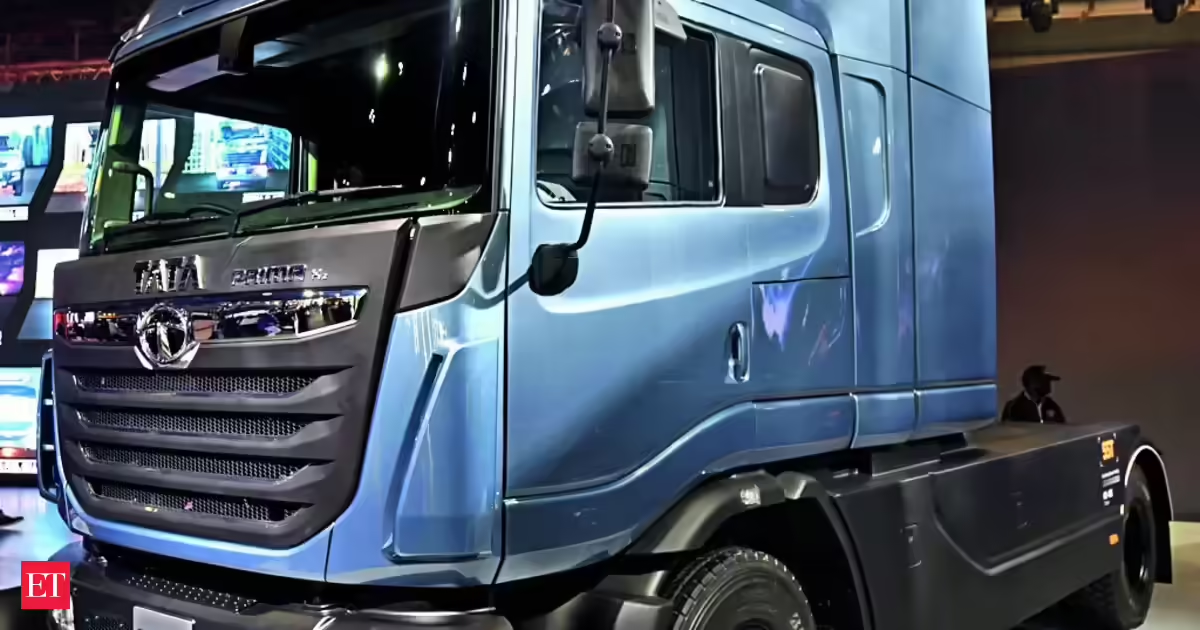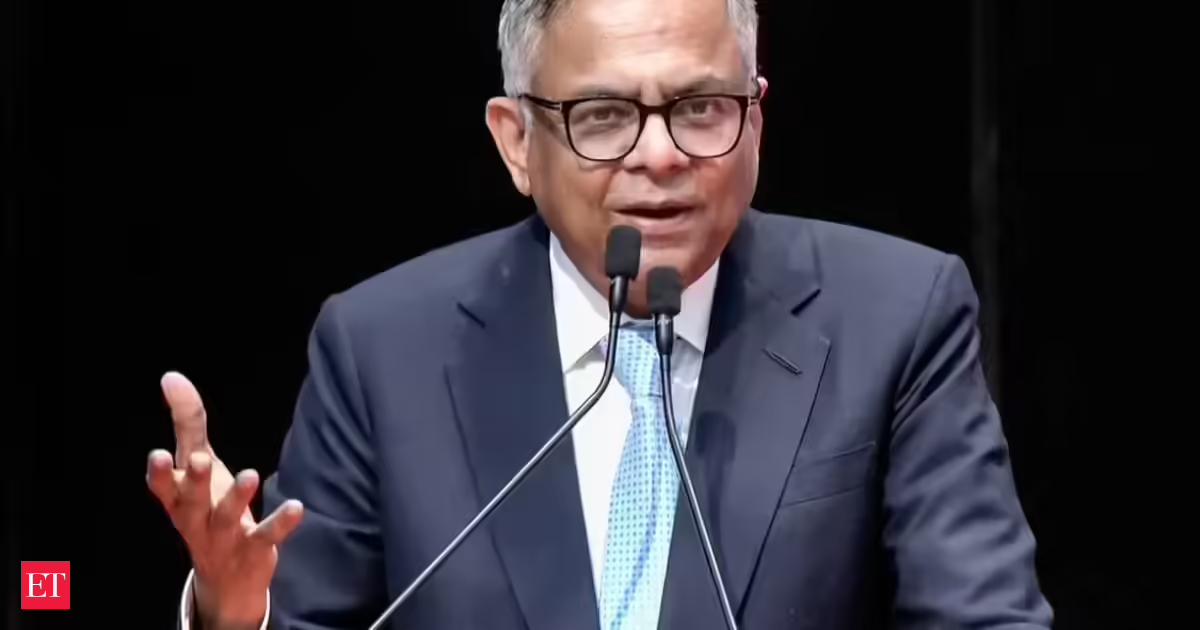
Tata Motors’ commercial vehicles business is overhauling its business model to reduce dependence on India’s cyclical truck market as geopolitical disruptions, freight volatility and technology shifts reshape the global commercial mobility industry.The strategy, outlined in Tata Motors commercial vehicles’ FY26 annual report, marks one of the company’s sharpest structural pivots in years as the newly demerged entity expands into software, services, exports, electric mobility and alternative fuel technologies to build more resilient and recurring revenue streams beyond vehicle sales.Chairman N Chandrasekaran said the company had reorganised itself into an “8-vertical structure” aimed at creating “new revenue streams while de-risking the business from economic cycles.”The shift comes amid rising uncertainty across the global freight ecosystem, with the chairman flagging US tariffs, supply-chain reconfiguration, uneven economic recovery and the West Asia crisis as emerging risks reshaping commercial mobility markets.“Agility and resilience” are becoming critical capabilities, Chandrasekaran said, as clean energy transitions, digital technologies and geopolitical volatility redefine competitiveness in the trucking industry.Shift from volume-led growthManaging Director and CEO Girish Wagh described FY26 as a “defining year” for Tata Motors CV, saying the demerger and standalone listing sharpened strategic intent, strengthened governance and enabled “clearer capital allocation choices, faster decision-making and a deeper alignment between strategy and outcomes.”The company reported FY26 revenue of ₹83,855 crore compared with ₹76,359 crore in FY25, while EBITDA margins improved to 12.3 per cent. Return on capital employed (ROCE) stood at 72.3 per cent, among the highest in the global commercial vehicle industry, according to the company.But the bigger strategic signal in the report was the growing importance of businesses outside traditional truck manufacturing.
Tata Motors CV redraws strategy to reduce dependence on truck cycle: Chandrasekaran
Tata Motors CV revamps strategy, focusing on software, services, and clean mobility to reduce truck cycle dependency amid global disruptions.
TL;DRAI
Tata Motors CV restructured into 8 verticals scaling Fleet Edge (1M+ connected vehicles) and AI to break truck cycle dependence. Implication: commercial vehicle industry shifting from volume to data-services competitiveness, creating new recurring software and fleet analytics revenue.
712 words~3 min read