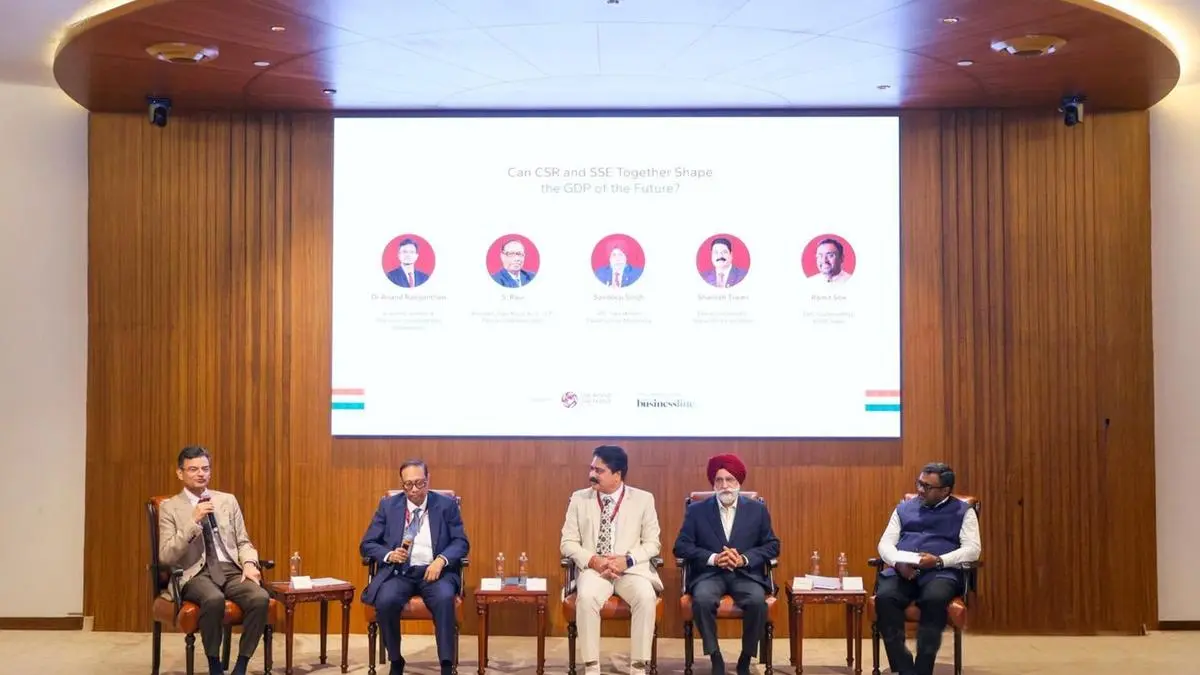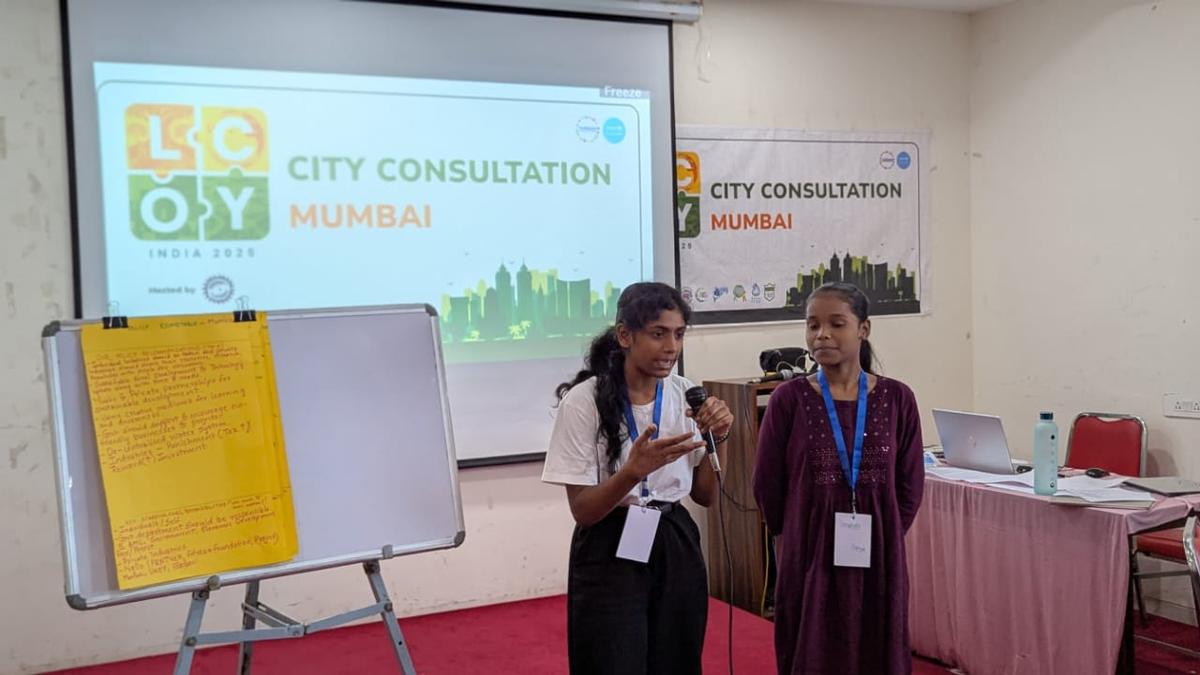
The inaugural edition of the Mumbai Climate Week in February this year drew the kind of attention that signalled a country taking its place in the global conversation. On the sidelines of this milestone summit, a smaller, separate gathering took place, convened by The Rockefeller Foundation, that merits its own recognition. In the room were philanthropists, practitioners, NGO leaders, and global social development institutions—the people and organisations that, between them, represent much of what India’s social sector looks like today—all focused on a single question that has occupied India’s social sector for decades: What will it actually take to get to scale?PhilanthropyThat such a gathering happened at all is worth noting. The idea that India’s best minds—from business, from civil society, from government-adjacent institutions—would come together to work seriously on the country’s most pressing development challenges is not something that could have been said with confidence even a decade ago. In most countries, the possibility still remains distant. The conversation that unfolded that evening was, in many ways, a reflection of how far India’s social sector has come. Rajiv J Shah, president of The Rockefeller Foundation, echoed the sentiment: “There is no other place in the world, in my experience, where there is so much top-tier talent that cares—real leaders with excellence in business, in science, marrying that with the commitment to help those who need it. That is very unique to this country.” Consider these numbers from the India Philanthropy Report 2026: India’s total sector funding has nearly doubled between FY20 and FY25 to reach about ₹27 lakh crore ($310 billion) in FY2025. Private philanthropy is expected to have reached approximately ₹1.43 lakh crore ($16 billion) in FY25, with growth projected to compound at 9%–11%. For context, this number stood at approximately ₹36,000 crore ($5.5 billion) in 2016. Family offices have grown sevenfold, from 45 in 2018 to over 300 in 2024, signaling an institutionalisation of wealth that is increasingly finding its way into structured, strategic giving.Remarkable as they are, the numbers are only part of the story. What has changed more fundamentally is the quality and seriousness of the conversation. Pertinently, those asking the question are no strangers to scaling themselves. India’s philanthropic ecosystem today has real infrastructure: since its inception in 2012, SVP India has built a community of over 775 engaged philanthropists across eight cities with over ₹110 crore ($12.6 billion) disbursed to NGO investees, a living example of how giving compounds when practiced in community. GivingPi, established in 2022 under the aegis of Dasra, has already become the country’s foremost network for family philanthropy, bringing together over 450 families to give more thoughtfully. The Convergence Foundation, set up in 2021, has shown how patient, long-term capital, when deployed with discipline over a decade, can move the systemic needle in ways that project-based funding simply cannot.All of this, because a generation of practitioners decided that building the infrastructure for giving was as important as the giving itself. Consequently, we now have ourselves a sector that is more collaborative, more evidence-driven, and more ambitious than at any point in India’s history.The infrastructure is one crucial half of the picture. But infrastructure is only ever as good as what it supports. An equally telling measure of how far India’s social sector has come is what has happened on the ground in the organisations that have spent decades doing the work philanthropy exists to accelerate, and in doing so, have demonstrated what getting to scale actually requires.Consider the work done by Anand Bang and his colleagues at SEARCH, the Society for Education, Action and Research in Community Health. In Gadchiroli district in Maharashtra, where about 40% of the population is tribal, SEARCH has built a model of community health that has been widely studied, and one that governments have sought to replicate. Its approach of staying close to the community, listening before prescribing, building trust over time instead of arriving with solutions, has produced outcomes that large-scale programmes with far greater resources have been hard-pressed to match. Consider Educate Girls, founded by Safeena Hussain, which has worked to improve education and learning outcomes for girls in some of India’s most underserved districts since its inception in 2007—work that has earned the organisation global recognition and Safeena a place on TIME magazine’s Women of the Year list in 2026. To date, it has mobilised over two million girls for school enrolments, supported over 2.4 million students with remedial learning, and worked across over 30,000 villages. Consider SNEHA, the Society for Nutrition, Education and Health Action, established in 1999 by Dr Armida Fernandez, working to improve women’s and children’s health in India’s most densely populated urban communities. Over the last decade alone, the organisation has assisted about 190,000 pregnant women and screened about 90,000 children for malnutrition. Critically, SNEHA has done this by strengthening the public health infrastructure it already operates within, demonstrating one of the strongest models for what impact looks like when civil society and the State move in the same direction.In fact, what each of these organisations share, beyond their significant impact, is their relationship with the stakeholders. They remain proximate to the communities they serve, and work alongside the State rather than in parallel to it. This becomes especially relevant when put together with the fact that public spending accounts for approximately 95% of India’s total social sector funding. No philanthropic capital, however well deployed, can match that reach. The organisations that have achieved durable scale are those who have treated the government as the ultimate vehicle for the change they are working towards by bringing better data, stronger processed, and real institutional capacity into public systems, and equipping those inside the government with the tools they need to do more.All of this—the infrastructure, the organizations, the caliber of the people getting behind development problems, and the growing sophistication of the conversations—taken together, represents genuine, hard-won progress. And yet, the India Philanthropy Report 2026 also surfaces numbers that complicate this narrative: the funding gap in India’s social sector currently stands at ₹16 lakh crore ($180 billion), and is projected to widen to ₹18 lakh crore ($210 billion) by FY30. Private philanthropy would need to accelerate to nearly three times its current pace just to prevent this gap from growing.The ecosystem has certainly deepened, but it has not yet widened in the ways that the moment demands.The work done over the last decade has contributed significantly to this deepening engagement, especially from the people already leaning in. The more difficult, more consequential work now is to find the people who don’t know the door exists. The sector that gathered in Mumbai in February has built the tools, developed the frameworks, and demonstrated what works. What remains, then, is to widen the circle of people behind it. The funding gap is real and it is growing. The one variable that will tip the scale is whether the people who understand this are willing to walk out of the room and ask someone who wasn’t in it, someone who has likely not been asked before. We need to have more direct conversations about what this collective ambition of a Viksit Bharat at 2047 looks like, what it means, and what it would take to get there, because India@2047 will depend on and be defined by these conversations.(The views expressed are personal)This article is authored by Govind Iyer, leadership and boards, The Rockefeller Foundation, The Convergence Foundation and SVP India and Deval Sanghavi, co-founder, Dasra.
India’s social sector has come a long way; now for the hard part
Authored by - Govind Iyer, leadership and boards, The Rockefeller Foundation, The Convergence Foundation and SVP India and Deval Sanghavi, co-founder, Dasra.
TL;DRAI
India's philanthropic sector doubled to $310B in FY25; private giving reached $16B as family offices grew 7x. For platform builders: scale requires stakeholder proximity and infrastructure alignment, not parallel systems—the 95% reach model.
1,244 words~6 min read