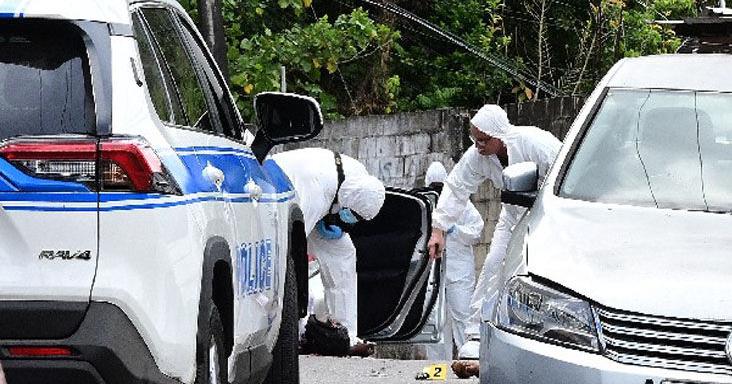
Public fear over violent crime in Trinidad and Tobago remains high despite the state of emergency (SoE), political analyst Dr Bishnu Ragoonath has noted.According to Ragoonath, ongoing murders continue to shape how citizens perceive safety in the country.Speaking on the current security situation and the possibility of an SoE extension, Ragoonath said while some crime statistics may show improvements, the persistence of killings is having a far greater impact on public confidence.He pointed out that the nature of media coverage plays a significant role in shaping perception, with homicide cases dominating headlines and reinforcing a sense of insecurity among the population.“The murder rate is still totally out of control,” Ragoonath said, adding, “I mean we’ve seen between yesterday (Friday) and today (Saturday), we have seen, what, five or six people already murdered.”He added that even where reductions may be recorded in other categories of crime, the visibility and frequency of killings overshadow any perceived gains, leaving many citizens unconvinced that the emergency measures are working effectively.The political scientist stressed that the SoE, which was introduced with the aim of reducing fear and restoring public confidence, has not fully achieved that objective in the eyes of the public.According to him, the challenge facing authorities is not only about statistical reductions in crime, but also about addressing the psychological impact of continued violent incidents.He noted: “That is something that we are going to have to find a balance with as to whether or not the SoE is or has been achieving its purposes.“We wait to see whether or not the security forces will give us more data as to exactly what was the benefit of the SoE, and whether or not that is sufficient.”At the same time, Ragoonath argued that the PNM Opposition could challenge the legality of the SoE at the courts, but iterated: “The Constitution allows for certain things to happen in a particular way and so that is what will remain.”Democracyalive and wellMeanwhile, political scientist Dr Hamid Ghany’s view is that democracy is alive and well here, pointing to lots of commentary about the SoE being “unconstitutional”, which he says is misplaced, because there have been marches, public meetings, candlelight vigils, freedom of expression in the media and on social media that has ranged from the sacred to the profane.“There are no separation-of-powers challenges in T&T with the SoE as there has been debate in our Parliament. If there is an extension, there will have to be debate in the Parliament to approve the resolution seeking the extension which should be sought by the Government in the interest of public safety and security,” he told the Sunday Express yesterday.He noted that Jamaica eventually solved their problem by ZOSO legislation, which did not require a special majority.“That was attempted here, but failed at the final vote in the Senate because the three-fifths majority was not attained. Our human rights provisions are based on the Canadian Bill of Rights 1960, while in 2011, Jamaica amended their constitution to create a new Charter of Fundamental Human Rights and Freedoms,” he added.
‘Murder rate still totally out of control’
Public fear over violent crime in Trinidad and Tobago remains high despite the state of emergency (SoE), political analyst Dr Bishnu Ragoonath has noted.According to Ragoonath, ongoing murders continue to
509 words~2 min read