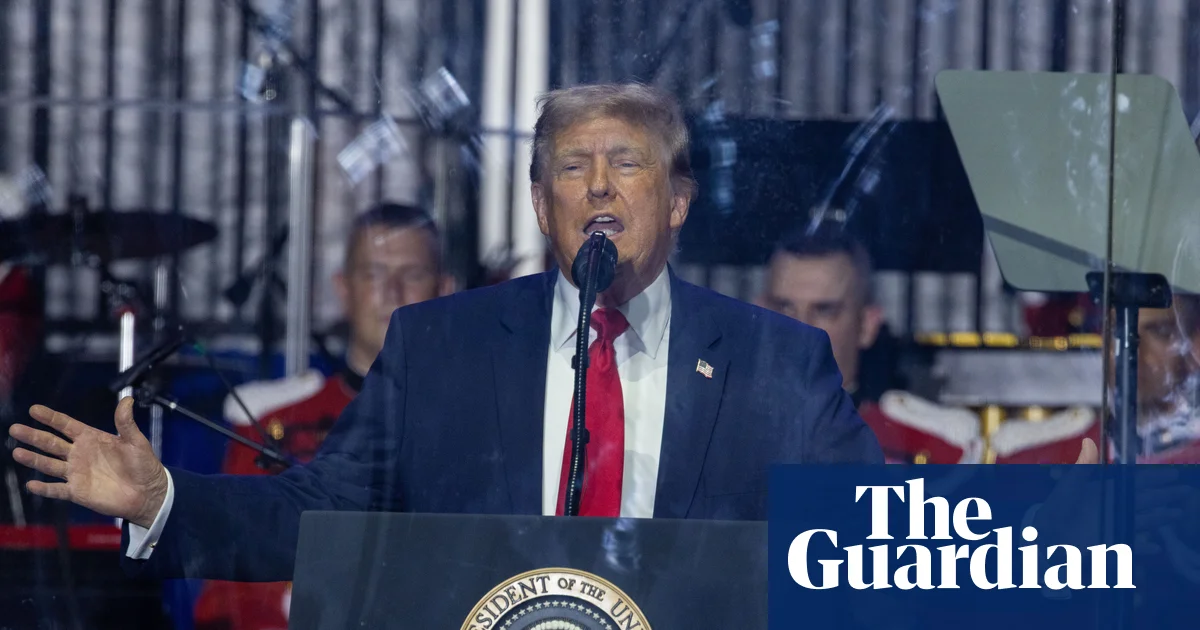
Shortly after taking office for the second time, Donald Trump created the White House Task Force on Celebrating America’s 250th Birthday, naming himself—“the man who some say is the Greatest President in History”—as its chair. The celebrations start this month, but the party planners seem to have faltered. Musical performers largely pulled out of a concert, so Trump is staging a rally, and a U.F.C. cage match will grace the South Lawn. It is a heady moment to be asking existential questions about what it means to be American. But, as it happens, another member of the task force has spent the past year and a half preparing a diligent and thorough answer on behalf of the President.Stephen Miller, Trump’s top domestic-policy adviser, has presided over the most concerted effort in a century to recast citizenship as a tool of systematic exclusion. Under his direction, the Administration has chosen to honor the Semiquincentennial by keeping people from entering the United States, by restricting those who have already done so from becoming full citizens, and by trying to strip naturalized citizens of their legal status. It is a vision that sends the country back in time, to some of the lowest points of the past century.Unlike so many iconic American fights, held in the halls of Congress or on the streets of major cities, this campaign is being waged for the most part in obscurity. Immigration policy gets to the core of the country’s identity, yet lawmakers haven’t passed legislation for comprehensive reform in more than thirty-five years. Drastic changes have instead come via executive orders, bureaucratic regulations, and technocratic maneuvers. It’s an ad-hoc form of policymaking that suits the President’s maximalist impulses and gives an ideologue like Miller a broad range of opportunities.A case in point: between June and December of last year, Trump issued bans on travel from thirty-nine countries, including Afghanistan, Haiti, Nigeria, and Iran. The government went on to suspend virtually all immigration applications filed by people from those countries. In January, a press release from the State Department listed seventy-five countries subject to a similar suspension. (Some two dozen countries appear on both lists, perhaps as an insurance policy in the event of an adverse court ruling.) According to the Migration Policy Institute, immigrants from the countries on the second list received forty-six per cent of all visas issued in 2024. Halting the visas closes the path toward permanent residency for hundreds of thousands of people—in effect, remaking the composition of who can come to the U.S. lawfully. Permanent residents born in those countries who had been approved for citizenship saw their naturalization ceremonies cancelled. (On Friday, a federal judge blocked the suspension of applications by immigrants from the thirty-nine countries in the travel ban.)Masked ICE agents using lethal force against immigrants and citizens have commanded the most attention and generated the greatest alarm. Now there’s cause for further concern: the Republican-controlled Senate just authorized another seventy billion dollars for immigration enforcement. But the agency at the center of the Administration’s ideological plans is the United States Citizenship and Immigration Services, or U.S.C.I.S., which runs the legal-immigration system. Late last month, the agency released a memo announcing plans to force most green-card applicants living in the U.S. with temporary status to leave the country for an extended period and submit their paperwork from an American consulate abroad. The impact of this would have been seismic. Of the 1.36 million green cards issued in 2024, fifty-eight per cent of them went to people who were already here. The move violated the agency’s preferred modus operandi: it drew widespread notice. Business groups and C.E.O.s warned the Administration about its effect on employment, according to the Washington Post. The U.S.C.I.S. backtracked, with the White House claiming that the memo was a housekeeping matter, rather than a change of strategy. But, according to a source with knowledge of the agency, the policy was prepared last fall.If the reasoning in the memo struck immigration lawyers as dubious, this may have been because the agency’s office of chief counsel failed to properly vet it. According to the source, government attorneys have been reassigned to work with Assistant U.S. Attorneys in investigating people whose legal status the government might be able to strip. Earlier this year, U.S.C.I.S. created the Tactical Operations Division. Some eighty officials are tasked with finding citizens, green-card holders, and refugees to investigate on the ground that the status they lawfully obtained might have been granted either through fraud or in error.Thousands of people living legally in the U.S. have already been identified, the Times has reported. By contrast, the U.S. averaged eleven denaturalizations a year between 1990 and 2017, and these were largely exceptional cases in which a person had deliberately misrepresented a serious criminal history, such as a Nazi past or links to war crimes. Denaturalizations were exceedingly rare in part because they’d once been common, used in response to disfavored political speech or ideology (as in the case of the Russian-born anarchist Emma Goldman) or identity (Germans and Japanese during the First and Second World Wars). The Supreme Court eventually interceded, with a series of rulings that made it far more difficult to remove someone’s citizenship for political reasons. Now U.S.C.I.S. has been instructed to refer one hundred to two hundred cases to prosecutors each month.The Administration’s strategy seems to hinge on a fantasy of radical subtraction—removing people who would dilute the country’s white majority. “If you import the Third World, you become the Third World,” Miller has said. There’s a model for what the government is doing: the Immigration Act of 1924, which established racial quotas that restricted immigration from southern and eastern Europe and blocked it altogether from Asia. That bill’s sponsor, Senator David Reed, of Pennsylvania, promised that “America will cease to be a ‘melting pot.’ ” Nearly a century later, Miller wrote, “That is exactly what most Americans want.” At the very least, it’s what the White House wants, and the President is trying to go even further, attacking the most foundational terms underlying the country’s understanding of who belongs here. Revealingly, in this summer of lofty celebration, the Supreme Court is expected to issue a ruling on birthright citizenship, which Trump, by fiat, has tried to end.The growth rate of the U.S. population is slowing, and it’s conceivable, even likely, that current immigration policies will tip the country toward a steadier population decline. If returning the U.S. to 1924 is the goal, the Trump Administration is succeeding. Two hundred and fifty years into the national experiment, however, this would mean that the future looks ever more like the distant past. ♦
For the Nation’s Birthday, Making It Harder to Become an American
The Trump Administration has chosen to honor the Semiquincentennial of a nation of immigrants with a vision that sends the country back in time.
TL;DRAI
Stephen Miller suspends visa applications from 75 countries (46% of 2024 visas) and accelerates denaturalizations to hundreds monthly. This blocks tech access to international talent, disrupting recruitment and reshaping global engineering competition.
1,109 words~5 min read