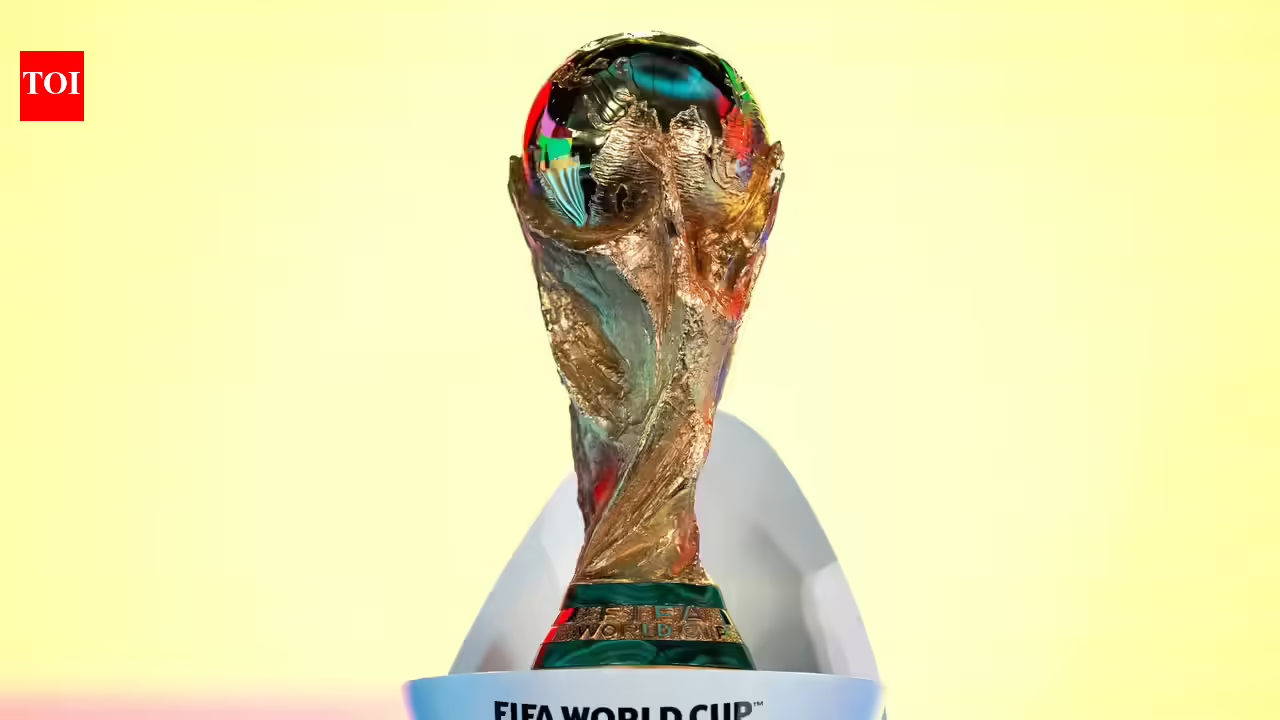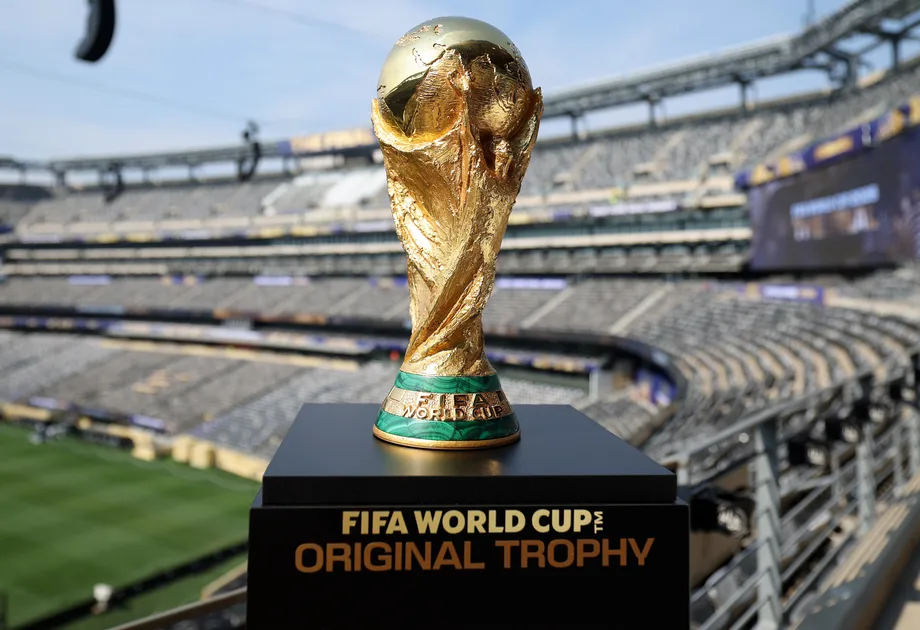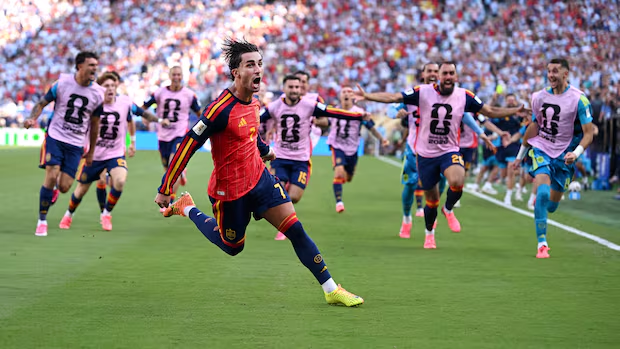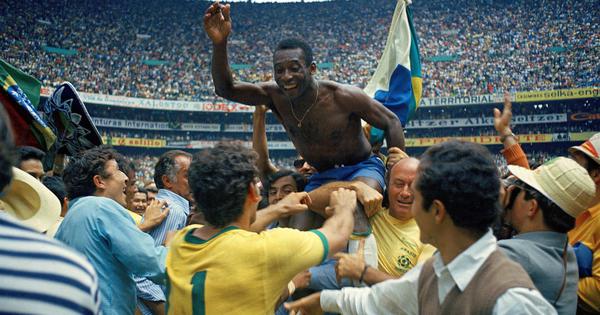
At some point between June and July this year, you will be watching the FIFA Men’s World Cup. Whether you’re a fan, locked-in and ready for the ride, or the peripheral watcher, you’ll be swept into the World Cup’s current. You’ll overhear conversations about Mbappe and Bellingham, about Lamine’s hamstring and Raphinha’s knee.The World Cup, by design, is simultaneously heavy and weightless. Weightless because name counts for nothing. You could be Cameroon, in just your second ever World Cup, facing defending champions Argentina, and you have an equal chance at victory. Heavy because its quadrennial cycle brings tension and anxiety. Four years is a generation in football; lives change in that time.A cultural eventAnd the best way to experience a World Cup is to ditch the abstract and watch it through the 3D glasses of history, the past breathing under the surface, the stakes of the future. For example, apply just one layer of context to Cameroon’s victory against Argentina in 1990: Argentina were led by the world’s greatest player of the time, or perhaps ever, Diego Maradona; the World Cup was happening in Italy, where Maradona played his club football; and Cameroon, African champions but a motley crew to the global eye, beat them 1-0 on the opening day.Jonathan O’Brien’s new three-volume series, Glittering Prize, is a distillation of the complete history of the World Cup, giving the reader a snapshot in time, an illustration of what the world looked like then – the world at large and in football.When a World Cup ends, we often compress it for documentation, with scores and scorers and winners and losers. In Glittering Prize, O’Brien narrates a tournament as a cultural event, its spectacle impacted by the threads of stories crisscrossing each other.Consider Italy, which will not be playing the 2026 World Cup, marking their third straight absence from a tournament they won just two decades ago. And consider their greatest ever attacking player, Roberto Baggio. It is day two of the 1998 World Cup, and Italy are trailing against Chile. The Bordeaux sky is faint white, awaiting dusk. With seven minutes left in the game, the referee points to the penalty spot and gives Italy a lifeline. Baggio, 31 years old, wearing number 18, places the ball on the penalty spot and takes four steps back. Both sections of the crowd are on their feet. Behind his restrained face is a raging storm.The significance of this penalty has nothing to do with the score. Neither does it have much to do with Baggio potentially becoming the first Italian to score in three World Cups. All its weight comes from another penalty, four years earlier.Baggio then wore jersey number 10, the number reserved for artists and maestros. He was the best player in the world. He stood above the penalty spot in Pasadena, California, with the 1994 World Cup on the line in the final against Brazil. And then he hit his penalty over the bar, into the crowd behind the goal, sealing the fate of the game and his life. Many in Italy still consider Baggio one of the greatest to have ever worn their blue, but the defining image of his career was that ball sailing into the Californian sky. He would later say it was the one episode he would erase if he had a magic wand.So when, four years on, in Italy’s first World Cup match since that wretched afternoon, the referee blew for a penalty, everyone looked at Baggio. Did he have the heart to go again?He scored; Italy salvaged a draw. That’s the kind of pulsing plotlines that O’Brien illustrates in Glittering Prize.Hidden historiesThe World Cup’s story, as the book’s, begins in 1930. Brought to life by French lawyer Jules Rimet, the World Cup was an entrepreneurial exercise, a championship that could platform all the professionals the more prestigious Olympic Games wouldn’t. Several Romanian players, enlisted in their country’s military, nearly missed the boat to Uruguay – literally, because their two-week sea voyage hadn't been factored into their military leave.Then, consider the 1950 World Cup, hosted by Brazil – the first World Cup after the Second World War. France pulled out of the tournament entirely when they realised the distances they would have to fly between Brazilian venues. Turkey withdrew for similar reasons, baulking at the financial costs of travelling. These were the economics of an earlier world, and they shaped who played and who didn’t.Brazil, desperate for glory, reached the final. O’Brien details how, in the days before the decisive match against Uruguay, the Brazilian government and press had already crowned their team champions. The newspaper O Mundo ran a photograph of the squad under the headline “These are the world champions.” Over half a million commemorative T-shirts had been sold. Rio de Janeiro’s mayor delivered a pre-match speech over the stadium’s public address system, as though they had already won. Politicians visited the team’s training camp, delivering jingoistic speeches. Then Uruguay scored twice in the second half and won 2–1. The match, and its repercussions, were of such seismic scale that it got a commemorative nickname: Maracanazo.
‘Glittering Prize’: An entertaining record of the FIFA World Cup from its genesis to the present day
Jonathan O’Brien’s three-volume series culminates with the 2022 FIFA World Cup hosted by Qatar. The 2026 World Cup begins on June 11.
1,763 words~8 min read