Hwang Sun-jun
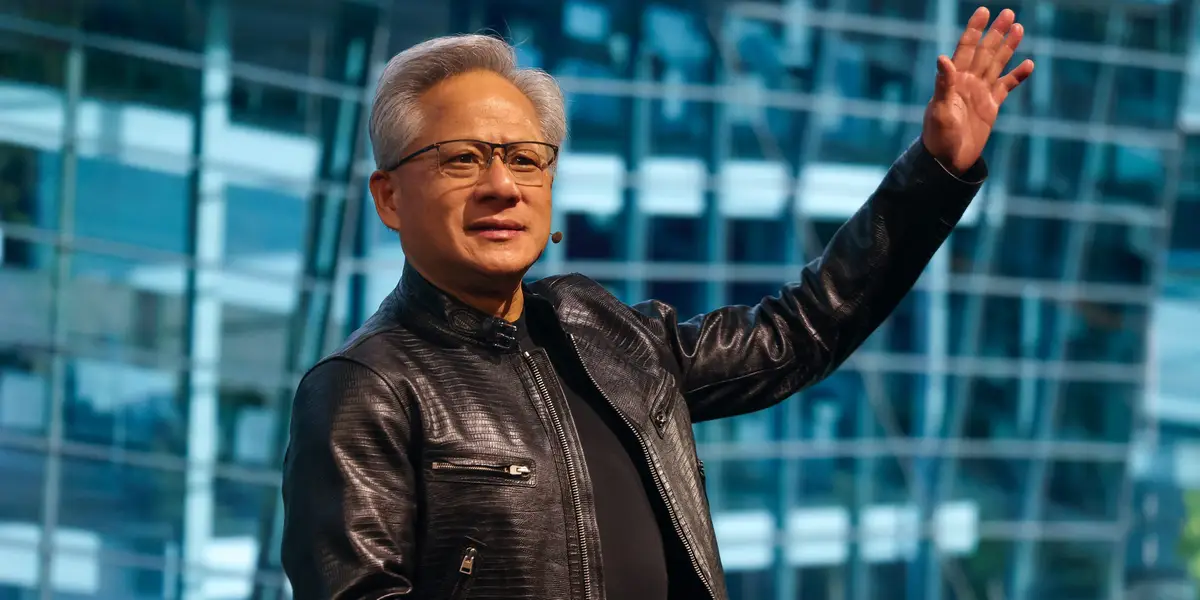
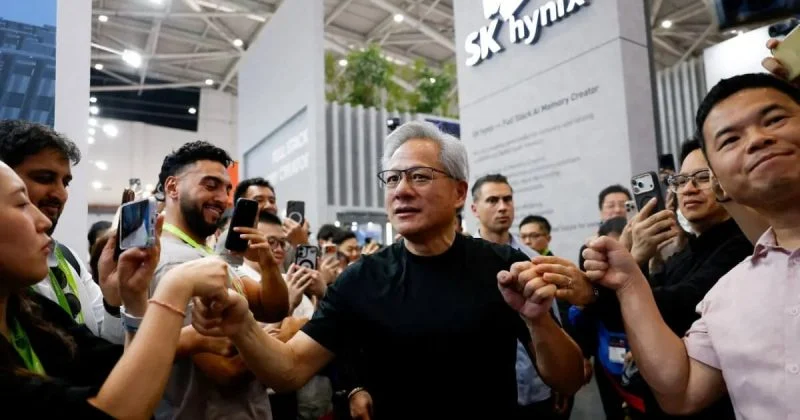
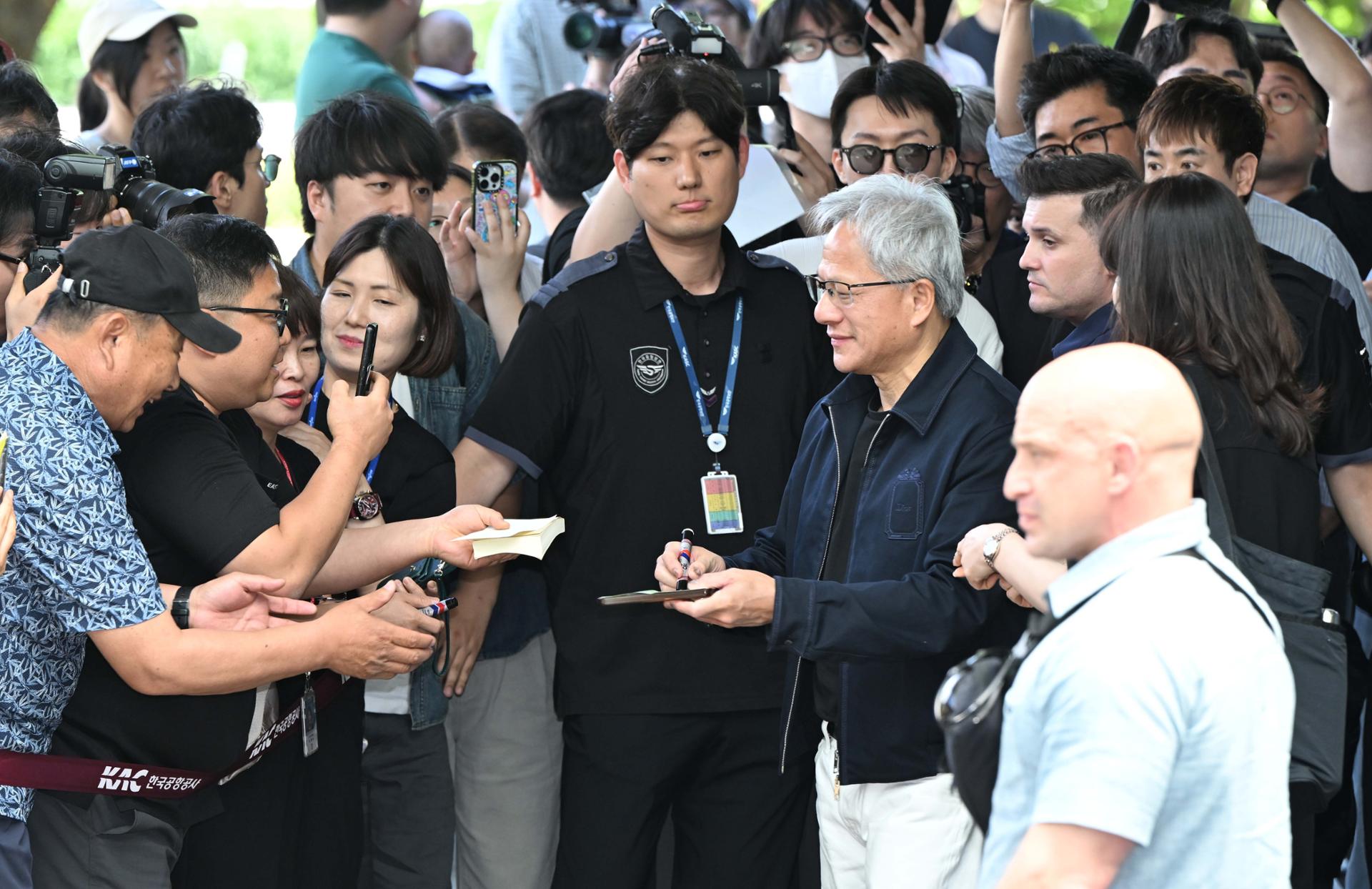
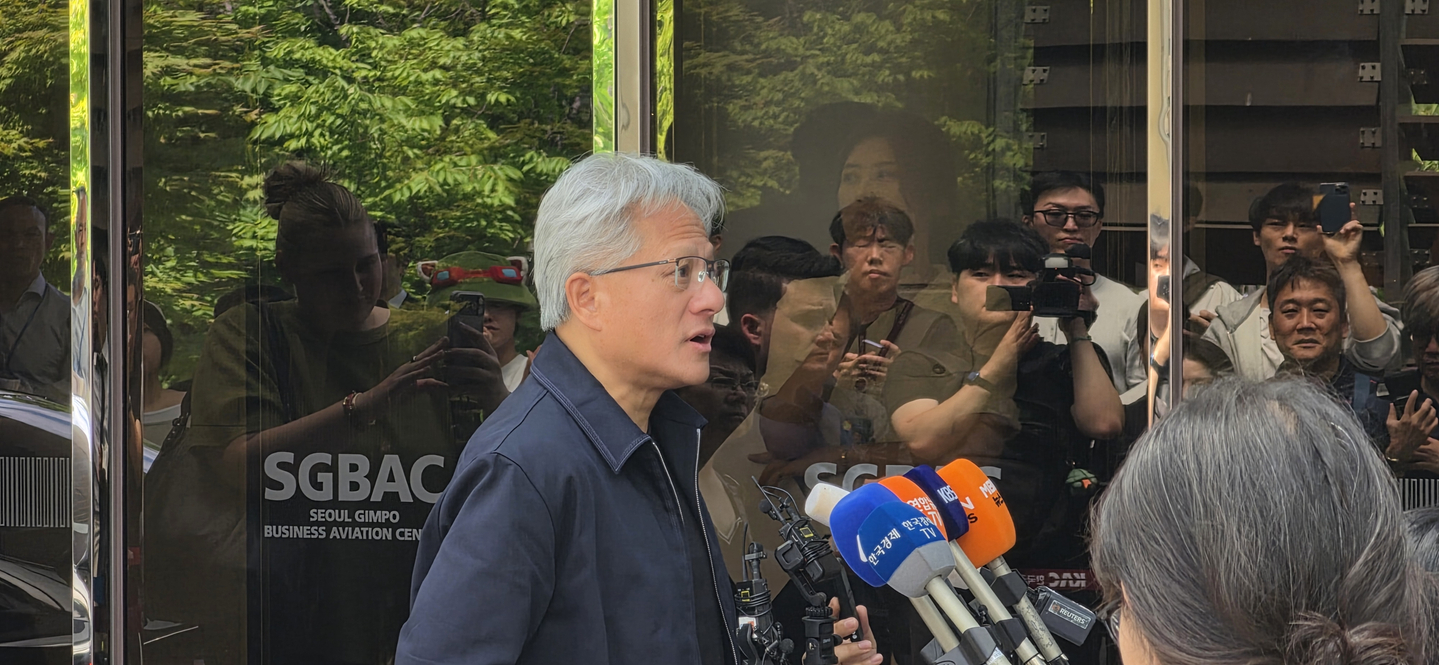
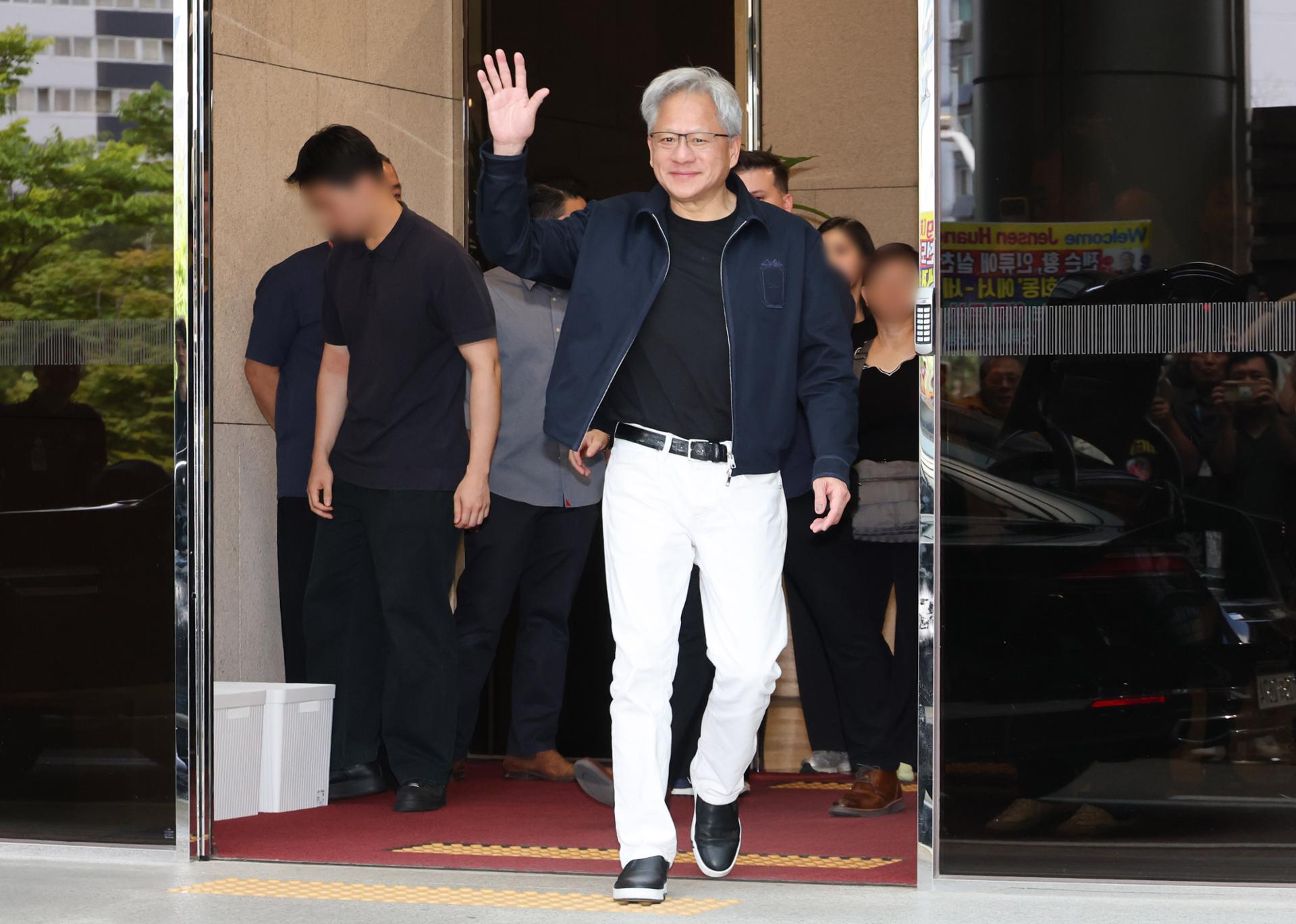
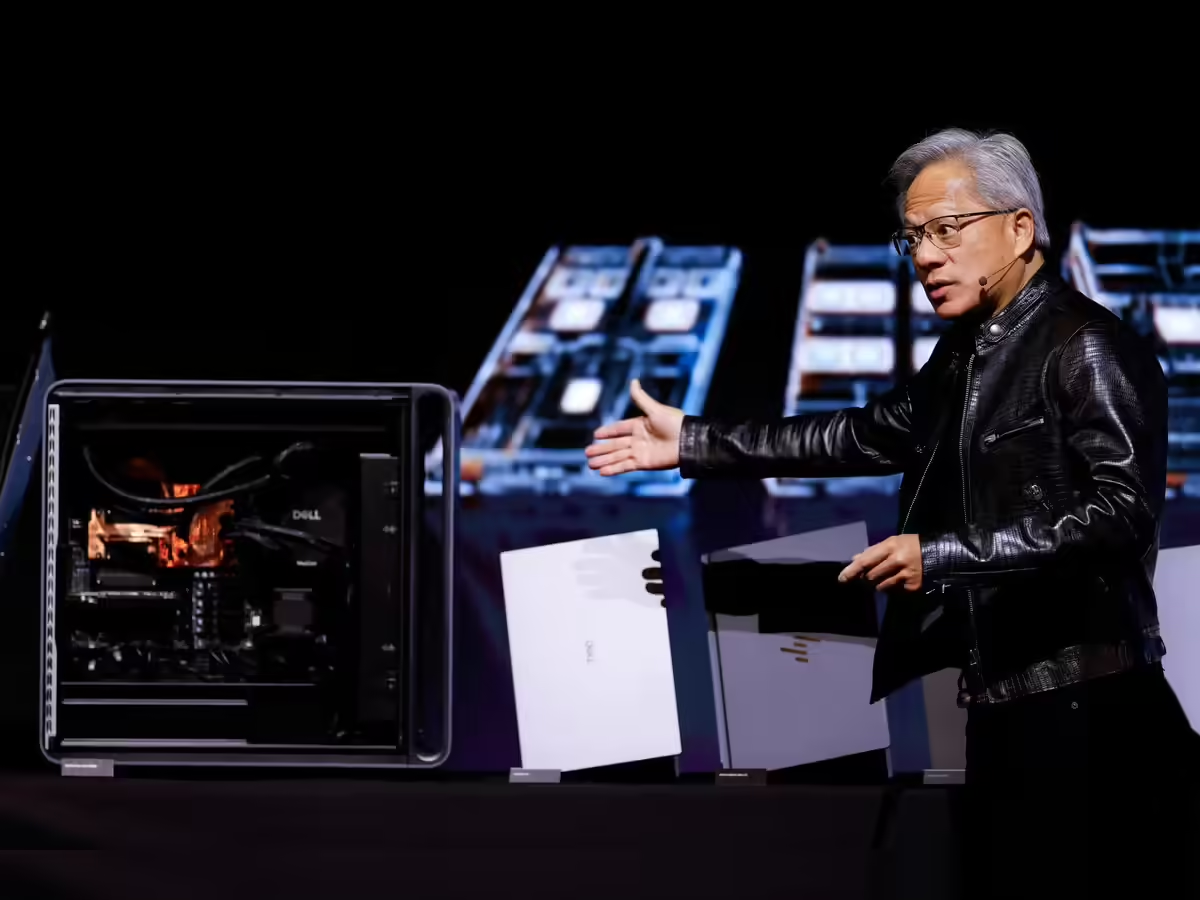
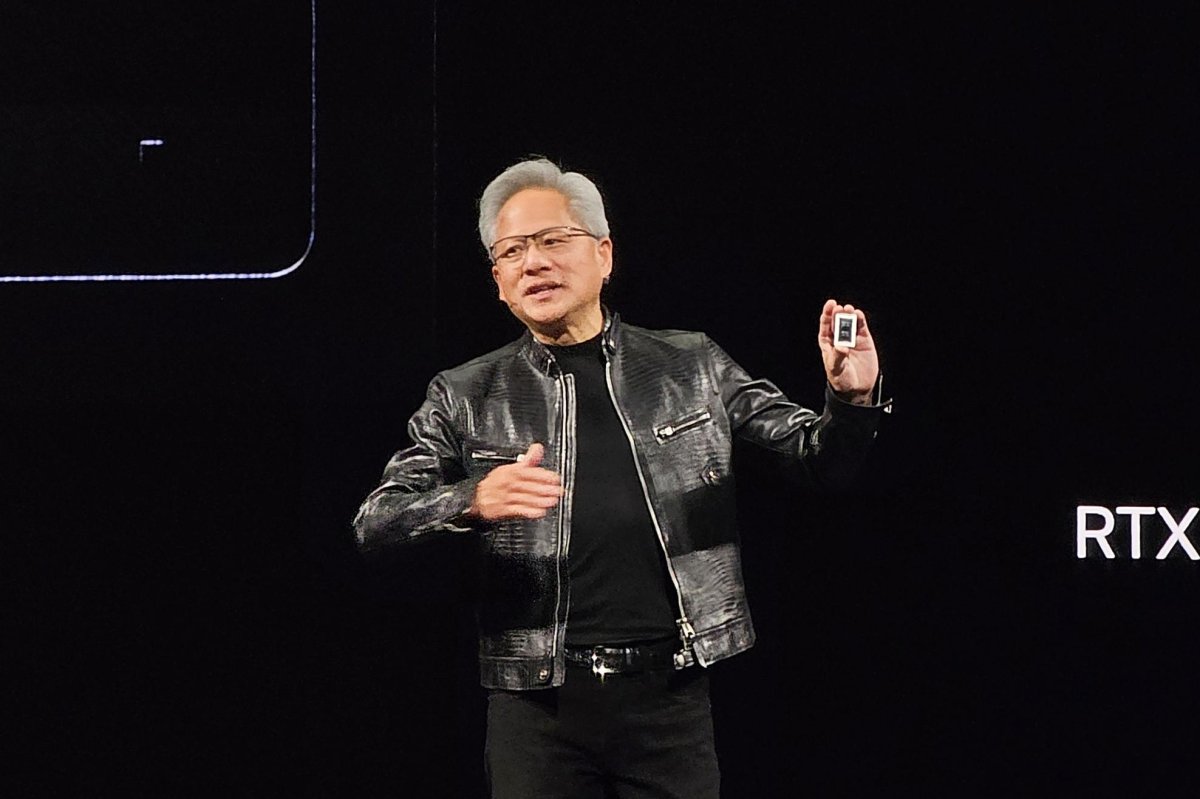
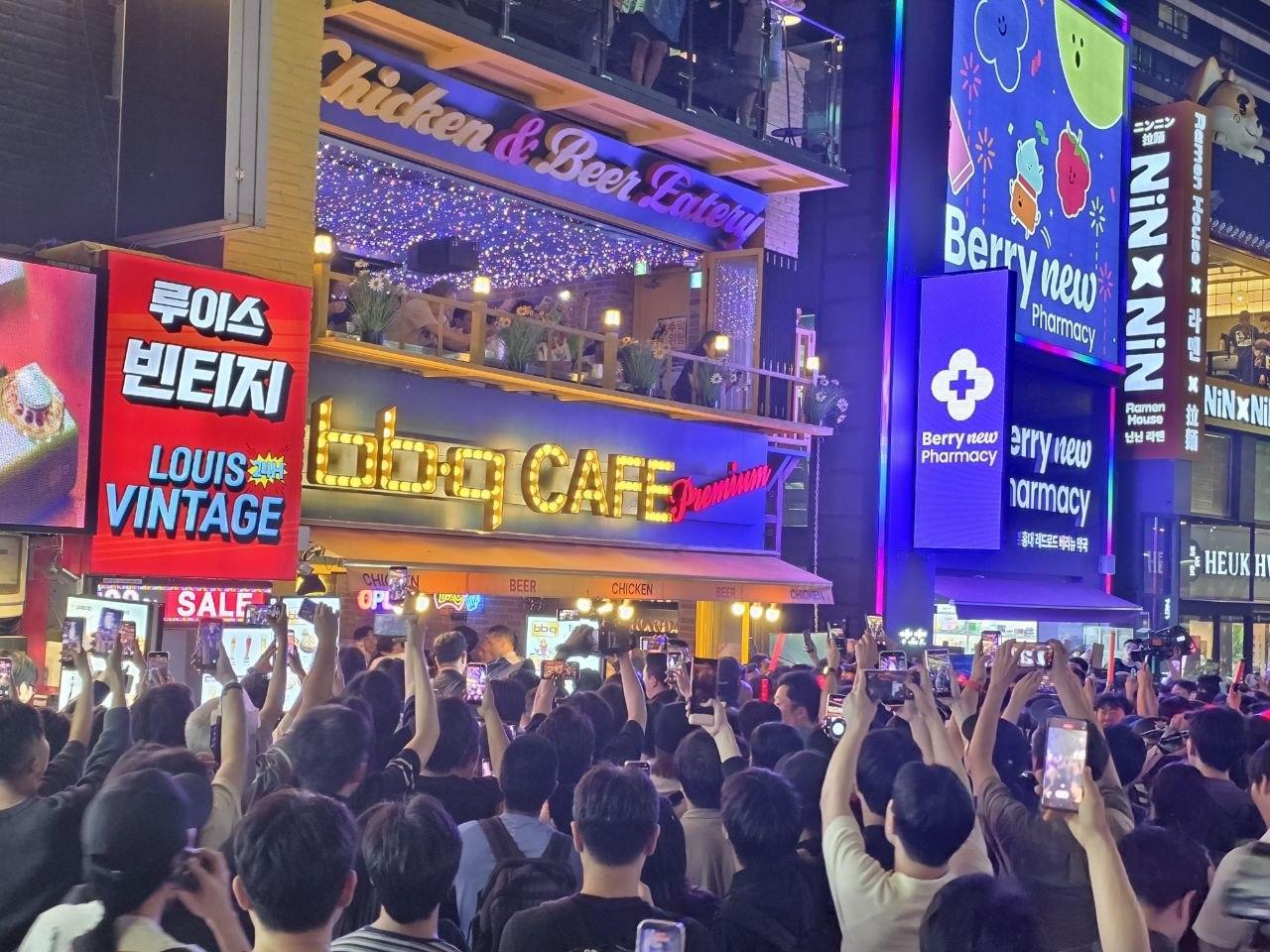
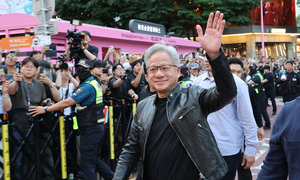
Gaming cred, investment gains, down-to-earth image have made Nvidia's chief an unlikely youth icon in Korea Nvidia CEO Jensen Huang greets members of the public as he arrives at a barbecue restaurant in Hongdae, Seoul, on Friday for a dinner meeting with SK Group Chair Chey Tae-won, LG Group Chair Koo Kwang-mo and Naver Chair Lee Hae-jin. (Yoon Chang-bin/The Korea Herald) When Nvidia CEO Jensen Huang landed in South Korea last week, he was treated more like a celebrity than a corporate executive.From his visit to a PC bang in Hongdae to his meeting with esports icon Faker and his pork belly-and-soju dinner with Korean business leaders, Huang's every move attracted crowds, cameras and online attention. Some fans even followed his whereabouts through a "Jensen Huang tracker."The Korea Herald spoke to young Korean adults for their take on Huang and why he appears to be the nation's favorite CEO.Part of the fascination is straightforward: Nvidia sits at the center of the global AI boom, and many of Korea's future industries — semiconductors, high-bandwidth memory, robotics and artificial intelligence — are deeply tied to the company's ecosystem. Huang's comments, partnerships and even his dinner companions are viewed as potential clues to Korea's industrial future.Why Nvidia matters"A lot of people are actually thankful to Huang for giving them an opportunity to invest in Nvidia, which many believe is a stock that is unlikely to lose money," said Lee Tae-ho, 24. "His promises to invest in Korea and expand GPU supplies have further strengthened his positive image."Lee added that events such as the widely discussed "Kkanbu summit" and Nvidia's commitments to Korea have only strengthened Huang's favorable image.But AI and stocks alone do not fully explain why Huang has become unusually popular among Koreans in their 20s and 30s.Interviews with young Koreans suggest his appeal stems from four factors: gaming culture, internet familiarity, a self-made success story and an approachable image that contrasts many other corporate elites.Gaming credFor many young Koreans, Nvidia was familiar long before ChatGPT and the AI boom.The company's graphics cards powered countless gaming PCs and PC bang, or internet gaming cafe, sessions. Before Nvidia became one of the world's most valuable companies, it was already a household name among gamers debating frame rates, performance and hardware upgrades.Whenever Huang praises Korean esports, gives a shout-out to Faker or visits a PC bang, it does not feel like another foreign executive making generic compliments about Korean culture. Instead, he is engaging with a community that many young Koreans genuinely grew up with and remain proud of. Nvidia CEO Jensen Huang receives a souvenir signed by Lee "Faker" Sang-hyeok as he meets members of esports organization T1's League of Legends team at T1 Base Camp in Mapo-gu, Seoul, Friday. (Yoon Chang-bin/The Korea Herald) "2030 is a generation that is really into games, especially graphics cards, because they are necessary for playing high-end games," said Choi Yun-ho, 27. "Nvidia has definitely played a big part in Korean gaming culture."Choi added that Koreans often feel a sense of familiarity toward East Asian figures who openly show appreciation for Korea. Huang, a Taiwanese American founder who embraces Korean gaming and esports culture, fits naturally into that space.In other words, Huang is admired not only because Nvidia is powerful, but because that power is connected to something many young Koreans already understand.Meme statusAnother important factor is Huang's online presence.Many young Koreans do not follow semiconductor earnings or supply-chain developments closely. Yet they encounter Nvidia and Huang constantly through stock communities, YouTube clips and social media feeds.In that environment, Huang is not introduced as a distant executive in a suit. He appears as a recurring internet character."Even though I wasn't well informed on the industry at first, famous stock YouTubers mentioned Nvidia and Huang so many times that the names eventually became familiar," said Kim Cheol-woo, 25.Han Sung-hyun, 26, said Korean online communities have built a strong meme culture around both Nvidia and its CEO."These days Nvidia and Huang are at the core of these memes," Han said. "YouTubers also act as a bridge to the broader public." Nvidia CEO Jensen Huang (right) shares fried chicken and beer with Samsung Electronics Chairman Lee Jae-yong (left) and Hyundai Motor Group Executive Chair Chung Euisun at a Kkanbu Chicken outlet in Gangnam-gu, Seoul, in October, at a gathering Korea nicknamed the "Kkanbu summit." (Herald DB) Repeated exposure does not necessarily create expertise, but it does create familiarity. For many people, Huang feels less like a distant Silicon Valley executive and more like someone they already know from the internet.For a generation that increasingly consumes information through algorithms rather than newspapers, that familiarity matters. Recognition no longer comes from earnings reports and press conferences alone. It also comes from streamers, memes and viral clips.Many young Koreans may not know every detail of Nvidia's HBM supply chain, but they know Jensen.Self-made appealBeyond memes and market influence, Huang also benefits from a powerful personal story.His widely publicized journey — from immigrant dishwasher to founder of the world's most valuable AI chip company — offers a classic self-made success narrative.That story resonates with many younger Koreans accustomed to hearing about inherited wealth, family connections and elite backgrounds. Huang may now sit alongside Korea's chaebol leaders, but his story feels different from that of a typical corporate heir."I think people look up to him because he is seen as a successful businessman who was not born with a silver spoon in his mouth, overcame difficult times and built the world's No. 1 company by market value," said Kim Sung-ji, 38. From left: Naver Chair Lee Hae-jin, LG Group Chair Koo Kwang-mo, Nvidia CEO Jensen Huang and SK Group Chair Chey Tae-won hand out snacks to the public gathered outside a pork belly restaurant in Hongdae, Seoul, on Friday. (Yoon Chang-bin/The Korea Herald) Kim Jae-won, 31, said Huang has successfully built both a self-made founder story and a public image that people can project themselves onto."He built the story of a self-made founder who created a mega-company, and then made friendly efforts to approach Korea," Kim said.Kim added that Huang's casual meals with Korean corporate leaders worked on two levels. They elevated him into the highest circles of business power while making that world feel strangely accessible through familiar dishes such as chicken and beer or samgyeopsal and soju."People often imagined, 'What would it be like if I were sitting at that table?'" Kim said. "They projected themselves into that seat."Not your typical tycoonThat accessibility leads to perhaps the most important factor: Huang's image.Many young Korean adults respond positively to powerful figures who do not appear overly formal, hierarchical or "kkondae" — the Korean term for an older authority figure seen as rigid and out of touch.Huang is unquestionably elite. He built Nvidia into the defining company of the AI era and is now one of the most influential figures in global technology. Yet he rarely presents himself like a traditional corporate titan."I think he knows how to receive the spotlight," Han said. "Eating barbecue and handing out bungeoppang? That's exactly what the young generation is crazy about. A company becoming successful and becoming famous among youth are completely different things, but Huang has managed to do both."His trademark leather jacket, gaming references, soju drinking and willingness to interact directly with fans all reinforce that image. While many executives attempt to appear relatable, Huang often looks genuinely comfortable doing so."When chaebol leaders eat chimaek or samgyeopsal, it feels unusual," said Kim Sung-ji. "But with Jensen Huang, that's not the case, because he had already built that image in the US."Hyun Jung-hee, 27, agreed."He looks young and active, not like a typical CEO tycoon," she said. "I think wearing leather jackets and using (millennial and Gen Z slang) is an effective way to get closer to the young generation."Hong Ji-won, 26, said Huang represents a type of successful figure that many younger Koreans have long wanted to see."Most of the so-called MZ generation (millennials and Generation Z) loathe boomer culture, which is exactly why figures like Huang receive a lot of recognition," Hong said."He's showing an image that young people have long been waiting for: a successful but chill individual who shows respect to those who look up to him."